
Victorian Hallway Coat Rack
A victorian hallway coat rack brings practical storage and period character to an entrance, combining solid timbers with robust metal and ceramic hooks.
Victorian Hallway Coat Rack
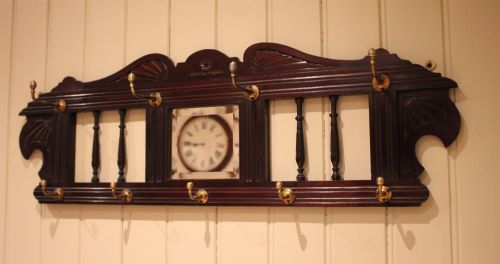
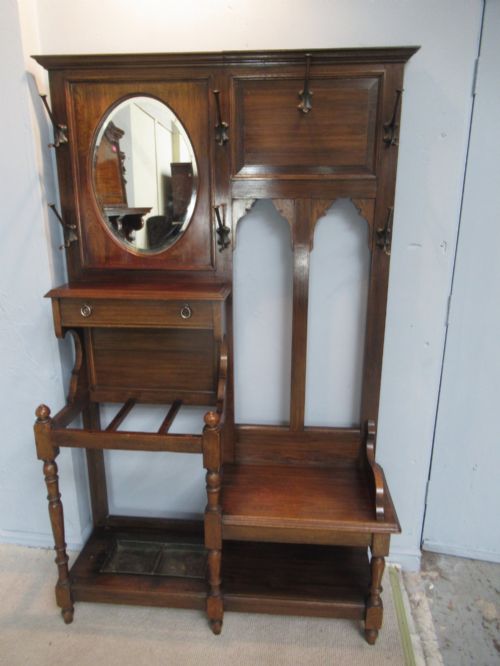
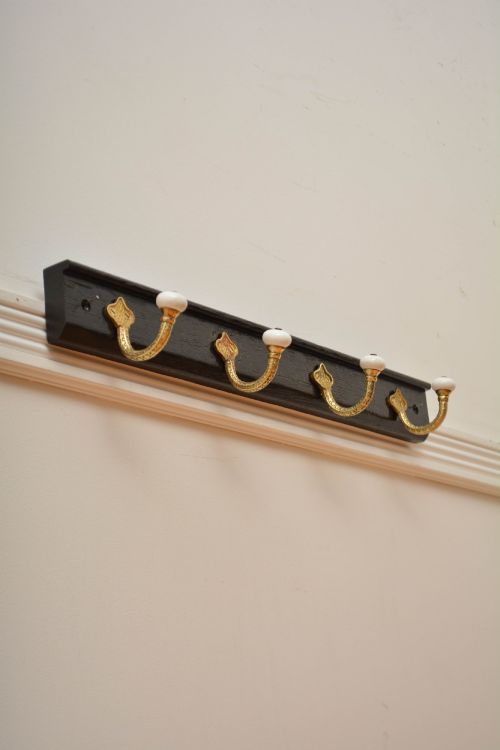
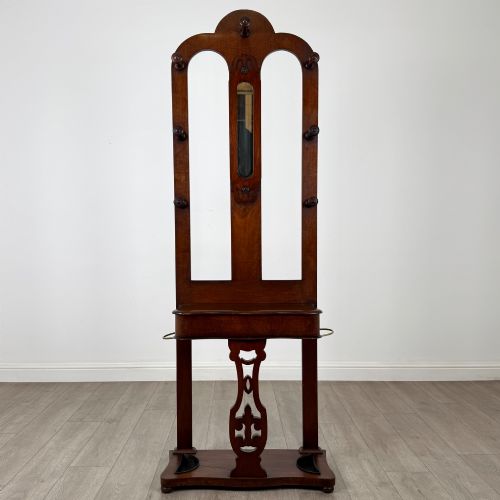
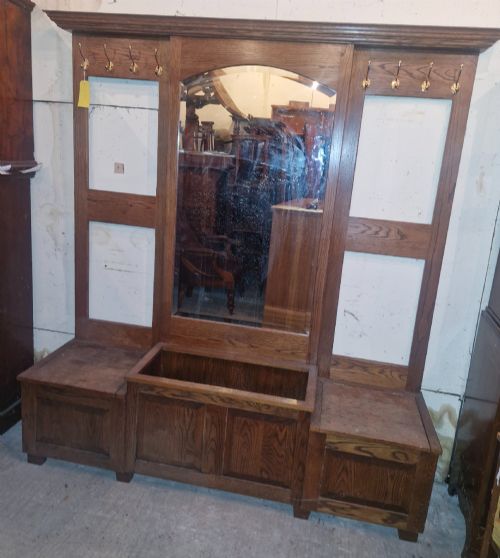
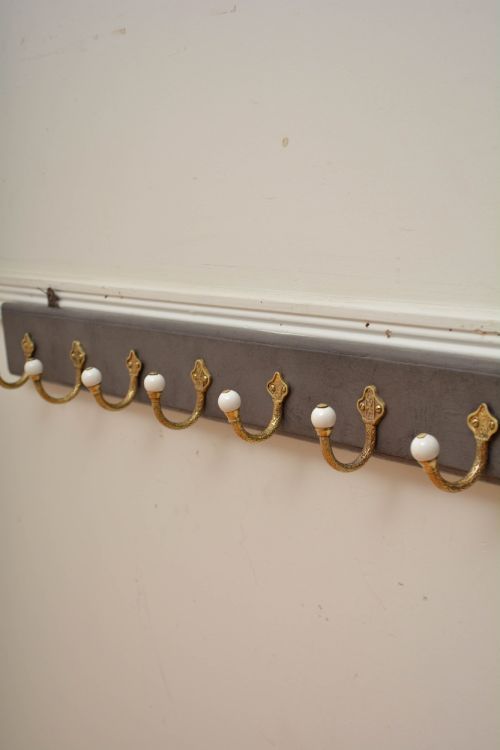
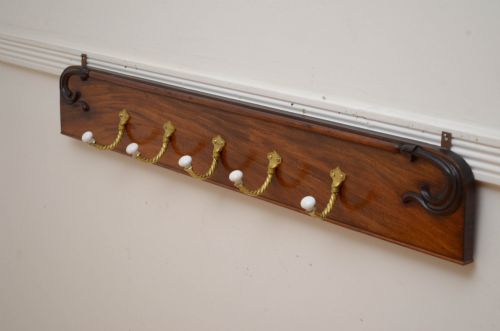
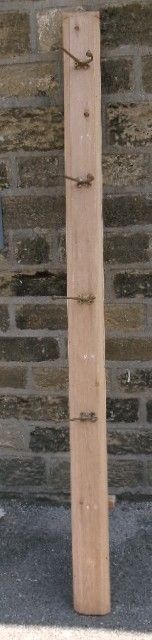
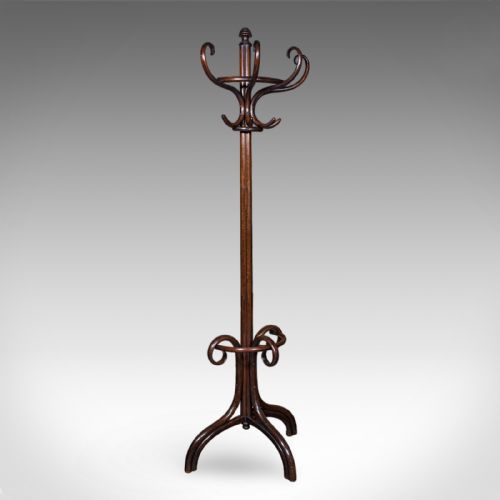
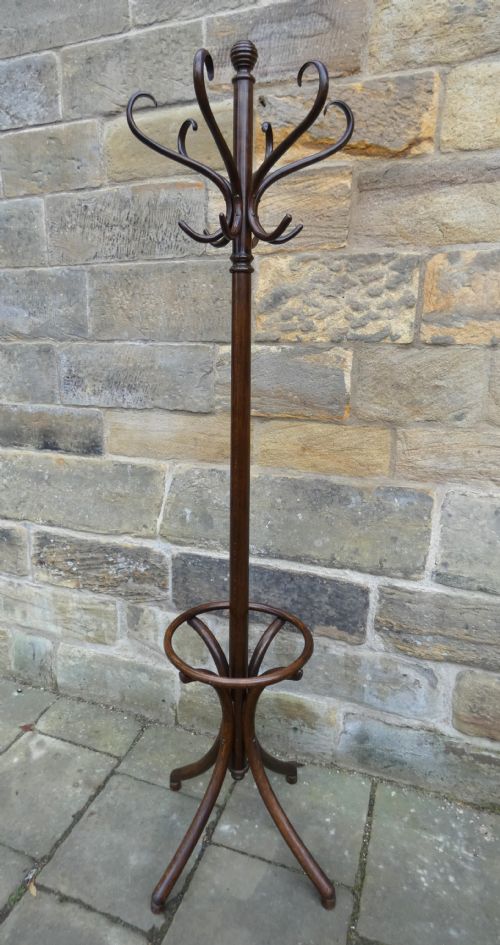
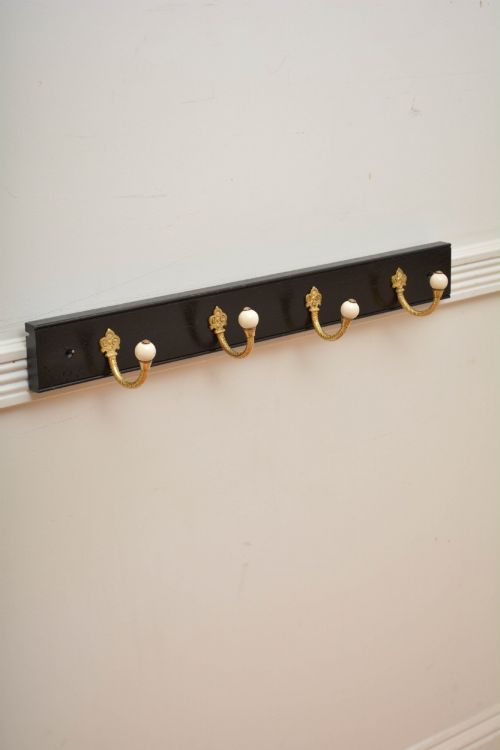
A victorian hallway coat rack encompasses everything from simple wall-mounted timber boards fitted with cast brass hooks to substantial freestanding hall stands incorporating mirrors and umbrella compartments. The most frequent examples encountered on this page are wall-mounted wooden backboards fitted with ceramic-tipped brass hooks, alongside floor-standing bentwood and carved oak hall stands.
The objects serve the functional purpose of organising outerwear, hats and walking sticks within an entrance hall or reception space. Pieces originate primarily from the nineteenth century and the early twentieth century, spanning Victorian, Edwardian, and Aesthetic Movement design traditions.
Materials and construction
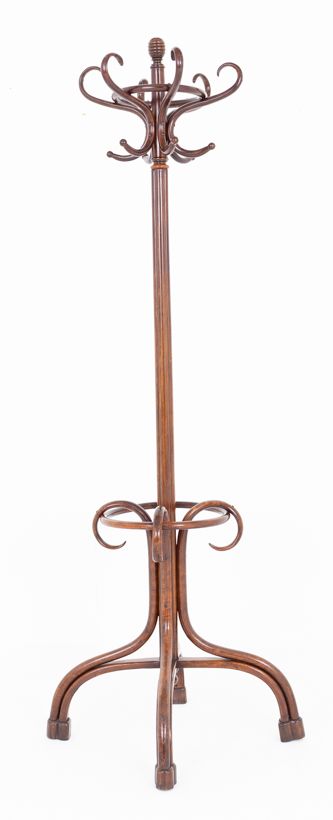
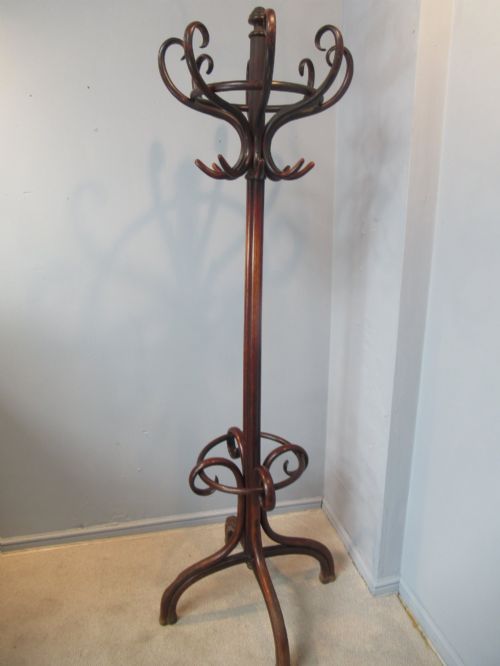
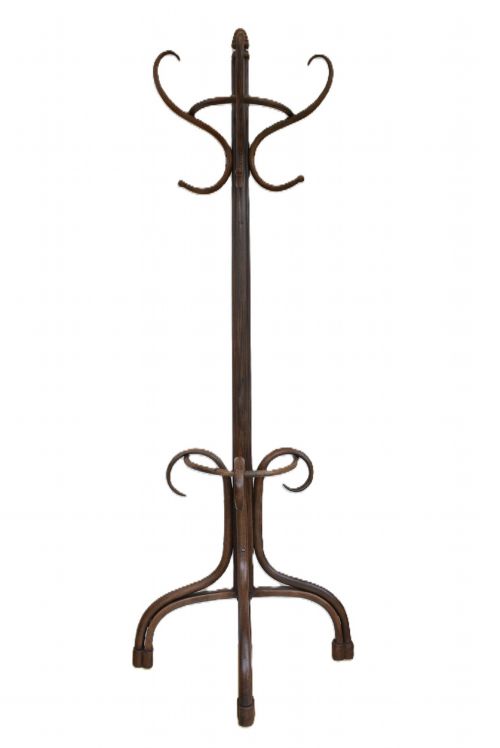
Cabinet makers utilised dense hardwoods including mahogany, oak, walnut and pine for the structural backboards and frames, frequently employing ebonisation to mimic costlier materials. Wall-mounted racks rely on secure timber backplates, while floor-standing pieces incorporate steam-bent beech in the Austrian and Thonet bentwood tradition.
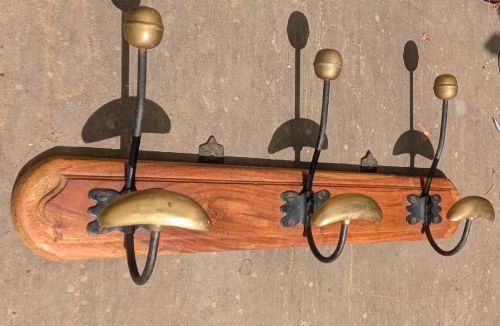
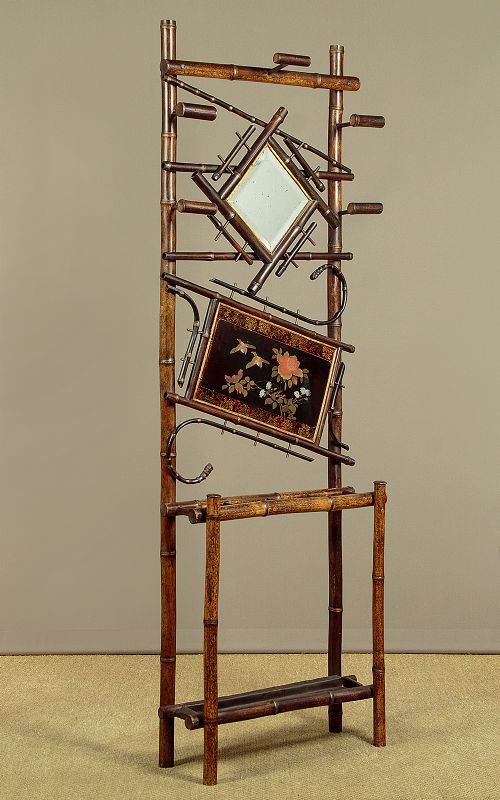
Hardware consists of cast iron and cast brass hooks, often featuring white or coloured porcelain ceramic inserts on the tips to prevent garment damage. Certain examples integrate bevelled wall mirrors, cow horn elements, bamboo framework, or cast iron umbrella and stick wells into the main body.
Listings feature oak, mahogany, walnut, pine, beech, bamboo, brass, cast iron, glass, and ceramic across various historical periods.
Determinants of quality
The standard of a piece rests upon the weight and casting quality of the metal hooks and mounting plates, where finer examples display crisp detailing and secure housing within the timber. Substantial timber thickness, robust joinery, and the retention of original ceramic inserts separate superior wall boards and freestanding stands from simpler utility items.
Carving depth and sculptural presence define the upper tier of oak and walnut hall stands, particularly where motifs such as Greenman masks or intricate foliage ornamentation are executed by hand. The structural integrity of steam-bent beech components and the clarity of original mirror glass further distinguish finer workshop production.
Jas. Shoolbred·Thonet
The Victorian Hallway Coat Rack Glossary
- Bentwood
- Furniture formed by steaming timber until pliable and bending it into curved shapes. This technique defines lightweight hall stands and revolving coat trees.
- Hall stand
- A large freestanding hallway item combining a mirror, coat hooks, a shelf for hats, and storage wells for umbrellas or walking sticks.
- Ebonised
- Timber treated with a dark stain or chemical finish to imitate ebony. This dark surface finish provides high contrast against polished brass hooks.
- Aesthetic movement
- A late nineteenth century design style emphasising visual beauty over narrative content. Pieces from this movement often utilise materials like bamboo and lacquered surfaces.
Victorian Hallway Coat Rack: Frequently Asked Questions
How do I mount a wall coat rack safely?
Wall-mounted racks require sturdy fixings into wall studs or masonry plugs to support heavy winter garments and wet coats safely.
Check the spacing of the pre-drilled screw holes on the timber backboard to ensure secure wall engagement across multiple points.
What is the difference between a hall stand and a coat rack?
A coat rack is typically a horizontal wall-mounted board fitted with hooks for hanging garments and hats.
A hall stand is a large freestanding piece of furniture that often incorporates a mirror, glove box, and umbrella stands alongside coat hooks.
How do I care for antique wood and brass?
Maintain the timber surfaces with a traditional beeswax polish applied sparingly and buffed with a soft cloth to preserve the finish.
Clean brass and ceramic hooks gently with a dry cloth, avoiding harsh chemical metal polishes that can damage surrounding wood.
How do I identify a bentwood hall stand?
Bentwood pieces feature smooth, continuous curves formed from steamed beech wood rather than joined rectilinear timber components.
They appear frequently in late nineteenth and early twentieth century hallways as lightweight, open-framework coat trees.