




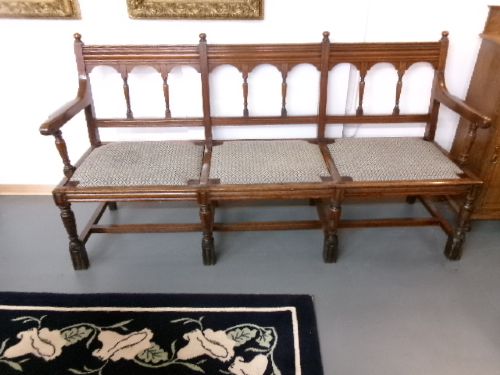
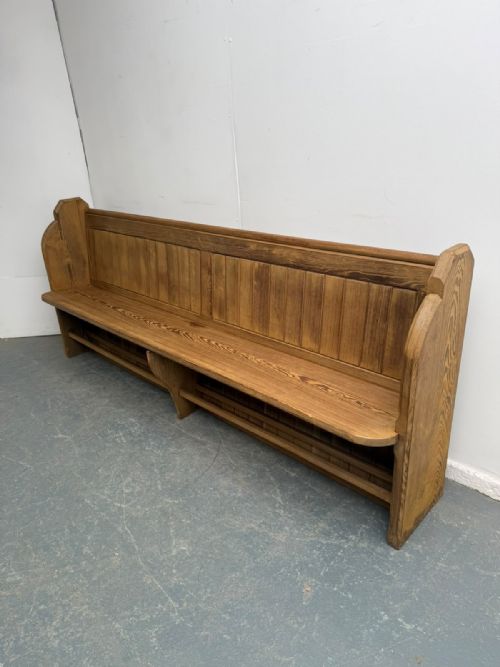
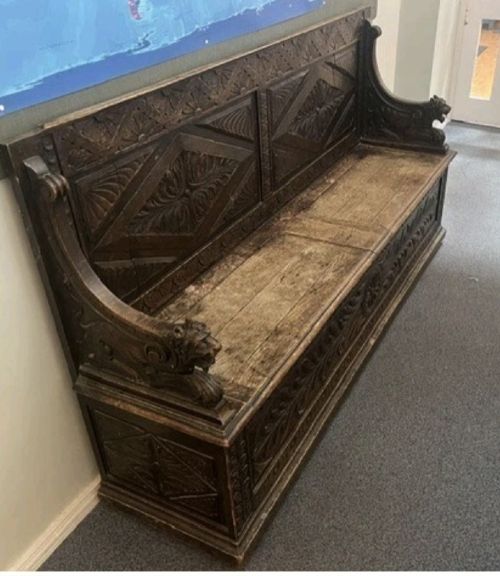
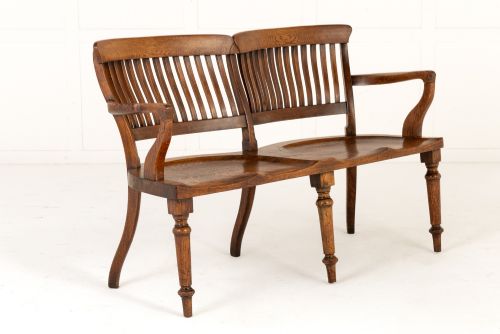

Victorian Hall Settle
A victorian hall settle is a sturdy entrance seat offering hidden storage, built to impress guests and withstand daily comings and goings.
Victorian Hall Settle
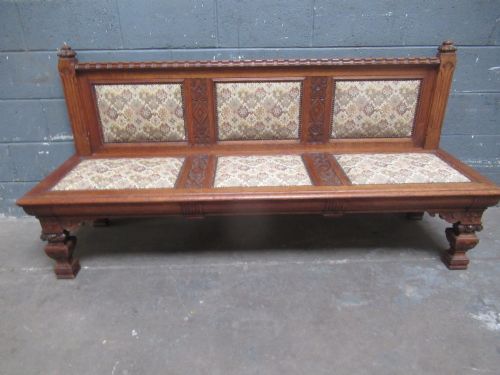
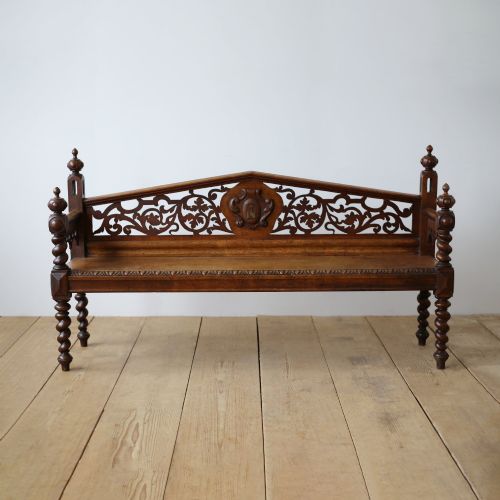
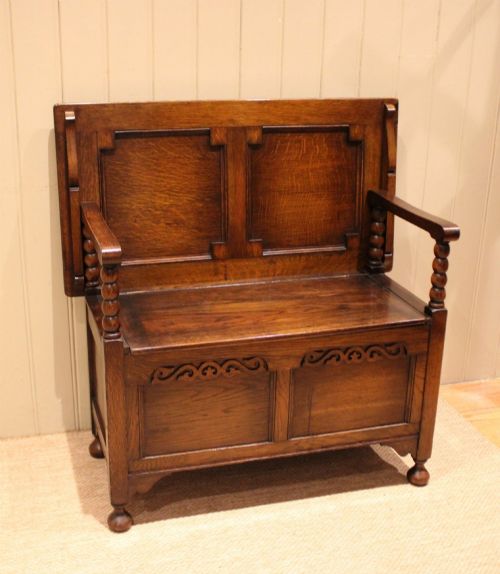
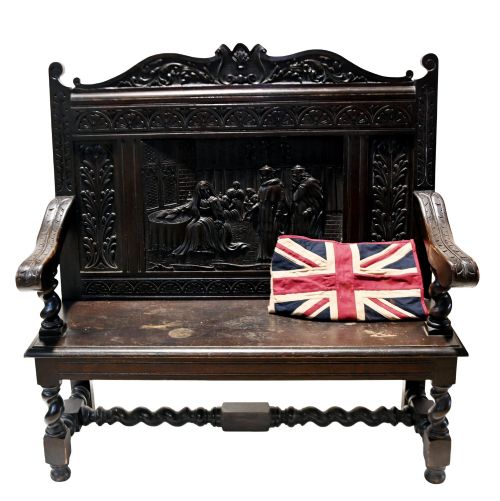
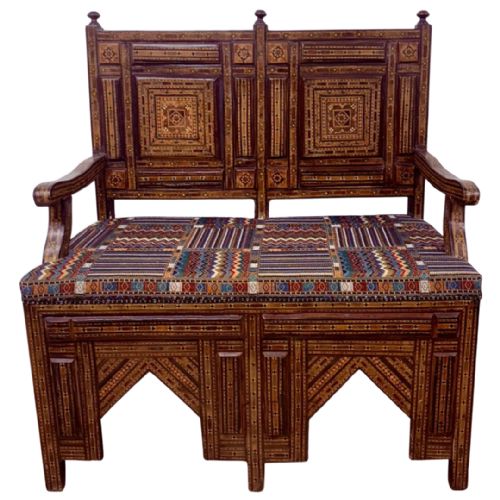
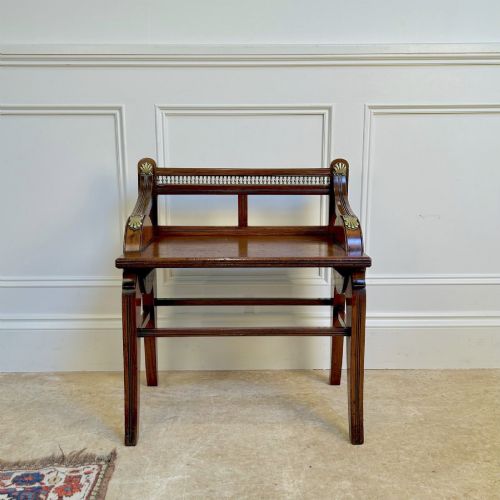
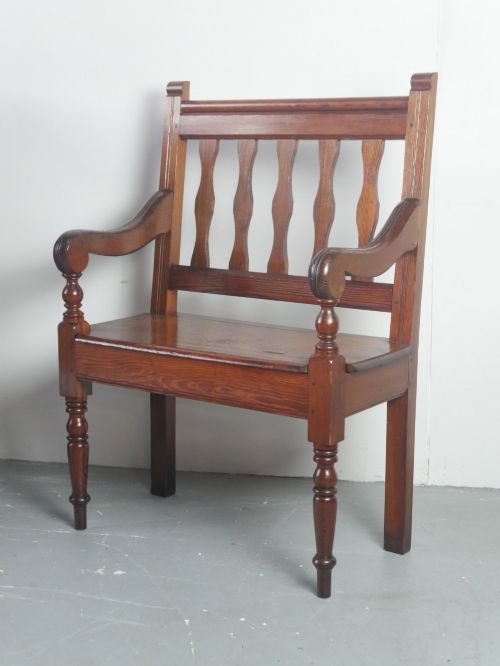
When you search for a victorian hall settle, you encounter substantial seating designed for entranceways and corridors, predominantly originating from the nineteenth century. These pieces combine practical seating with functional storage, often taking the form of box settles with lift-up lids or architectural panelled benches.
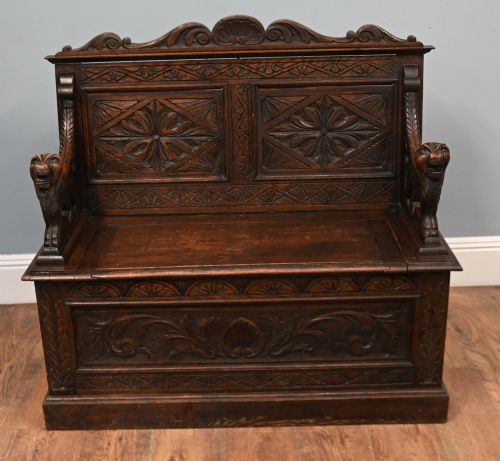
The selections span various regional interpretations and revival aesthetics, ranging from rustic pine country pieces to heavily carved oak baronial designs. You will frequently find examples displaying Gothic revival motifs or simplified farmhouse constructions suited to domestic hallways.
Materials and construction
Carpenters relied heavily on solid oak and pine, utilising traditional mortise and tenon joints to build frames capable of enduring heavy daily use. Surfaces received wax finishes, paint applications, or intricate relief carving depicting foliage and figural motifs.
Secondary elements often incorporate brass hinges, iron brackets, and occasionally upholstered panels in fabric, leather, or brass studwork. Construction methods prioritised structural rigidity, particularly in large box settles designed to serve as both benches and storage chests.
Victorian Hall Settle Retail Price Guide 2026
Typical asking prices for victorian hall settle among the pieces listed under this phrase on Sellingantiques today, from the lower quarter to the upper quarter. They describe what is for sale here now, not the wider market.
Keep an eye out for hidden Green Man carvings peering through the oak foliage to watch over your hallway.
Distinctions in quality
The standard of carving and timber selection dictates the hierarchy among these pieces, separating utilitarian workshop output from ambitious cabinetmaker commissions. Crisp execution of architectural details and deep relief work indicate superior craftsmanship.
Proportion and structural integrity also define better examples, where timber remains stable and original hardware stays intact. Subtle design elements, such as panelled backs and integrated storage boxes, reflect the maker's attention to domestic utility.
James Shoolbred·GIllows
The Victorian Hall Settle Glossary
- Box settle
- A wooden bench featuring a compartment beneath the hinged seat used for storing outdoor garments and boots. This form protected inhabitants from draughts in corridors.
- Gothic Revival
- An architectural and decorative style popular during the period, drawing inspiration from medieval ecclesiastical design. Pieces often incorporate pointed arches and tracery.
- Monk's bench
- A convertible piece of furniture featuring a back that folds down to create a small table surface. These double-duty items suit compact spaces.
- Baronial
- A descriptive term applied to heavy, carved oak furniture intended to evoke medieval great halls. Such forms display substantial proportions and prominent crestings.
- Panelling
- Framework composed of vertical stiles and horizontal rails fitted with thin wooden inserts. This technique provided strength without excessive weight.
Victorian Hall Settle: Frequently Asked Questions
What is a victorian hall settle?
A victorian hall settle is a heavy wooden bench placed in an entranceway, frequently incorporating a hinged seat that opens to reveal a storage compartment for boots and coats.
These items acted as both welcoming seats for visitors and practical storage units in bustling nineteenth-century homes.
How were these settles used?
Households used these benches in hallways and boot rooms for changing footwear and waiting before entering the main rooms of the house. The high panelled backs protected sitters from cold draughts blowing in through front doors.
They also served to project an image of establishment and heritage to arriving guests through ornate carving and solid timber construction.
Where should I place a settle?
These pieces fit naturally in spacious hallways, boot rooms, or large country kitchens where their depth and architectural presence can be fully appreciated. Their built-in storage makes them practical for organising everyday outdoor wear.
Ensure adequate floor space is available, as the high backs and solid proportions require room to breathe without dominating the circulation path.
How do I identify different styles?
Examination of the decorative motifs and timber reveals stylistic origins, such as Gothic revival pointed arches or rustic painted pine finishes. Regional variations appear between British oak examples and imported Hungarian pine pieces.
Construction details like hand-cut joinery and period hardware help distinguish nineteenth-century production from later revivals.