




Victorian Haberdashery Unit
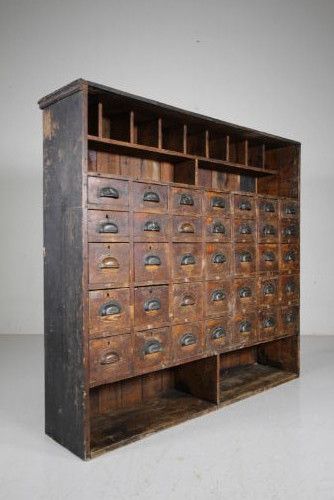
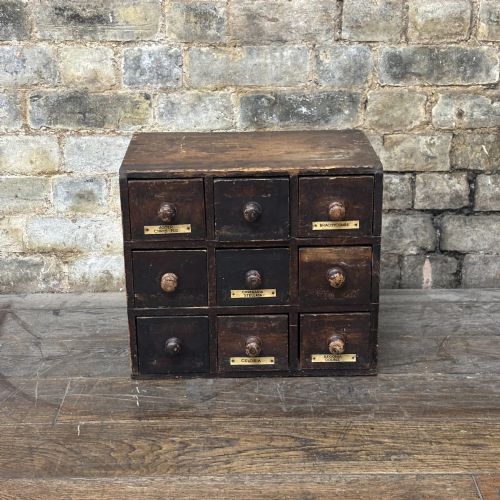
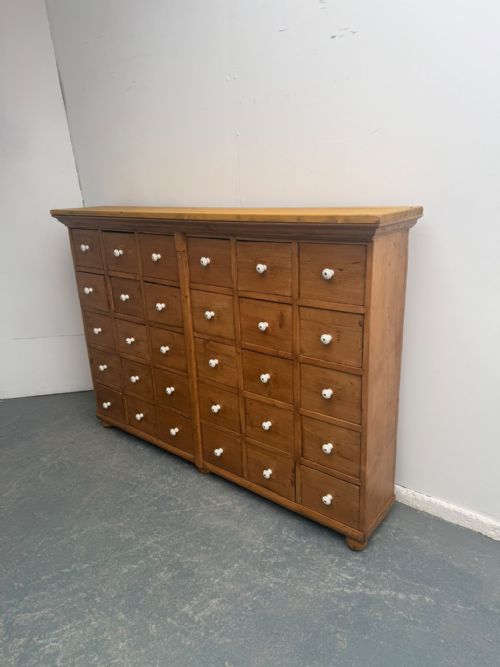
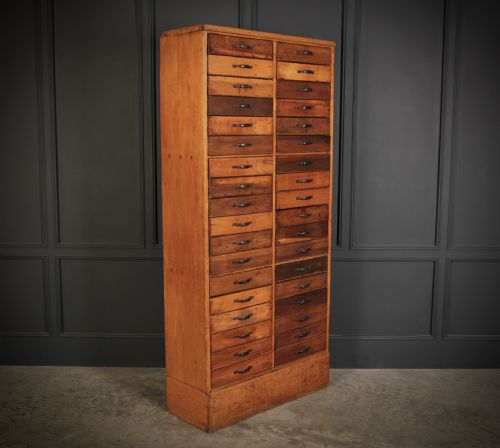
A victorian haberdashery unit is a utilitarian shop fitting built to organise small goods, offering deep banks of drawers for any collector seeking functional period storage.
Victorian Haberdashery Unit
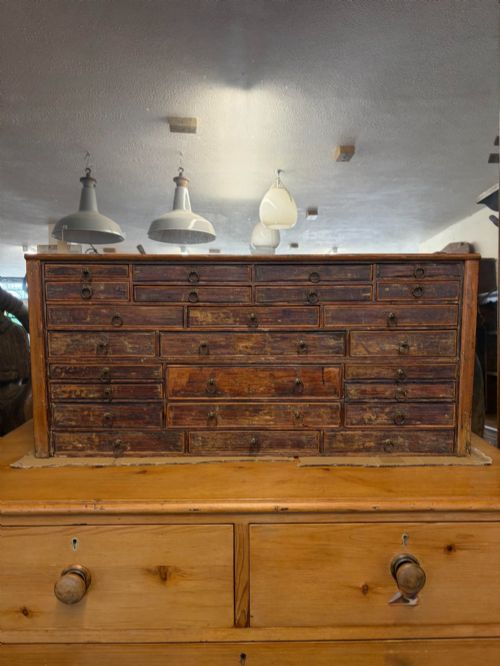
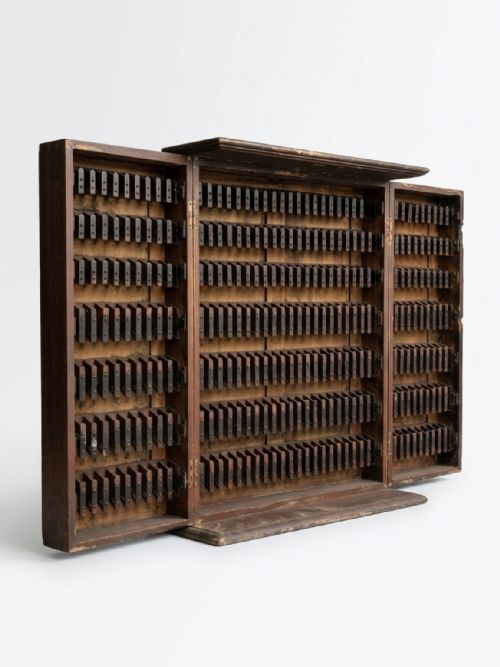
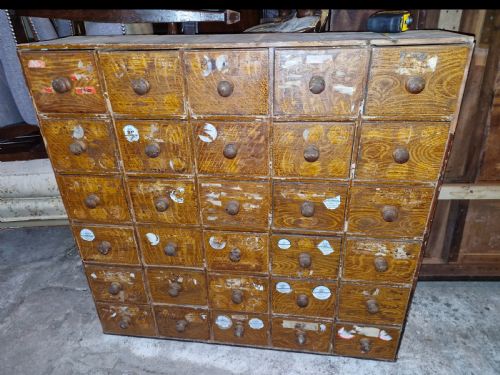
A victorian haberdashery unit typically takes the form of a bank of drawers, a chemist chest, or a shop display cabinet designed for commercial use. The pieces appearing here span the nineteenth century and the Edwardian era, reflecting the robust requirements of nineteenth century retail trades.
Most examples function as multi-drawer storage units or shop fittings, originating from chemists, florists, and general merchants. They provide extensive compartmentalisation through numerous small drawers suited to organising items.
Forms range from large banks containing twenty-five or fifty drawers to smaller wall cabinets and shop display stands. Pine and walnut dominate the construction, often retaining original painted finishes or polished surfaces from their working lives.
How they were made
Construction relies heavily on timber framing, predominantly utilising pine, walnut, fruitwood, and oak for carcass and drawer assembly. These woods provided the necessary durability for heavy daily commercial use in shops and businesses.
Hardware components incorporate brass and cast iron for handles, label holders, and structural support. Cabinet makers combined these metals with glass in display sections to protect merchandise while maintaining visibility.
Listings feature items built from pine, walnut, fruitwood, and oak, alongside brass and iron hardware elements.
What varies in quality
The scale and complexity of the drawer configuration dictate much of the character, with larger banks possessing numerous drawers commanding attention for their visual impact. The presence of original painted surfaces or polished timber grain adds to the integrity of an individual piece.
Provenance and specific commercial origins, such as items associated with named businesses or railway use, influence the historical interest of the furniture. Structural timber selection, from solid walnut to utilitarian pine, marks the distinction between workshop fittings and display items.
Luxmore's of Ilfracombe
The Victorian Haberdashery Unit Glossary
- Bank of drawers
- A large cabinet containing multiple small drawers arranged in rows and columns. These units were standard trade fittings designed to hold stock in quantities.
- Shop fitting
- Furniture built specifically for commercial interiors rather than domestic use. Such pieces prioritized robust construction and practical access over decorative flourish.
- Chemist chest
- A specialised storage unit with numerous small compartments once used by apothecaries for dry ingredients. They frequently feature detailed drawer pulls and narrow proportions.
- Display stand
- A raised fixture utilising wood, brass, or iron to showcase merchandise on a counter or floor. These items balance structural strength with open visibility for customers.
Victorian Haberdashery Unit: Frequently Asked Questions
What is a haberdashery unit?
A haberdashery unit is a commercial storage piece featuring multiple small drawers designed to hold ribbons, threads, and small dry goods in a shop.
These pieces were essential fixtures in nineteenth century retail environments, built to keep large inventories sorted and accessible behind a counter.
How were these cabinets used?
Merchants used them to store and display stock ranging from sewing supplies to chemist items and seeds. Each small drawer held a specific type of merchandise for quick retrieval.
In modern settings, they serve as practical storage for collections, craft materials, or office supplies while retaining their historical appearance.
What woods were used?
Cabinet makers utilised regional and imported timbers depending on the intended use and budget of the shop. Pine served as the primary material for large painted utilitarian banks.
Hardwoods such as walnut, fruitwood, and oak appeared in finer shop fittings and display cabinets intended for customer view.
How to date a piece?
Dating relies on construction methods, timber choices, and hardware styles consistent with the nineteenth and early twentieth centuries. Victorian pieces often show hand-cut dovetailing and heavy timber frames.
Later Edwardian and nineteen-twenties examples introduce standardised machine-cut elements while maintaining the functional aesthetic of earlier trade furniture.