
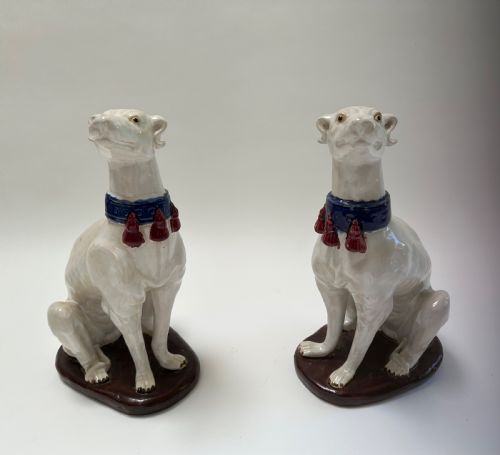


Victorian Greyhound Figurines
Victorian greyhound figurines capture the lean elegance of the hound in earthenware and bronze, offering a striking decorative accent for any room.
Victorian Greyhound Figurines
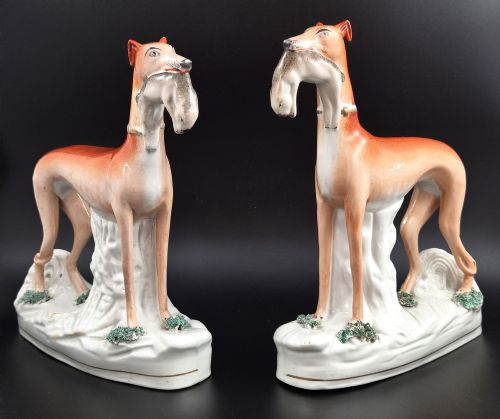
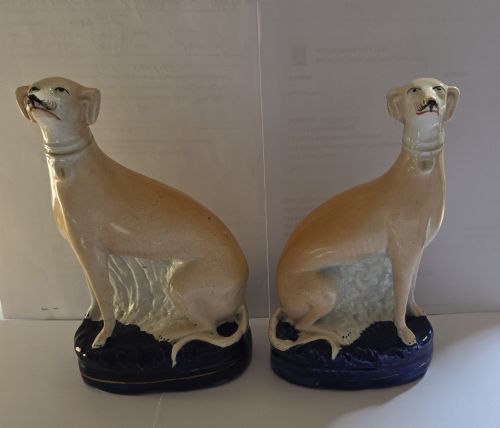
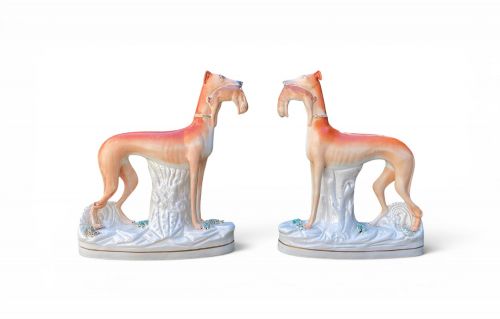
When you search for Victorian greyhound figurines, you are looking at decorative sculptures and ornaments that celebrate the athletic form of the hound, most frequently rendered as pairs of seated dogs. The versions you are most likely to meet on this page belong to the Victorian Staffordshire tradition, often modelled alongside hares or serving practical roles as quill holders and desk accessories.
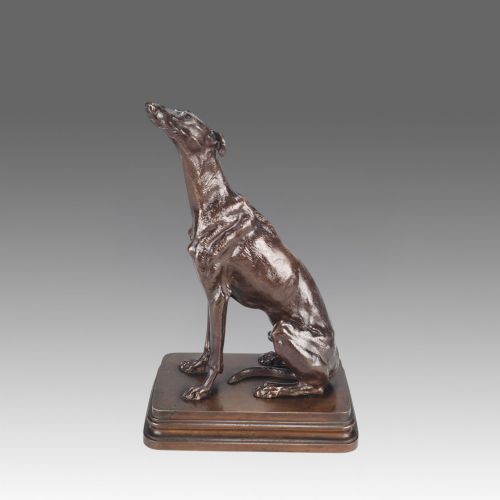
The objects span the nineteenth century, with origins primarily in English pottery traditions as well as French and Italian workshops. Alongside the Staffordshire earthenware figures, the selection includes bronze sculptures influenced by the animalier movement, reflecting diverse interpretations of the breed across different European makers.
Materials and production methods
The earthenware pieces rely on traditional Staffordshire pottery techniques, shaped from clay and finished with lead glaze, enamel paint, and occasional touches of gold leaf. These ceramic figures are often formed as hollow Staffordshire pottery pairs, capturing the texture of the fur and the natural posture of the hunting dogs through moulded detail.
Bronze sculptures utilise metal casting techniques characteristic of the animalier school, capturing muscular definition and anatomical precision in French works. These metal pieces function independently as decorative ornaments and practical items such as paperweights or desk accessories.
Several greyhounds sit patiently beside remarkably oversized hares, apparently ignoring their traditional quarry entirely.
Distinguishing quality in the figures
In bronze pieces, the refinement of the chasing and the fidelity of the cast define the upper tier of the range. The depth and preservation of the original patina further distinguish high-grade animalier sculptures from simpler decorative ornaments.
Alfred Dubucand·Thomas Parr·Joseph Francois Victor Chemin
The Victorian Greyhound Figurines Glossary
- Animalier
- A nineteenth-century artistic movement focusing on the realistic depiction of animals, particularly in bronze sculpture. Practitioners of this style prioritised anatomical accuracy and dynamic movement.
- Staffordshire pottery
- Earthenware produced in the industrial pottery district of Staffordshire, England, famous for popular mantelpiece figures. These ceramic ornaments were widely manufactured for middle-class homes.
- Lead glaze
- A glossy coating applied to pottery before firing, giving ceramics a shiny and waterproof finish. This technique enhances the brightness of the underlying enamel paint.
- Quill holder
- A desk accessory featuring a hollow or fitted base designed to hold writing feathers. In greyhound figures, this functional element is typically incorporated into the ceramic base.
Victorian Greyhound Figurines: Frequently Asked Questions
How were greyhound figurines used?
These pieces served primarily as decorative ornaments on mantelpieces and sideboards within Victorian homes. Certain Staffordshire examples also fulfilled a practical function as quill holders or desk accessories.
Pairs of dogs were frequently arranged symmetrically to frame other decorative objects in the room. Their dual role as art and utility made them popular household items.
How do I identify a Staffordshire greyhound?
Staffordshire figures typically feature earthenware construction finished with lead glaze and hand-painted enamel details. They often appear as seated pairs, sometimes accompanied by hares or integrated with inkwells and quill holders.
Dating relies on stylistic markers from the mid to late nineteenth century, reflecting the prevailing aesthetics of English country pottery.
What is an animalier bronze?
An animalier bronze is a nineteenth-century sculpture dedicated to the realistic portrayal of animals. These works highlight the muscular form and posture of the greyhound through detailed metal casting.
Artists working in this style paid close attention to anatomical precision, resulting in lifelike figures that often doubled as paperweights or desk ornaments.