




Victorian Greyhound Figure
A victorian greyhound figure captures the sleek elegance and athletic intensity of the breed, prized by collectors for shelf presence.
Victorian Greyhound Figure
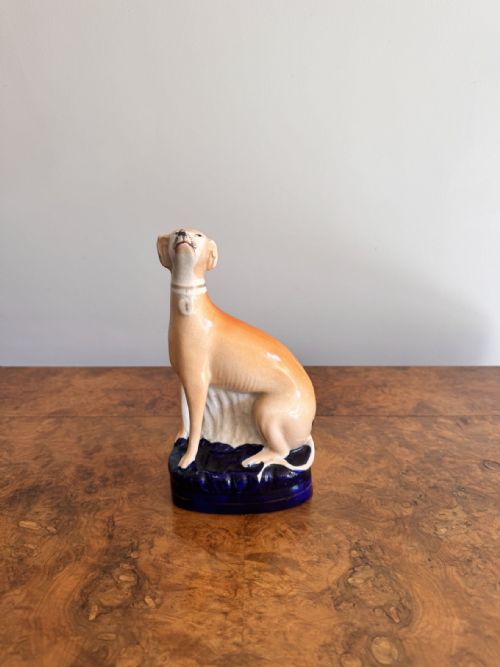
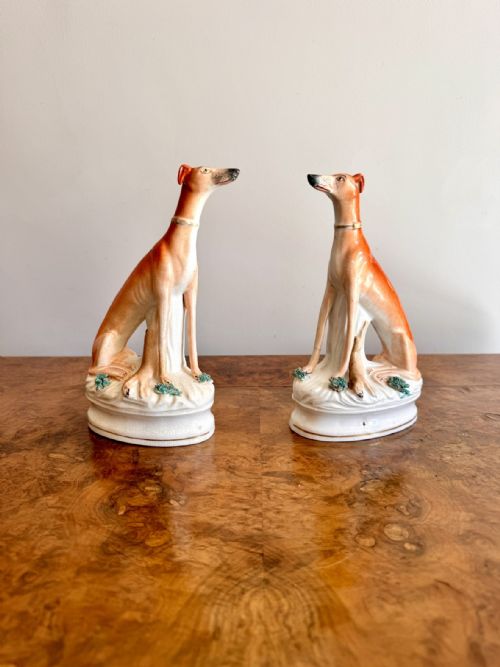
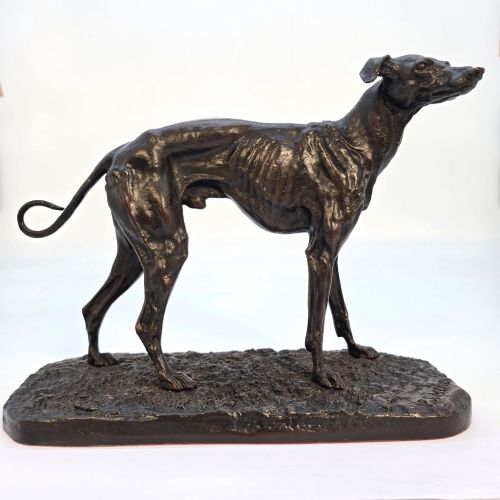
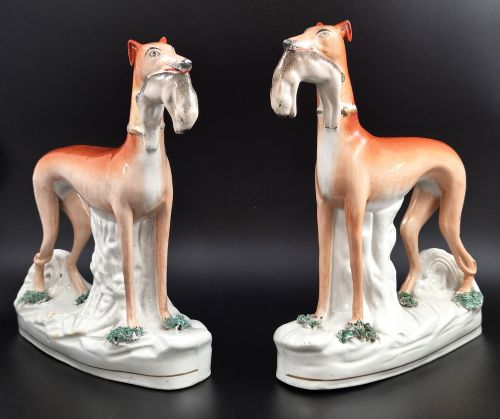
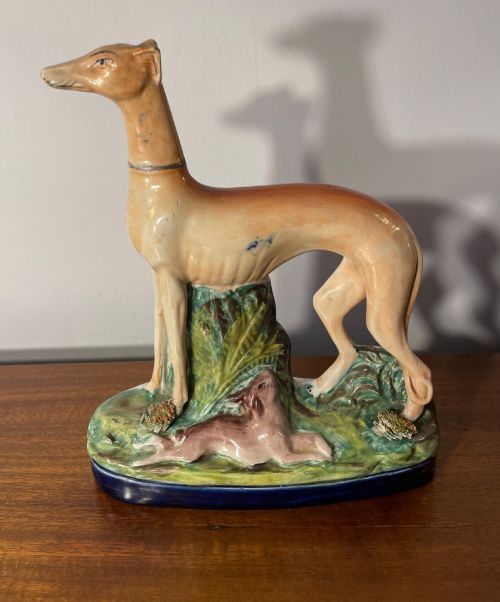
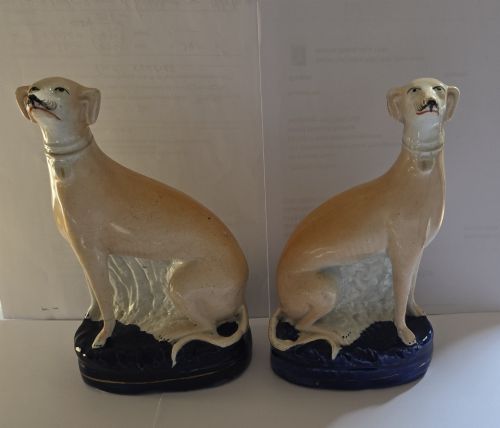
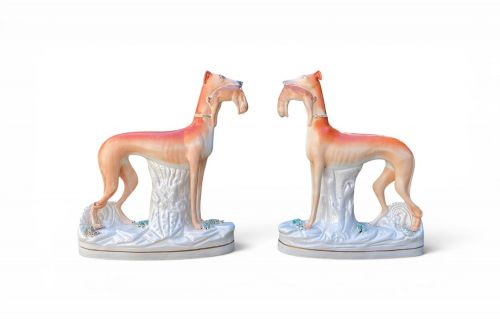
A victorian greyhound figure encompasses both earthenware pottery from Staffordshire potteries and cast bronze animalier sculptures from French and Italian workshops. These pieces frequently appear as pairs depicting seated hounds, often accompanied by hares, or serving functional roles such as inkwells, quill holders, and desk paperweights.
The Staffordshire earthenware examples dominate the selection, ranging from standard mantelpiece ornaments to unusually large figures created in country pottery traditions. French animalier bronzes offer a contrasting interpretation, focusing on muscular tension and realistic texture through skilled metal casting.
Dating primarily from the nineteenth century, these objects reflect both popular domestic ceramic output and high-art continental sculpture. Buyers encounter everything from simple glazed ceramic hounds to elaborate Italian Renaissance Revival models.
How They Were Made
Staffordshire pottery figures are formed from earthenware clay, shaped using press moulds, and finished with lead glaze and hand-applied enamel paint or gold leaf accents. Firing in traditional kilns created the characteristic glossy surface sheen seen on glazed ceramic examples.
Bronzes are produced using the lost-wax casting technique, allowing sculptors to capture fine muscular detail and fur texture before applying patination. These metal sculptures are often mounted on integrated bases or cast as heavy desk accessories.
Victorian Greyhound Figure Retail Price Guide 2026
Typical asking prices for victorian greyhound figure among the pieces listed under this phrase on Sellingantiques today, from the lower quarter to the upper quarter. They describe what is for sale here now, not the wider market.
Listings feature earthenware, bronze, and glazed ceramic materials, spanning periods from the early nineteenth century through the Victorian era.
What Varies in Quality
The naturalism of the modelling separates superior animalier bronzes and Staffordshire earthenware from more basic production pieces. Strong definition in the musculature, facial expression, and the rendering of captured hares dictates the artistic merit of the sculpture.
Originality of the hand-painted enamel and the preservation of lead glaze or gold leaf ornamentation determine the integrity of ceramic figures. Pairs that remain together with matching decoration command stronger visual symmetry than assembled singles.
Functional pieces like inkwells and quill holders rely on the integration of the utilitarian elements into the sculptural form without disrupting the silhouette of the hound.
Pierre Jules Mene·Thomas Parr·Joseph Francois Victor Chemin
The Victorian Greyhound Figure Glossary
- Animalier
- A nineteenth-century artistic movement dedicated to the realistic portrayal of animals, particularly in bronze sculpture. Practitioners focused on capturing the anatomy and movement of subjects like hounds and sighthounds.
- Staffordshire pottery
- Earthenware produced in the industrial potteries of Staffordshire, England, known for domestic mantelpiece ornaments and figure groups. These works utilised local clays and vibrant lead glazes.
- Lead glaze
- A glossy coating containing lead oxide applied to earthenware before firing to seal the porous clay body. This finish provides a reflective sheen characteristic of nineteenth-century ceramics.
- Quill holder
- A desk accessory featuring a modelled figure with hollows or slots designed to hold writing quills or pens. These dual-purpose ceramic pieces combined utility with decorative display.
Victorian Greyhound Figure: Frequently Asked Questions
What are victorian greyhound figures made of?
These figures are primarily fashioned from earthenware pottery with lead glaze and enamel paint, or cast in bronze by continental animalier sculptors.
Pottery examples often feature hand-applied gold leaf details, while bronze pieces rely on patination for their surface finish.
Why were ceramic greyhounds paired with hares?
Hounds were traditionally bred for coursing hares, making the pairing a natural subject for Victorian sporting and domestic pottery.
These compositions celebrated rural pursuits and country sports on the drawing room mantelpiece.
Were these figures used as desk accessories?
Many models served practical functions beyond simple display, doubling as inkwells, quill holders, and heavy paperweights.
These pieces incorporated functional brass or ceramic wells into the base beneath or beside the seated hound.