


Victorian Grand Canal Art
Victorian grand canal art brings the light and architecture of Venice into a room through nineteenth-century oils and watercolours.
Victorian Grand Canal Art
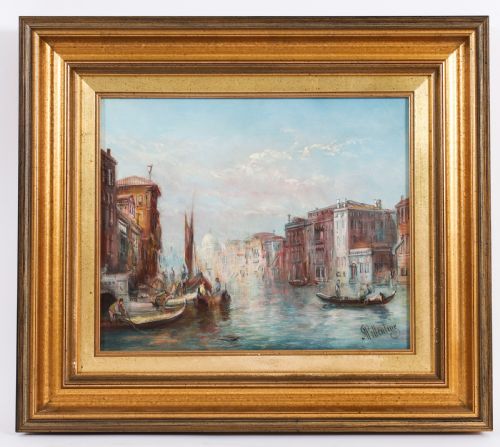
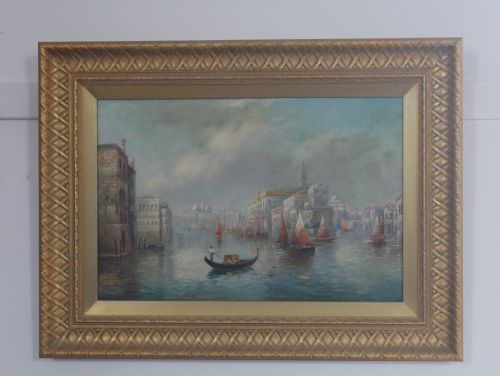
Victorian grand canal art captures the waterways, palaces and historic landmarks of Venice through nineteenth-century British and Italian viewpoints. These pieces depict famous locations such as the Mocenigo Palace, the Santa Maria della Salute, the Doge's Palace and La Dogana.
The works appearing on this page take the form of framed oil paintings on canvas and delicate watercolour paintings on paper. Oil paintings often present broad townscapes of the canals, whereas watercolours focus on atmospheric light and architectural detail.
Originating in the nineteenth century, these paintings align with periods like Victorian fine art, nineteenth-century romanticism and British impressionism. They offer buyers a direct connection to the grand tour tradition of European travel.
How they were made
Painters applied oil and watercolour pigments onto prepared canvas and paper surfaces to build up architectural views and luminous waterways. Canals and skies received thin washes or heavy impasto depending on whether the artist worked in watercolour or oil.
Finished works found protection within wooden frames, frequently incorporating giltwood and gilded wood mouldings under glass for watercolours. These frames enhanced the visual weight of the townscapes and separated the canvas from the room.
Styles span Victorian fine art, nineteenth-century romanticism, maritime scenes and British impressionism.
What varies in quality
Quality rests in the handling of Venetian light and the precise rendering of complex architecture like the Santa Maria della Salute or the Ducal Palace. Skilled painters balanced the glassy reflection of the water against the solid stone of the palazzos with confident brushwork.
The depth of the artist's palette and the fidelity of the perspective define the upper tier of these townscapes. Weaker examples offer stiffer compositions and heavier, less nuanced handling of the oil on canvas or paper.
Alfred Pollentine·F J Aldridge·William Raymond Dommersen·Benedetto Salviati·Hercules Brabazon Brabazon·Henry Wimbush·Jane Vivian·J Yates
The Victorian Grand Canal Art Glossary
- Townscape
- A painting that depicts an urban scene, specifically historic buildings, canals and public squares in Venice. These works focus on architectural accuracy combined with atmospheric weather effects.
- Giltwood
- Wood covered with a thin layer of gold leaf or gold paint used extensively for nineteenth-century picture frames. It adds a warm reflective border that complements oil paintings.
- Impressionism
- A style of painting emphasising small, thin yet visible brush strokes and accurate depiction of light. British examples from this period capture the changing moods of the Venetian lagoon.
- Watercolour
- Pigments suspended in a water-based solution applied to paper to create translucent washes of colour. It requires swift execution to preserve the luminosity of the paper underneath.
Victorian Grand Canal Art: Frequently Asked Questions
Who painted these Venetian views?
These works come from nineteenth-century artists such as Alfred Pollentine, Jane Vivian and William Raymond Dommersen who travelled to Italy.
Their paintings record the iconic palaces and waterways seen during the Victorian era.
Are these pieces oils or watercolours?
The selection includes both oil paintings on canvas and delicate watercolour paintings on paper.
Oils provide rich surface texture while watercolours offer luminous atmospheric effects.
Which landmarks appear most often?
Artists frequently painted the Santa Maria della Salute, the Doge's Palace, La Dogana and the Mocenigo Palace along the Grand Canal.
These subjects formed the core repertoire for artists painting Venetian townscapes.
How should I display them?
Keep oil paintings and watercolours away from direct sunlight to protect the pigments and canvas or paper.
Ensure frames with giltwood and glass hang securely on walls with stable humidity.