
Victorian Gothic Side Seat
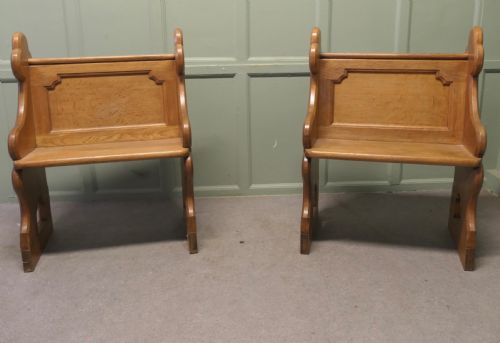
A victorian gothic side seat brings architectural carving and ecclesiastical seriousness into domestic rooms.
Victorian Gothic Side Seat
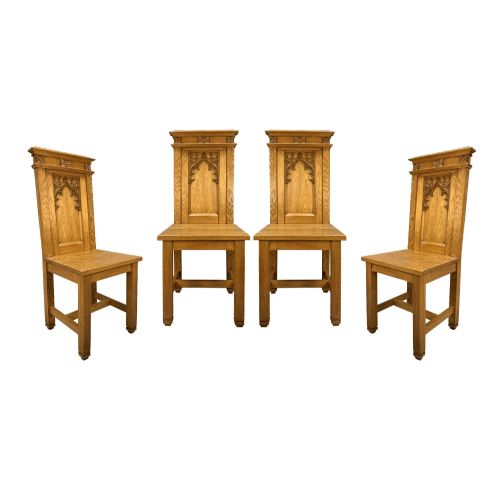
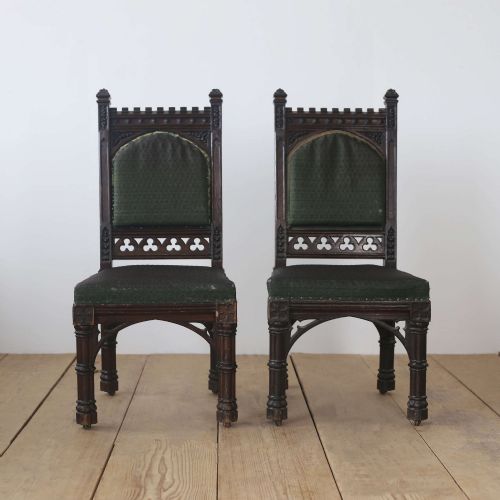
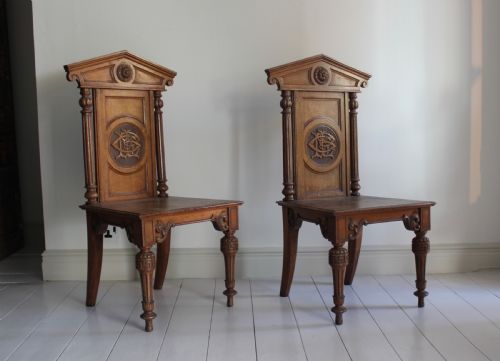
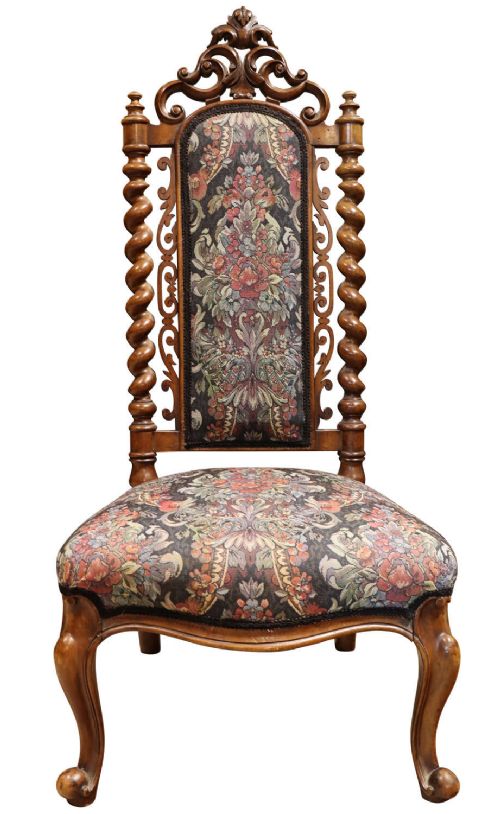
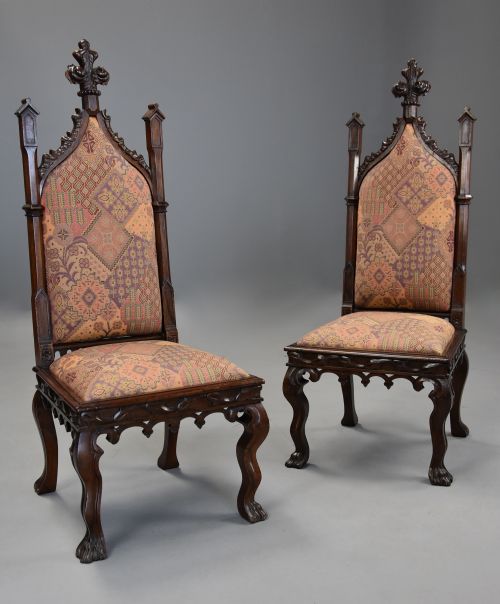
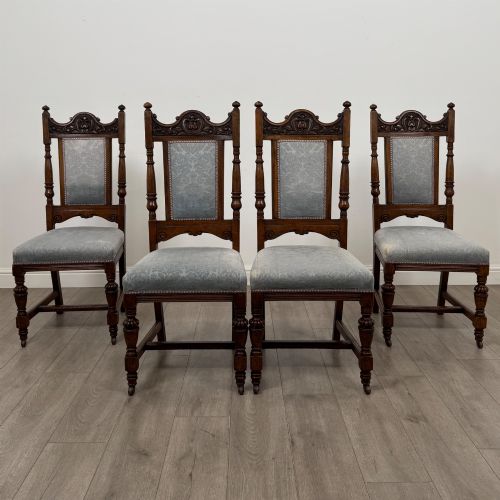
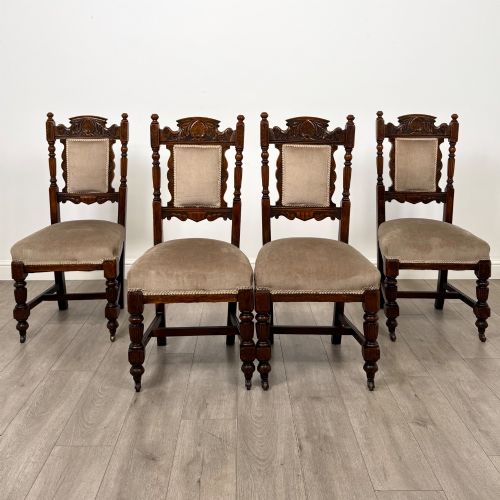
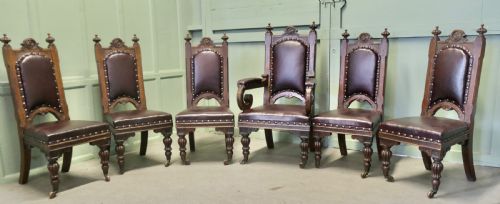
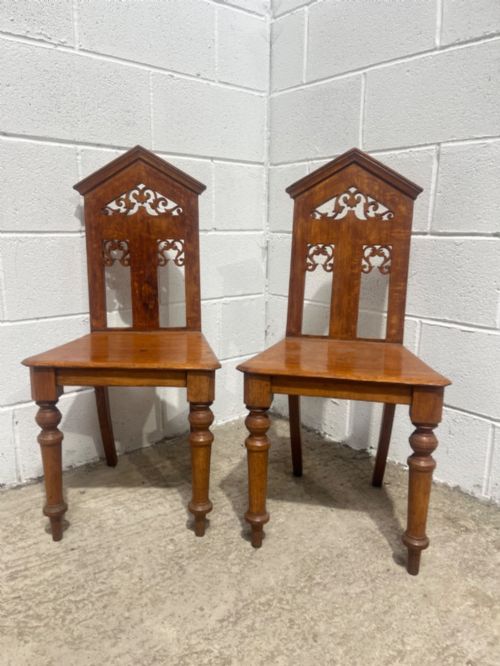
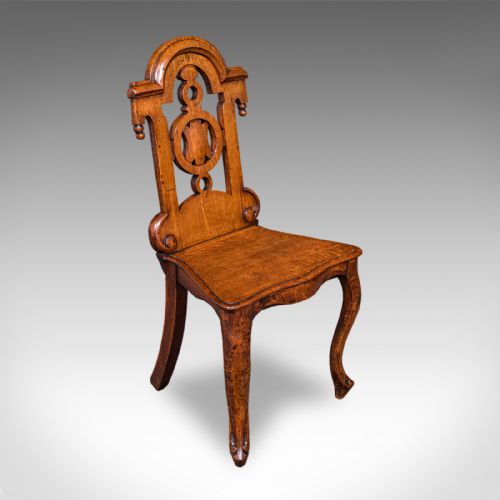
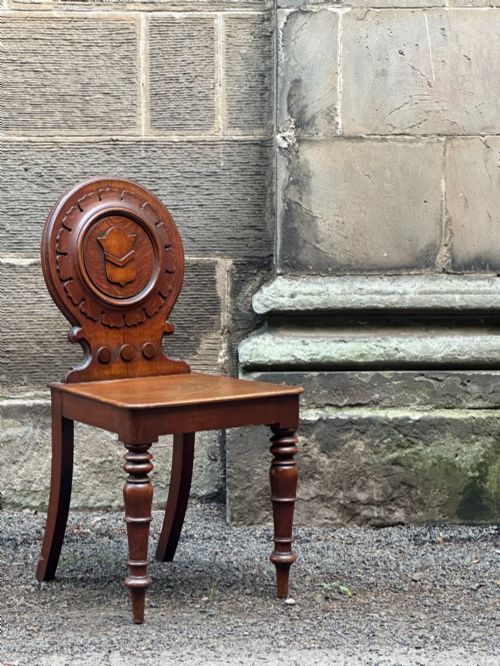
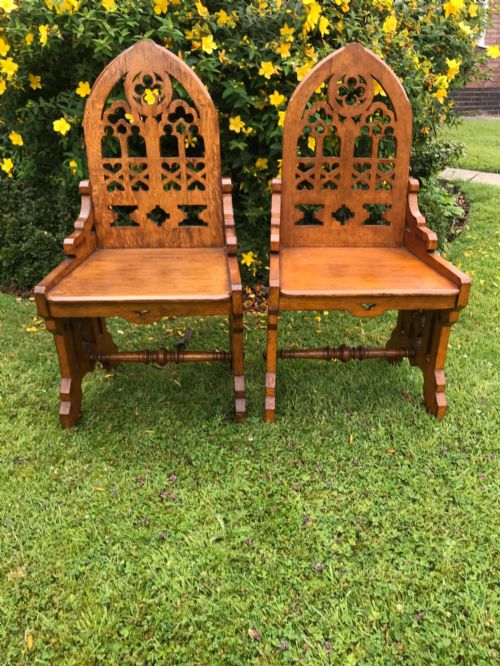
A buyer seeking a victorian gothic side seat encounters pieces spanning the nineteenth century, most frequently taking the form of hall chairs, dining chairs, or occasional seats in oak, walnut, mahogany, and rosewood. These designs draw heavily on Gothic Revival, Jacobean Revival, and ecclesiastical idioms, often manifesting with high backs, heraldic shield motifs, and carved panelling.
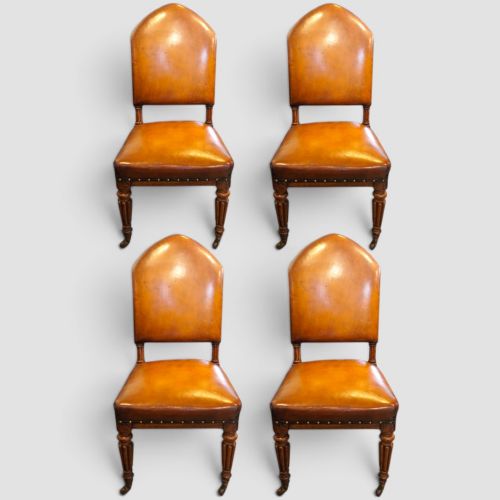
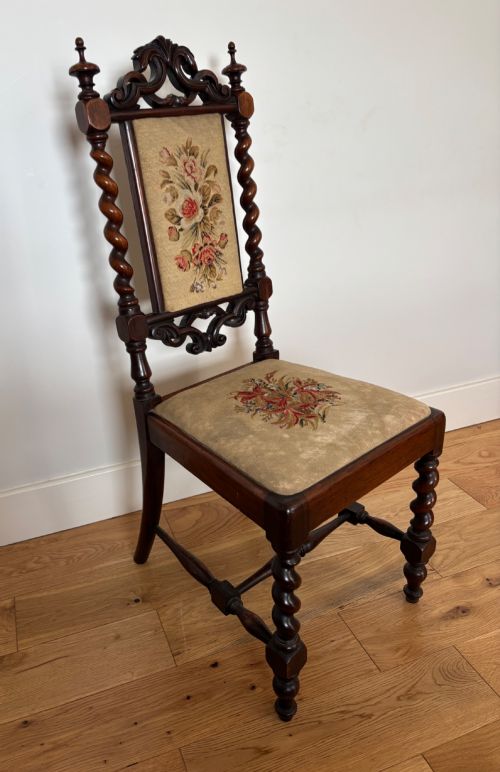
The selection ranges from single pieces and pairs to larger sets intended for dining rooms or reception halls. Alongside standard timber seats, examples upholstered in tapestry fabric, leather, and Spanish leather appear, reflecting the diverse domestic and institutional commissions of the period.
Originating predominantly from English workshops, pieces also surface from Scottish makers, Channel Islands cabinet makers, and specialised ecclesiastical suppliers. Forms extend from simple carved timber hall chairs to dedicated prayer chairs and child's seats.
Materials and construction methods
Cabinet makers relied principally on dense hardwoods such as oak, walnut, mahogany, and rosewood to support the deep relief carving characteristic of the Gothic Revival style. Timber components were joined using traditional methods to withstand the structural demands of high-backed and heavily carved designs.
Upholstered variants incorporated materials like leather, Spanish leather, and tapestry fabric, secured to the timber frames with brass detailing. Makers also utilised brass for maker's plates, engraved plaques, and structural reinforcement on institutional commissions.
Specific seating survived from St Paul's Cathedral, stamped directly with the name of the London landmark.
Distinctions in quality and execution
Quality rests upon the crispness and depth of the architectural carving, particularly on shield backs, pierced splats, and high-backed panels. Pieces originating from documented workshops or bearing maker's stamps and institutional provenance demonstrate superior craftsmanship.
The selection of timber grain and the integrity of applied upholstery, whether heavy leather or woven tapestry, separate standard utility seating from high-status commission pieces designed for grand halls or cathedrals.
W A Willcocks·Gillows of Lancaster·R Whytock of Edinburgh
The Victorian Gothic Side Seat Glossary
- Gothic Revival
- An architectural and decorative movement drawing inspiration from medieval forms, pointed arches, and ecclesiastical motifs. This aesthetic dominates the ornamentation of nineteenth-century seating.
- Hall Chair
- A timber seat intended for an entrance hall, typically featuring a solid wooden back with carved heraldic shields or crests. These chairs prioritized visual impact and durability over cushioned comfort.
- Prie-Dieu
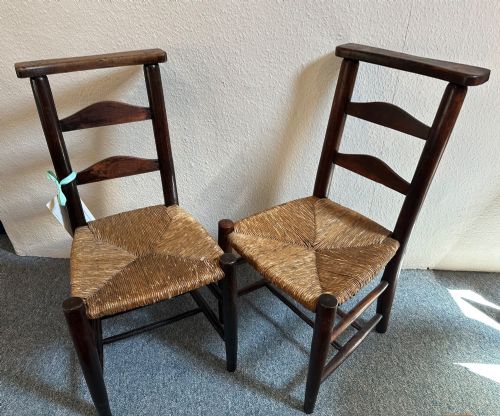
- A low devotional prayer chair featuring a distinctively shaped upper rail designed for kneeling or leaning during worship. These pieces often incorporate rich woodwork and upholstered panels.
- Shield Back
- A chair back shaped or carved to resemble a heraldic shield, frequently embellished with family crests or tracery. This design appears commonly on nineteenth-century hall seating.
- Jacobean Revival
- A style reviving seventeenth-century British furniture characteristics, marked by heavy turned legs, rectilinear framing, and geometric carving. It frequently blends with Gothic elements in Victorian dining sets.
Victorian Gothic Side Seat: Frequently Asked Questions
Where were these chairs originally placed?
These pieces were designed for entrance halls, libraries, dining rooms, and ecclesiastical settings such as cathedrals and churches.
Institutional pieces often bore specific property marks, while domestic versions served as formal seating in reception areas.
How do I identify a Gothic Revival chair?
Look for architectural motifs including pointed arches, quatrefoils, trefoils, and deep relief carved tracery. High backs and heraldic shield elements are also strong indicators.
Timbers are typically heavy hardwoods like oak or walnut, finished with dark wax or polish.
Are upholstered seats original?
Many chairs feature period-appropriate materials such as leather, Spanish leather, or tapestry fabric fixed with brass tacks. Some timber hall chairs were intentionally made without upholstery for ease of maintenance.
Checking the attachment methods and wear patterns helps determine the age of the fabric.
What is the difference between a hall chair and a dining chair?
Hall chairs generally feature solid wooden seats and high, decorative backs designed for visual presence rather than prolonged sitting. Dining chairs are usually built as sets for comfort around a table.
Dining variants frequently incorporate padded leather or fabric seats.