

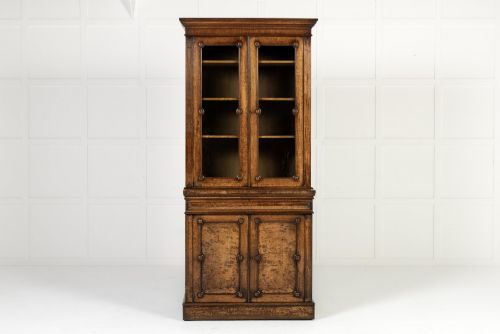


Victorian Gothic Oak Bookcase
When you search for a victorian gothic oak bookcase, you are looking for substantial library furniture defined by pointed arches, heavy carving, and dark timber.
Victorian Gothic Oak Bookcase
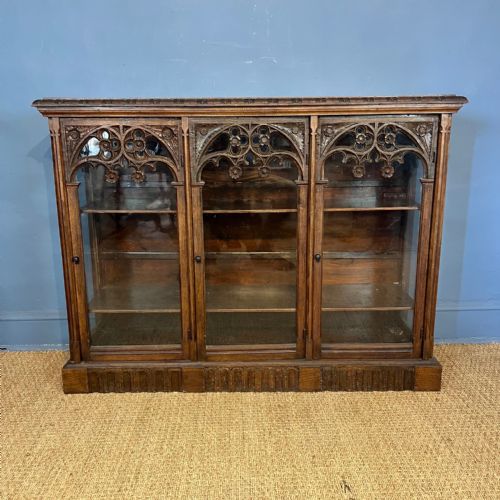
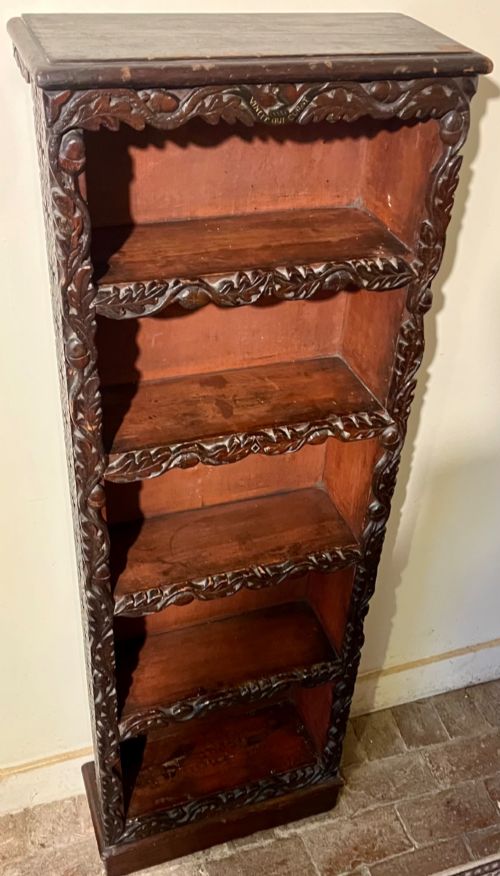
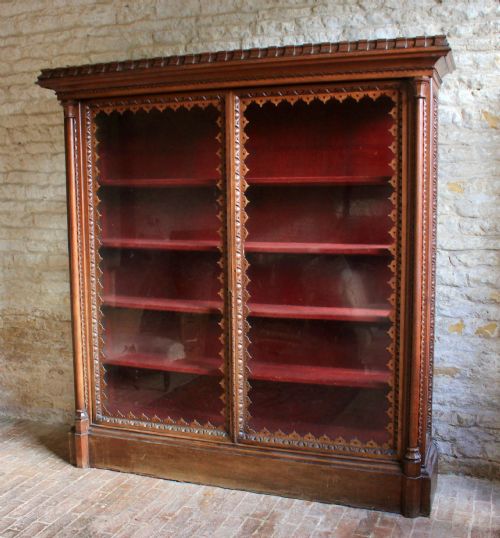
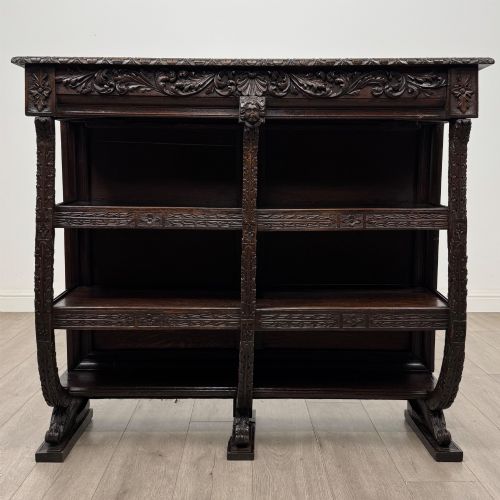
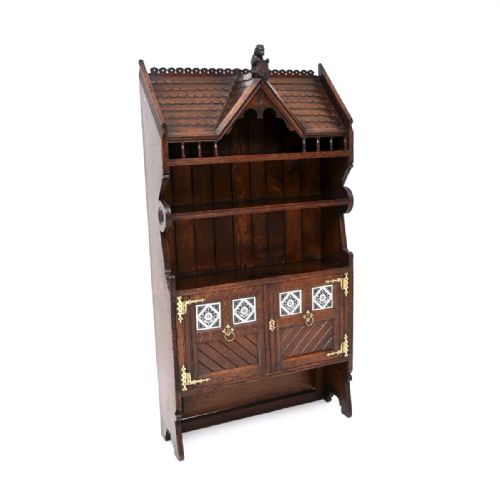
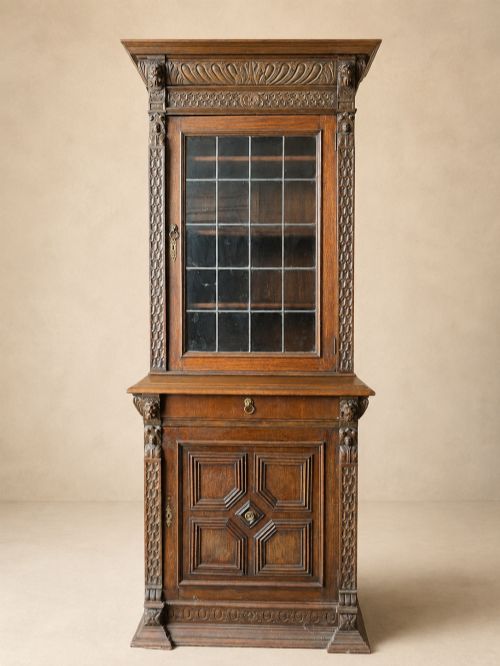
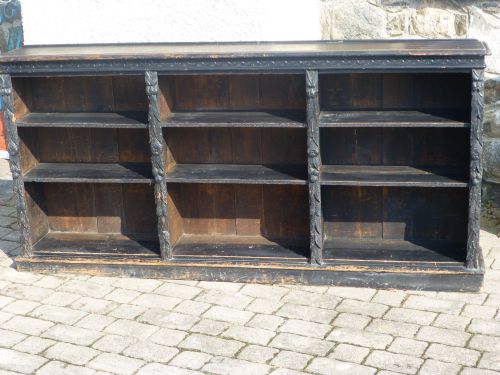
A victorian gothic oak bookcase is a substantial piece of nineteenth-century library furniture, built to house large volumes and scholarly collections. These pieces range from tall library cabinets with glazed doors to lower openfront formats with adjustable shelves.
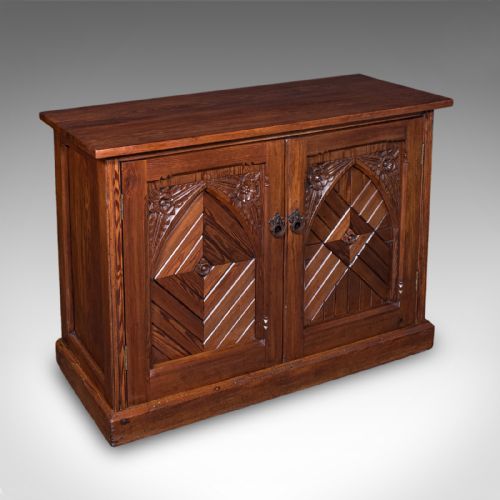
The aesthetic borrows heavily from medieval ecclesiastical architecture, featuring pointed arches, tracery, and occasionally carved grotesque faces known as green men. On this page, you will frequently encounter tall breakfront designs alongside smaller alcove cabinets produced across the Victorian era.
Origins span English, Scottish, and continental workshops, with dates centring around the 1880s alongside earlier mid-century examples. The underlying timber is almost universally oak, sometimes finished in ebonised variants or contrasted with pollard oak sections.
How they were made
Cabinet makers relied primarily on solid oak and pollard oak, often accented with ebonised detailing to heighten the architectural contrast of the gothic motifs. Lead and brass featured frequently in the construction of glazed doors and panel work.
Stained glass panels occasionally formed the upper doors of larger cabinets, drawing directly from ecclesiastical window designs. Carving was executed by hand, ranging from shallow fret-cut tracery to deep relief work depicting foliage and figural carvings.
Victorian Gothic Oak Bookcase Retail Price Guide 2026
Typical asking prices for victorian gothic oak bookcase among the pieces listed under this phrase on Sellingantiques today, from the lower quarter to the upper quarter. They describe what is for sale here now, not the wider market.
Several survival cabinets bear later sign-writing for German beer cellars and inns, having transitioned from private libraries to commercial hospitality.
What varies in quality
Quality in a victorian gothic oak bookcase rests upon the ambition of the architectural detailing and the crispness of the hand carving. Pieces featuring deep relief work, green man masks, and breakfront cornices represent the upper tier of production.
The choice of secondary timbers and interior fittings also separates standard workshop output from exceptional commissions. Adjustable shelf mechanisms, original brass hardware, and intact leaded or stained glass indicate superior original manufacture.
John Moyr Smith·Richard Bridgens
The Victorian Gothic Oak Bookcase Glossary
- Breakfront
- A piece of furniture where the central section projects forward from the side sections. This layout creates depth and breaks up the linear profile of large library pieces.
- Green Man
- A sculptural architectural motif representing a face carved from or entwined with leaves and vines. It appears frequently on nineteenth-century gothic revival woodwork.
- Tracery
- Openwork stonework or woodwork elements forming patterns of intersecting lines, borrowed from gothic cathedral windows. Cabinet makers translated this directly into glazed door frames.
- Pollard Oak
- Timber taken from trees that have been pruned close to the trunk to promote a dense branch growth, creating a highly figured, swirling grain pattern.
- Ebonised
- Timber treated with chemical stains or dark finishes to imitate the appearance of ebony. This technique was popular in nineteenth-century decorative arts to create stark contrasts.
Victorian Gothic Oak Bookcase: Frequently Asked Questions
How do I adjust the shelves?
Most nineteenth-century bookcases utilise wooden ratchets, brass shelf studs, or vertical slots cut into the interior sides. These systems allowed owners to alter shelf heights for varying folio sizes.
Original mechanisms should move smoothly within the cabinet lining. Care must be taken when repositioning older oak boards to avoid scoring the interior finish.
Are these bookcases suitable for modern books?
These pieces were built to house heavy nineteenth-century volumes, meaning the shelf depths and structural framing easily support modern hardbacks and art books. The substantial oak construction prevents sagging under heavy loads.
Many surviving examples feature adjustable shelving, making them adaptable for mixed paperbacks and large coffee table books. Ensure the room has stable humidity to protect the antique timber.
How do I distinguish mid-Victorian from late-Victorian pieces?
Mid-Victorian examples from the 1850s and 1860s often display heavier architectural proportions and simpler geometric tracery. Carving tends to be deep and focused on structural mass.
Late-Victorian pieces produced towards the 1890s frequently incorporate aesthetic movement influences or lighter fret-cut details. Documentation or stylistic markers help narrow down the decade of manufacture.