
Victorian Gothic Hall Seating
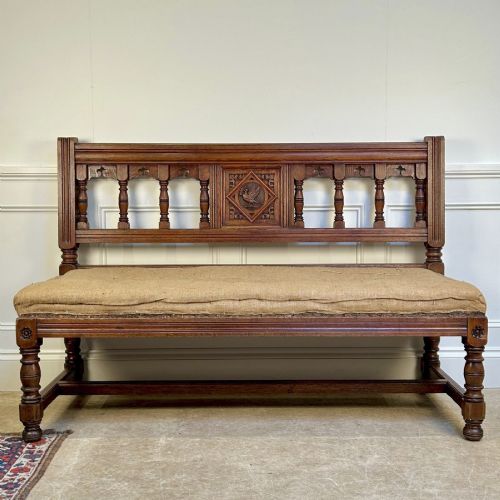
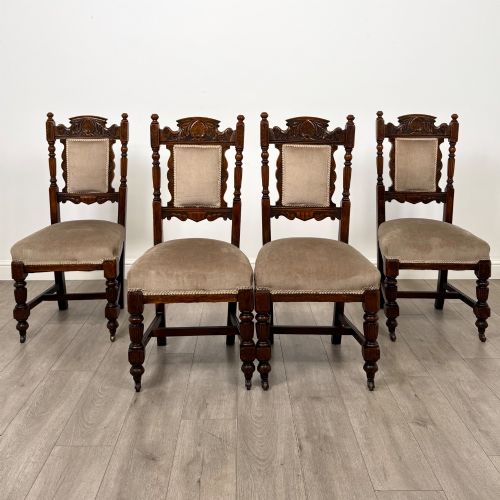
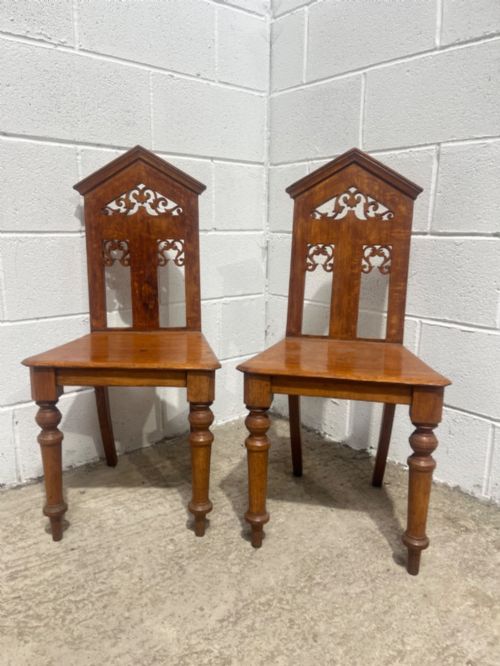
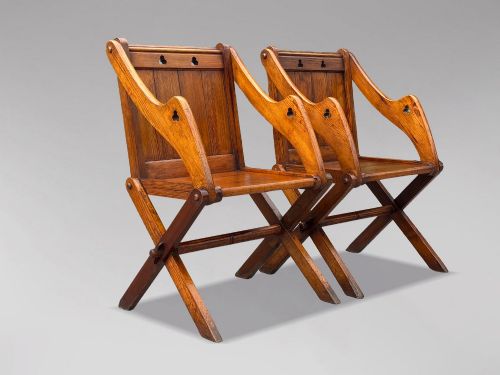
Victorian gothic hall seating comprises heavy architectural benches, settles and chairs built to anchor a grand entrance with dark timber and pointed arches.
Victorian Gothic Hall Seating
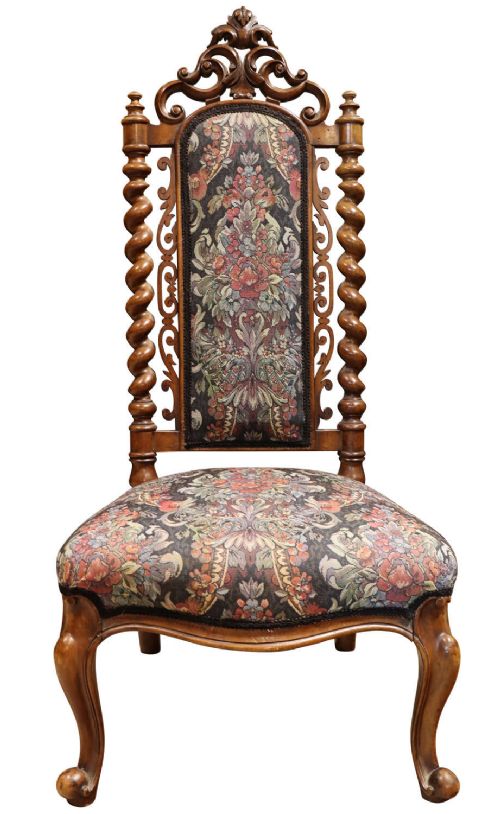
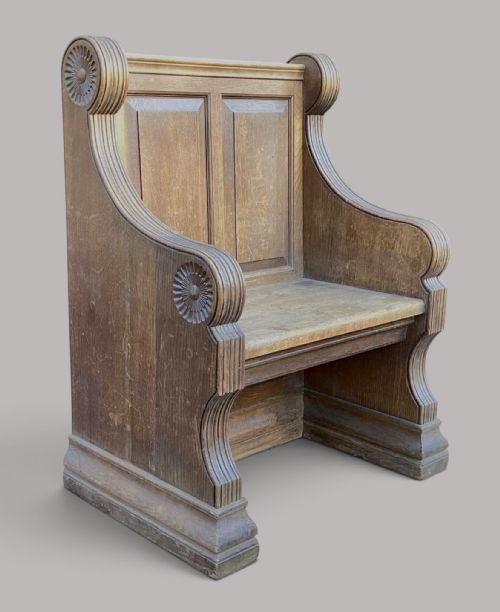
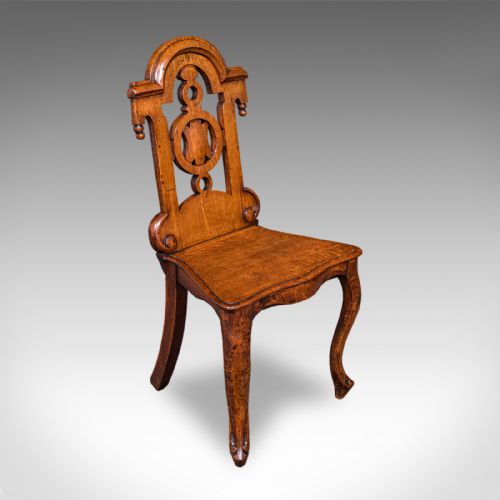
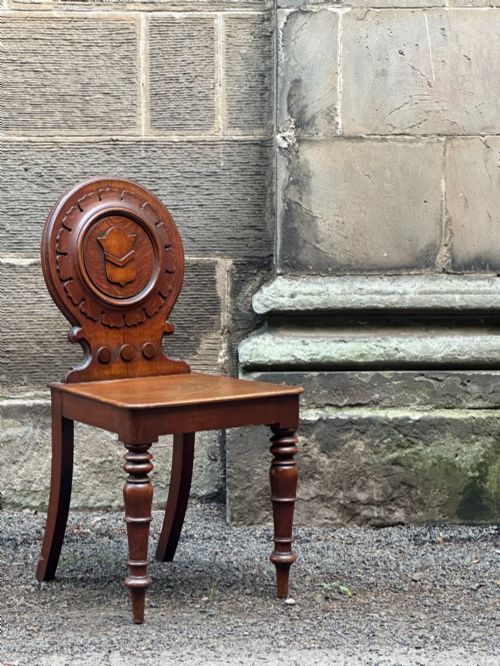
Victorian gothic hall seating centres on substantial timber furniture designed to furnish nineteenth-century entrance halls, vestibules and ecclesiastical spaces. Buyers searching for this phrase most frequently encounter robust oak hall chairs, heavy benches and architectural settles dating from the middle to late decades of the nineteenth century.
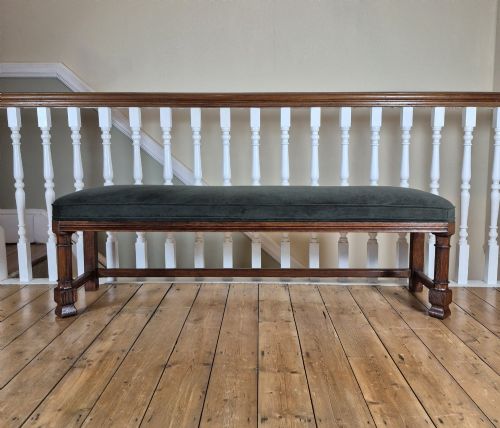
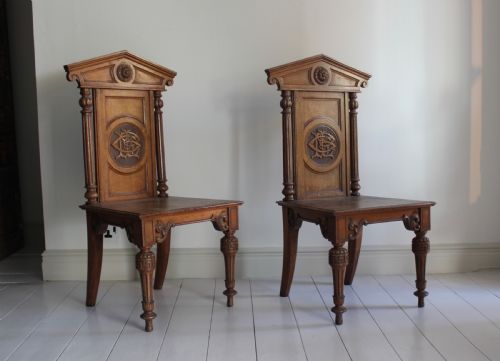
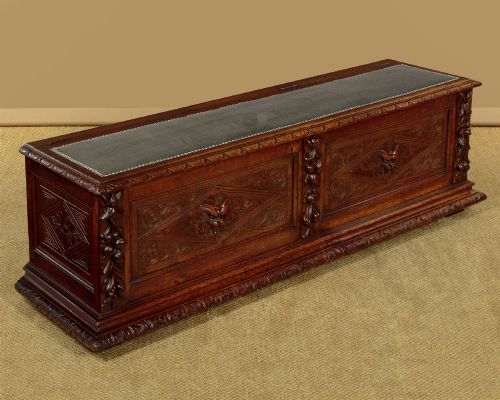
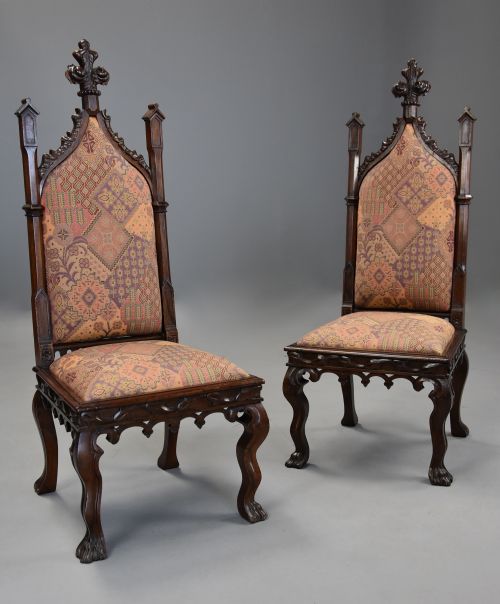
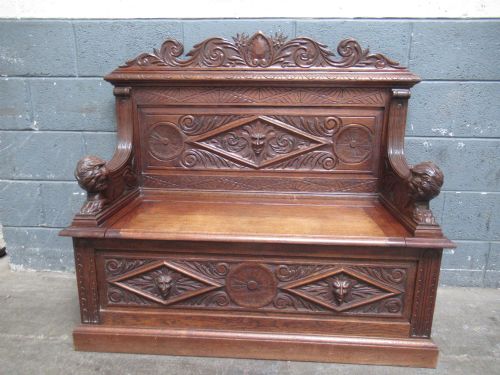
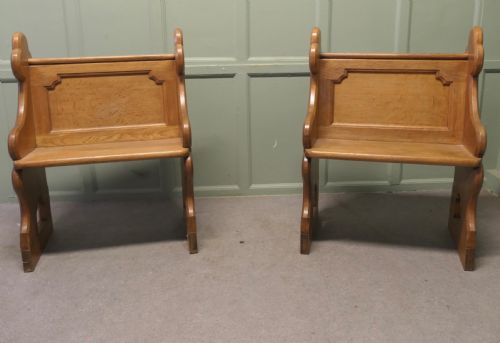
The surviving forms range from simple pairs of high-backed side chairs featuring heraldic shields to large church pews, monks benches and storage settles with lift-up seats. Many pieces display distinct stylistic crossovers, blending strict Gothic Revival pointed arches with Jacobean revival carving or ecclesiastical details.
Materials and Construction
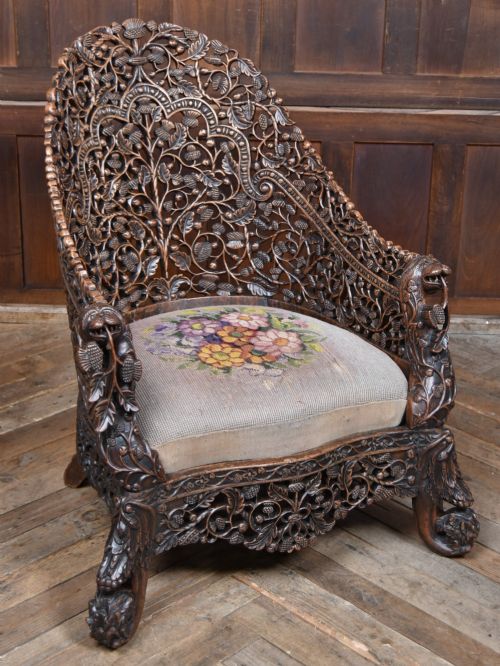
Makers relied primarily on solid English oak, supplemented by walnut, mahogany and pitch pine, joined with traditional pegged mortise and tenon construction to withstand heavy daily use. Surfaces received deep hand-carving displaying linenfold panels, tracery, quatrefoils and occasionally applied brass hardware.
Upholstered variants incorporate durable textiles, leather and tapestries fastened with brass tacks to padded seats. Structural timber frames were frequently left with a dark, polished finish to emulate medieval church furniture.
Listings feature nineteenth-century oak, mahogany, rosewood and pitch pine across various seating forms.
Craftsmanship and Proportion
Quality in these pieces rests on the crispness of the timber carving and the architectural integrity of the frame. Superior examples display deeply undercut mouldings and well-balanced proportions rather than flat, machine-cut decoration.
The choice of primary timber significantly affects the standing of a piece, with dense, figured oak and rosewood commanding greater attention than secondary softwoods. Maker attributions or stamps from established cabinet makers elevate certain items above standard utilitarian hall furniture.
Gillows·W.A. Willcocks
The Victorian Gothic Hall Seating Glossary
- Gothic Revival
- An architectural and design movement drawing inspiration from medieval ecclesiastical forms, featuring pointed arches, trefoils and heavy vertical lines. This style dominates the ornamentation found on nineteenth-century entrance furniture.
- Settle
- A wooden bench with a high solid back, armrests and frequently a box seat or chest incorporated beneath the hinged lid. They were traditionally placed in drafts and entryways to block cold air.
- Monks Bench
- A multifunctional piece of furniture featuring a hinged back that folds down flat to convert the seat into a small table. These items combine seating with concealed storage compartments.
- Tracery
- Architectural stonework ornamentation adapted into wooden panel carving, resembling intersecting ribs or geometric patterns. It provides the characteristic window-like patterns seen on chair backs.
- Linenfold
- A style of wood panel carving designed to resemble folded parchment or linen fabric. It appears frequently on the lower panels of nineteenth-century benches and settles.
Victorian Gothic Hall Seating: Frequently Asked Questions
How were these benches used originally?
Victorian hall seating served practical purposes in grand homes, municipal buildings and churches where visitors waited or removed outer garments. They provided sturdy seating and frequently incorporated hidden storage beneath hinged seats for boots or accessories.
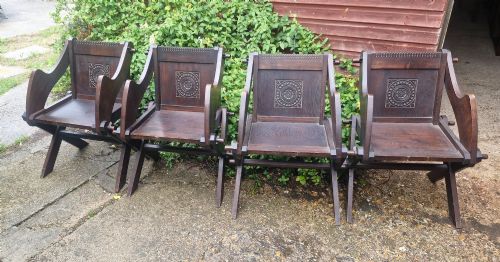
In ecclesiastical contexts, similar benches and Glastonbury chairs furnished chapels, vestries and cathedrals for clergy and congregations. Their heavy construction ensured they remained firmly in place within large, draughty stone corridors.
Where should I place hall seating at home?
These architectural pieces work best in spacious entryways, boot rooms or wide corridors where their substantial depth and high backs can be properly appreciated. Placing a heavy oak bench against a plain wall allows the carved tracery and panel details to stand out clearly.
They also function effectively in large living rooms or libraries as statement seating, particularly versions with storage boxes. Ensure the floor space can accommodate the physical weight and deep footprint of nineteenth-century timber frames.
How do I identify the period of a chair?
Dating relies on examining the timber species, construction marks and the specific combination of revival styles used in the carving. Pieces from the mid-nineteenth century often display crisp Gothic Revival arches, while items from later decades lean toward Jacobean revival motifs or simpler ecclesiastical forms.
Hand-cut peg joints, timber shrinkage patterns and original hardware offer reliable clues to nineteenth-century manufacture. Maker stamps or labels, when present, provide exact workshop attributions.
What is the difference between a pew and a settle?
A church pew is an open-backed or bench-form seating structure designed for fixed rows in ecclesiastical settings, often constructed from pitch pine or oak with simple ends. They lack the enclosed, draft-excluding arms and solid panel back typical of domestic furniture.
A settle is an enclosed wooden bench featuring high solid backs, solid side arms, and frequently a hinged box seat underneath. This design specifically sheltered occupants from cold drafts in unheated entrance halls.