

Victorian Gothic Carved Desk
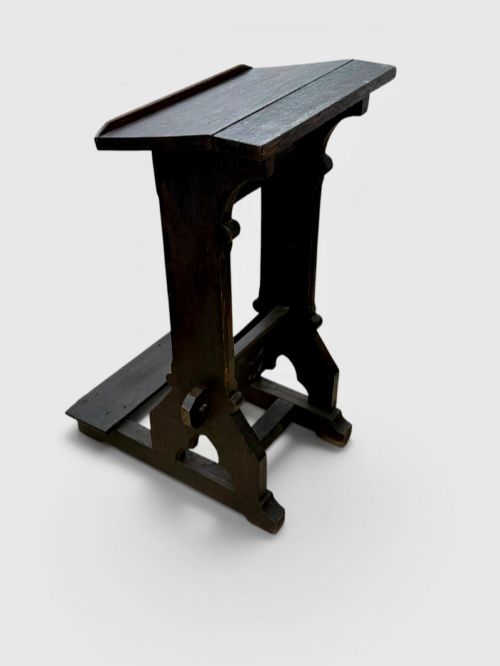
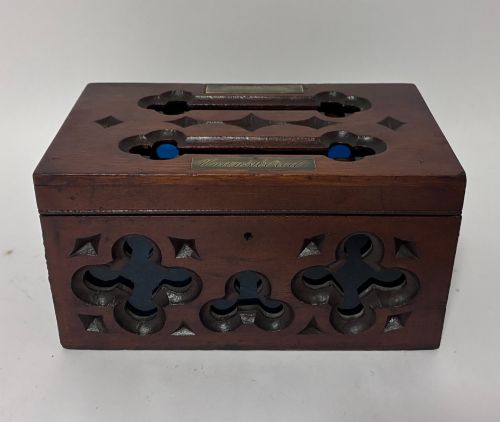
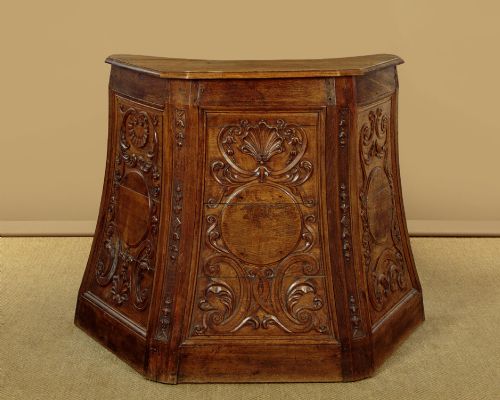
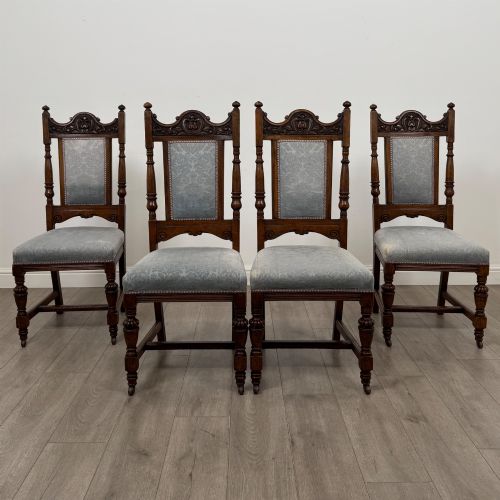
These heavy oak victorian gothic carved desk examples bring monastic timber and robust ecclesiastical carving straight into a modern study.
Victorian Gothic Carved Desk
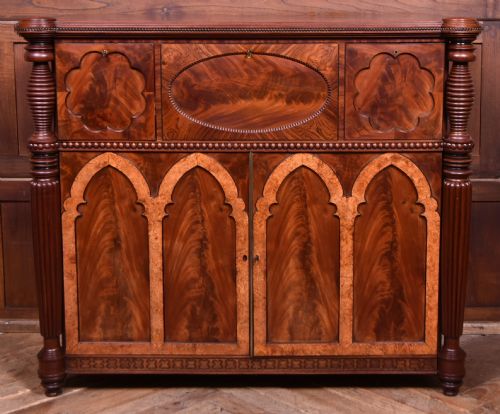
A victorian gothic carved desk brings together nineteenth-century revivalism and heavy timber construction, drawing heavily on medieval and ecclesiastical architecture. These pieces range from kneehole writing tables to partners desks and revolving desk chairs, constructed primarily during the nineteenth century.
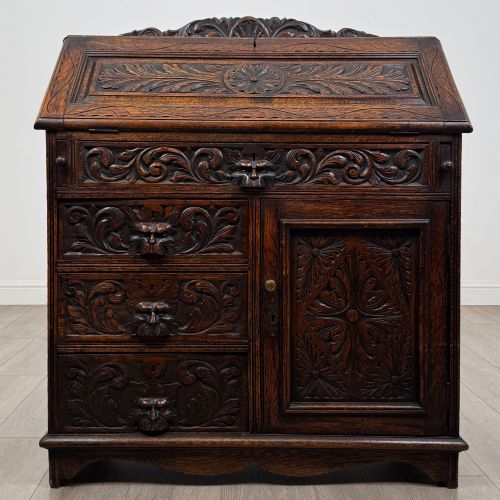
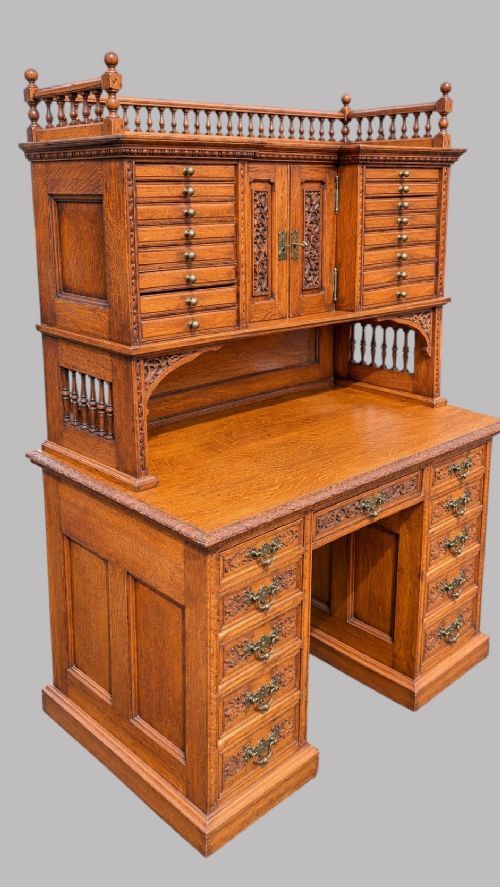
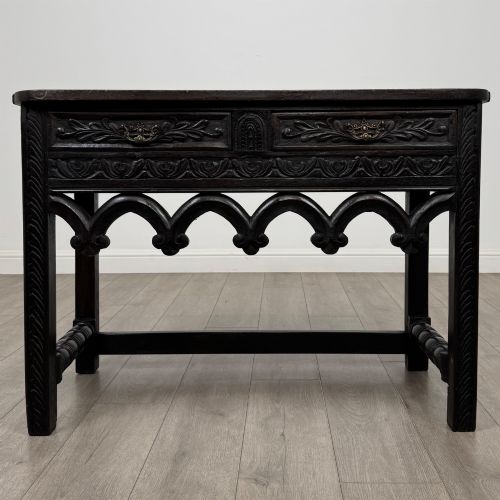
The version most commonly met on this page is the solid oak kneehole desk or pedestal writing table, often featuring deep relief carving such as green man motifs or lion heads. These forms reflect the Victorian Gothic Revival style, pairing utility with dark, figured wood and structural solidity.
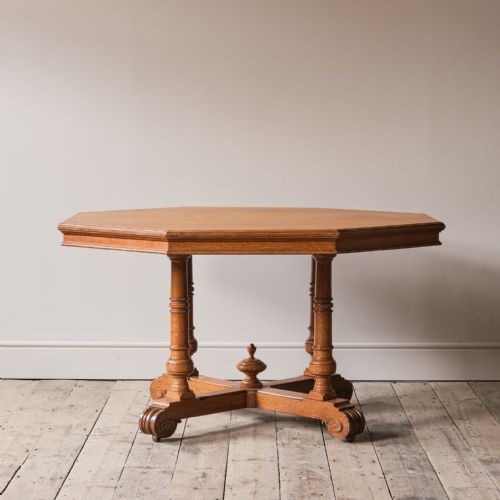
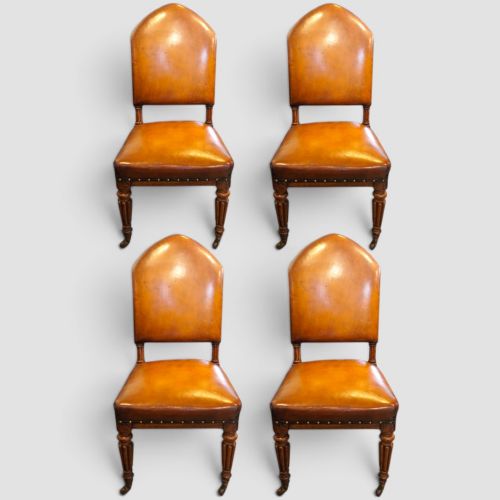
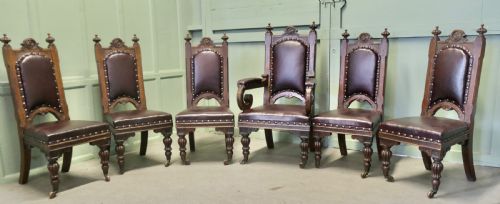
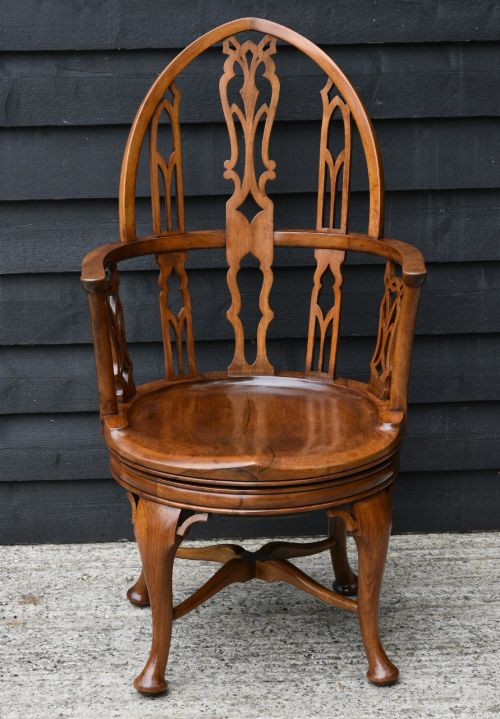
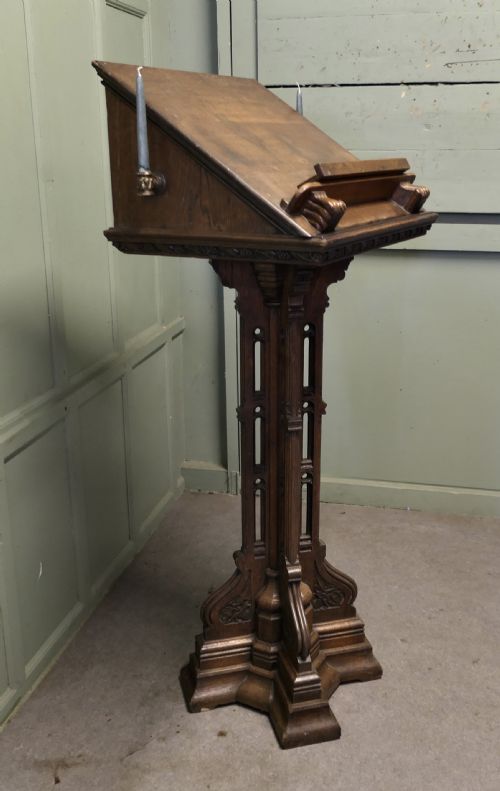
Alongside standard writing tables, the evidence includes related seating and ancillary furniture such as swivel desk chairs, side tables, and secretaires. Each item shares a vocabulary of pointed arches, linenfold panels, and robust joinery typical of nineteenth-century workshops.
Materials and Construction Methods
Oak dominates the construction of these pieces, selected for its density and capacity to hold crisp, deep hand-carving. Craftsmen utilised solid timber planks for desk tops and drawer fronts, joining them with traditional dovetails and pegged mortise and tenon joints.
Secondary materials such as leather inserts provide a traditional writing surface, while brass hardware functions as handles, hinges, and decorative mounts. Upholstery fabric and metal components appear on associated desk chairs and revolving seating.
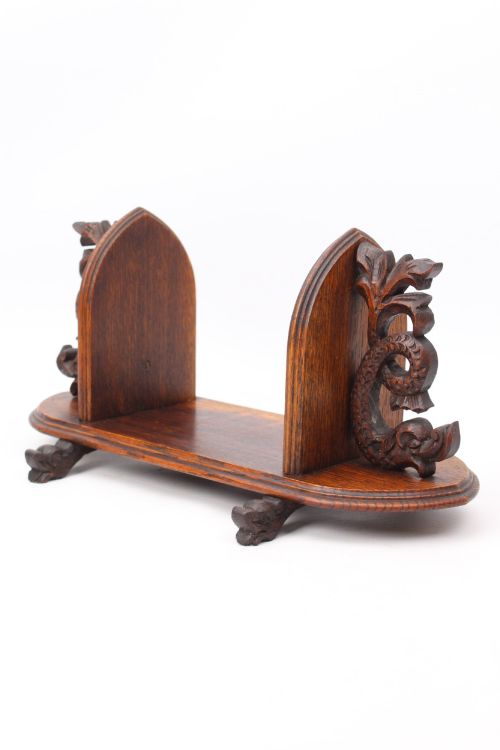
Carving was executed entirely by hand, creating sculptural details like green men, lions heads, and tracery. The finish relied on shellac or wax applications that darkened the oak grain over decades of use.
Gaze into the foliage of an oak green man carving and discover a woodland face staring straight back from the study.
Distinguishing Quality in Gothic Revival Furniture
The distinction between standard production and superior craftsmanship rests in the depth and execution of the hand-carving. Crisp undercutting, symmetrical proportion, and expressive detailing on motifs like lions heads or foliage separate finer commissions from simpler workshop output.
Selection of timber also dictates standing, with quarter-sawn oak displaying prominent medullary rays that enhance the visual texture of the grain. Hardware integration, secondary wood selection, and the stability of mechanical elements in revolving desk chairs further define the tier of the piece.
Gillows·Winterhalder·S and H Jewell
The Victorian Gothic Carved Desk Glossary
- Gothic Revival
- A nineteenth-century architectural and decorative movement that reintroduced medieval forms such as pointed arches, tracery, and heavy mouldings into domestic furniture.
- Green Man
- A sculptural motif depicting a human face disgorging foliage, frequently encountered in the carved woodwork of nineteenth-century ecclesiastical and secular furniture.
- Kneehole Desk
- A form of writing table featuring a central recess for the user's legs, flanked by pedestals containing banks of small drawers.
- Partners Desk
- A large double-sided writing table designed for two people to work opposite one another, typically fitted with drawers on both long sides.
- Secretaire
- A cabinet or desk incorporating a drop-front writing flap that conceals a fitted interior of small drawers and pigeonholes.
Victorian Gothic Carved Desk: Frequently Asked Questions
What defines a Victorian Gothic desk?
These pieces are characterised by heavy oak construction, dark finishes, and architectural ornamentation drawn from medieval design. Details such as pointed arches, chamfered edges, and deep relief carvings distinguish them from plain nineteenth-century furniture.
They combine functional writing surfaces with the imposing aesthetic of nineteenth-century revivalism, making them focal points in a study or library.
How do I care for an antique oak desk?
Maintain the timber by keeping it away from direct heat sources and sudden humidity changes that can cause the solid oak panels to split. Regular application of a traditional beeswax polish nourishes the wood and preserves the depth of the dark finish.
Avoid using modern liquid silicone sprays, which can penetrate the grain and damage the historic patina built up over generations.
Were these desks used in churches or homes?
While many architectural motifs derive from ecclesiastical buildings, these desks and tables were manufactured primarily for domestic studies, libraries, and offices. The Gothic Revival style was immensely popular for residential interiors during the nineteenth century.
Some related forms, such as prie-dieus and lecterns, originated in religious spaces, but writing furniture was designed for secular administrative and literary work.
How can I tell a revolving desk chair period?
Nineteenth-century swivel desk chairs feature heavy cast-iron or wooden undercarriages with screw mechanisms for height adjustment. The joinery is typically hand-pegged, and the upholstery utilises traditional horsehair stuffing beneath leather or fabric.
Examining the wear patterns on the central spindle and the construction of the revolving platform helps confirm nineteenth-century manufacture against later reproductions.