


Victorian Gold Trinket Box
A Victorian gold trinket box is a small, precious receptacle for keepsakes, jewellery and snuff, combining period craftsmanship with portable luxury.
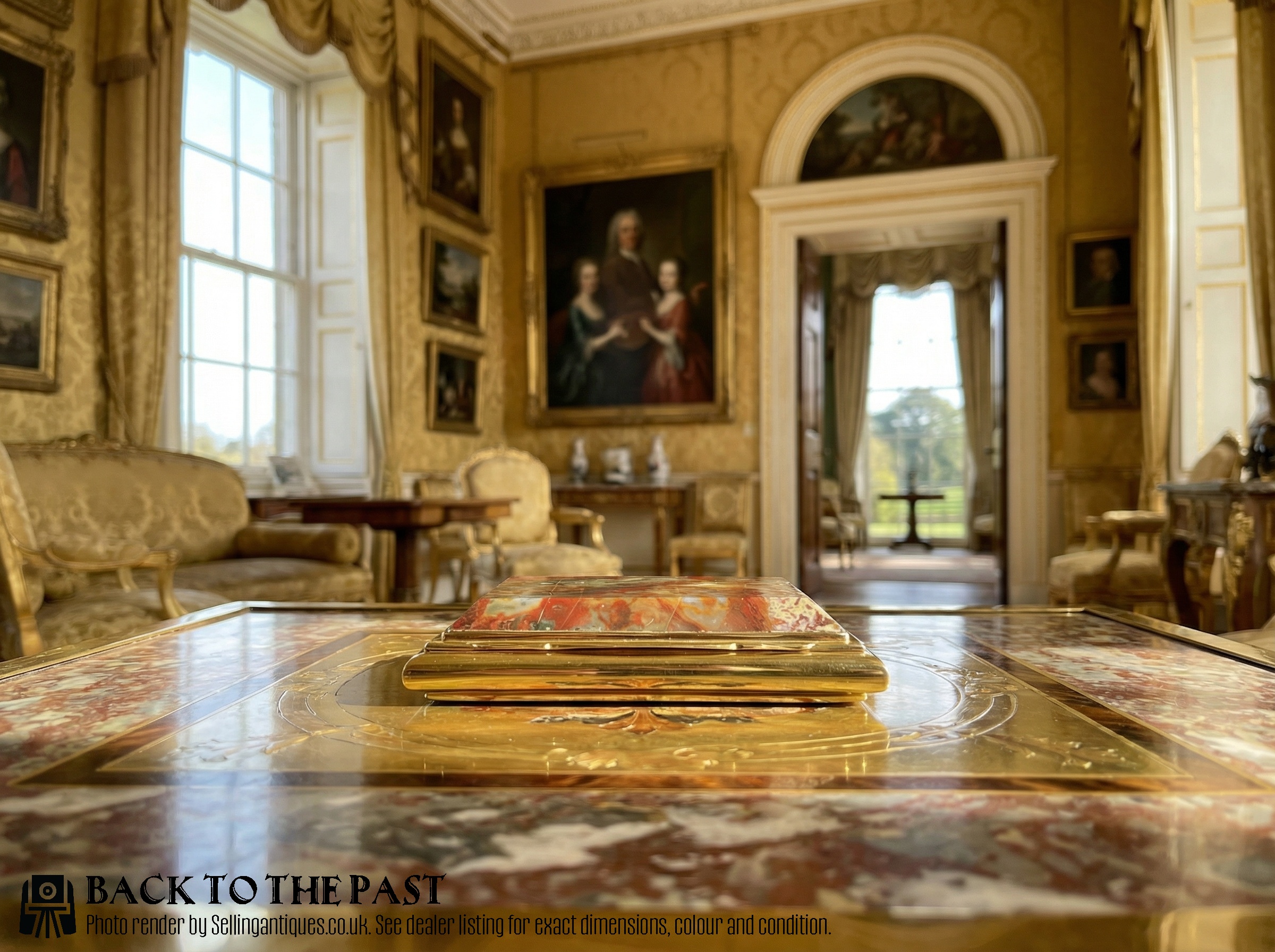
Victorian Gold Trinket Box
A Victorian gold trinket box takes many forms across the evidence, appearing primarily as jewellery caskets, snuff boxes, keepsake cases, and vinaigrettes.
The pieces span the nineteenth century, including specific dates from the eighteen-forties to the eighteen-nineties, carrying designations such as Victorian and nineteenth century.
Origins stretch beyond Britain to Scotland, France, Italy, Germany, and Japan, reflecting diverse regional aesthetics applied to personal storage.
Materials and Technique
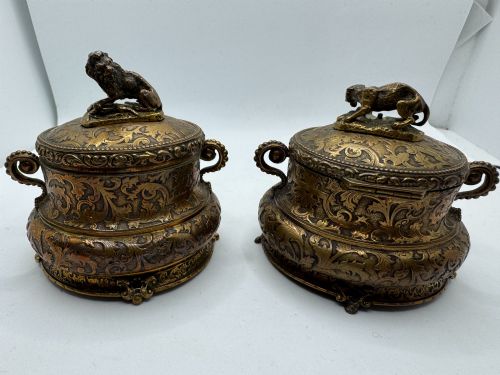
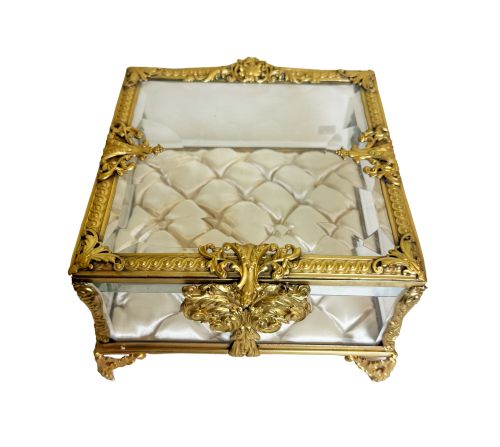
Makers utilised precious metals including gold, silver gilt, and solid silver, often pairing them with brass, gilt bronze, gilt metal, and copper.
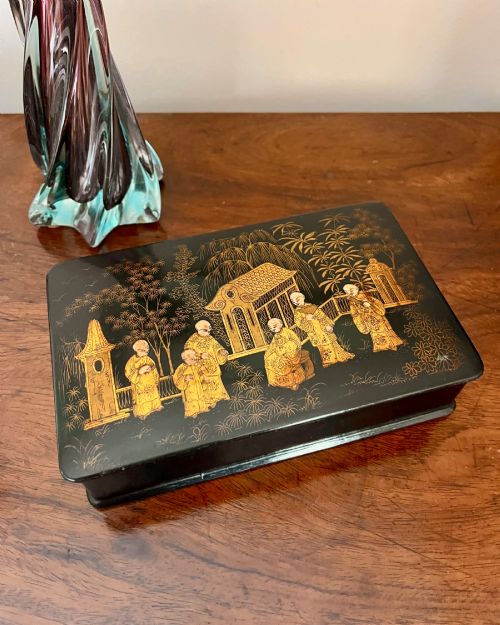
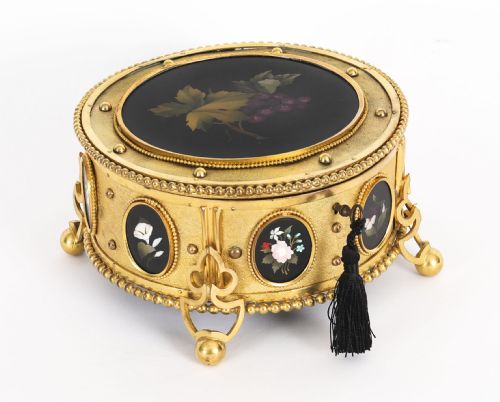
Surfaces incorporate decorative elements such as gold leaf, lacquer, glass, crystal, agate, horn, enamel, cameo, and pietra dura.
Construction techniques visible in the evidence range from engine-turned guilloche design and electro-forming to hand-carving and box-making.
Forms range from cylindrical etuis and miniature caskets to table boxes and desk diaries.
Distinction in Craft
Quality rests upon the pedigree of the materials and the ambition of the ornamentation, shifting from simple brass housing to solid fifteen-carat or eighteen-carat gold.
The refinement of surface detail dictates distinction, separating standard cast metal frames from intricate engine-turned guilloche, inlaid pietra dura, and applied enamel.
Provenance and specific maker attribution elevate individual boxes, moving them from anonymous decorative items to documented works of goldsmithing.
Samson Mordan·The David McDonald·Goldsmiths
The Victorian Gold Trinket Box Glossary
- Vinaigrette
- A small ornamental box featuring an internal perforated grille, designed to hold a sponge soaked in aromatic vinegar.
- Ormolu
- Gilded bronze, frequently utilised in nineteenth-century French caskets to provide a bright, gold-coloured metal finish.
- Guilloche
- An intricate mechanical engraving technique that produces precise, repeating geometric patterns across a metal surface.
- Pietra dura
- An artistic inlay technique employing cut and fitted polished coloured stones to create pictorial designs.
- Trinket box
- A small receptacle intended for holding rings, pins, and other minor personal valuables.
Victorian Gold Trinket Box: Frequently Asked Questions
What went inside a Victorian gold trinket box?
These receptacles held precious personal items such as rings, brooches, small keepsakes, and daily necessities like snuff.
Smaller variants specifically accommodated scented vinegars or folded notes, keeping personal luxuries close at hand.
How do I identify a nineteenth-century piece?
Examine the construction methods, materials, and stylistic markers such as Rococo Revival or Chinoiserie.
Dates and origins often appear in hallmarks, metal purity stamps, or regional manufacturing traits characteristic of the period.
Were these boxes made only in Britain?
While many originate from English and Scottish makers, continental workshops across France, Germany, and Italy produced significant numbers.
Non-European influences also surface, including Japanese Meiji period lacquered pieces found within the wider category.
How should I clean a gilded metal surface?
Dust gently with a soft, dry cloth to preserve delicate gilding and applied surface ornamentation.
Avoid chemical polishes and abrasive liquids, which can strip away thin layers of gold leaf or gilt wash.