
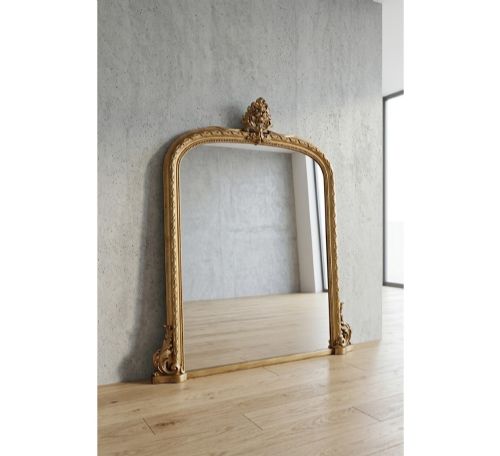
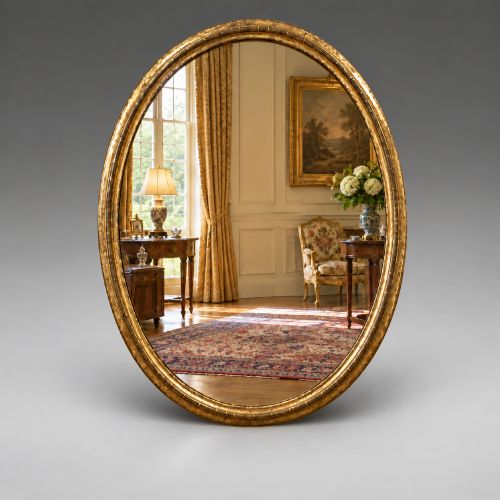
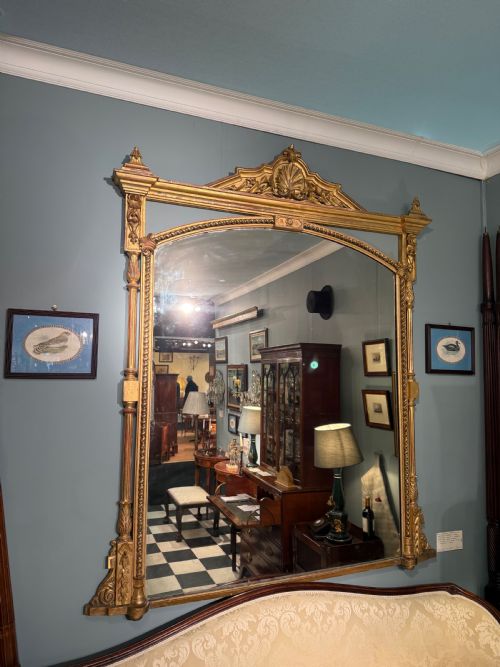
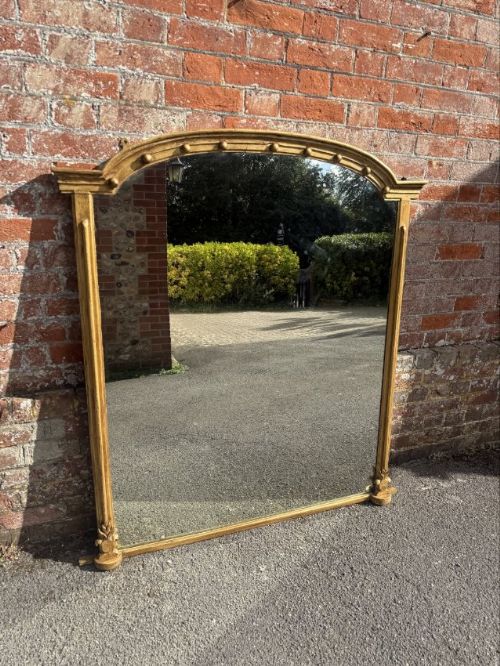
Victorian Gold Overmantel
A victorian gold overmantel brings scale, reflection and gilded presence directly above a fireplace.
Victorian Gold Overmantel
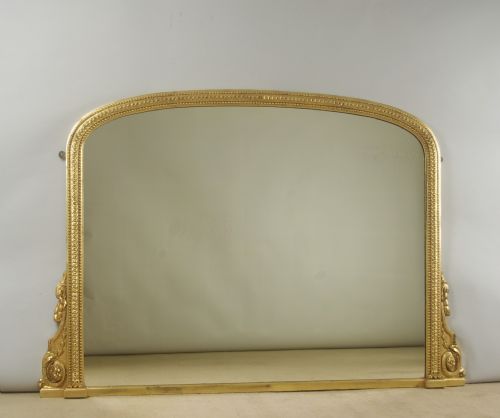
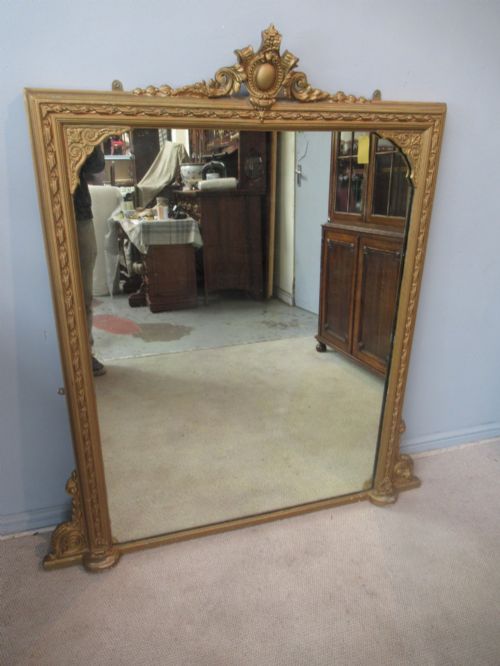
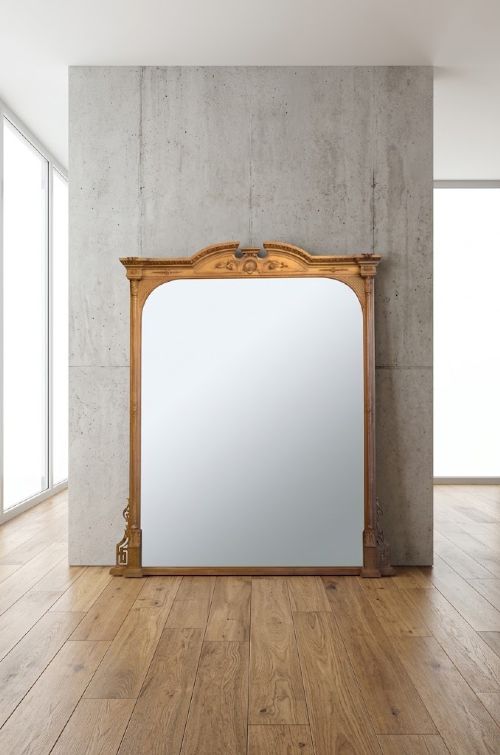
A victorian gold overmantel is a large mirror designed to sit directly above a chimney breast in a nineteenth-century interior. These pieces reflect light deep into a room while anchoring the hearth as a central decorative focus.
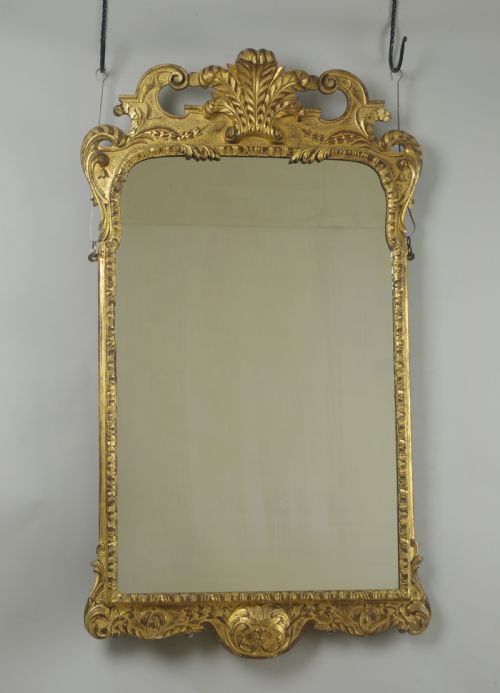
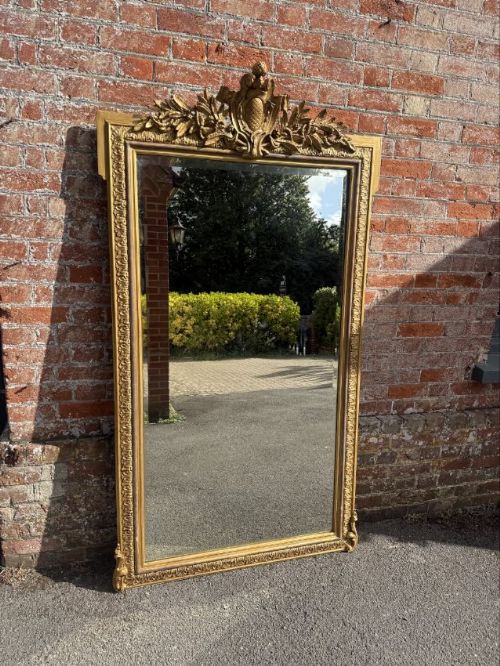
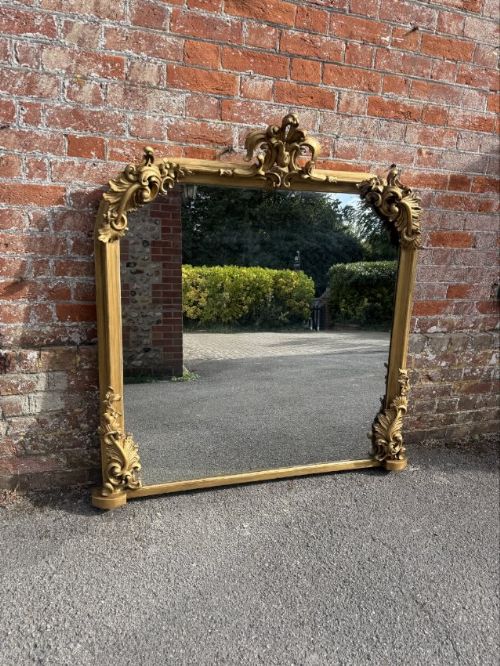
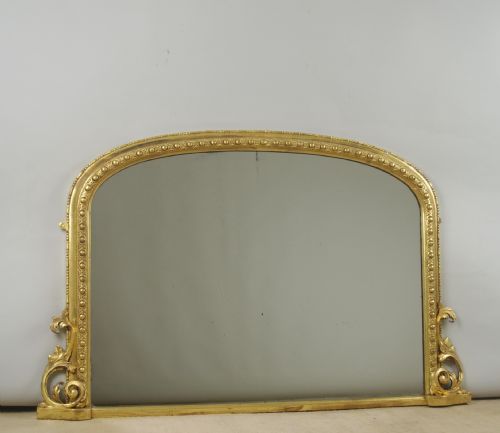
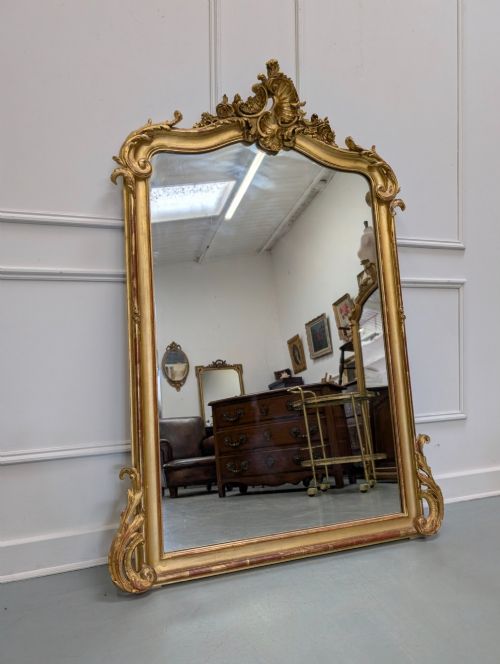
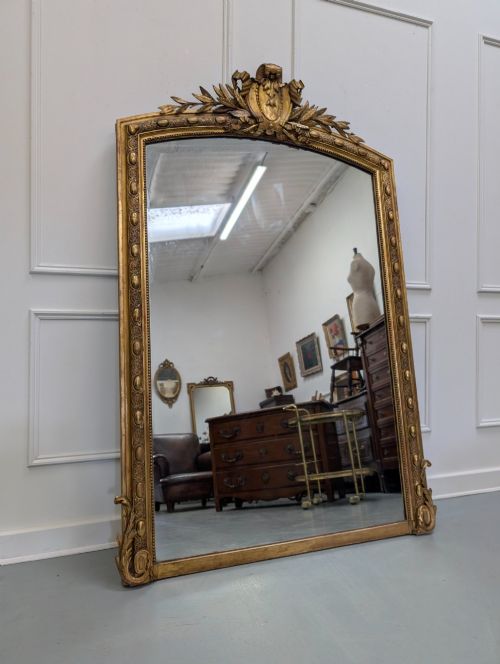
Most examples found here date across the nineteenth century, including Victorian, Edwardian, and specific decades from the eighteen-fifties to the eighteen-nineties. Forms span English arched top designs, French chateau mirrors, and Chinese Chippendale styles.
The scale is typically substantial, ranging from tall wall-leaning formats to wide tripartite plates intended for grand reception rooms. Makers constructed them to dominate the wall space above the fireplace mantel.
How they were made
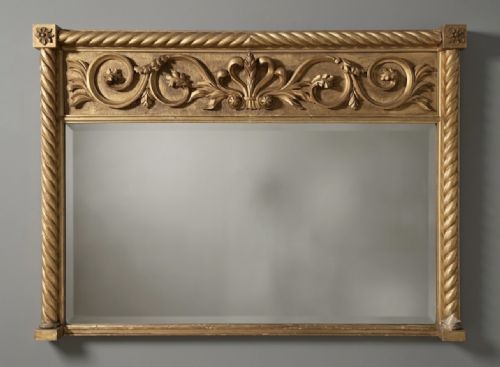
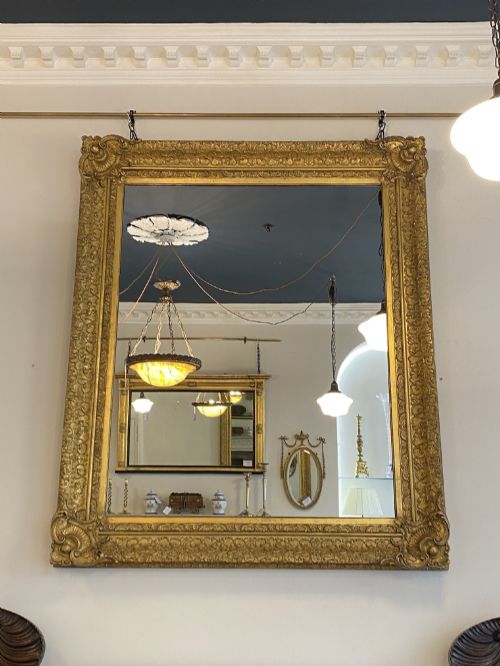
Carved wood frames form the primary structural skeleton, often combined with applied gesso and composition ornaments to build up intricate relief details like acanthus leaves and rope twists. Artisans then applied gold leaf or gilt paint over the prepared surfaces to achieve a bright metallic finish.
Glass plates provide the reflective surface, occasionally featuring bevelled edges or appearing as multi-plate configurations. Traditional joinery secures the heavy mirror plates within the timber frames to support the considerable weight of each piece.
Some frames include nautical rope twist designs, proving that nineteenth-century gilders liked to bring a maritime knot indoors.
What varies in quality
Depth and crispness of the carved wooden ornament separate standard production from finer output. Hand-carved details and well-modelled gesso retain sharp definition, whereas heavily built-up composition mouldings can appear blunt or rounded over time.
The integrity of the original gilding and the clarity of the mirror plate dictate the visual impact of the piece. Untouched gold leaf surfaces aged with natural patination hold greater character than crude overpainting.
The Victorian Gold Overmantel Glossary
- Overmantel
- A large mirror specifically proportioned to hang on the wall directly above a fireplace mantelpiece. These frames often incorporate arched or shaped tops to fit architectural chimney breasts.
- Gesso
- A plaster-like mixture applied to wooden frame foundations and carved or moulded into decorative relief details before gilding. It provides the smooth base necessary for catching light on gold leaf.
- Giltwood
- Timber that has been coated with gold leaf or metallic paint to simulate solid gold. It represents the primary finish for nineteenth-century decorative wall mirrors.
- Composition
- A moulded mixture of whiting, resin, glue and linseed oil pressed into ornamental shapes for frames. Artisans applied these composition reliefs onto wooden carcases to speed up intricate decorative work.
- Pier glass
- A tall mirror designed to hang on the narrow pier of wall space between windows. These mirrors often match the grandeur and gilding style of contemporary overmantels.
Victorian Gold Overmantel: Frequently Asked Questions
How do I hang a heavy overmantel mirror?
These heavy frames require direct anchorage into solid masonry or substantial wall studs using rated fixings.
Weight distribution across multiple secure mounting points prevents frame distortion and ensures structural safety.
What rooms suit an overmantel mirror?
Living rooms and dining spaces remain traditional placements where the piece sits naturally above a fireplace hearth.
Grand hallways and bedroom walls also accommodate these large vertical or horizontal proportions effectively.
How do I clean a gilded mirror frame?
Dust the carved wood and gesso surface gently using a soft, dry brush without applying moisture.
Liquid cleaners can damage historic gold leaf and composition mouldings, so moisture must stay away from the frame.
How can I date an overmantel mirror?
Examining the construction of the timber backboards, framing techniques, and decorative motifs reveals the period.
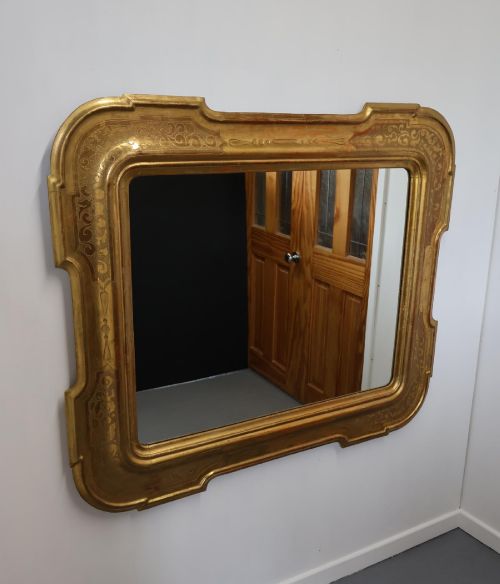
Styles transition from early Victorian arched forms and Rococo Revival curves to later nineteenth-century architectural column framing.