



Victorian Gold Insect Jewellery
Victorian gold insect jewellery captures the natural world in precious metals and gemstones, offering delicate brooches and pendants that collectors prize.
Victorian Gold Insect Jewellery
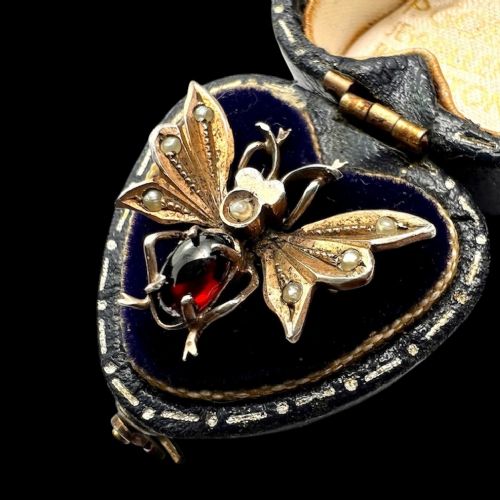
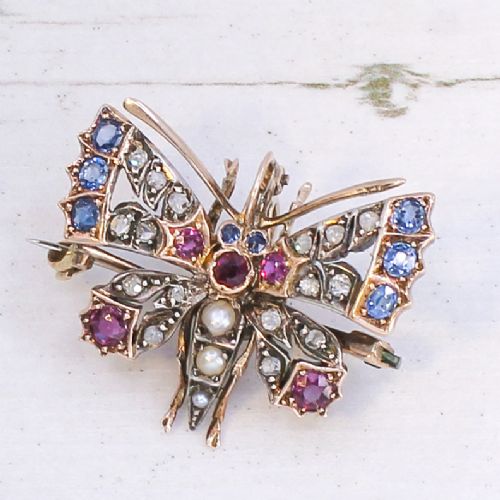
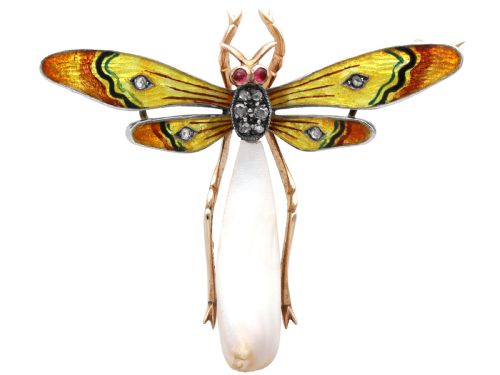
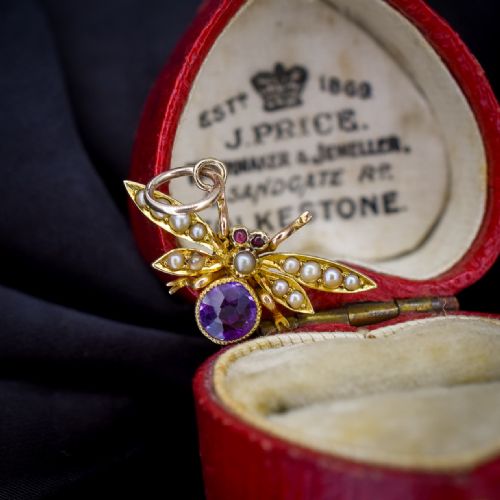
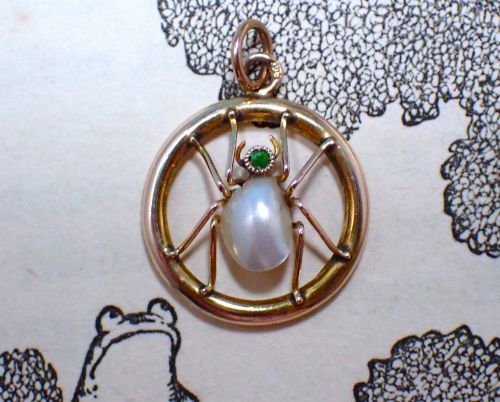
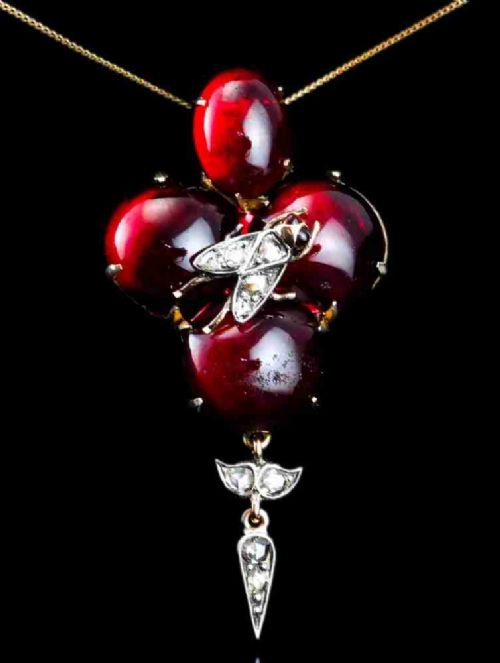
Victorian gold insect jewellery comprises intricate brooches, pendants, charms, and earrings shaped like dragonflies, flies, spiders, beetles, and butterflies. These wearable natural specimens emerge predominantly from the Victorian and Edwardian periods, stretching from the late nineteenth century into the early twentieth century.
Buyers on this page most commonly encounter yellow gold insect forms set with diamonds, pearls, garnets, and emeralds. Many pieces function as versatile brooches and pendants, allowing wearers to pin them to garments or suspend them from chains.
Materials and construction
Goldsmiths shaped these insects using various karats of yellow gold, frequently combining gold with silver settings to enhance the brilliance of diamond pavé work. Enamel work also appears on select pieces to add naturalistic colour to wings and bodies.
Gemstones including diamonds, pearls, seed pearls, emeralds, rubies, and garnets are flush-set or claw-set into the precious metal bodies and wings. Cabochon cuts and faceted stones bring texture and depth to the arthropod forms.
Victorian Gold Insect Jewellery Retail Price Guide 2026
Typical asking prices for victorian gold insect jewellery among the pieces listed under this phrase on Sellingantiques today, from the lower quarter to the upper quarter. They describe what is for sale here now, not the wider market.
Listings feature items spanning the Victorian, Edwardian, and Regency periods, alongside materials like yellow gold, silver, diamond, pearl, emerald, garnet, and coral.
Factors of quality
Quality rests in the anatomical realism of the insect form and the precision of the stone setting. Fine examples balance delicate wirework and detailed engraving with secure gemstone placement.
The choice and matching of gemstones elevate certain pieces, particularly where diamonds, emeralds, and pearls are utilised to render wings and bodies with distinct visual contrast.
The Victorian Gold Insect Jewellery Glossary
- Cabochon
- A gemstone shaped and polished with a smooth convex surface rather than faceted. This style of cutting is frequently seen on garnets within nineteenth-century pieces.
- Convertible
- A piece of jewellery designed to be worn in multiple ways, such as functioning as both a brooch and a pendant. These items often feature hidden loops or detachable bails.
- Naturalism
- An artistic style that faithfully reproduces organic forms from the natural world. This movement inspired jewellers to replicate insects with anatomical accuracy.
- Seed pearl
- A very small, naturally occurring pearl, often drilled and strung or used in clusters. They commonly accent the bodies and wings of Victorian insect brooches.
Victorian Gold Insect Jewellery: Frequently Asked Questions
How were these pieces worn?
Owners typically pinned these insects to lapels, bodices, hats, or cravats using integrated pin stems. Many examples also include loops to allow suspension from necklaces.
Some versatile designs function as both brooches and pendants. This dual functionality allowed the wearer to adapt the jewellery for different outfits and occasions.
How do I care for antique insect jewellery?
Antique pieces require gentle handling due to their age and delicate gemstone settings. Avoid chemical cleaners, ultrasonic baths, and prolonged immersion in water.
Store each item individually in a lined box to prevent scratches on softer stones and pearls. Professional inspection of the prongs ensures gemstones remain secure.
How do I identify the period?
Dating relies on stylistic clues, metal types, gemstone cuts, and construction techniques. Late nineteenth-century pieces often display naturalistic motifs combined with specific gold karats and old-cut diamonds.
French pieces and Edwardian items exhibit distinct manufacturing signatures and fastener styles. Comparing the piece to documented examples helps narrow down the decade.