
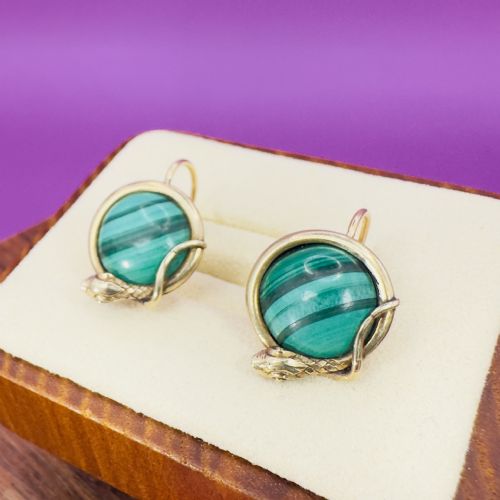


Victorian Gold Dangles
Victorian gold dangles bring movement and fine metalwork to the ear, combining nineteenth-century revival styles with enduring precious materials.
Victorian Gold Dangles
Victorian gold dangles primarily take the form of drop earrings and swinging pendants that capture light with every turn of the head. These pieces span the nineteenth century and subsequent revival periods, showing how goldsmiths played with length and suspension.
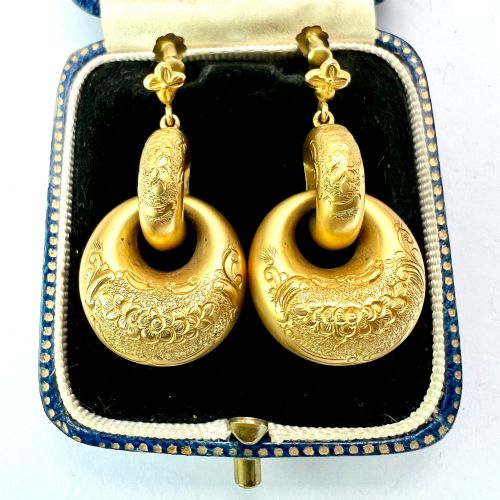
Earrings dominate this selection, frequently featuring teardrops, hoops, and tassels suspended from secure fittings. Alongside authentic nineteenth-century examples, the listings include later interpretations that borrow the aesthetic of the period.
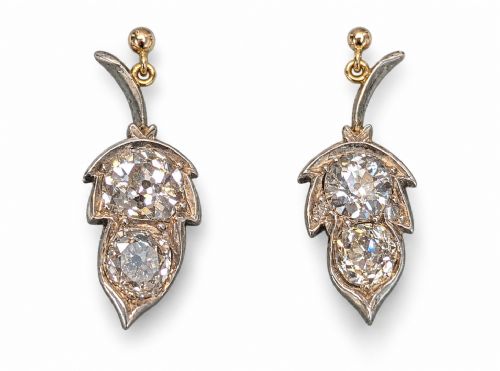
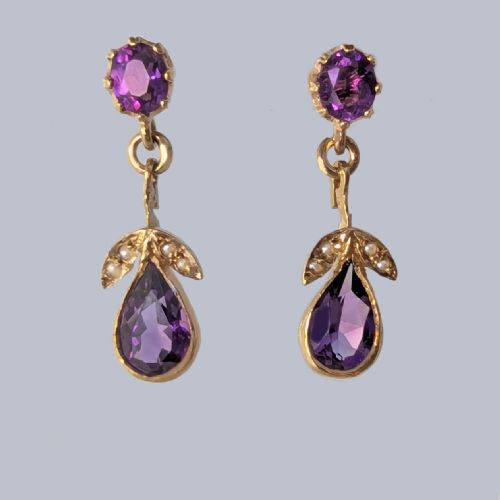
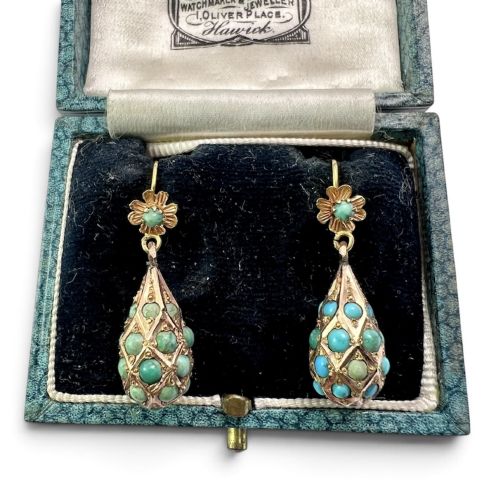
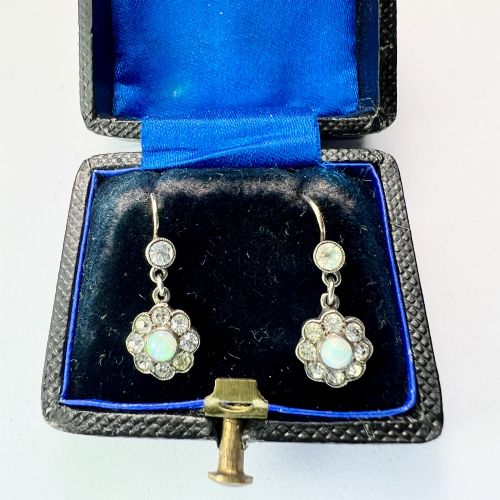
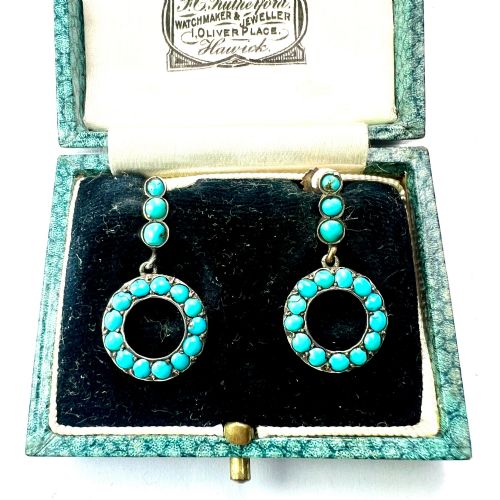
The materials range from standard nine-carat and fifteen-carat gold to silver-gilt mounts set with diamonds, amethysts, pearls, and turquoise. Distinct movements like Etruscan and Classical Revival appear alongside simpler banded agate and coral designs.
Making and Materials
Goldsmiths shaped these pieces using lower and higher carat yellow gold, frequently combining silver for gemstone settings to keep diamonds and pastes bright against darker backdrops. Hollow stampings and wirework kept larger forms lightweight enough for comfortable wear.
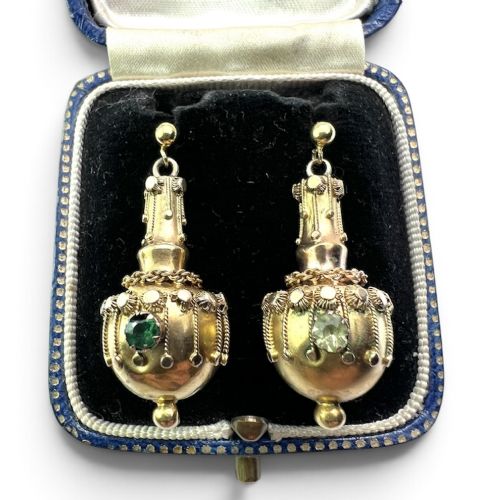
Lapidaries cut garnets, amethysts, malachite, and turquoise into cabochons and teardrops, mounting them in bezels or securing them with seed pearls. Granulation and wire filigree, characteristic of Etruscan revival pieces, demonstrate meticulous hand assembly.
Listings feature items spanning the Victorian, Edwardian, and mid-twentieth-century eras, incorporating gold, silver, diamonds, and turquoise.
Quality and Construction
Superior examples show crispness in stamped or chased details, where patterns remain sharp and metal thickness provides structural integrity without excessive weight. Hand-applied granulation and secure stone settings separate finer workshop output from simpler mass production.
The integrity of articulated joints and suspension links dictates longevity in hanging drops. Well-preserved original screw-backs or wire fittings indicate careful past ownership, whereas clumsy repairs or replacement parts diminish historical cohesion.
Knoll and Pregizer
The Victorian Gold Dangles Glossary
- Cabochon
- A gemstone shaped and polished with a smooth, rounded convex surface rather than faceted. This cut suits stones like turquoise, opal, and star garnets.
- Day-to-night earrings
- Convertible drop earrings designed with a removable lower section. Wearers could detach the heavier lower dangles for daytime activities and reattach them for evening wear.
- Etruscan Revival
- A nineteenth-century design movement inspired by archaeological discoveries in Italy. It is characterised by applied gold wirework and tiny granules arranged in geometric patterns.
- Silver-gilt
- Silver that has been coated with a thin layer of gold. This technique provided the bright white setting required for diamonds while maintaining a warm gold appearance on the reverse.
Victorian Gold Dangles: Frequently Asked Questions
How do I clean antique gold dangles?
Clean these pieces gently with a soft dry cloth to remove surface dust. Avoid liquid immersion, ultrasonic cleaners, and harsh chemicals, as moisture can damage glued pearls or historical foils behind paste stones.
Store them individually in lined boxes to prevent friction against other jewellery. Checking the security of stone settings periodically helps protect fragile mounts.
Are these earrings comfortable to wear?
Many Victorian dangles use lightweight hollow gold construction or tiered components designed to distribute weight evenly. Screw-backs and wire hooks secure the drop safely beneath the lobe.
Heavier gemstone configurations require consideration of individual earlobe sensitivity. Shorter day-to-night variants offer a lighter alternative for extended daily use.
How can I tell a true Victorian pair?
Examine the fabrication methods, fastener types, and gemstone cuts for consistency with nineteenth-century manufacturing. Hallmarks, where present, indicate specific assay offices and purity standards of the period.
Stylistic cues such as Etruscan granulation or lava cameos point towards nineteenth-century production. Comparing pieces against documented revival styles helps separate authentic era items from later homages.
What does day-to-night mean?
Day-to-night pieces feature detachable lower sections that alter the length and weight of the jewellery. A simple top cluster or stud served for daytime activities.
Adding the dangling components transformed the item for evening occasions. This versatility was practical for nineteenth-century wardrobes.