

Victorian Gold Albert
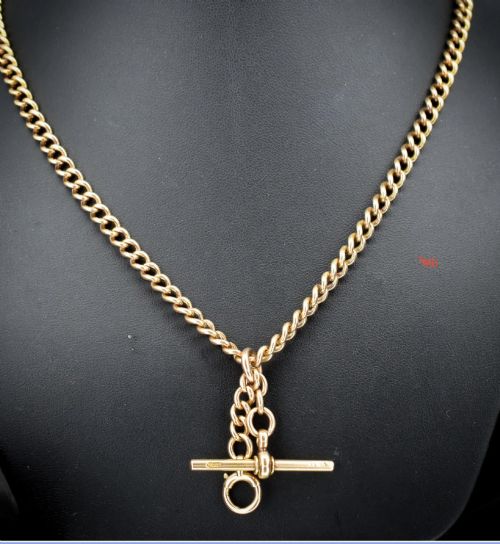
A victorian gold albert is a functional piece of period jewellery designed to secure a pocket watch, worn today as a substantial necklace or bracelet.
Victorian Gold Albert
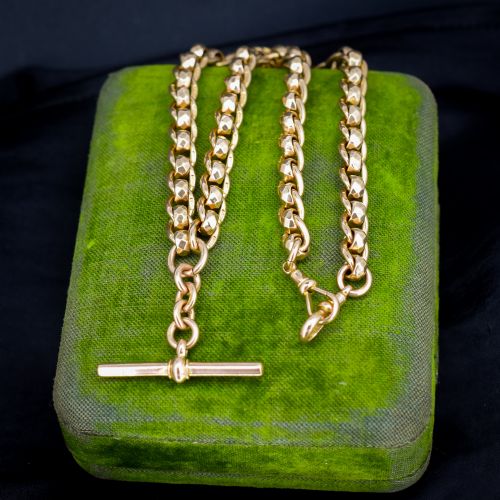
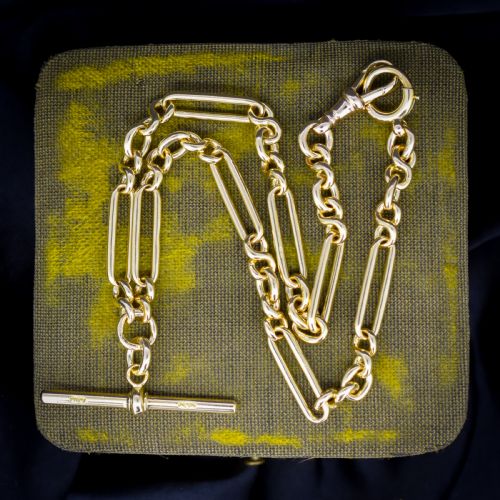
A victorian gold albert functions as a traditional pocket watch chain, originating from the nineteenth century when gentlemen secured timepieces to their waistcoats. These items span periods including the Victorian and Edwardian eras, alongside pieces dated into the early twentieth century.
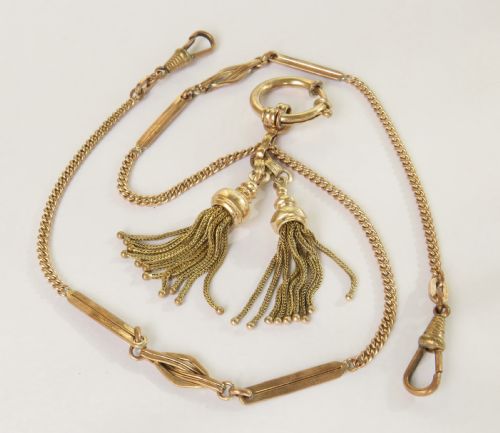
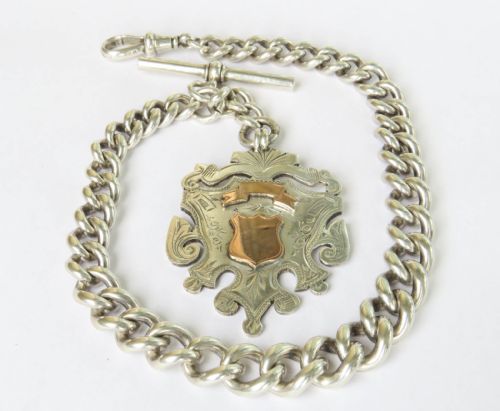
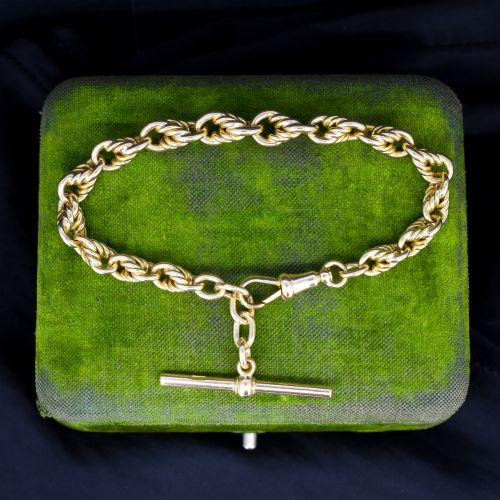
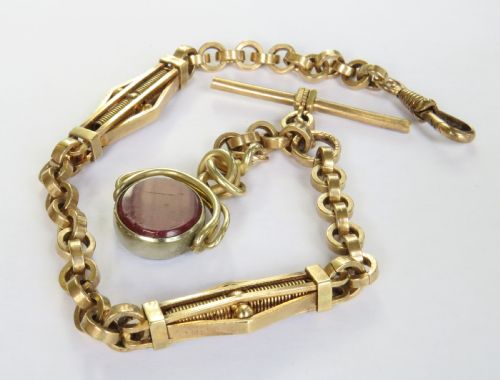
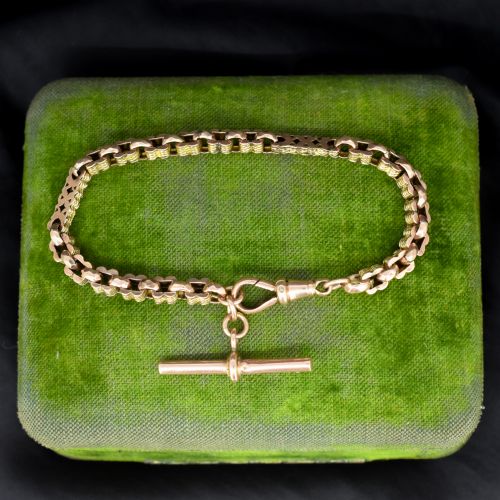
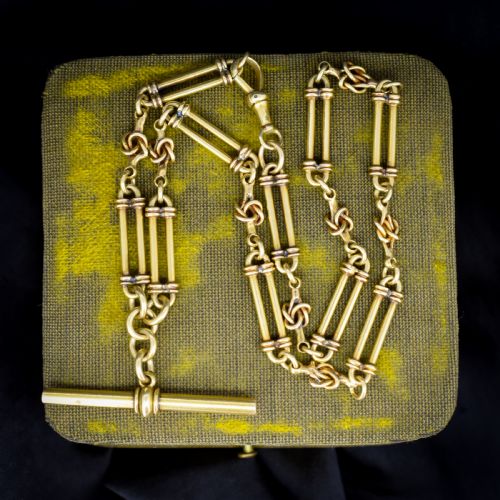
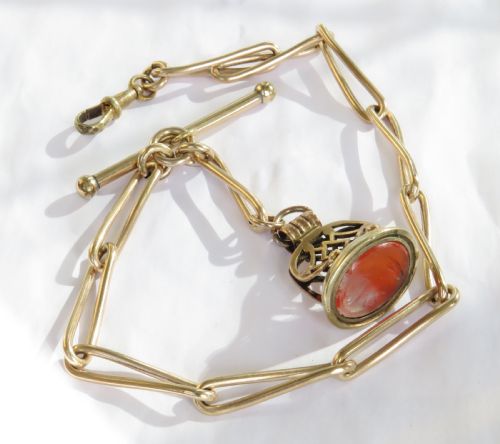
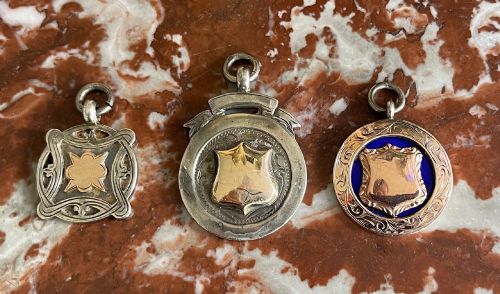
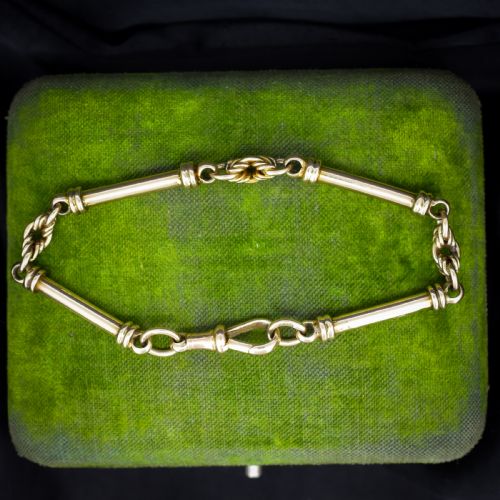
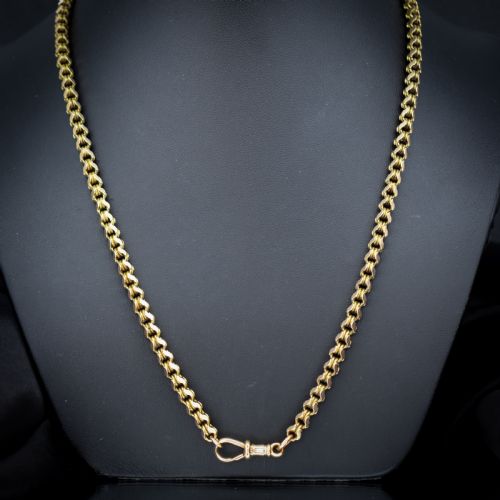
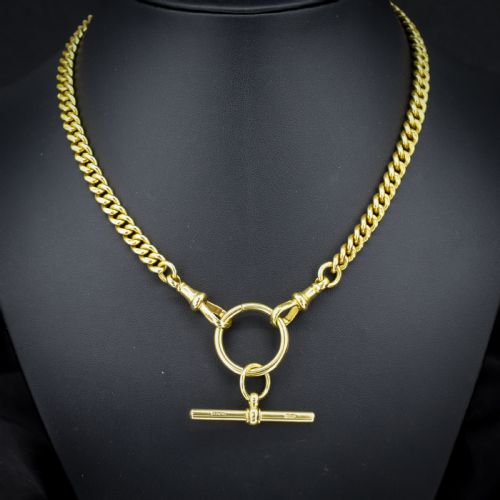
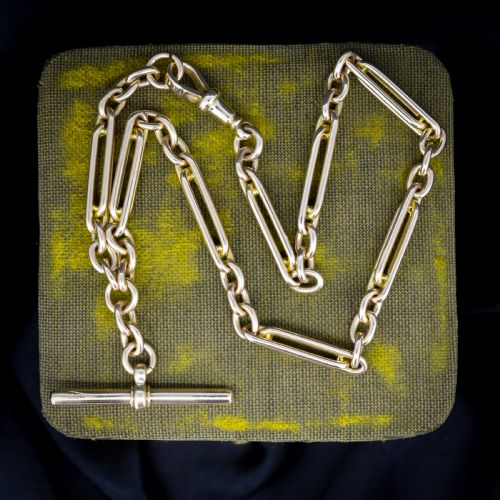
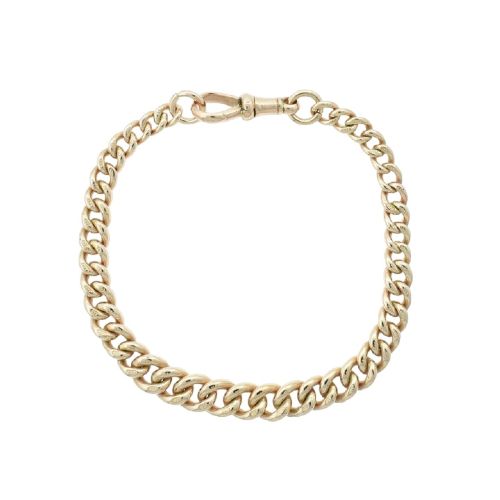
The selections on this page appear primarily as pocket watch chains, necklaces, and converted bracelets fitted with the original fastening hardware. Common formats include single and double chains, often accompanied by hanging fobs, tassels, or T-bars.
Lengths and link configurations vary considerably, from shorter neck chains to longer lengths designed to wrap around the wrist. The forms range from simple curb and trombone links to intricate love knot and fancy link designs.
Materials and construction
Makers utilised various gold purities, predominantly nine-carat, fifteen-carat, and eighteen-carat yellow and rose gold, alongside rolled gold variants. Metal components were shaped into hollow or solid links, curb patterns, and tubular bars by period goldsmiths.
Construction relies on specialised hardware integral to the design, including dog clips, bolt rings, swivel fobs, and T-bars. These functional closures display the hallmarks, metal stamps, and maker marks characteristic of nineteenth and early twentieth-century workshops.
Victorian Gold Albert Retail Price Guide 2026
Typical asking prices for victorian gold albert among the pieces listed under this phrase on Sellingantiques today, from the lower quarter to the upper quarter. They describe what is for sale here now, not the wider market.
Several Victorian oil paintings of horses by an artist named Albert share space here with the watch chains.
Distinctions in quality
The calibre of a piece depends heavily on the weight of the gold used and the integrity of the individual links. Solid gold iterations with substantial gram weights sit at the higher end, while rolled gold and hollow link versions represent a lighter construction.
Survival of original components dictates desirability, particularly the presence of matching dog clips, functional swivels, and fully legible hallmarks. The complexity of the link pattern, such as multi-strand fancy links or trombone variations, further distinguishes superior examples.
Albert Clark·Albert Rieger
The Victorian Gold Albert Glossary
- Albert chain
- A watch chain designed to attach a pocket watch to a garment, featuring a T-bar at one end and a clip at the other.
- Dog clip
- A spring-loaded clasp used to secure the chain to a pocket watch or fob, shaped like a miniature hound clip.
- T-bar
- A short transverse bar attached to the centre of the chain, slotted through a buttonhole to anchor the watch.
- Rolled gold
- A manufacturing method where a layer of gold is mechanically bonded to a base metal core.
- Fob
- An ornamental medallion, seal, or tassel suspended from the watch chain.
Victorian Gold Albert: Frequently Asked Questions
What is a victorian gold albert used for?
Originally designed to secure a pocket watch to a waistcoat, these pieces connected the timepiece to a buttonhole via a T-bar and dog clip.
Today, collectors repurpose them to wear as necklaces or multi-wrap bracelets.
How do I wear a pocket watch chain as jewellery?
Shorter chains fasten around the neck using the existing dog clip and bolt ring connections.
Longer chains wrap around the wrist multiple times to form a heavy bracelet, often retaining the original T-bar as a decorative toggle.
What is the difference between rose gold and yellow gold?
Rose gold contains an alloy of copper mixed with gold, giving it a distinct reddish or pinkish hue.
Yellow gold maintains the traditional warm metallic colour achieved through silver and copper alloy mixtures.
How do I identify the period of an albert chain?
Hallmarks stamped onto the links or dog clips provide official assay office symbols and date letters indicating the year of manufacture.
Link styles, such as heavy curb or trombone patterns, also point towards Victorian or Edwardian production eras.