


Victorian Glazed Spaniels
Victorian glazed spaniels are quintessential mantelpiece companions modelled in earthenware, offering a charming slice of nineteenth-century English domestic life for modern interiors.
Victorian Glazed Spaniels
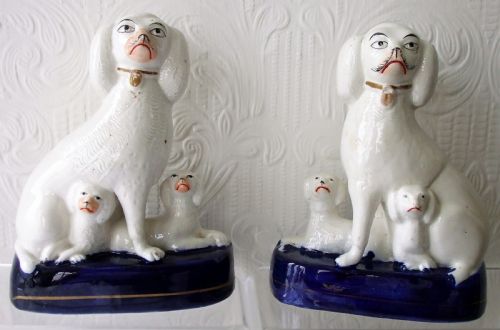
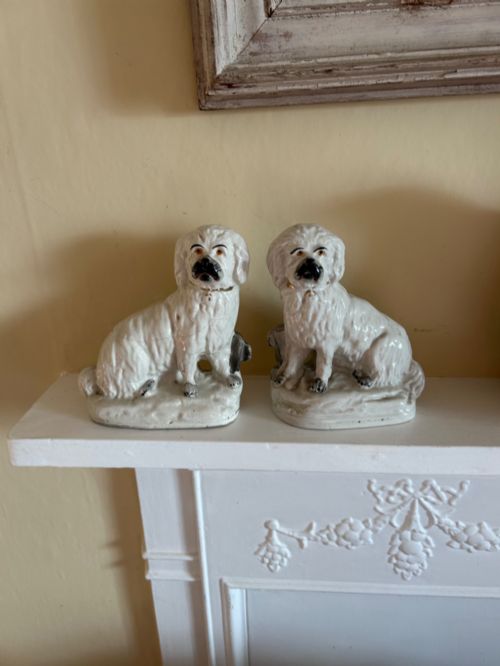
Victorian glazed spaniels comprise seated dogs, spaniel pairs, and decorative dog clock groups designed to sit upon the mantelpiece. These ceramic figures reflect the nineteenth-century taste for domestic animal ornaments in English homes.
Most examples found on this page date from the Victorian era, specifically around eighteen-eighty and eighteen-sixty, taking the form of earthenware figurines, quill holders, and poodles or terriers alongside spaniels.
Makers shaped these decorative objects to appear in matched pairs or small collections, often featuring copper lustre or hand-painted enamel finishes applied over a white or patterned ceramic body.
Materials and manufacture
Potters utilised earthenware and ceramic bodies, shaping them into dog figurines through moulding techniques before applying a smooth lead glaze. This glazed surface protected the porous clay beneath and provided a glossy sheen.
Enamel colours and metallic copper lustre accents were added by hand, sometimes complemented by gilt or gold leaf detailing on collars and lockets. Firing the pieces sealed these pigments into the surface finish.
Listings feature Victorian earthenware and ceramic materials, spanning periods from eighteen-hundred through to nineteen-hundred.
Assessing quality
The application of copper lustre and glaze depth separates simpler decorative objects from superior examples, as even firing creates a richer metallic sheen across the ceramic surface.
Beswick
The Victorian Glazed Spaniels Glossary
- Earthenware
- A type of porous ceramic pottery fired at lower temperatures, commonly used for nineteenth-century mantelpiece figures before being coated in a protective glaze.
- Lead glaze
- A glossy coating containing lead oxide applied to ceramic bodies to waterproof the clay and enhance surface reflection. It gives these nineteenth-century figures their characteristic shine.
- Copper lustre
- A metallic glaze finish producing a reflective, coppery sheen across the surface of pottery. Potters utilised this technique to decorate nineteenth-century dog figurines.
- Quill holder
- A desk accessory or decorative object featuring an integrated inkwell or pen rack. Some ceramic dog figures incorporate this functional element into their design.
- Staffordshire pottery
- Earthenware figures produced in the pottery region of England during the Victorian period. These include spaniels, poodles, and terriers modelled as decorative mantel ornaments.
Victorian Glazed Spaniels: Frequently Asked Questions
How were Victorian spaniel figures displayed?
These ceramic dogs typically sat in matched pairs on either side of the fireplace mantelpiece, facing inward toward the hearth. Their placement brought symmetry and a sense of domestic companionship to the Victorian parlour.
Collectors today continue to arrange pairs on mantelpieces, bookshelves, or side tables, maintaining the traditional manner in which these nineteenth-century ornaments were enjoyed in British homes.
Are all the dogs spaniels?
While spaniels form the majority of the figures, the category also includes poodles, Maltese terriers, and King Charles spaniels. Some listings even present dog clock groups or quill holders.
This variety reflects the broad range of animal subjects modelled by nineteenth-century Staffordshire potteries alongside their iconic seated spaniel pairs.
How do I date these ceramic figures?
Dating relies on stylistic clues, manufacturing methods, and recorded production periods from the nineteenth century. Many pieces date from around eighteen-sixty to eighteen-eighty, aligning with the height of Victorian ceramic output.
Examining the glaze composition, base characteristics, and enamel painting style helps place individual figures within the broader Victorian period.