
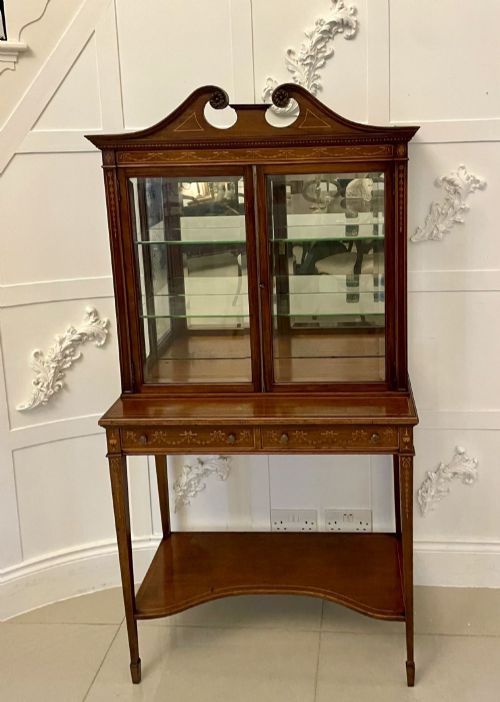
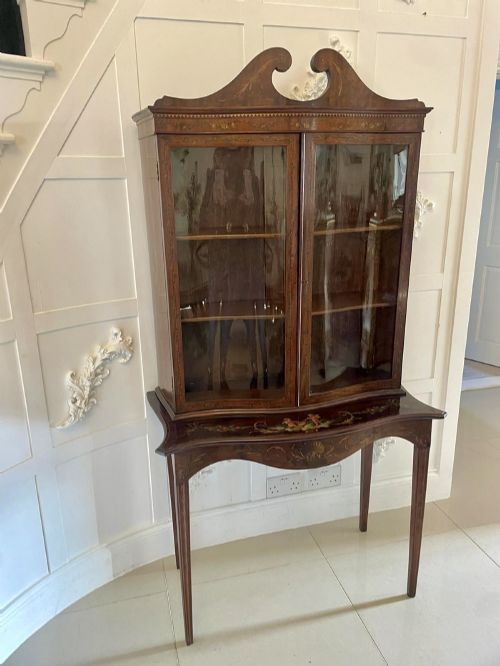
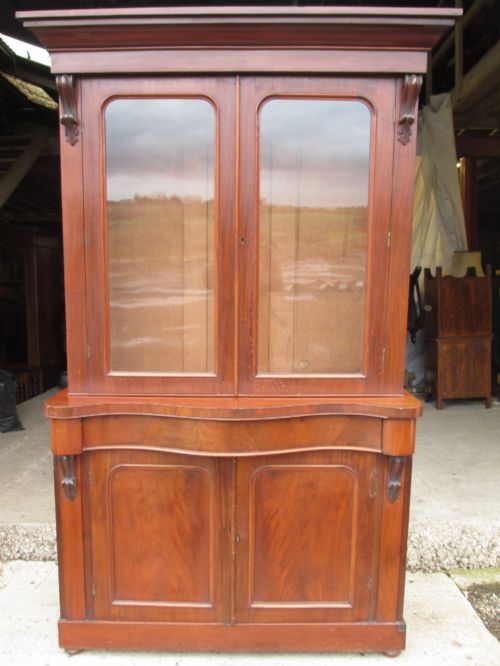
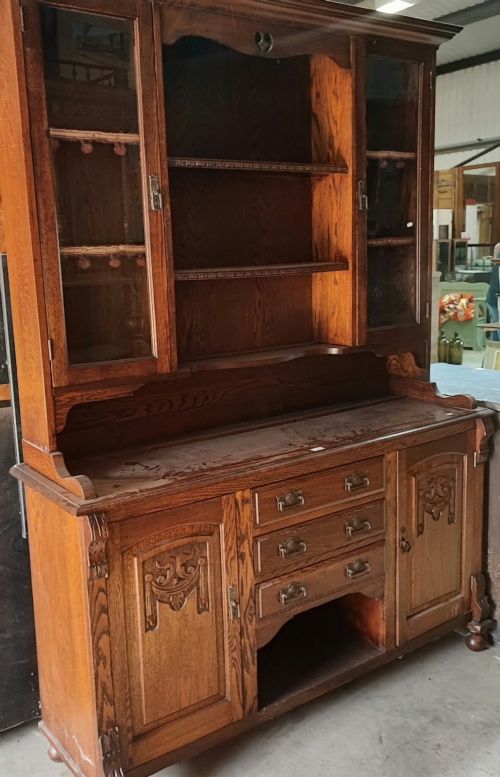
Victorian Glazed Display Cupboard
A victorian glazed display cupboard brings together timber and glass to hold books or prized possessions behind protective panelled doors.
Victorian Glazed Display Cupboard
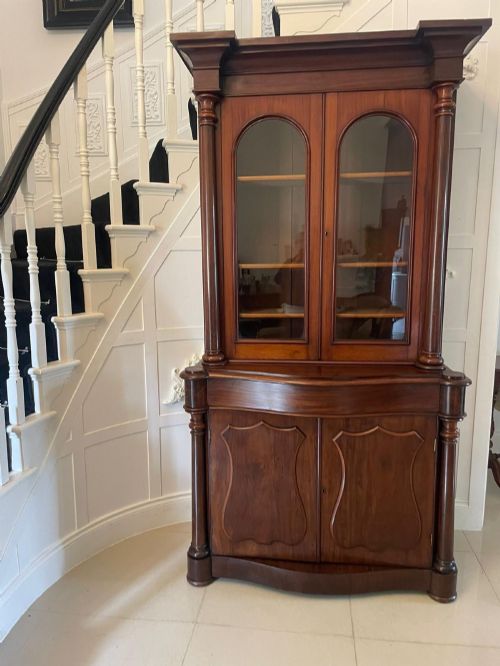
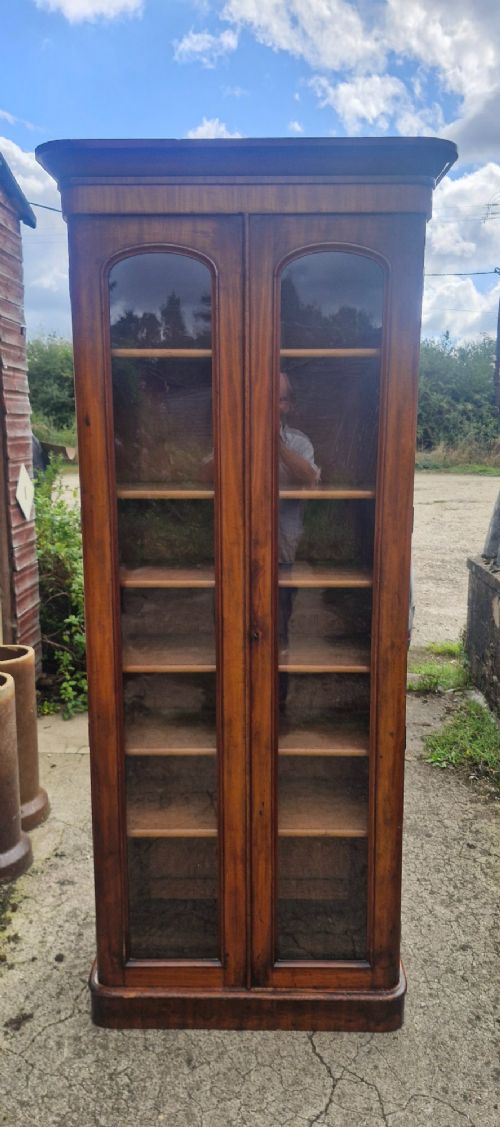
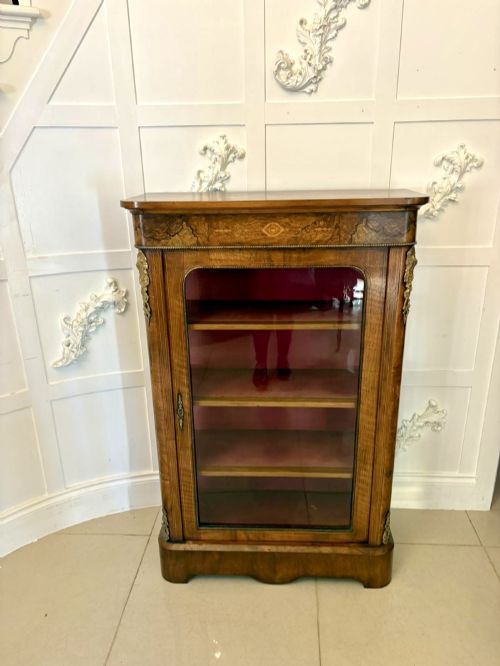
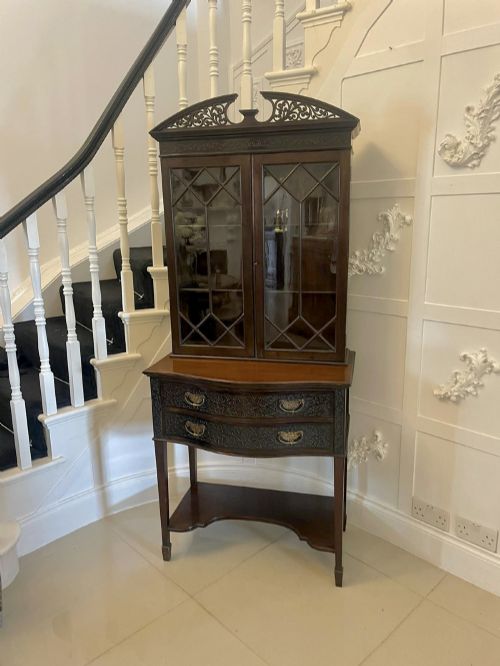
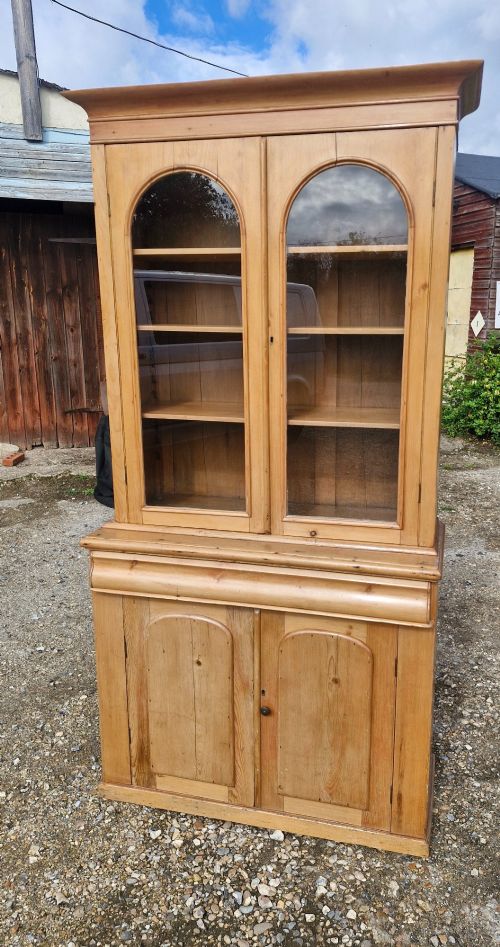
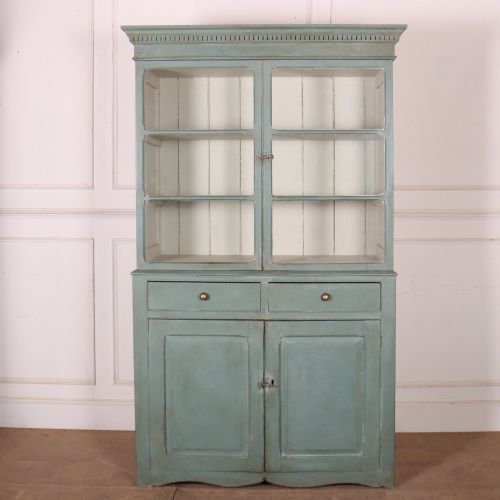
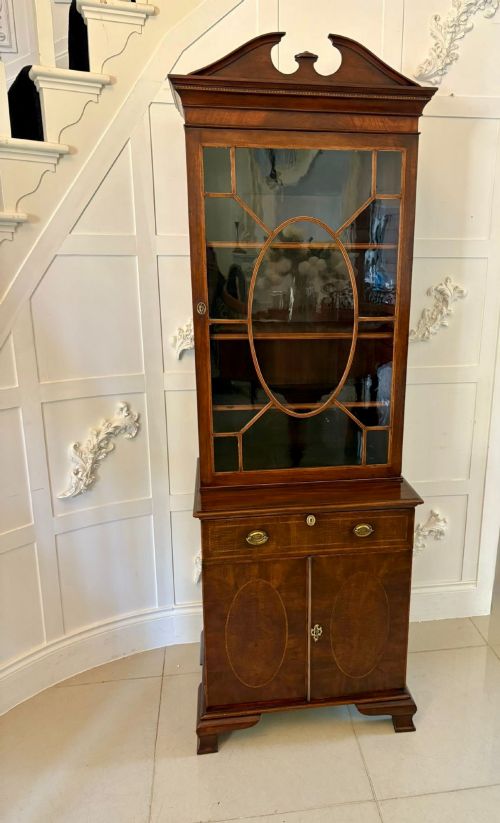
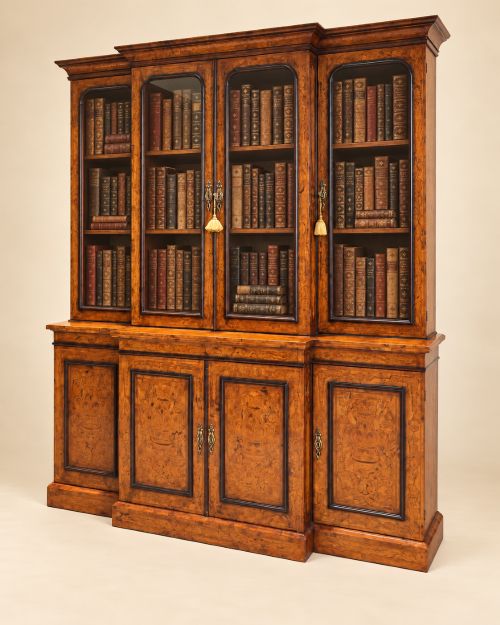
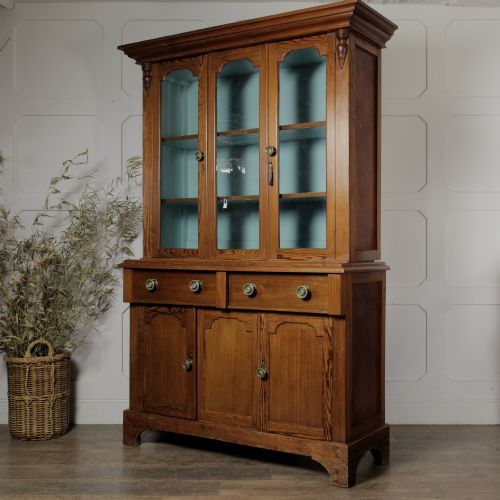
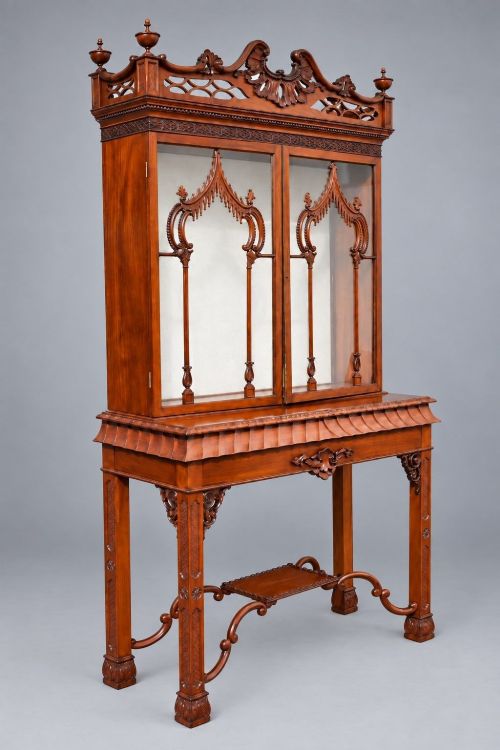
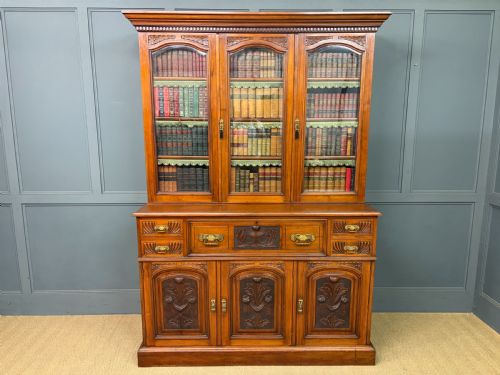
A victorian glazed display cupboard is typically encountered on this page in the form of a mahogany or walnut bookcase, pier cabinet, or kitchen dresser. These tall or wall-hanging pieces were built during the nineteenth century to store collections while keeping dust at bay through glass doors.
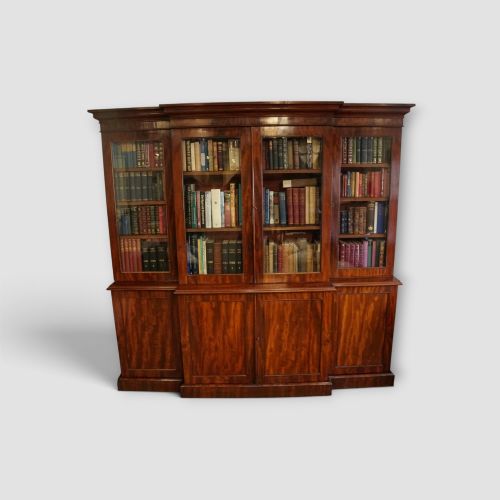
The varieties span from formal breakfront library bookcases in figured timbers to stripped pine kitchen cupboards and narrow corner cabinets. Most examples combine upper glazed shelving with lower wooden cupboards or drawers.
Origins range across English urban workshops and Scottish country joiners, utilising regional hardwoods and softwoods suited to domestic storage.
How they were made
Cabinet makers utilised dense hardwoods like mahogany, walnut, and oak alongside utilitarian softwoods such as pine. Timber boards were joined with traditional framing methods, supporting glazed upper doors fitted with individual glass panes.
Decoration relied on marquetry inlay, satinwood banding, carved mouldings, and brass hardware rather than applied plastics. Ormolu mounts and original painted decoration appear on select walnut and mahogany pieces.
Surfaces were finished with wax, polish, or historic paint layers that protected the wood while accentuating the natural grain of figured mahogany and burr walnut.
Some nineteenth-century pine cupboards retain stubborn layers of old kitchen paint that tell stories of forgotten rural dining rooms.
What varies in quality
Quality rests on the selection of timber figure, such as highly figured mahogany or burr walnut, and the crispness of hand-carved details. Finer pieces demonstrate precise marquetry inlay and balanced proportions across breakfront or slim bodies.
Construction integrity defines the upper tier, seen in solid backboards, smoothly operating adjustable shelving, and well-fitted glass doors that swing true. Lesser examples show simpler pine carcases with utilitarian joints and minimal decorative flourish.
Jas Shoolbred·Edwards & Roberts
The Victorian Glazed Display Cupboard Glossary
- Pier cabinet
- A low freestanding cabinet designed to fit narrow wall spaces between windows during the nineteenth century. These often feature glazed doors and walnut or mahogany veneers.
- Breakfront
- A cabinet front where the central section projects forward from the flanking wings. This configuration adds architectural depth to large bookcases.
- Astragal glazed
- Glass doors divided into smaller panes by narrow wooden mouldings called glazing bars. These frame the glass in geometric or gothic patterns.
- Ormolu
- Gilded bronze mounts applied as decorative ornaments to high-status furniture. It appears on walnut and mahogany display pieces from the period.
- Marquetry
- Decorative woodwork where thin slices of tinted wood, shell, or ivory are fitted into a veneer panel to form pictures or floral patterns.
Victorian Glazed Display Cupboard: Frequently Asked Questions
How do I clean the glass?
Use a soft cloth dampened with mild soapy water or a standard glass cleaner applied to the cloth rather than directly onto the wood. Avoid harsh chemicals that might damage historic polish or painted decoration near the frame.
Take care around old putty and fragile muntins holding individual glass panes in place.
Can shelves be adjusted?
Many nineteenth-century bookcases feature adjustable shelving supported by wooden ratchets, brass studs, or notched interior pilasters. This system allows owners to alter shelf heights for different book sizes or display objects.
Simpler country cupboards often have fixed wooden shelves nailed or housed securely into the carcase sides.
Are the locks original?
Original brass locks and matching working keys appear on many better-quality nineteenth-century pieces, often stamped with maker names or crown ciphers. Replacement locks and escutcheons are common due to lost keys over generations of use.
Inspect the keyhole escutcheon for signs of original brass pin placement to determine age.
How do I tell walnut from mahogany?
Walnut displays a rich brown tone with intricate dark swirling grain patterns and occasional burr clusters. Mahogany ranges from pale pinkish-brown to deep reddish-brown with a straighter, linear grain and characteristic ribbon-like figure.
Satinwood and oak offer contrasting pale gold or distinct flecked silver grain patterns.