


Victorian Glass Wine Bottle
A Victorian glass wine bottle brings nineteenth-century colour and weight to the table, offering a sturdy vessel for pouring vintage spirits.
Victorian Glass Wine Bottle
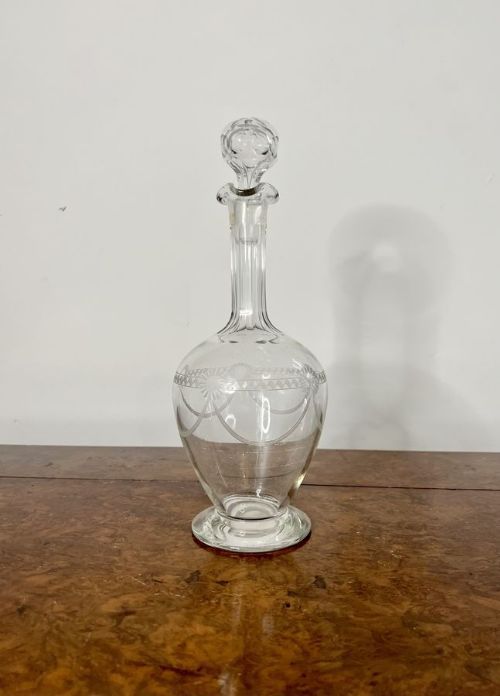
A victorian glass wine bottle encompasses heavy lead crystal decanters, tall service carafes, and shaft and globe vessels designed for the nineteenth-century dining room. These pieces originate primarily from British workshops, alongside notable continental items from Bohemian makers.
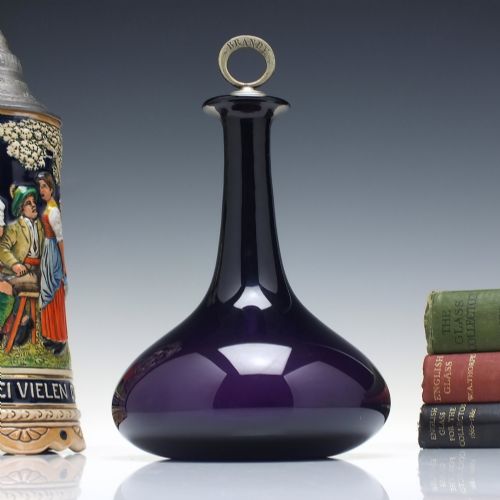
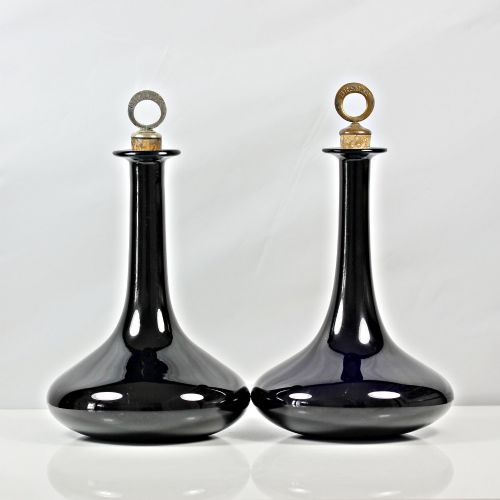
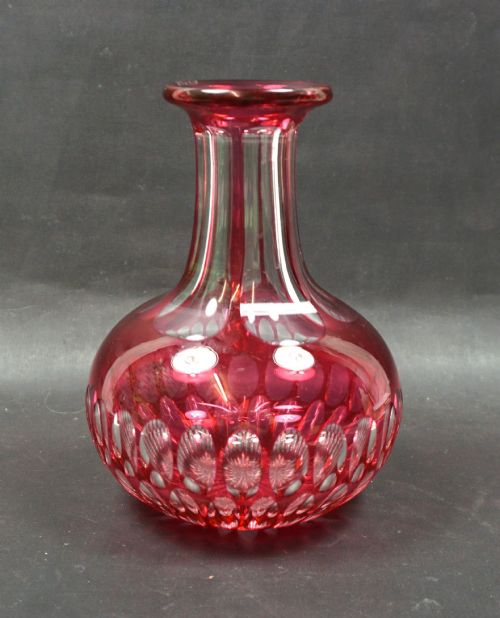
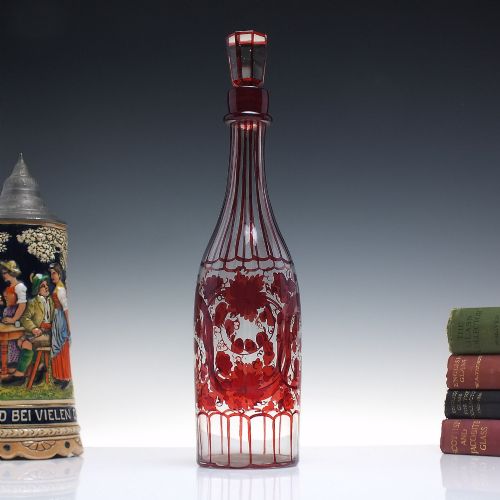
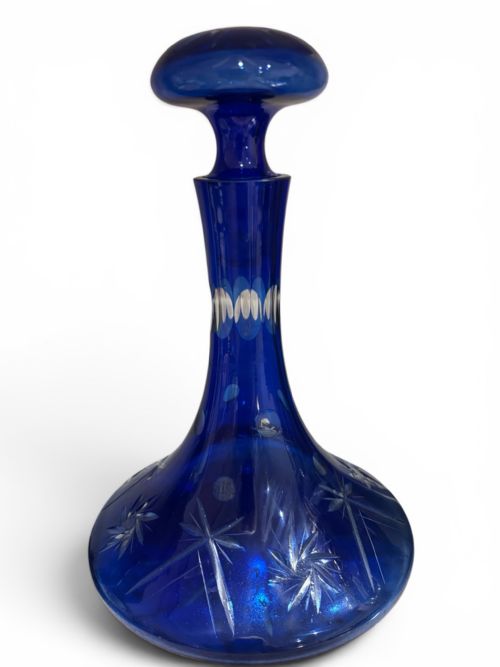
Buyers frequently encounter richly coloured examples in cranberry, amethyst, cobalt, and green glass, often paired with hand-painted decoration, overlay techniques, or metal mounts. Clear cut glass and lead crystal varieties remain equally common across the period.
Production spans the entire nineteenth century, drawing on styles ranging from William IV robustness to later Arts and Crafts simplicity. Forms shift between traditional decanters, serving bottles, flagons, and ewers intended for wine and spirits.
Materials and Techniques
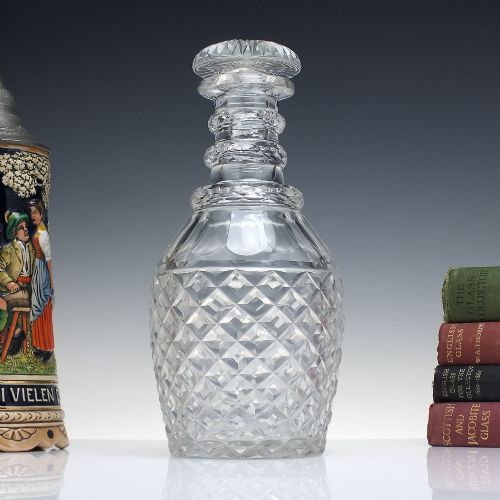
Makers utilised heavy lead crystal and clear glass, shaping vessels through blowing, optical moulding, and deep wheel-cutting to catch the light. Overlay techniques involved casing clear crystal with layers of coloured glass before cutting through the surface to reveal contrasts.
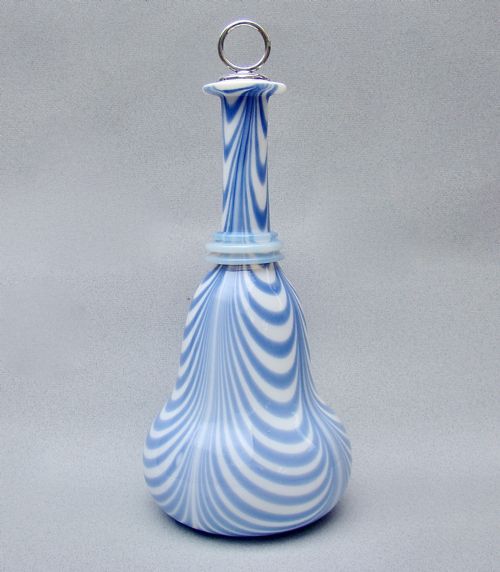
Surface decoration frequently combined hand painting, enamel work, and engraving, alongside metal fittings in silver plate and old Sheffield plate. Specialised glass types like Nailsea incorporated distinct looped or flecked colour patterns within the metal.
Victorian dining protocol dictated that wine decanters must travel around the table in a clockwise direction, mirroring the movement of the sun.
Judging Quality
Quality rests upon the crispness of the wheel-cut facets, the depth and clarity of coloured glass layers, and the balance of the vessel in the hand. Master glassmakers achieved precise wall thicknesses and sharp geometric definition without surface distortion.
The integration of metal mounts, such as silver necks or plated collars, distinguishes standard utility items from presentation pieces. Superior examples maintain unblemished surface detail and well-fitted stoppers original to the body.
James Powell·Hukin & Heath·Stevens & Williams
The Victorian Glass Wine Bottle Glossary
- Cranberry glass
- A rich red-pink glass coloured with gold chloride during production. This tone gained widespread popularity during the Victorian era for decorative tableware.
- Lead crystal
- Glass containing metallic lead oxide to increase weight, brilliance, and refractive index. It provides the heavy feel expected in nineteenth-century decanters.
- Shaft and globe
- A decanter silhouette featuring a long narrow neck above a rounded globular body. This profile offers stability and ample volume for aged wines.
- Overlay
- A technique of layering coloured glass over a clear crystal core. Subsequent cutting through the outer layer produces geometric patterns of contrasting colour.
- Nailsea glass
- Glassware characterised by flecked, looped, or splashed white or coloured enamel threads within clear or tinted glass. The style originated in Somerset before spreading to other regions.
Victorian Glass Wine Bottle: Frequently Asked Questions
How do I clean an old glass decanter?
Residue inside historical vessels responds best to warm water and specialised cleaning beads rather than harsh detergents. Gentle swirling prevents damage to ancient internal surfaces.
Avoid sudden temperature shifts to protect heavy lead crystal from thermal shock. Allow the bottle to dry completely upright before replacing the stopper.
Were these bottles meant for daily dining?
Middle and upper-class households utilised these vessels to transfer wine from storage casks to the dining table. They served both practical pouring functions and visual display.
Finer cut crystal and overlaid examples appeared during formal evening meals, while simpler serving bottles suited regular family gatherings.
How can I tell a genuine Victorian piece?
Examine the base for a polished pontil mark where the glassblower's rod was snapped off and ground flat. Nineteenth-century pieces typically exhibit minor irregularities in thickness and hand-finished surfaces.
Weight serves as another reliable indicator, as authentic lead crystal feels noticeably denser than modern pressed glass alternatives.
Do stoppers need to match the bottle?
Original stoppers were ground by hand to fit a specific neck, creating an airtight seal. Finding a matching replacement requires attention to the number on the stem and the grind of the glass.
Many surviving pieces retain their matched stoppers, which significantly enhances their completeness for collectors.