

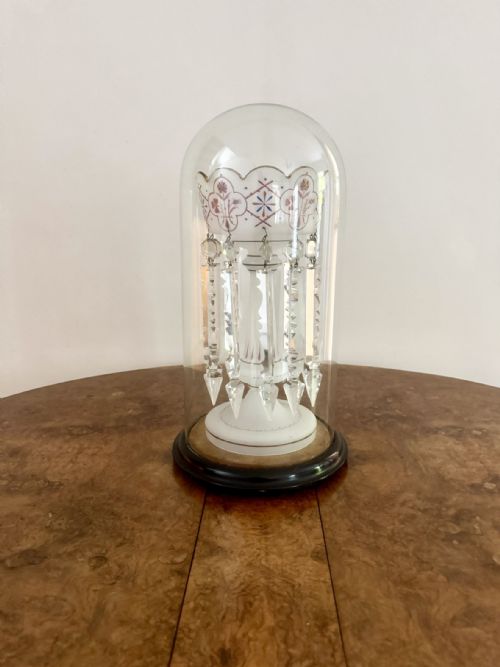


Victorian Glass Mantel Vase
These Victorian glass mantel vase examples are decorative glass vessels designed for the fireplace, offering colour and form from the nineteenth century.
Victorian Glass Mantel Vase
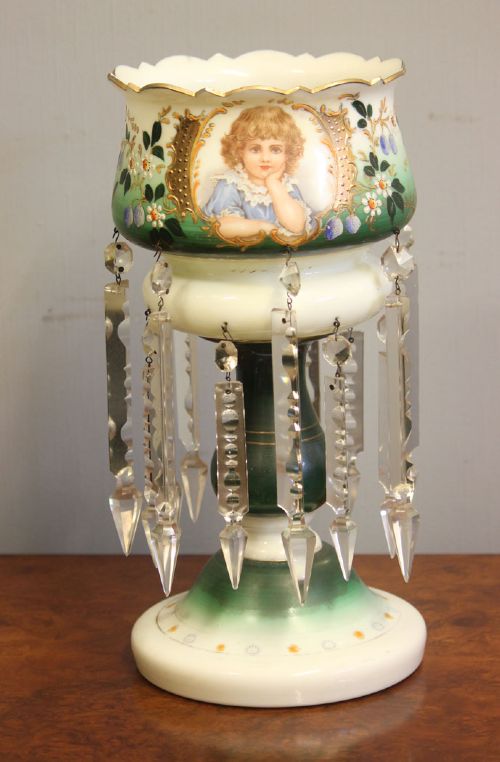
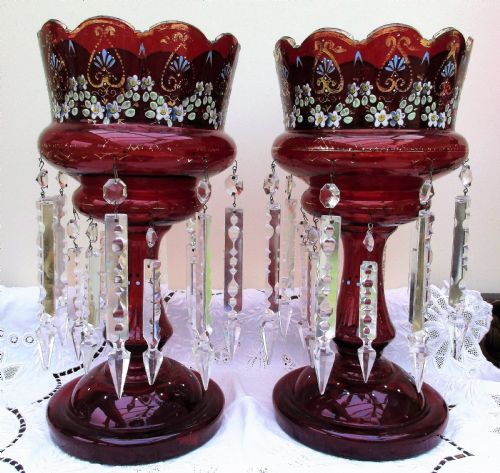
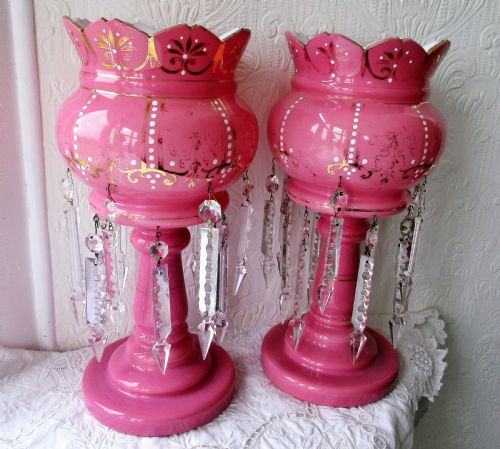
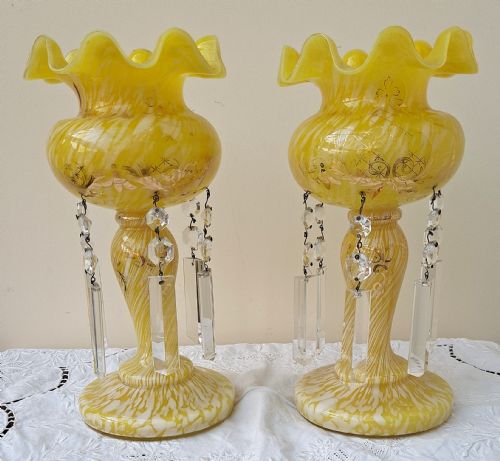
When you search for a victorian glass mantel vase, you encounter a selection of nineteenth century glass objects designed for display on the fireplace mantel. These pieces frequently appear as pairs of lustres or single vases utilising distinct hues of ruby, green, pink, and cranberry glass.
The inventory demonstrates that many forms function as table or mantel lustres featuring hanging crystal prisms alongside the main glass body. Alongside these standard lustres, you find bohemian overlay glass, flash glass, opaline, mercury glass, and enamelled amethyst glass vessels.
Most items date from the Victorian era, spanning specific decades through the latter half of the nineteenth century up to nineteen hundred. The selection encompasses both English and Bohemian origins, often presented in pairs intended for symmetrical arrangement.
Materials and construction
The pieces rely on coloured glass production techniques, utilising ruby glass, cranberry glass, and green glass bodies formed during the nineteenth century. Makers frequently applied gold leaf, enamel decoration, or layered overlay methods to the outer glass surface.
Many examples incorporate cut crystal prisms suspended from the rim to catch the light around the mantelpiece. Bohemian flash glass techniques and mercury glass production further define the fabrication methods evident in the collection.
The listings span the nineteenth century, featuring Victorian and Bohemian pieces in ruby, cranberry, green, and amethyst glass.
Factors that separate the finest examples
Quality rests upon the depth of the glass colour and the precision of any overlay cutting or hand-applied enamel work. Superior examples display crisp faceting on the glass body and retain matching sets of original cut crystal prisms.
The complexity of the form and the presence of detailed portraits or extensive gilding elevate certain pieces above simpler coloured glass vessels. Condition and the integrity of the paired elements determine the standing of an item within the range.
The Victorian Glass Mantel Vase Glossary
- Lustre
- A decorative glass vase fitted with a ring of hanging crystal prisms that catch and refract light. These were popular on nineteenth-century mantelpieces.
- Flash glass
- Glass formed by blowing a thin layer of coloured glass over a colourless or contrasting base layer, then partially cutting through the top layer to reveal the contrasting hue beneath.
- Overlay glass
- A technique where multiple layers of different coloured glass are fused together before being cut away to create contrasting patterns and windows.
- Cranberry glass
- A rich pinkish-red glass produced by adding gold chloride to the molten glass batch. It is a signature material of the Victorian period.
- Mercury glass
- Double-walled blown glass silvered on the inside with a liquid mercury amalgam, sealed at the base to create a reflective mirror-like finish.
Victorian Glass Mantel Vase: Frequently Asked Questions
What is a mantel lustre?
A mantel lustre is a decorative glass vase fitted with a rim that holds dangling crystal prisms. They were placed on fireplace mantels to reflect candlelight and gas illumination.
Most surviving examples date from the Victorian period and were made in pairs for symmetrical display on either side of a clock or mirror.
How do I date a Victorian glass vase?
Dating relies on stylistic clues, manufacturing techniques, and the specific colours popular during different decades of the nineteenth century. Ruby, cranberry, and green glass were favoured at various times throughout the era.
Examining the pontil mark on the base and the method of glass coloration provides further evidence of the period of manufacture.
Where were these glass pieces made?
The pieces originate primarily from English glassworks and Bohemian factories renowned for coloured and layered glass production. Bohemian makers excelled in overlay techniques and flash glass.
English makers produced similar mantel ornaments, often incorporating enamel painting and gilding to suit Victorian tastes.
How should I clean my glass lustre?
Cleaning requires warm soapy water and a soft cloth applied gently to the glass surface. The hanging crystal prisms should be removed and washed individually to prevent damage.
Avoid abrasive cleaners or submerging pieces with gold leaf or enamel details for extended periods.