

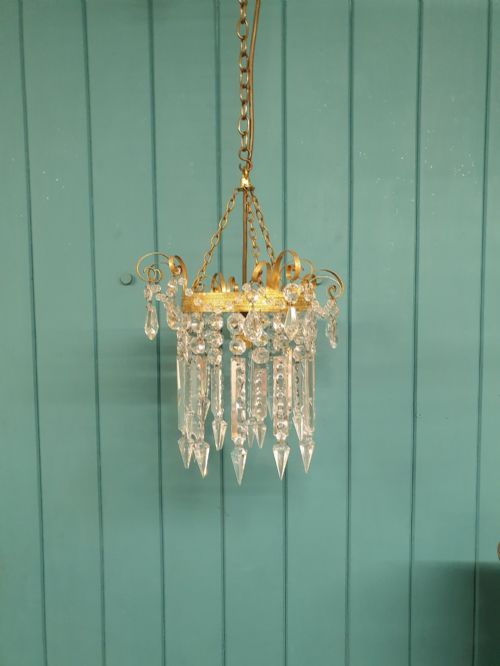


Victorian Cut Crystal Drop
These victorian cut crystal drop pieces combine heavy refractive glass with polished brass and gilt frames, bringing genuine 19th-century sparkle to any interior.
Victorian Cut Crystal Drop
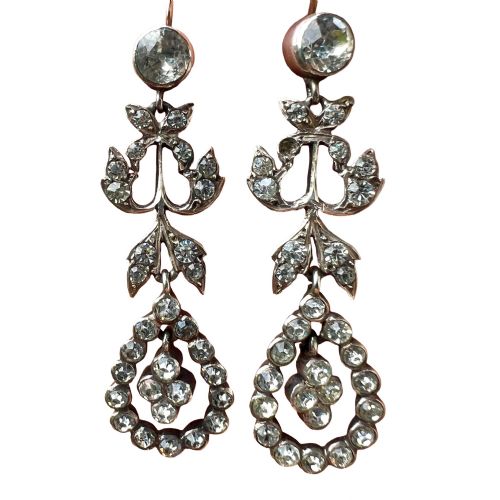
When you search for victorian cut crystal drop, you encounter a specialised selection of lighting and mantel ornaments primarily originating from 19th-century English, French, and Bohemian workshops. These items range from large chandeliers and electroliers to pairs of mantel lustres, wall-lights, and occasionally drop earrings featuring paste or citrine stones.
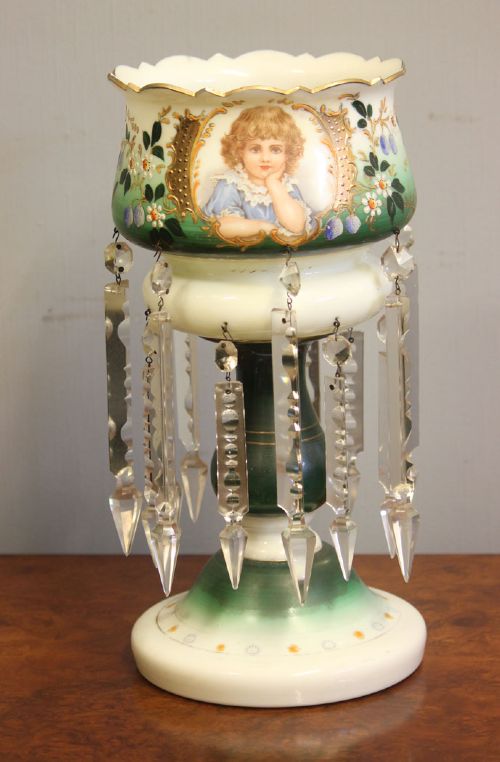
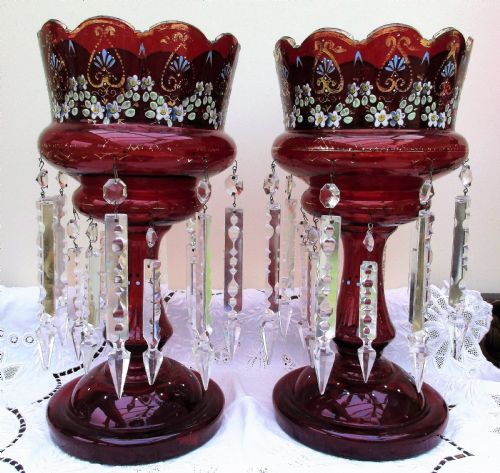
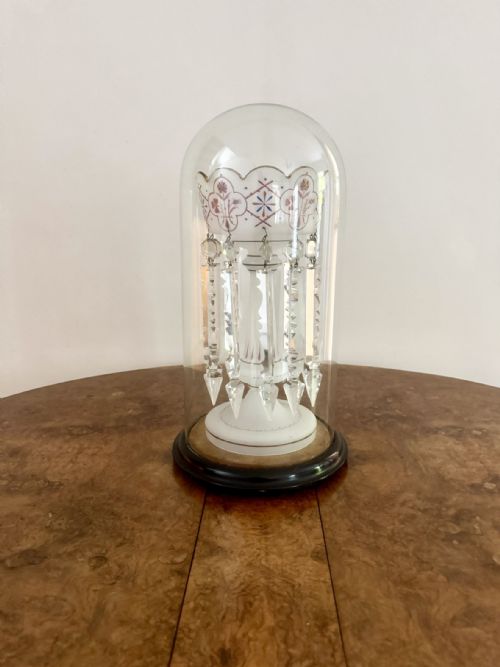
The mantel lustre is the form most frequently met on this page, standing on a sturdy base with delicate glass or crystal pendants suspended from the rim. Alongside these, large multi-branch chandeliers and waterfall pendant lights dominate the heavier lighting categories, each outfitted with prismatic drops designed to catch and scatter light.
Materials and construction methods
Makers shaped these objects using lead crystal and glass, frequently employing ruby, green, cranberry, or milk glass alongside flash glass techniques. Molten material was blown or pressed into form before artisans applied wheel-cut facets to the surface to maximise optical refraction.
Metal components relied on brass, gilt bronze, and occasionally silver settings to anchor the glass elements. Pendants and drops hung from delicate wire loops or pins, linking the heavy glass bodies to wall-lights, chandeliers, and lustre rims.
Some Victorian chandelier drops doubled as early conversation starters by doubling up as concealed prisms for projecting miniature rainbow patterns across parlour walls.
Standards of craftsmanship and preservation
Quality rests heavily on the depth and crispness of the facet cutting on both the body and the hanging pendants. Superior examples show sharp, clean edges on every cut rather than rounded, soft polish lines.
Completeness dictates upper-tier status, meaning the survival of a matching set of original crystal drops without replacements. The weight of the metal framework and the clarity of the coloured or clear glass further separate standard production from exceptional workshop output.
Baccarat
The Victorian Cut Crystal Drop Glossary
- Lustre
- A decorative tabletop ornament, usually featuring a central vase or stem fitted with a ring of hanging crystal drops. They sat on mantelpieces to catch the flicker of candle or gas light.
- Flash glass
- A technique where a thin layer of coloured glass is fused over a clear glass body before being cut through to reveal the clear layer underneath. This created striking contrast in ruby and green vessels.
- Electrolier
- A light fixture originally designed for gas or candles that has been converted to electricity. These often retain their heavy 19th-century brass frames and crystal drops.
- Paste
- Hand-cut glass or leaded glass used as a gemstone simulant in jewellery and decorative ornaments. It provided high refractive brilliance without relying on mined stones.
- Briolette
- A drop-shaped gemstone or crystal cut with triangular facets entirely around its surface. This specific cut maximised sparkle from every conceivable viewing angle.
Victorian Cut Crystal Drop: Frequently Asked Questions
What are mantel lustres used for?
Mantel lustres served primarily as decorative ornaments on living room and dining room mantelpieces during the 19th century. Their hanging crystal drops caught and multiplied the ambient light from nearby candles.
Over time, collectors came to prize them as centrepieces for formal sideboards and display tables. They remain functional decorative objects that instantly establish a period interior.
How can I tell Victorian lustres apart from earlier ones?
Victorian pieces frequently display bolder colours such as cranberry, ruby, and opaque milk glass alongside heavier press-moulded bases. Earlier Regency and Georgian examples lean toward lighter silhouettes and simpler cut crystal configurations.
Examining the weight of the metal and the precision of the facet cuts often clarifies the production era. Colour variety expanded significantly as chemical tinting methods advanced through the 19th century.
Can antique chandeliers be hung safely today?
Most antique chandeliers and electroliers require professional rewiring to meet modern electrical safety standards before ceiling installation. Electricians should anchor the heavy brass and bronze frames directly into ceiling joists.
The fragile crystal drops are best attached only after the main metal frame is securely fastened overhead.