




Victorian Glass Desk Lamp
A victorian glass desk lamp brings heavy brass engineering and glowing coloured glass together on a working surface.
Victorian Glass Desk Lamp
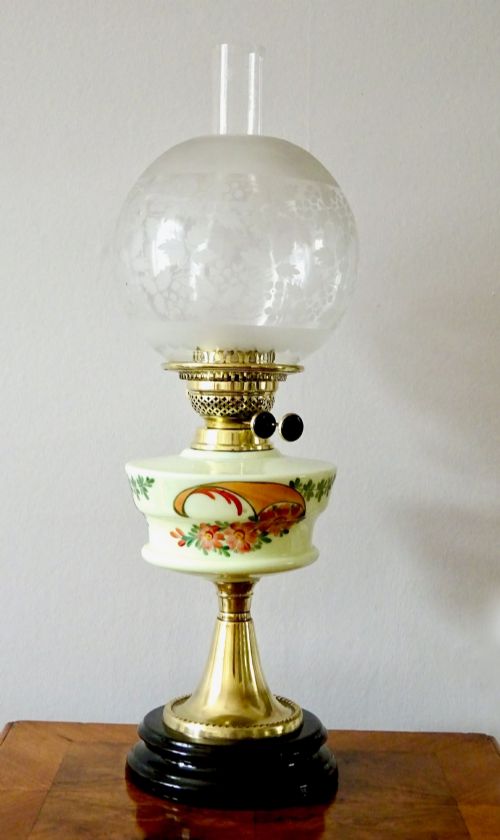
A buyer searching for a victorian glass desk lamp encounters heavy brass and bronze structures paired with reservoirs and shades formed from opaline, cut, frosted, or ruby glass. These pieces span from the mid nineteenth century into the Edwardian period, often incorporating oil or paraffin mechanisms that were later converted for electricity.
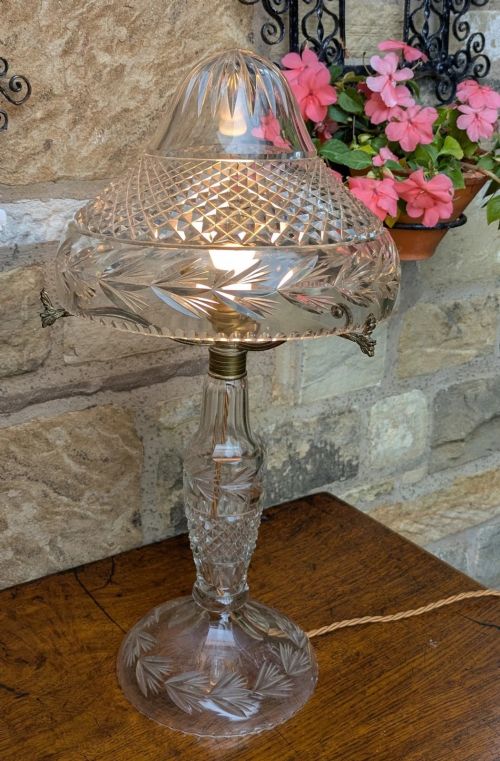
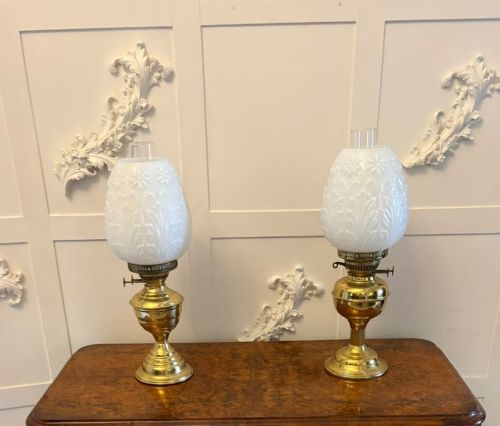
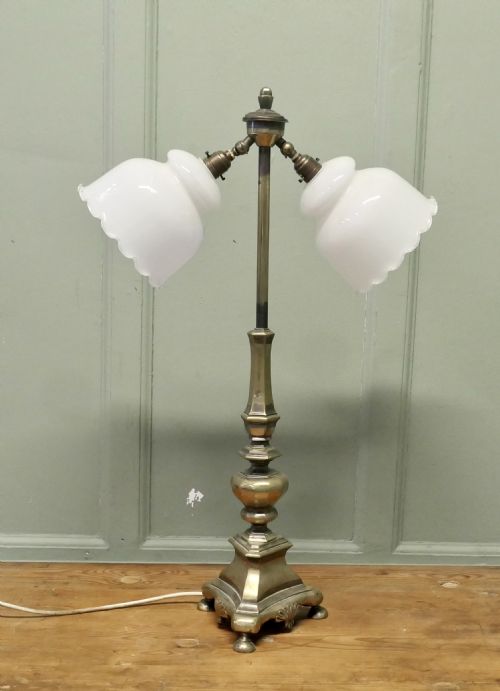
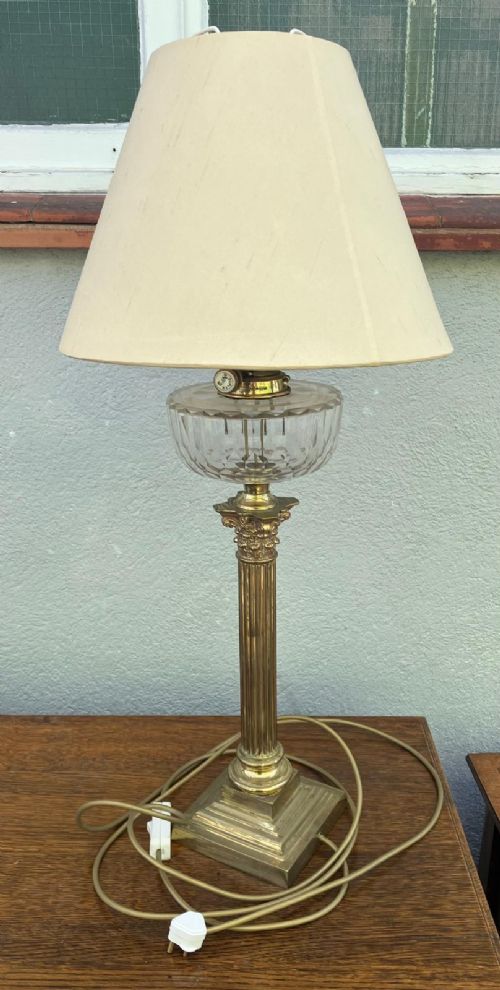
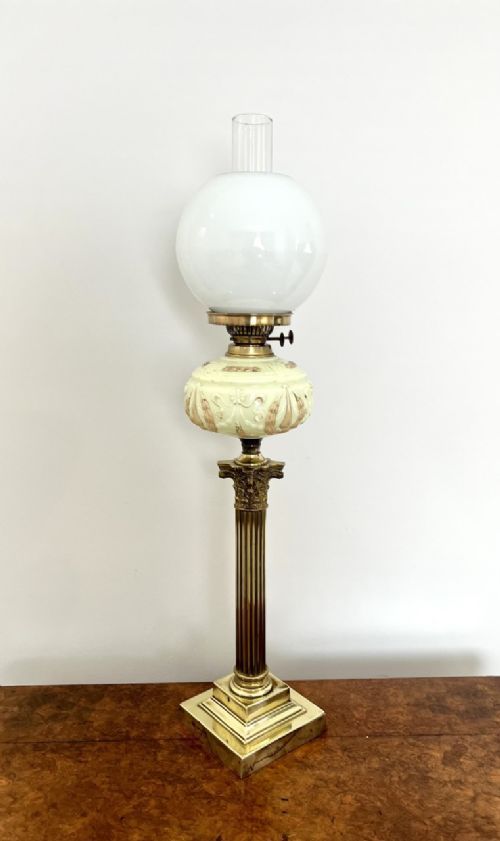
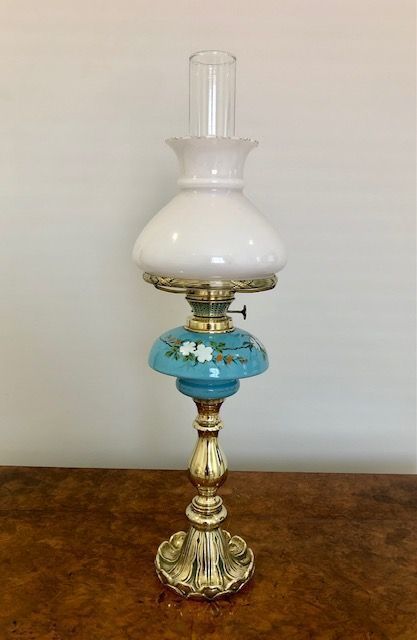
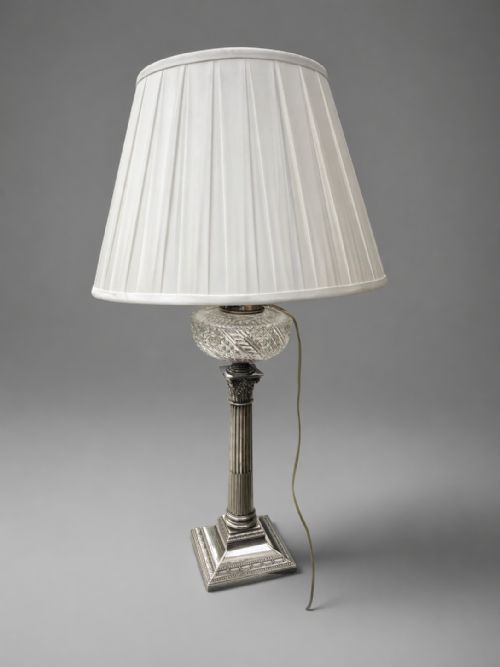
The most common configurations on this page include classical Corinthian columns mounted on stepped bases, alongside twin angled reading lamps and heavy table oil lamps fitted with contrasting glass shades. Formats range from modest brass desk pieces to tall decorative lamps featuring elaborate floral or geometric cutting.
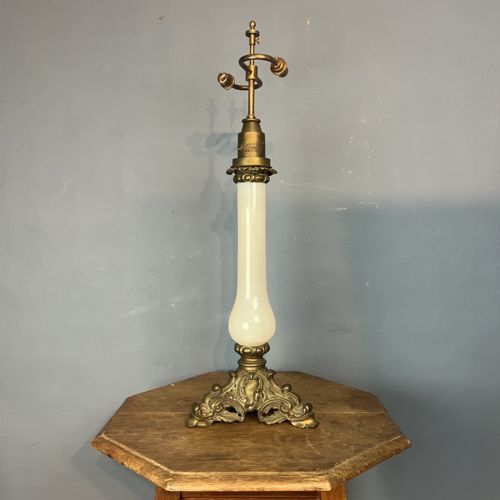
Origins include English workshops alongside French and German makers, utilising durable metals and high grade lead crystal or pressed opaline glass designed to soften harsh indoor illumination.
Materials and construction
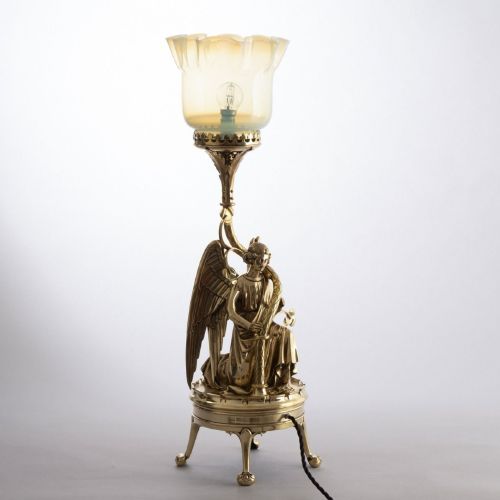
Heavy brass and cast bronze form the structural columns, burners, and weighted bases, providing the necessary stability to support tall glass reservoirs and shades. These metal components frequently feature turned details, fluting, or classical Corinthian capitals.
Glass elements include hand cut lead crystal, opaque opaline glass, and flashed ruby glass with etched patterns, shaped through blowing, pressing, or wheel cutting. Metal mounts and collars secure the glass components to the weighted bases without adhesives.
The inventory records table lamps, oil lamps, desk lamps, and spirit dispensing barrel lamps dating from 1850 onwards.
Distinguishing quality
Quality rests upon the crispness of the brass casting, the depth and clarity of the glass cutting, and the retention of original matching components. Superior examples display sharp fluting on column shafts, heavy gauge metal that resists bending, and thick glass reservoirs free from internal clouding.
Maker signatures stamped onto burner mechanisms or collars elevate a piece, as do well proportioned paired sets where the brass patination and glass tint match evenly across both items.
Mc Gary·Emile Picault·Joseph Hinks·Osler·Wild and Wessel
The Victorian Glass Desk Lamp Glossary
- Opaline glass
- An opaque or translucent pale glass, often white or pastel tinted, used for soft light diffusion in Victorian lighting.
- Corinthian column
- A classical architectural column style featuring ornate acanthus leaves on the capital, frequently adopted for Victorian lamp standards.
- Vaseline glass
- A yellow or greenish glass containing uranium dioxide that glows under ultraviolet light, sometimes found in nineteenth century lighting.
- Reservoir
- The enclosed vessel situated beneath the burner that held oil or paraffin before modern electrical conversion.
- Duplex burner
- A double wick mechanism common on larger nineteenth century oil lamps, designed to produce a brighter flame.
Victorian Glass Desk Lamp: Frequently Asked Questions
How do I convert an oil lamp to electricity?
Most antique lamps accommodate modern wiring by running a discreet cord down through the central column without altering the exterior brass or glass components.
Qualified restorers handle this process while preserving original burners and collars wherever possible.
Are these lamps safe for daily use?
When fitted with modern electrical wiring and PAT tested by a professional, these sturdy metal and glass lamps function reliably in contemporary spaces.
Their heavy weighted bases prevent accidental tipping on desks and tables.
How do I clean antique glass shades?
Warm water and mild soap safely remove dust from opaline and cut glass components without damaging aged patination on the brass mounts.
Harsh chemical cleaners should be avoided to protect delicate etched patterns and gilt highlights.
How do I date a brass and glass lamp?
Dating relies on burner patents, screw thread standards, and stylistic markers such as Gothic Revival motifs or classical Corinthian columns.
Maker stamps on metal collars provide the most direct evidence of a workshop's active production period.