
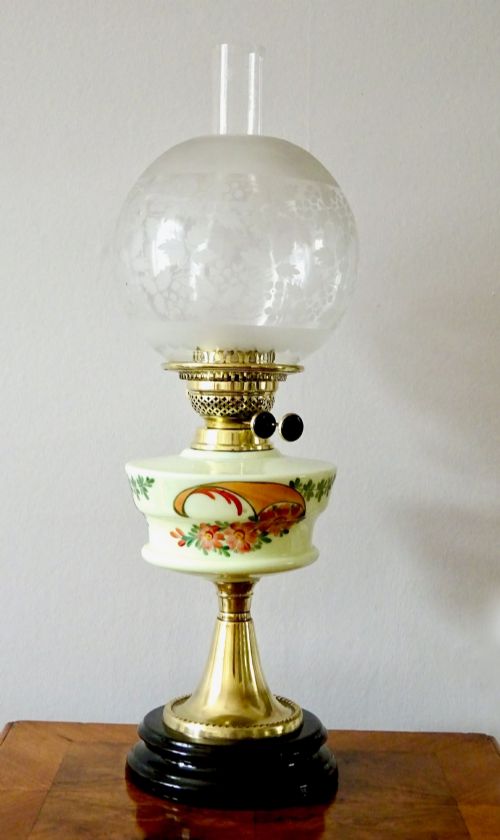


Victorian Glass Chimney Burner
A victorian glass chimney burner brings character and warm ambient light to a room, combining functional oil lighting with decorative glass and brass.
Victorian Glass Chimney Burner
A victorian glass chimney burner typically takes the form of an oil lamp or table lamp designed for domestic illumination. These pieces combine a fuel reservoir with a burner mechanism and a glass chimney to steady the flame.
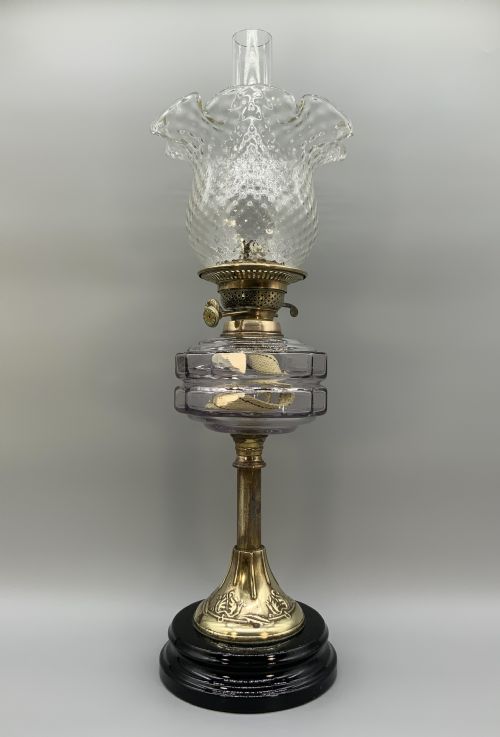
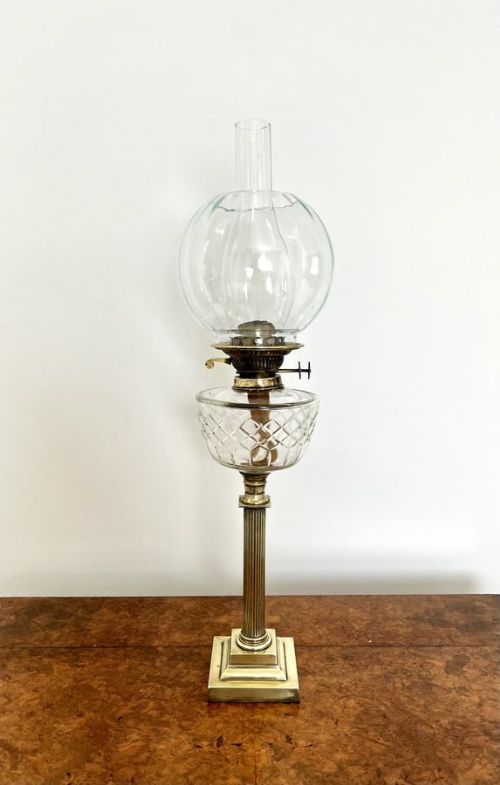
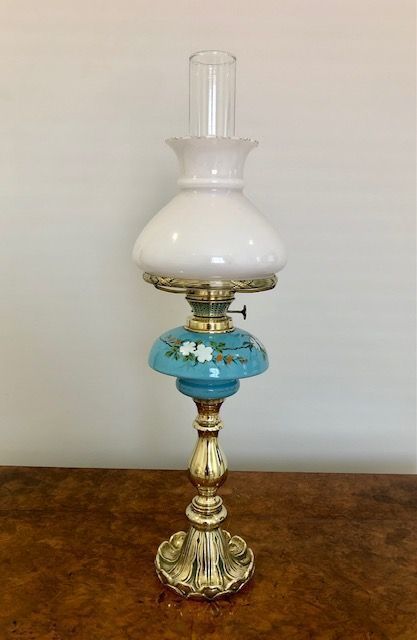
The selections encountered here span the Victorian and Edwardian eras, stretching into the early twentieth century. You will frequently find brass columns paired with clear glass, opaline glass, or richly coloured cranberry glass shades.
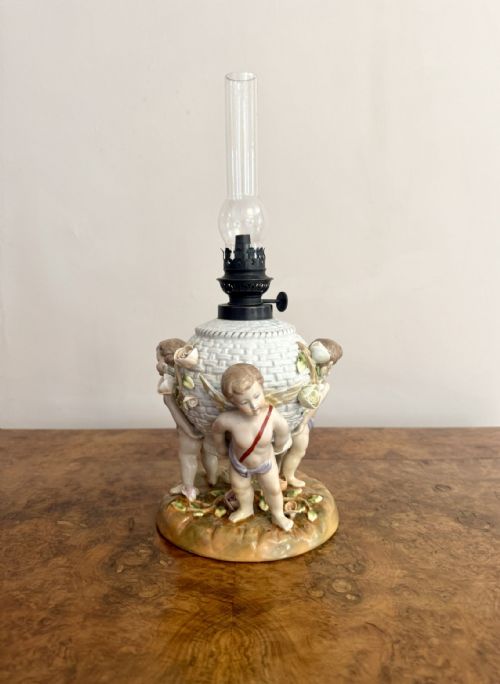
Some examples incorporate figurative ceramic or porcelain bases, including owl designs, while others feature hand-blown art nouveau shades. The overarching aesthetic remains rooted in nineteenth-century domestic lighting traditions.
How they were made
Makers utilised brass for structural columns and burners, pairing metal components with ceramic or porcelain reservoirs. Glassmakers produced shades and chimneys through hand-blowing and cutting techniques, achieving both clear and opaline finishes.
Ceramic elements often featured moulded animal forms or hand-painted details. Metalwork relied on casting and turning brass, while glass components demonstrated skilled manipulation of molten material into globes and chimneys.
Listings demonstrate a strong representation of brass and glass construction across the Victorian and Edwardian periods.
What varies in quality
The distinction between standard domestic lighting and finer examples lies in the weight of the brass and the crispness of the glass cutting. Heavier metal castings and deeply faceted crystal or cut glass indicate superior workshop production.
Artistic execution in ceramic components, such as painted porcelain figures and hand-blown art nouveau shades, elevates certain pieces above utility items. The integration of maker-marked burner mechanisms further separates ordinary lamps from notable survivals.
Messengers·Harrods·Sitzendorf
The Victorian Glass Chimney Burner Glossary
- Chimney
- A narrow glass tube placed over the burner to steady the flame and draw air into the wick. This component protects the flame from drafts and helps maintain an even burn.
- Opaline Glass
- A semi-translucent white glass popular in nineteenth-century lighting. It softens the light emitted from the oil reservoir.
- Cranberry Glass
- A rich red-pink glass created by adding gold chloride to the molten batch. It imparts a warm glow when the lamp is lit.
- Reservoir
- The container that holds the lamp oil or paraffin beneath the burner assembly. These are found in glass, porcelain, and brass.
- Burner
- The metal mechanism mounted atop the reservoir that regulates the wick and supports the glass chimney. Many incorporate thumb wheels for adjusting the flame height.
Victorian Glass Chimney Burner: Frequently Asked Questions
How do these oil lamps work?
The lamp relies on a cotton wick submerged in oil within the lower reservoir. Capillary action draws the fuel upward to the burner where it is ignited inside the protective glass chimney.
Adjusting the thumb wheel on the burner raises or lowers the wick to control the size of the flame. The chimney ensures a steady draft for a clean burn.
How do I date a glass lamp?
Dating relies on stylistic clues, materials, and burner patents stamped into the metalwork. Victorian pieces often feature heavy brass bases and cranberry or opaline shades, while Edwardian examples show early art nouveau influences.
Consulting the shape of the ceramic body and the type of glass shading helps narrow the decade of manufacture. Maker marks on the brass burner provide the most definitive chronological anchor.
How do I clean an antique lamp?
Glass chimneys and shades can be washed gently in warm soapy water to remove accumulated dust and soot. Take care with hand-painted porcelain or coloured glass surfaces to preserve the finish.
Brass components benefit from dusting with a soft cloth rather than aggressive polishing, which can remove aged patination. Avoid submerging weighted bases or vintage wick mechanisms in water.