


Victorian Gilt Framed Artwork
These pieces of victorian gilt framed artwork combine nineteenth-century painting traditions with elaborate metallic mouldings, bringing period depth and ornamental warmth to any interior.
Victorian Gilt Framed Artwork
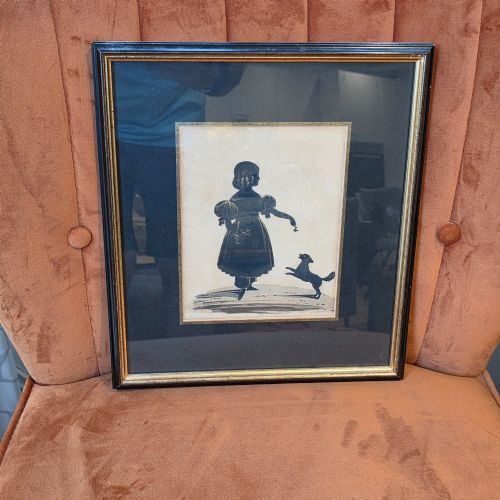
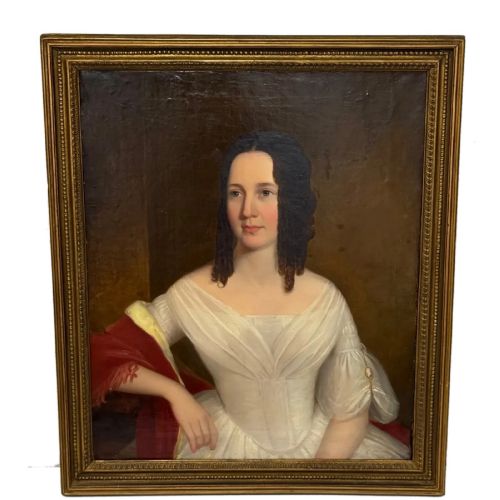
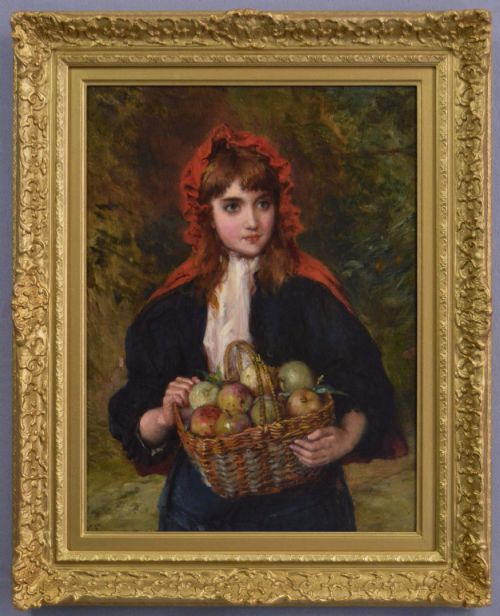
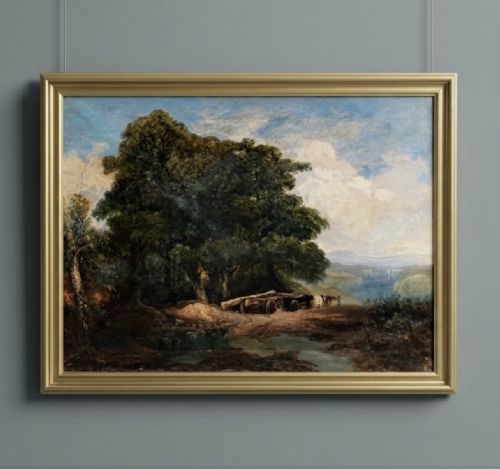
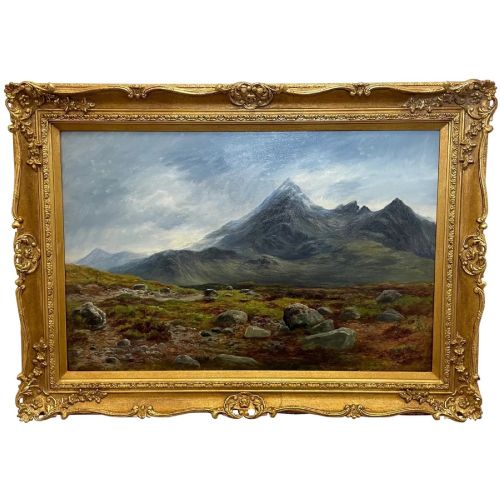
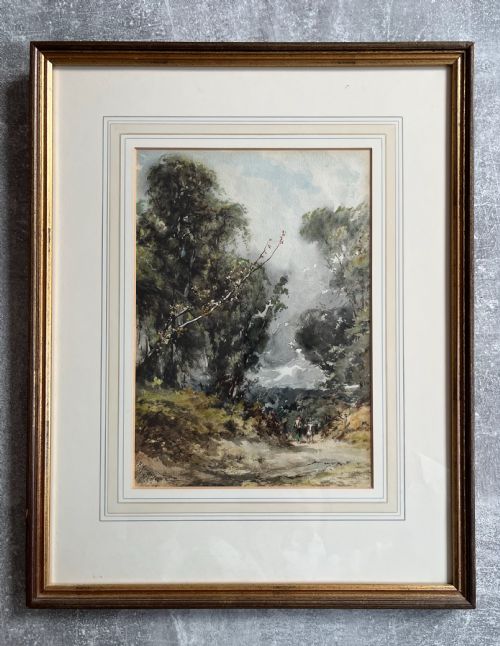
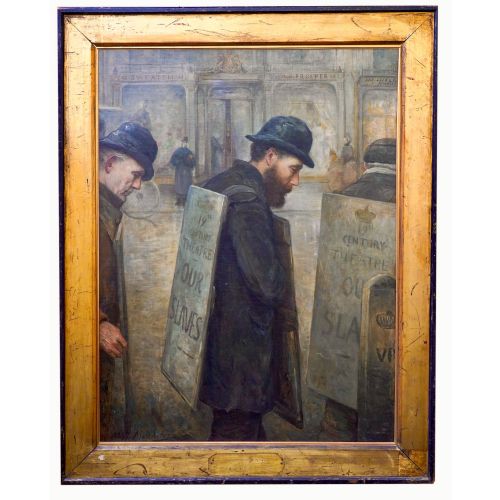
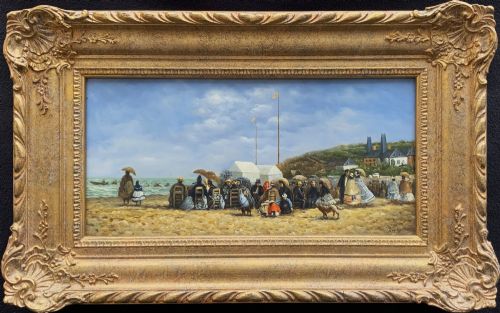
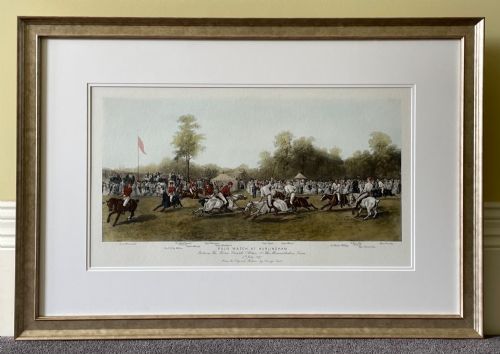
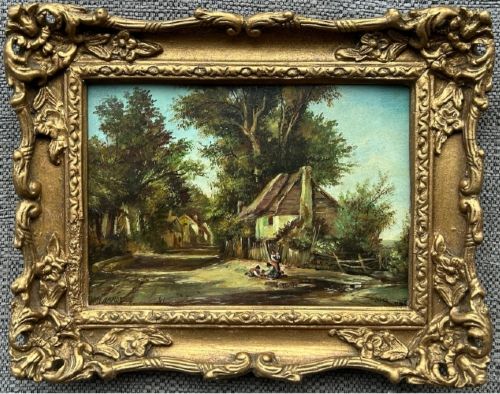
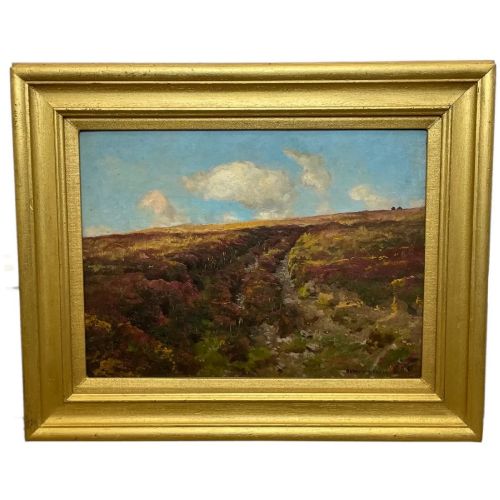
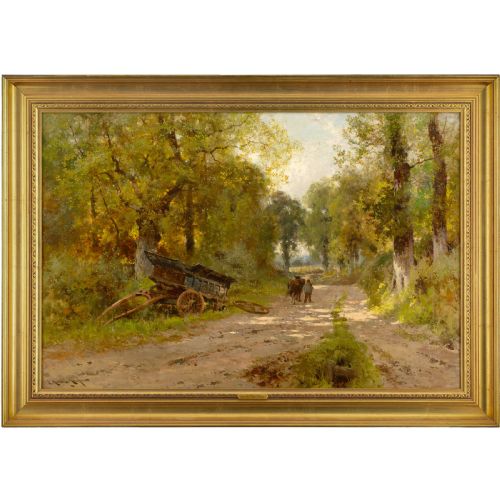
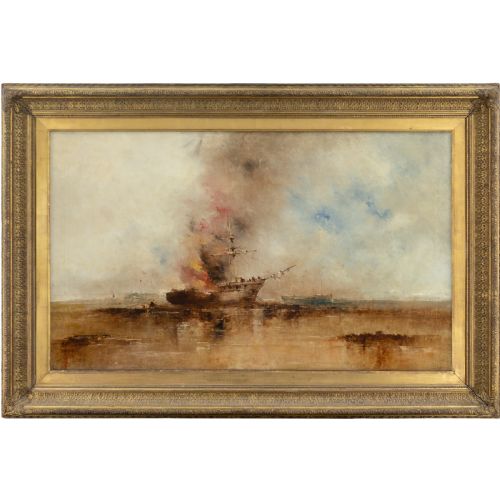
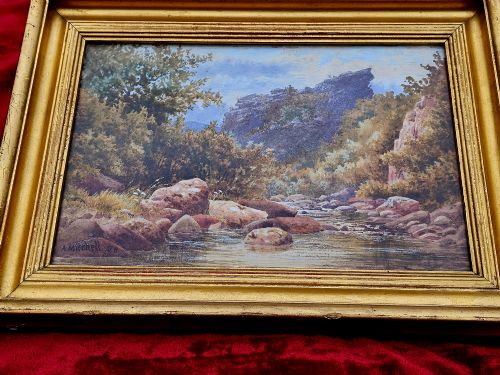
Victorian gilt framed artwork encompasses oil paintings, watercolours, silhouettes, and prints enclosed within gilded wooden surrounds. The subjects span romantic and Scottish landscapes, maritime scenes, portraiture, social history, and still life compositions.
Most examples originate from the nineteenth century, though the selection includes related works extending into adjacent decades and styles such as Regency and Post-Impressionism. Buyers encounter diverse formats, ranging from intimate watercolours behind glass to monumental oil paintings on canvas.
Framing is integral to these pieces, typically utilising wood finished with gilt leaf, alongside variations such as burr maple frames. The works reflect academic, realist, and domestic traditions recorded across British and European schools.
Materials and Techniques
The physical objects combine oil paint or watercolour applied to canvas, panel, board, or paper, mounted behind glass where appropriate. Canvases are stretched over wooden frames, whilst works on panel utilise prepared wooden supports.
Frames are constructed from timber, predominantly wood and giltwood, shaped to form moulding profiles that house the artwork. Gilding techniques apply thin metallic leaf to the wooden substructure to create a reflective golden surface.
Victorian Gilt Framed Artwork Retail Price Guide 2026
Typical asking prices for victorian gilt framed artwork among the pieces listed under this phrase on Sellingantiques today, from the lower quarter to the upper quarter. They describe what is for sale here now, not the wider market.
Listings incorporate nineteenth-century academic and realist styles alongside Victorian landscape and maritime painting traditions.
Evaluating Quality
Quality rests upon the skill of the execution, evident in the handling of brushwork, anatomical proportion, light, and perspective within the painted surface. Works by named artists or those associated with academic institutions demonstrate superior draughtsmanship and compositional confidence.
The joinery and decorative crispness of the gilt framing also separate standard production from finer examples. Heavier, intricately moulded giltwood frames indicate greater workshop input and material investment than simpler wooden battens.
William James Hubard·William Oliver·Richard Sebastian Bond·William Beattie-Brown·George Fotherly Hargitt·Felix Stone Moscheles·Dumini Leopoldo·William Howard Hardy·Arthur Wardle·John Horace Hooper·William McAlpine·A Mitchell·Alfred Fontville de Breanski Jr·Oliver Clare·Frederick Morgans·Edward Mills·Sir Joshua Reynolds·Sir Thomas Lawrence·William Banks Fortescue·Stephen Samuel Lewin·John Rose Miles·Vittorio Reggianini·Thomas W Lascelles·Mark William Langlois·David Bates
The Victorian Gilt Framed Artwork Glossary
- Giltwood
- Wood that has been coated with gold leaf or a metallic substitute. This material defines the bright, ornamental surrounds typical of nineteenth-century frames.
- Oil on Canvas
- A painting medium where pigments are suspended in drying oils and applied to a stretched woven fabric support. This combination forms the durable surface seen in many period works.
- Watercolour
- A painting method using water-soluble pigments applied to paper supports. These pieces are traditionally displayed beneath glass to protect the delicate paper surface.
- Lithograph
- A print produced through a flat-surface printing process using a stone or metal plate. This technique allowed the reproduction of graphic images and portraits in the nineteenth century.
- Needlework
- A textile craft executed with a needle, such as Berlin work embroidery. Framed examples preserve decorative stitched panels behind protective glazing.
Victorian Gilt Framed Artwork: Frequently Asked Questions
What subjects are common in these artworks?
The selections frequently feature landscapes, coastal scenes, domestic interior genre scenes, and detailed portraiture. Many depict animals, botanical studies, or historical narratives characteristic of nineteenth-century taste.
Subjects range from Scottish highland views and maritime clashes to intimate studies of children, animals, and everyday domestic life.
How do I identify the period of a frame?
Period frames are identified by their timber construction, corner joinery, and the composition of the gesso and gilt layers. Nineteenth-century mouldings often use applied composition ornaments over a wooden base.
Examining the reverse reveals older fixings, stretcher marks, and panel construction methods consistent with Victorian workshop practices.
Are watercolours displayed differently from oil paintings?
Watercolours and works on paper require protective glass and mounts to prevent atmospheric damage and direct contact with the frame. This framing protects the delicate pigment and paper support.
Oil paintings on canvas or panel are traditionally left unglazed to allow the textured paint surface to remain visible without optical interference.
What is Berlin work?
Berlin work is a type of nineteenth-century needlework embroidery stitched from printed colour-patterned charts. These textiles often feature domestic animals or floral motifs executed in wool.
When encountered in period settings, these embroidered panels are frequently preserved inside original wooden frames such as burr maple.