




Victorian Gilt Accent Chair
A Victorian gilt accent chair brings undeniable warmth and historical character to a room through its polished gilding and period forms.
Victorian Gilt Accent Chair
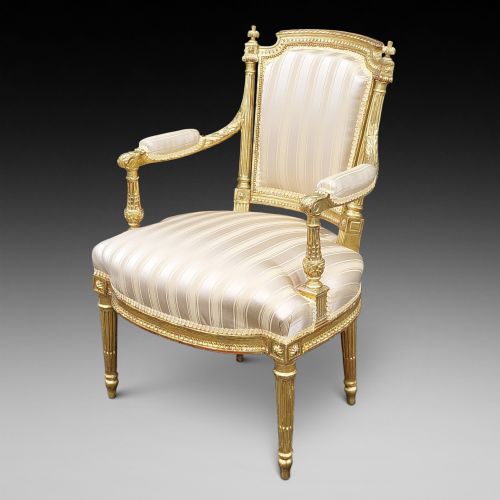
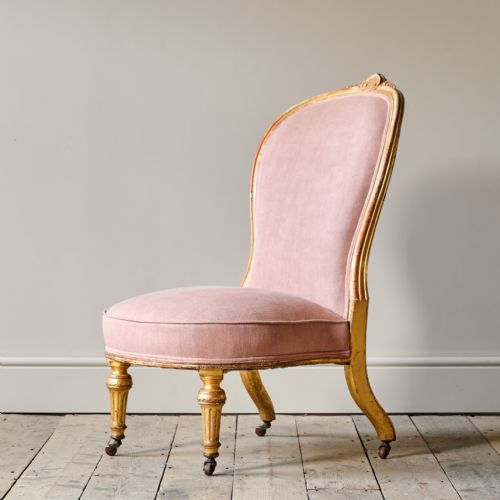
A victorian gilt accent chair encompasses a variety of seating forms from the nineteenth century, ranging from salon chairs and side chairs to nursing chairs and fireside armchairs. The pieces appearing here span the Victorian era, alongside earlier Regency examples and specific revivals such as Louis XVI and Rococo.
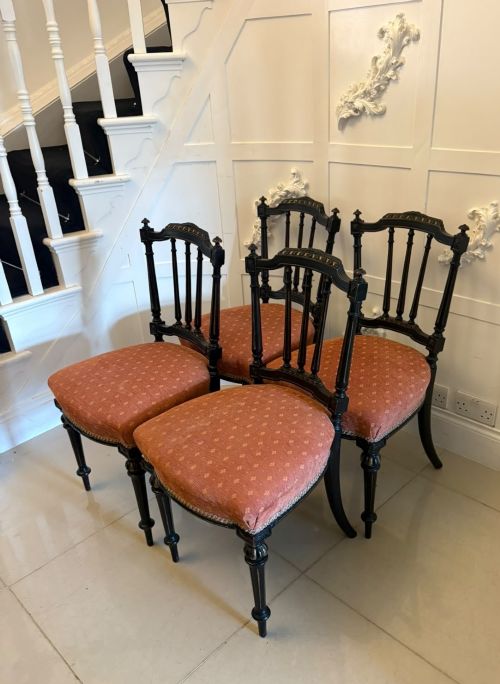
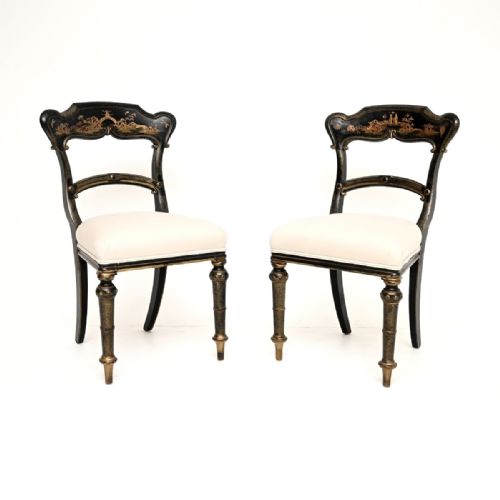
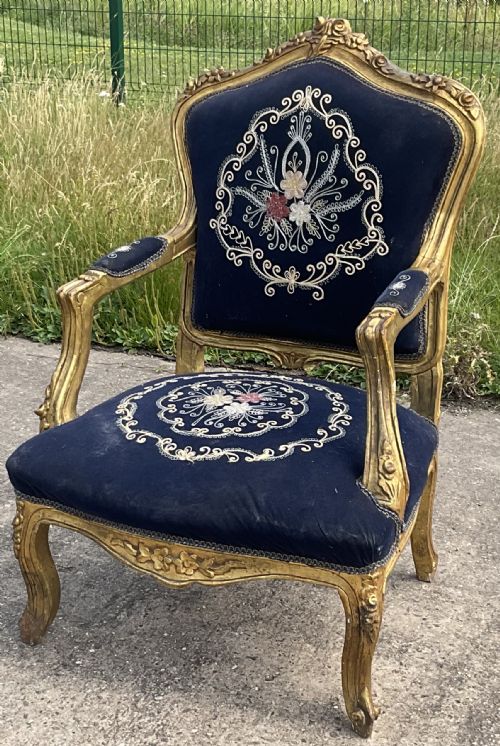
Buyers encounter diverse stylistic expressions within this category, including French revival fauteuils, ebonised and gilt dining chairs, and lacquered chinoiserie side chairs. Forms also extend to smaller bedroom chairs, child chairs, and slipper chairs featuring gilt legs or frames.
The materials and aesthetic influences recorded across these examples reflect both traditional British manufacturing and international design inspirations, such as Anglo-Indian carved wood or Pugin style hall chairs. Each piece offers a distinct seating solution tailored to nineteenth century domestic interiors.
Materials and construction
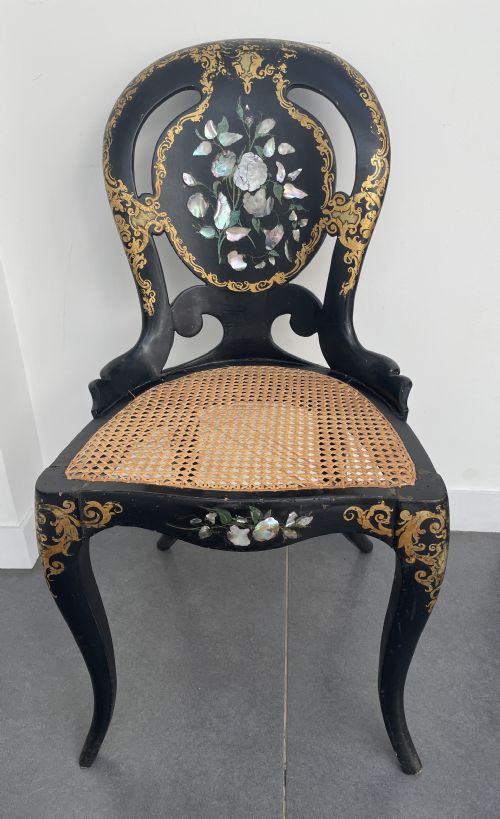
Makers constructed these chairs primarily using timber frameworks of giltwood, ebonised wood, beechwood, and papier mache, frequently supplemented by brass elements. Carved details and turned components form the structural base for subsequent surface decoration.
Surfaces received applied gilding, silver gilt, or paintwork, occasionally complemented by inlaid mother of pearl or lacquered finishes. Upholstery schemes rely upon period textiles including silk fabric and velvet to finish the seating surface.
Current listings feature nineteenth century periods alongside materials such as giltwood, velvet, silk, and ebonised wood.
Evaluating craftsmanship
The refinement of carved ornament and the crispness of the giltwood or ebonised finish dictate the visual strength of the piece. Superior examples display deeply chiselled woodwork and harmonious proportions across arms, legs, and crest rails.
The selection of covering materials, from original or period silk and velvet to intricate mother of pearl inlay, separates standard production from finer parlor and salon seating. Structural integrity in the joinery of armchairs and side chairs underpins the longevity of the gilding and fabric.
Lamb of Manchester·Holland & Sons
The Victorian Gilt Accent Chair Glossary
- Giltwood
- Timber that has been coated with gold leaf or a metallic substitute. This finish provides the bright, reflective surface characteristic of formal nineteenth century seating.
- Fauteuil
- An open-framed armchair with upholstered armrests. Originating in France, this form became popular in British revival salons.
- Ebonised
- Wood treated with a finish to imitate ebony. This dark staining often contrasts with gilt highlights.
- Nursing chair
- A low-seated chair designed for comfort near a fire or nursery. These pieces frequently feature prominent backs and padded upholstery.
- Papier mache
- A composite material made from paper pulp or shreds bound with glue. Victorian makers moulded this substance into durable chair structures before painting and gilding them.
Victorian Gilt Accent Chair: Frequently Asked Questions
How do I place a gilt accent chair?
These chairs function well in living rooms, bedrooms, or hallways where their reflective gilt surfaces catch natural light. Pairing them with neutral walls allows the carved wood and metallic finish to stand out.
Because many examples originate as salon or nursing chairs, their proportions suit quiet seating corners rather than heavy daily lounging.
What distinguishes Victorian gilt from Regency gilt?
Regency pieces often draw on stricter neoclassical lines with restrained, linear gilt decoration. Victorian pieces tend toward heavier ornamentation, embracing revival styles like Rococo and Louis XVI with deep carving and complex curves.
Examining the underlying wood species and construction joints also helps clarify the chronological shift between these periods.
Are these chairs suitable for daily seating?
Many nineteenth century salon and side chairs were built for formal reception rooms rather than rugged everyday use. Checking the stability of the frame and the condition of the joints ensures safe seating.
Lighter bedroom or slipper chairs require gentle handling to preserve delicate giltwood surfaces and historic upholstery fabrics.
How do I identify a revival style?
Revival pieces borrow motifs from earlier French and English eras, such as the elaborate scrollwork of Rococo or the symmetrical elegance of Louis XVI. Makers combined these historical references with nineteenth century manufacturing techniques.
Look at the exaggeration of curves and the boldness of the carved giltwood to spot mid to late Victorian interpretations of earlier designs.