


Victorian Gemstone Bangle
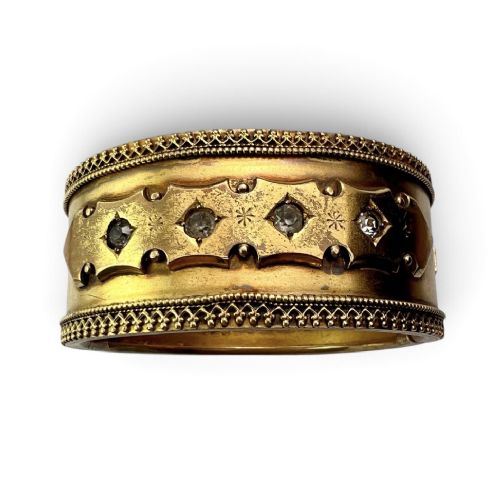
A victorian gemstone bangle brings together rich gold and colourful stones, offering a classic wrist ornament that collectors prize for period charm.
Victorian Gemstone Bangle
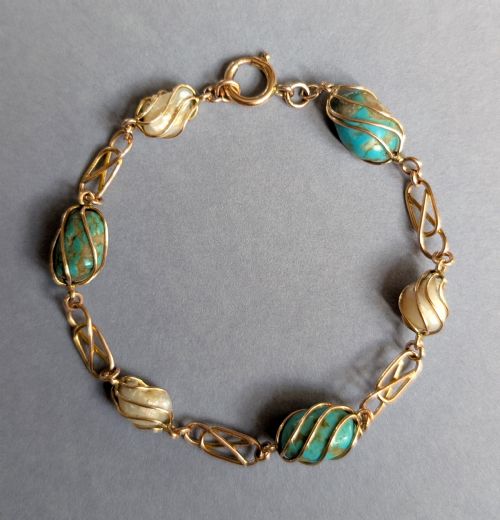
A victorian gemstone bangle is a hinged or solid wrist ornament from the nineteenth century, often set with stones such as amethyst, garnet, citrine, opal, ruby, sapphire, aquamarine, chrysoberyl, and turquoise. The listings show forms ranging from flexible link bracelets to rigid bangles, frequently accented with seed pearls.
Most pieces you meet on this page date from the Victorian era around 1890, though the selection extends to Edwardian pieces and the early decades of the 1900s. These ornaments combine yellow gold, rose gold, and higher carat variants like 9ct, 15ct, and 18ct gold to mount the gems securely.
Buyers look for these items to wear as distinct historical pieces of jewellery that reflect nineteenth-century design trends. The inclusion of multi-stone settings, double heart motifs, and gate link structures defines the visual variety available in this category.
Materials and construction
Goldsmiths utilised various gold purities, including 9ct, 15ct, and 18ct yellow and rose gold, to form the structural body of each bangle and bracelet. Stones were individually set into bezel or claw mounts, frequently accompanied by delicate seed pearls arranged in floral or geometric clusters.
The construction involves hinged mechanisms for rigid bangles and articulated links for flexible bracelets, allowing the metal to contour comfortably around the wrist. Gemstones such as garnets, amethysts, and citrines were cut and polished by hand to fit tightly within their gold settings.
Some Victorian makers hid double heart motifs inside garnet and amethyst clusters, whispering romance right into the clasp.
Distinctions in quality
The choice of gold purity and gemstone variety shapes the primary distinction between pieces in this range. Higher carat golds and rarer stones like unheated Ceylon sapphires or substantial opal and diamond combinations elevate a piece above standard multi-stone designs.
The integrity of the setting and the preservation of the delicate seed pearls determine the physical standard of surviving items. Pieces with intact, original stones and functional hinges represent the higher tier of craftsmanship from this period.
The Victorian Gemstone Bangle Glossary
- Bangle
- A rigid ring-shaped bracelet that slips over the hand or opens with a hinged clasp. This form provides a solid foundation for flush-set or raised gemstone arrangements.
- Seed pearl
- A very small, naturally occurring or cultured pearl used in clusters or borders around larger central stones. They add a delicate white contrast to coloured gems.
- Gate link
- A bracelet style formed of parallel metal bars connected by small vertical links, resembling a garden gate. This flexible structure was popular during the late nineteenth century.
- Carat
- A unit of measurement used to indicate the purity of gold in jewellery. British nineteenth-century pieces frequently employ 9ct, 15ct, and 18ct standards.
Victorian Gemstone Bangle: Frequently Asked Questions
How do I care for a Victorian gemstone bangle?
Clean these pieces gently with a soft, dry cloth to remove daily oils without disturbing the delicate seed pearls or softer stones. Avoid chemical dips and ultrasonic cleaners, which can damage historic settings and natural pearls.
Store each bangle individually in a lined box to prevent the gold and gemstones from scratching against other items in your collection.
Can I wear a gemstone bangle every day?
Rigid bangles and flexible bracelets from the nineteenth century require considerate wear due to their age and delicate components like seed pearls. Reserve them for gentle daily use or special occasions to protect the gold settings and older gemstone cuts.
Taking the piece off before swimming, gardening, or heavy lifting prevents undue stress on the hinges and clasps.
How do I identify a Victorian clasp?
Victorian bangles often feature integrated push-releases, tongue-in-groove clasps, or hidden box closures that sit flush within the band. Many pieces also include a safety chain to prevent the bracelet from falling if the primary clasp loosens.
Examining the closure under magnification reveals hand-finished joints rather than modern mass-produced mechanisms.
What is the difference between Victorian and Edwardian styles?
Victorian pieces tend to feature heavier rose or yellow gold settings, often incorporating rich garnets, amethysts, and dense multi-stone arrangements. The later Edwardian style frequently shifts toward lighter gold work, platinum accents, and diamond-heavy compositions.
Overlaps occur around the turn of the century, where transitional designs blend the warm tones of the nineteenth century with lighter decorative motifs.