
Victorian Garden Pots
These robust victorian garden pots bring genuine age and enduring presence to outdoor spaces through honest utilitarian design.
Victorian Garden Pots
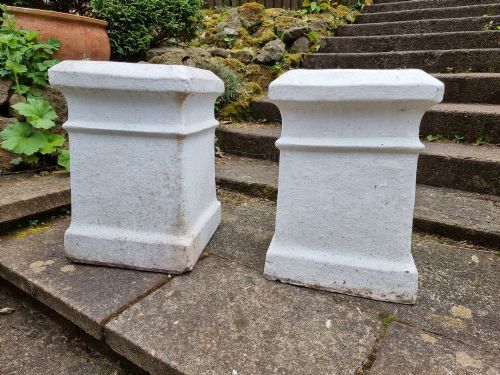
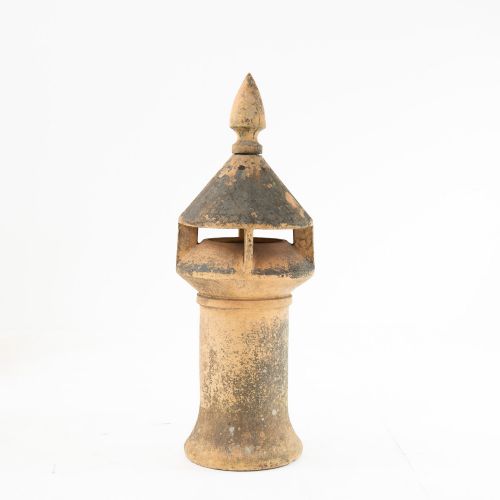
Victorian garden pots encompass heavy cast iron urns, terracotta vessels, and large copper containers originating across the nineteenth century. Buyers seek these pieces for planting schemes or architectural display within gardens and orangeries. The selection ranges from classical campana urns to rustic strawberry planters and repurposed chimney pots.
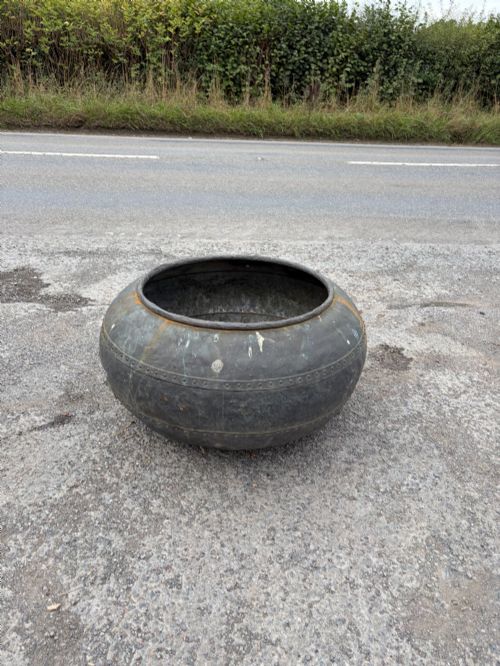
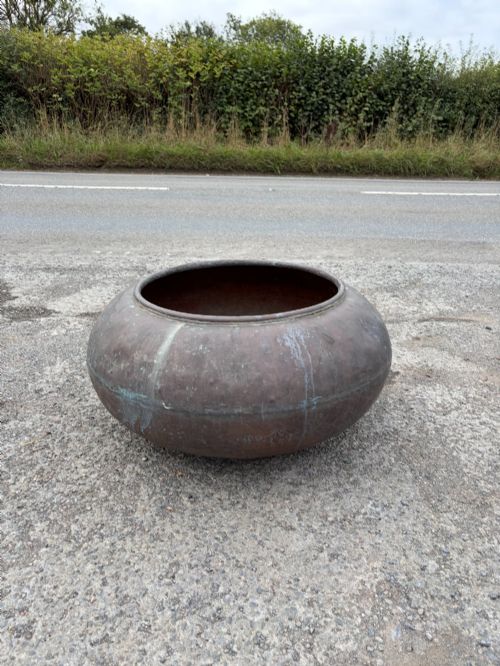
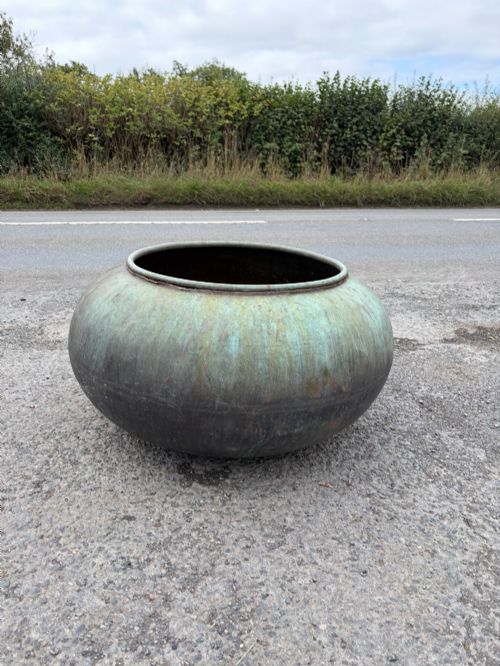
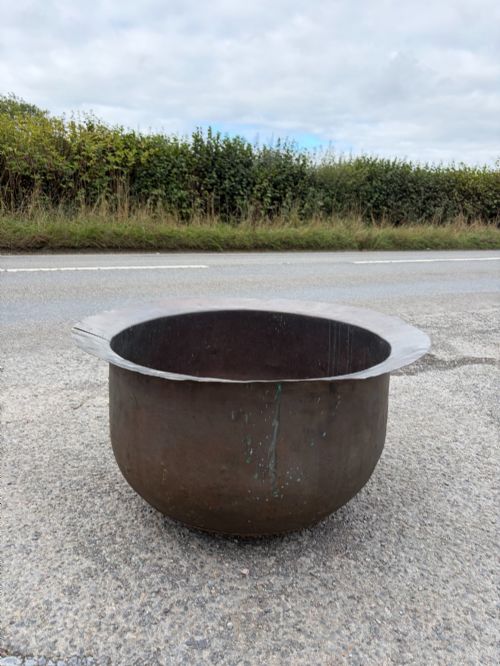
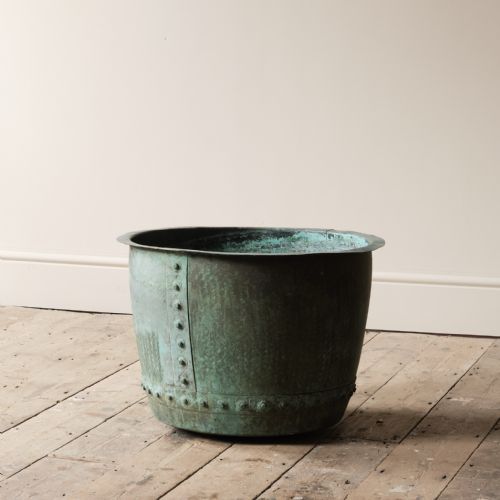
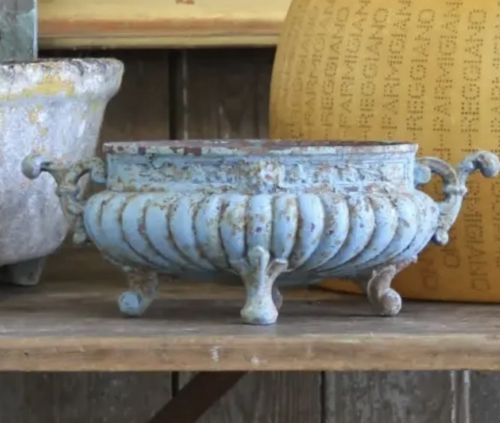
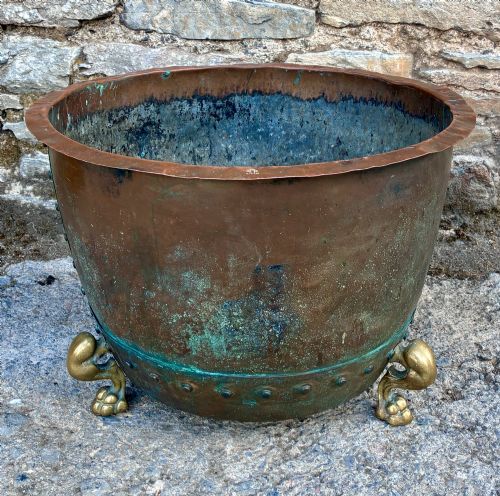
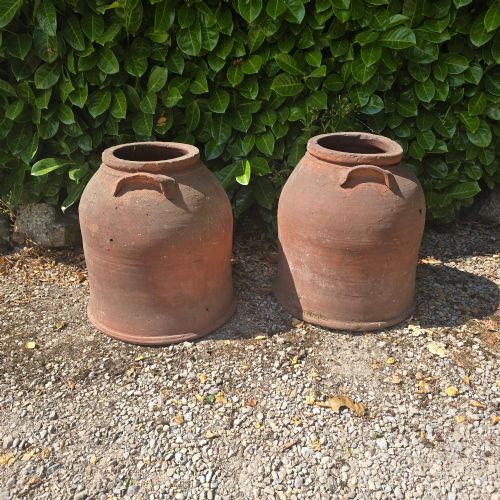
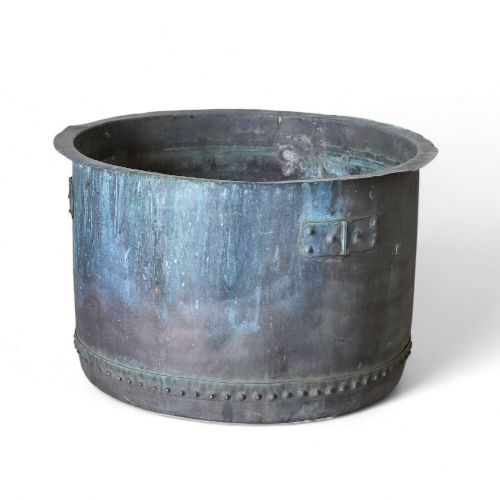
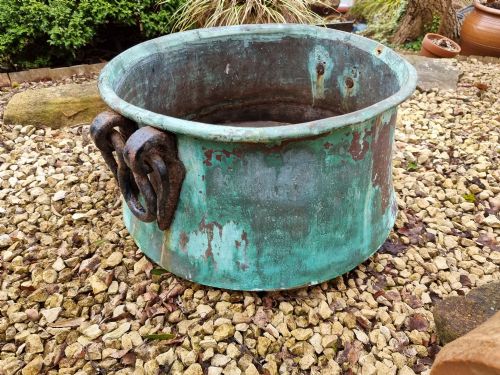
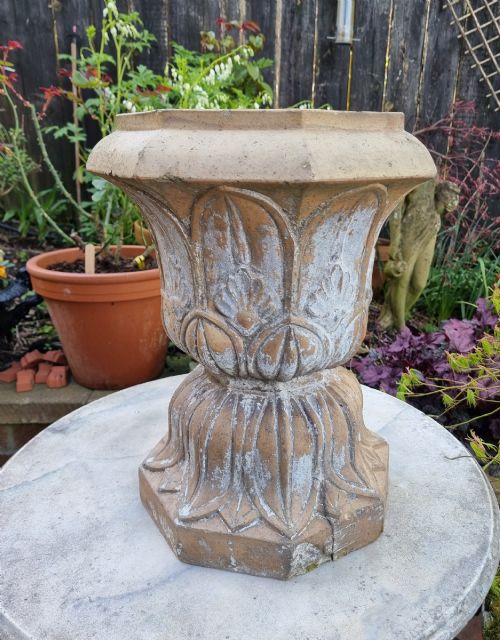
Cast iron examples often take traditional classical forms with fluted bowls and matching plinths. Terracotta pieces frequently display utilitarian roots, including dairy salting crocks and rhubarb forcers adapted for modern planting. Copper vessels appear as large riveted boilers and cauldrons bearing deep natural patinas.
Materials and Construction
Metal vessels rely on hand-beaten copper plates joined with visible iron rivets, alongside heavy cast iron poured into intricate moulds. Wrought iron provides structural support for pot stands and swing handles on larger cauldrons.
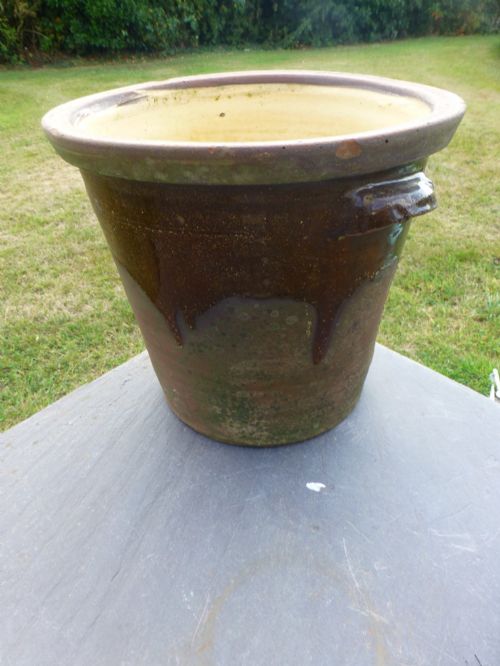
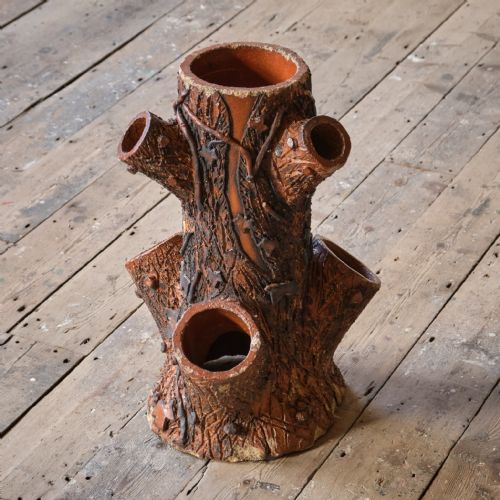
Earthenware items utilise fired terracotta and salt-glazed clay, sometimes shaped to imitate natural wood grain in faux bois designs. Paint finishes and natural verdigris develop over decades of exposure to the elements.
Several iron planters take the surprising sculptural form of giant marine shrimp.
Assessing Merit
Quality rests in the depth of natural weathering, the integrity of original surface finishes, and the crispness of cast relief ornamentation. Heavy casting weight and proportional balance separate superior decorative urns from standard utilitarian vessels.
Maker attribution and survival of original painted or verdigris surfaces elevate specific pieces. The harmony between material age and structural soundness dictates the standing of each individual vessel.
C. R. Stevens·Andrew Handyside
The Victorian Garden Pots Glossary
- Campana urn
- A bell-shaped garden vessel with a flared rim, widely produced in cast iron and terracotta during the nineteenth century. These classical forms sit upon integrated pedestals.
- Faux bois
- A decorative technique imitating natural wood grain moulded directly into terracotta or stoneware. This rustic finish appears frequently on specialised strawberry planters.
- Verdigris
- A green patina formed naturally on copper and brass surfaces through long-term atmospheric exposure. This chemical layer protects the underlying metal while showing age.
- Rhubarb forcer
- A tall earthenware vessel placed over emerging crowns to block light and tenderize stalks. Gardeners now utilise these specialised pots as striking vertical planters.
Victorian Garden Pots: Frequently Asked Questions
Can cast iron pots stay outside all winter?
Cast iron withstands outdoor conditions well, though extreme freezing of saturated soil inside unlined vessels can cause stress. Proper drainage and positioning help protect historic metal through harsh weather.
Elevating pots on feet or bricks prevents moisture from trapping underneath during freezing months, preserving both the iron and the surface finish.
How do I identify a genuine nineteenth century piece?
Authentic period pieces show genuine surface wear, hand-riveted construction details, and heavy material density consistent with nineteenth century foundry work. Look for natural patination rather than artificial distressing.
Maker marks, old paint layers, and subtle casting irregularities also point toward genuine age rather than modern reproduction.
How should I clean copper garden vessels?
Washing with mild soapy water and a soft brush removes dirt while preserving the historical patina and verdigris finish. Aggressive scouring destroys the aged surface quality that collectors value.
Allowing the copper to age naturally outdoors maintains the stable protective coating developed over decades.
What plants suit traditional campana urns?
Trailing plants, box balls, and structural perennials complement the classical proportions of campana urns. The wide bowl allows root space for seasonal bedding displays.
Ensure adequate drainage material sits at the base before filling with soil to maintain healthy plant growth.