




Victorian Terracotta Garden Pots
Victorian terracotta garden pots are robust vessels designed to weather the elements, prized by gardeners for their honest ageing and classic silhouettes.
Victorian Terracotta Garden Pots
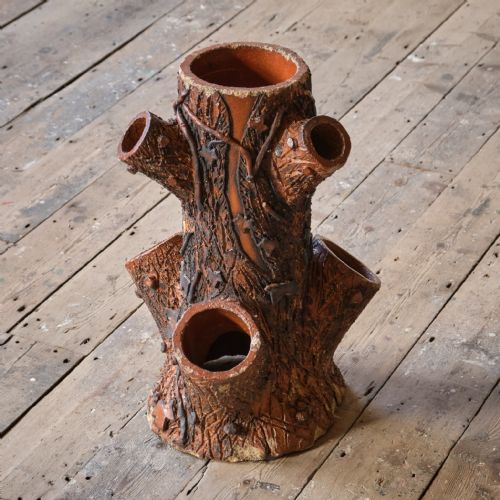
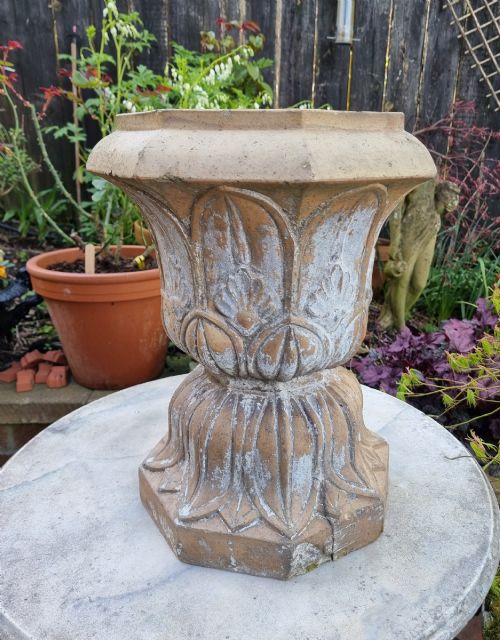
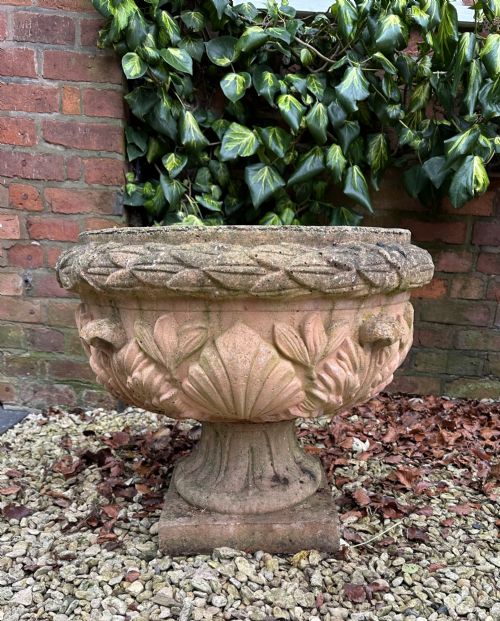
The versions most frequently met on this page include nineteenth-century campana urns, salt-glazed faux bois strawberry planters, and naturalistic pottery jardiniere pieces. Originating from English country houses and Scottish gardens, these vessels display periods ranging from the eighteen-sixties through to the nineteen-thirties.
Materials and construction
The pieces on this page are formed from earthenware clay and terracotta, often treated with a salt glaze or paint to enhance durability. Makers utilised traditional throwing and moulding techniques to shape these robust garden furnishings.
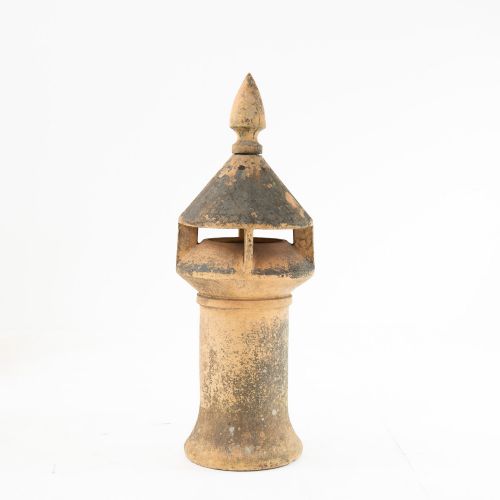
Specialised items such as faux bois planters employ surface moulding to mimic the natural texture of tree bark. Chimney pots and salt-glazed stoneware vessels demonstrate the robust firing methods required to withstand outdoor environments.
Materials represented across the inventory span standard terracotta, salt-glazed stoneware, and painted earthenware clay.
Assessing quality
Quality in these vessels rests on the crispness of the moulded detail and the natural weathering of the clay. Pieces displaying deep patination and well-defined Neoclassical or naturalistic motifs stand apart from simpler utilitarian wares.
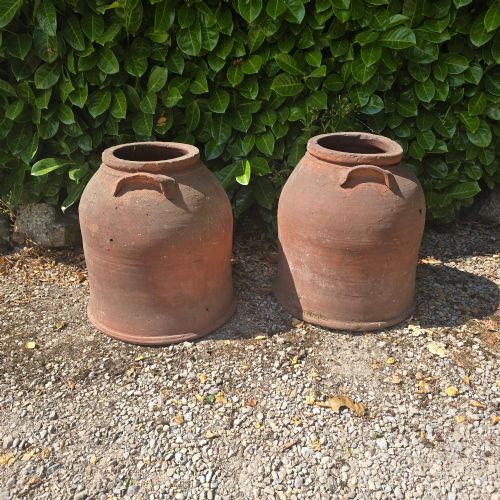
The integrity of the body and the uniformity of the salt glaze or paint finish dictate the structural standard. Surviving pairs and architectural items like rhubarb forcers show superior original purpose and retention of form.
C. R. Stevens
The Victorian Terracotta Garden Pots Glossary
- Terracotta
- A porous fired earthenware clay used extensively for horticulture and architectural ornaments. Its reddish-brown tone develops character as it weathers outdoors.
- Salt-Glazed Stoneware
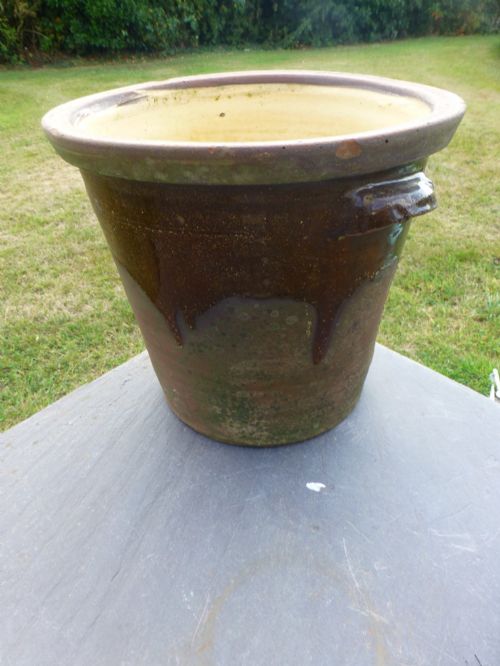
- Pottery finished by throwing common salt into the kiln during high-temperature firing, producing a durable, slightly pitted glassy coating. This treatment offers superior resistance to frost and moisture.
- Campana Urn
- A bell-shaped garden vessel with an everted rim and a pedestal base, originating from classical antiquity. Victorian interpretations frequently appear in formal gardens and patios.
- Faux Bois
- A decorative technique mimicking the texture and appearance of wood. In garden pottery, this style typically replicates the rough bark of tree trunks on planters and urns.
- Rhubarb Forcer
- A specialised agricultural pot placed over rhubarb crowns to exclude light and encourage early, tender growth. These heavy earthenware covers possess characteristic lifting lids or flanged tops.
Victorian Terracotta Garden Pots: Frequently Asked Questions
How do I protect terracotta pots from frost?
Terracotta absorbs moisture, which expands upon freezing and can crack the clay. Elevating pots on pot feet prevents water accumulation at the base.
Moving sensitive or salt-glazed planters into a greenhouse or shed during severe winter months ensures they survive intact.
Can these antique pots stay outside year-round?
Many nineteenth-century vessels were manufactured specifically to endure outdoor conditions in gardens and orangeries. Salt-glazed stoneware and dense terracotta handle weathering particularly well.
However, ensuring adequate drainage through the base hole remains essential to prevent frost damage regardless of material quality.
What is a rhubarb forcer used for?
Rhubarb forcers are heavy earthenware vessels placed over crowns to block out sunlight. This process forces the plant to grow rapidly upwards in search of light, producing sweeter, paler stalks.
Today, gardeners utilise these unusual pieces as striking architectural focal points on patios rather than for vegetable production.
How do I clean an antique terracotta pot?
Gentle brushing with a soft bristle brush and warm water removes loose dirt and organic debris. Avoid harsh chemical cleaners or pressure washers, which strip away valuable historic patination.
Allowing moss and lichens to remain often enhances the visual character of nineteenth-century garden ornaments.