


Victorian Garden Entrance Gate
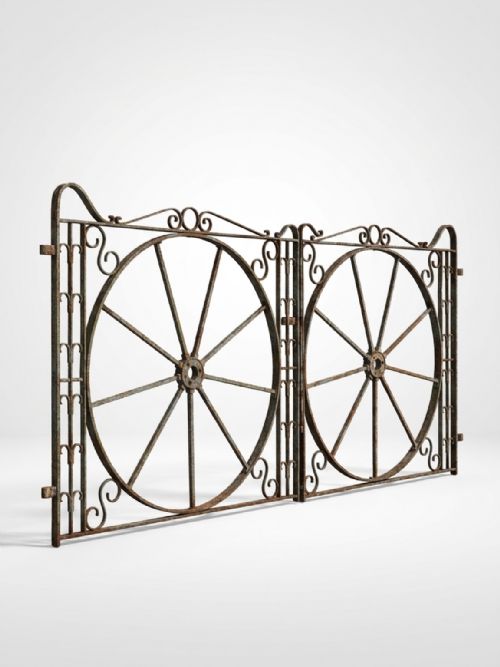
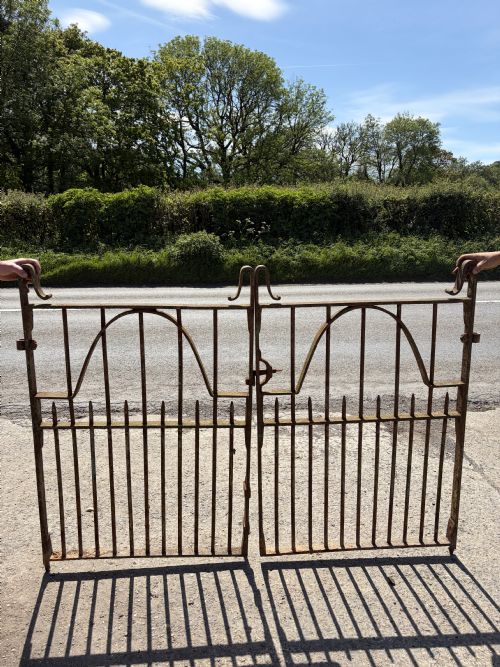
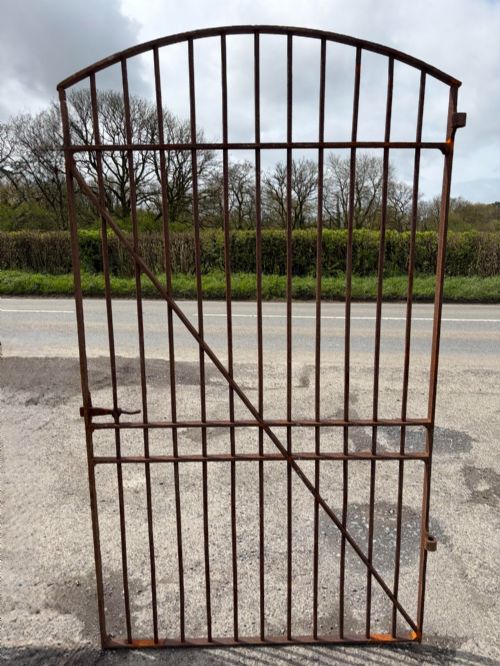
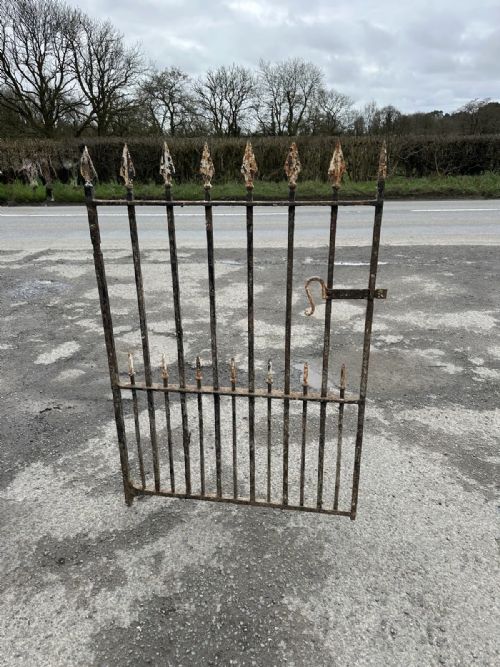
These Victorian garden entrance gate examples combine robust nineteenth-century ironwork with grand scale, offering an authentic boundary marker for grounds and driveway approaches.
Victorian Garden Entrance Gate
A victorian garden entrance gate serves as a grand threshold for properties, typically found in tall estate configurations or paired driveway formats. Buyers seeking a victorian garden entrance gate encounter substantial architectural salvage spanning the nineteenth century, occasionally paired with complementary sandstone or reconstituted stone statuary such as lions.
The selections on this page concentrate on heavy metalwork rather than light domestic wickets. Examples range from modest garden boundaries to towering eight-foot estate structures designed to span wide carriage drives.
Construction and materials
Makers utilised a combination of cast and wrought iron to achieve both structural rigidity and decorative flourish. Individual components frequently feature heavy strapwork, riveted construction, and distinctive cast elements like trident details.
Surrounding masonry elements incorporate natural sandstone and reconstituted stone, providing solid mounting points or decorative pier adornments that match the heavy metal barriers.
Sturdy stone lions stand ready to guard the gateway, proving that even a Victorian entrance appreciated a fierce sentinel.
Assessing quality and proportion
Superior examples demonstrate ambitious scale, such as monumental estate heights and balanced pairs designed for carriage access. The intricacy of the strapwork and the presence of hand-forged riveting distinguish standard utility barriers from finer architectural statements.
The integrity of the ironwork and the survival of original decorative motifs, including trident terminals, dictate the standing of a piece. Substantial gauge metal and harmonious proportions elevate an entrance from a functional boundary to a significant landscape focal point.
The Victorian Garden Entrance Gate Glossary
- Architectural salvage
- Building components rescued from older structures for reuse in new settings. These items preserve historical craftsmanship for modern landscape design.
- Strapwork
- Flat strips of metal riveted or joined to form decorative geometric patterns and structural reinforcement. It provides both strength and visual rhythm across large gates.
- Cast iron
- Molten metal poured into a mould to create rigid decorative forms. It allows for repeatable ornamentation that complements hand-forged wrought elements.
- Reconstituted stone
- Aggregate material moulded to resemble natural carved masonry. It offers a durable alternative for gate piers and associated garden statuary.
Victorian Garden Entrance Gate: Frequently Asked Questions
How do I hang a heavy iron gate?
Hanging a heavy nineteenth-century barrier requires substantial masonry piers or reinforced posts set deep into the ground. Professional installation ensures the immense weight is properly supported without sagging over time.
Matching the hinge pivots to the original strapwork design maintains smooth operation. Proper alignment prevents binding across wide carriage spans.
Can I use these gates for modern driveways?
Many nineteenth-century estate barriers offer sufficient width and height for contemporary vehicular access. Checking the exact clearance dimensions ensures compatibility with modern car sizes.
Restoration work may be necessary to adapt historic latch mechanisms for modern security requirements. This allows classical aesthetics to function with contemporary convenience.
How do I protect outdoor ironwork from rust?
Routine maintenance involves applying specialised metal primers and exterior paints designed for historic iron. Regular inspection prevents moisture ingress at riveted joints.
Addressing surface corrosion promptly preserves the underlying strapwork. A well-maintained protective coating withstands decades of exposure to the elements.
What distinguishes an estate gate from a garden gate?
Estate variations typically measure considerably taller and wider, engineered to secure main carriage drives and grand perimeters. Garden alternatives are scaled for pedestrian paths and smaller boundary openings.
Construction density also differs, with estate pieces utilising heavier gauge iron to span greater distances safely.