



Victorian Game Bird Painting
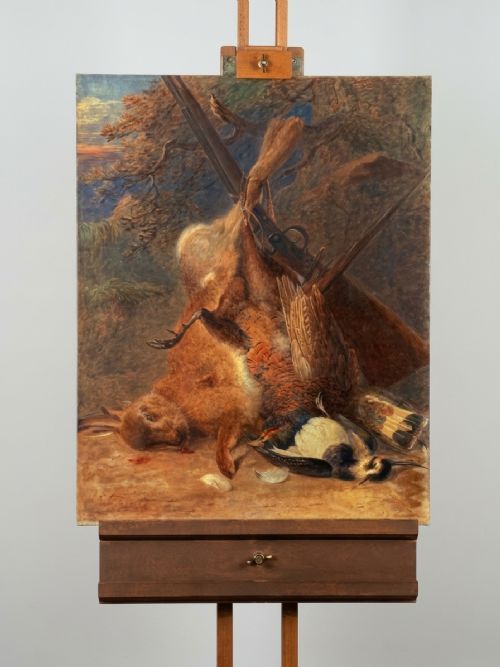
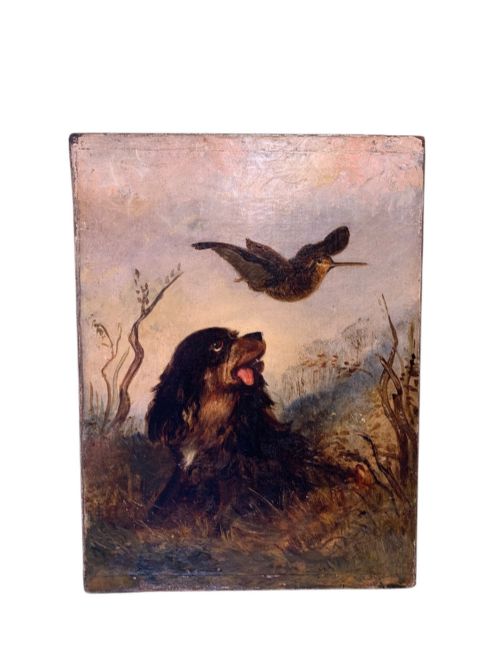
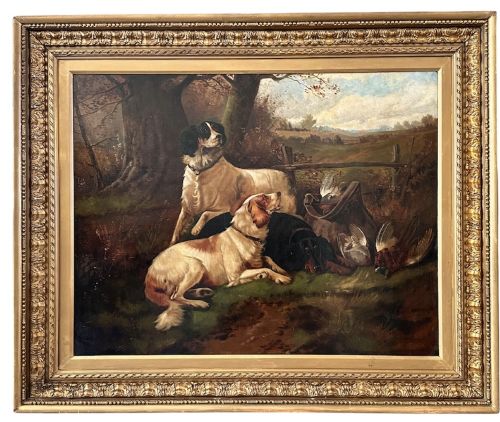
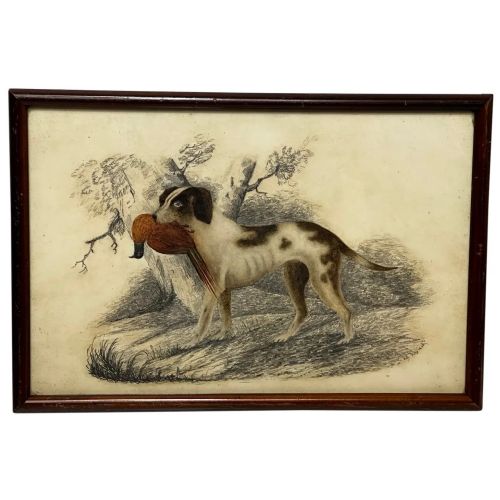
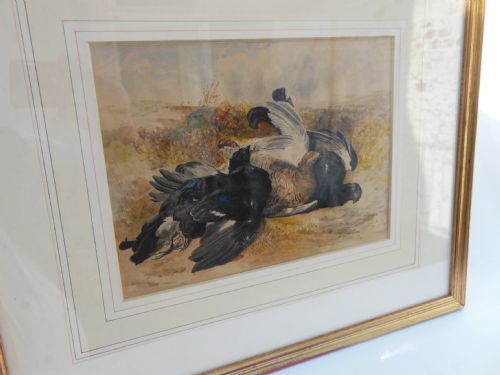
These Victorian game bird painting examples bring country pursuits indoors with oil on canvas and watercolour depicting gundogs, grouse, woodcock and larder views.
Victorian Game Bird Painting
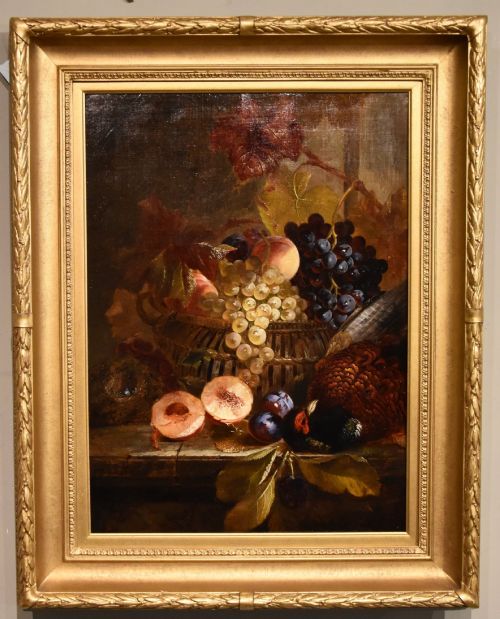
A Victorian game bird painting captures the pursuits of the field through depictions of grouse, woodcock, ducks and hanging songbirds rendered in oil paint or watercolour. Buyers seeking a Victorian game bird painting encounter works executed on canvas, paper or wood panels, often framed in gold leaf.
The subjects range from spaniels and pointers with the day's bag to larder views and trompe l'oeil still lifes. Works from the Victorian period sit alongside pieces dated to the nineteenth century, nineteen hundred and nineteen twenty.
British naturalism and Victorian sporting art define the visual approach of these works. Regional variations include nineteenth century Italian and Austrian naturalist pieces, alongside sculptures and figurines such as cold painted bronze grouse.
What varies in quality
The skill of the brushwork defines the hierarchy of these works, separating lively anatomical depictions from stiff renderings of birds and hounds. Mastery in capturing the texture of feathers and the alertness of a pointer distinguishes the finer pieces.
Provenance and attribution elevate certain works, particularly those bearing the signature of established painters of sporting subjects. The condition of the canvas, paper and original framing materials also influences the standing of an individual piece.
Monkeys occasionally infiltrate nineteenth century canvases alongside feathered game, proving that sporting artists appreciated an unexpected primate companion in the field.
George Sydney Shepherd·Michelangelo Meucci·John Sargent Noble·William Henry Ward·Thomas Blinks·Abel Hold
The Victorian Game Bird Painting Glossary
- Bodycolour
- An opaque watercolour paint containing white pigment to create solid, flat areas of colour. This technique adds density and highlight to works on paper.
- Trompe l'oeil
- An artistic illusionistic technique designed to trick the eye into perceiving a painted object as three-dimensional. It appears frequently in still life compositions of hanging birds.
- Larder view
- A traditional composition displaying harvested game arranged for the kitchen or pantry. These scenes celebrate the success of the shoot through detailed depictions of plumage.
- Cold painted bronze
- A manufacturing method where bronze figures receive paint layers without firing in a kiln. Austrian workshops utilised this process for sculptural representations of grouse.
- Sporting art
- A genre dedicated to depicting field sports, hunting, shooting and associated animals. It forms the core context for nineteenth century animal and gun dog paintings.
Victorian Game Bird Painting: Frequently Asked Questions
What subjects appear in these paintings?
The works depict game birds such as grouse, woodcock, black game and ducks, frequently accompanied by gun dogs like spaniels and pointers. Larder views and trompe l'oeil arrangements of hanging songbirds also feature prominently.
Scenes range from field sports in action to still life arrangements focusing on the plumage and physical details of the birds.
Which materials were used by artists?
Painters utilised oil paint on canvas and wood panels, alongside watercolour paint and bodycolour on paper. Gold leaf often appears on the frames enclosing these works.
Sculptural interpretations utilise bronze treated with cold painted techniques rather than traditional firing.
How do I display these pieces?
Works executed on canvas or wood panels suit traditional wall display in principal reception rooms or studies. Watercolours on paper require placement away from direct sunlight to protect the pigments.
Bronze sculptures and figurines find a natural home on desks, sideboards or an appropriate display surface.
How can I tell periods apart?
Dating relies on stylistic markers from nineteenth century British naturalism, Victorian sporting art and continental naturalist schools. Signatures, framing techniques and support materials provide further chronological clues.
Later pieces extend into the early twentieth century, reflecting continuity in sporting and naturalist themes.