


Victorian Furniture Writing Bureau
A victorian furniture writing bureau brings solid timber and functional compartments together for serious correspondence.
Victorian Furniture Writing Bureau
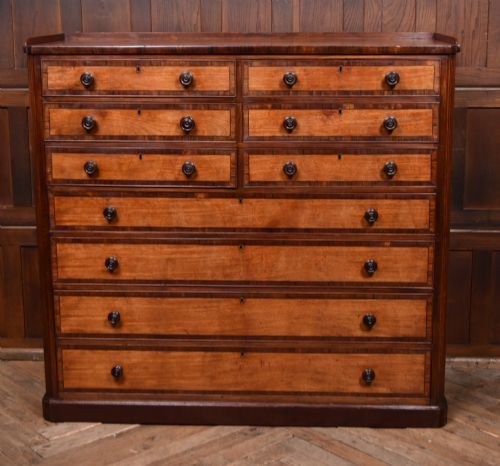
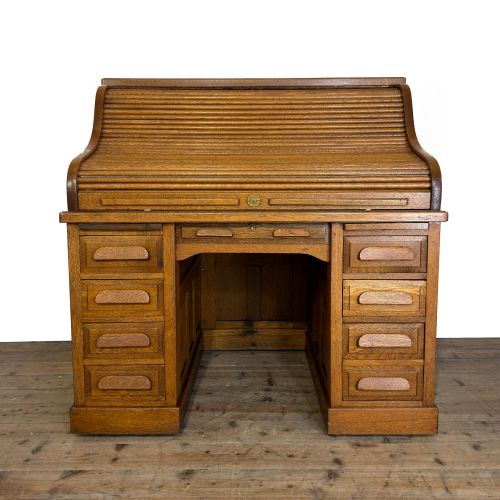
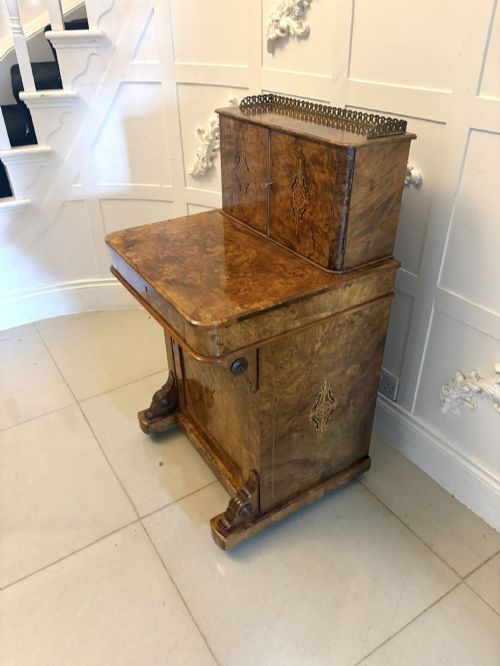
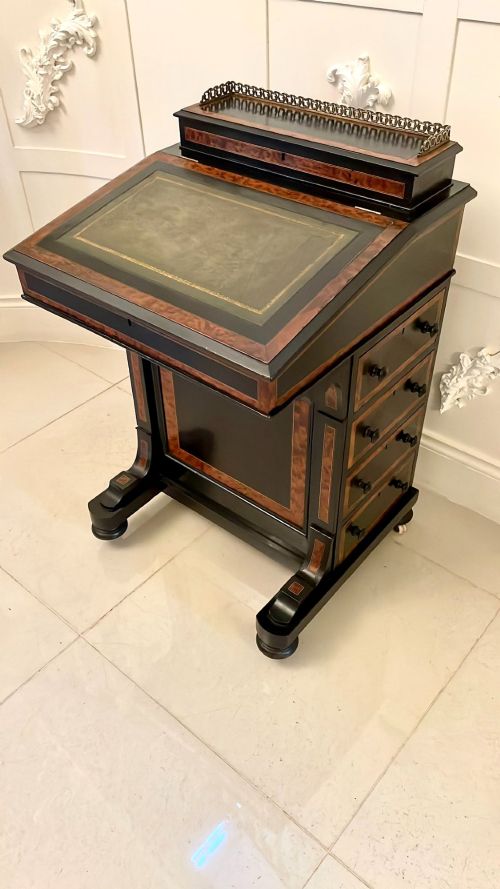
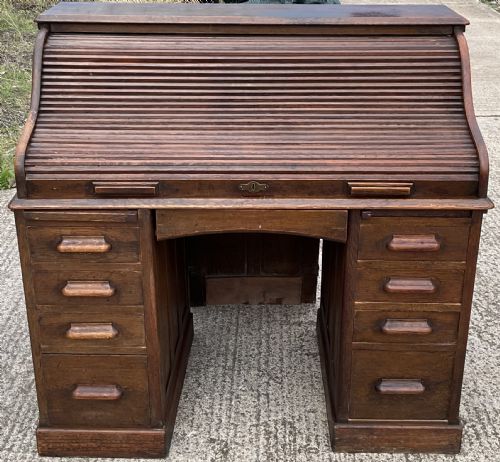
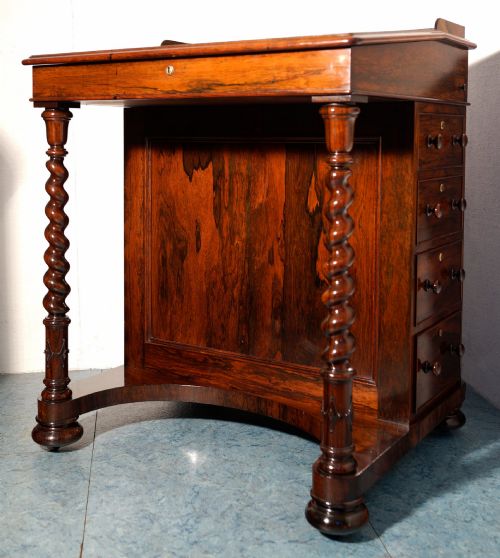
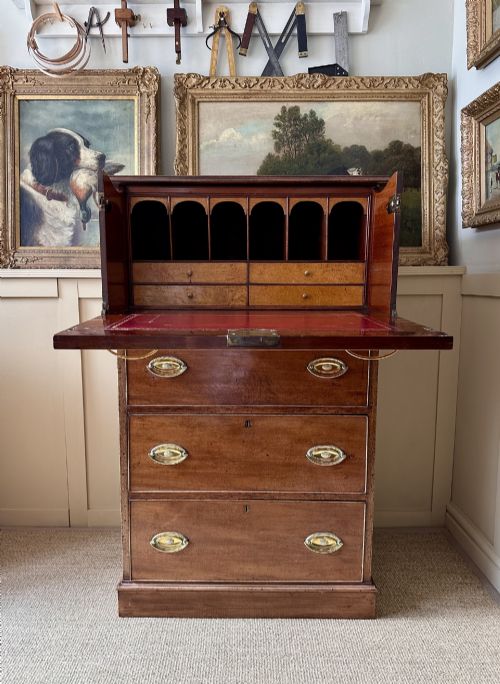
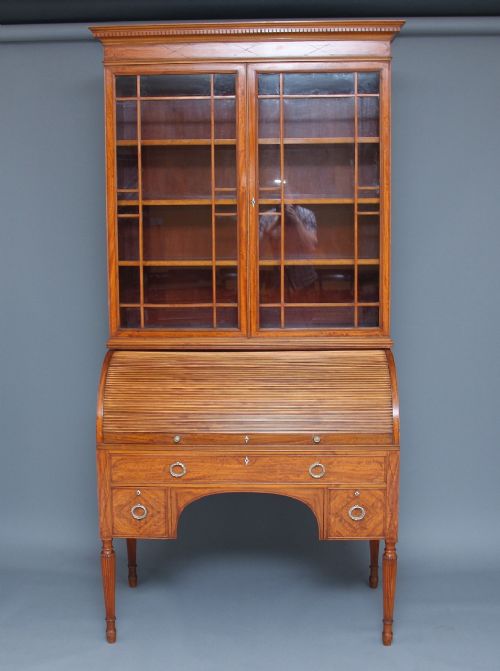
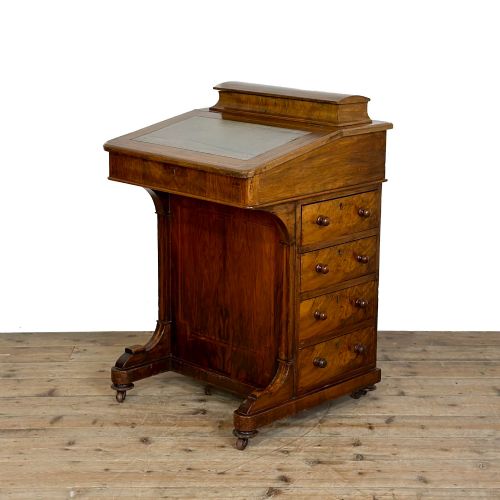
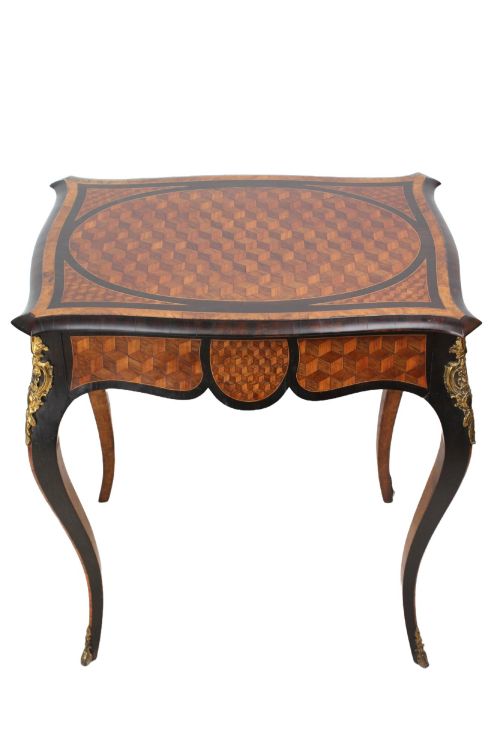
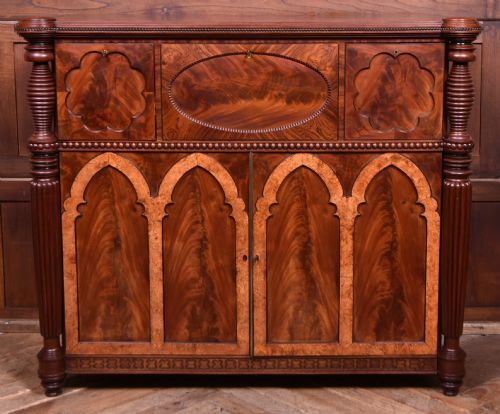
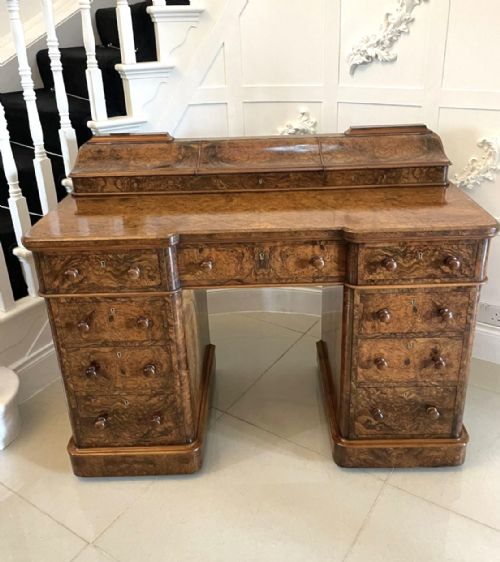
A victorian furniture writing bureau encompasses everything from compact davenports to large pedestal desks and drop-front secretaires. The pieces span the nineteenth century and into the edwardian era, reflecting shifting domestic habits and workspace needs. Oak, mahogany, and walnut appear frequently, often shaped into kneehole configurations or sloping writing compartments.
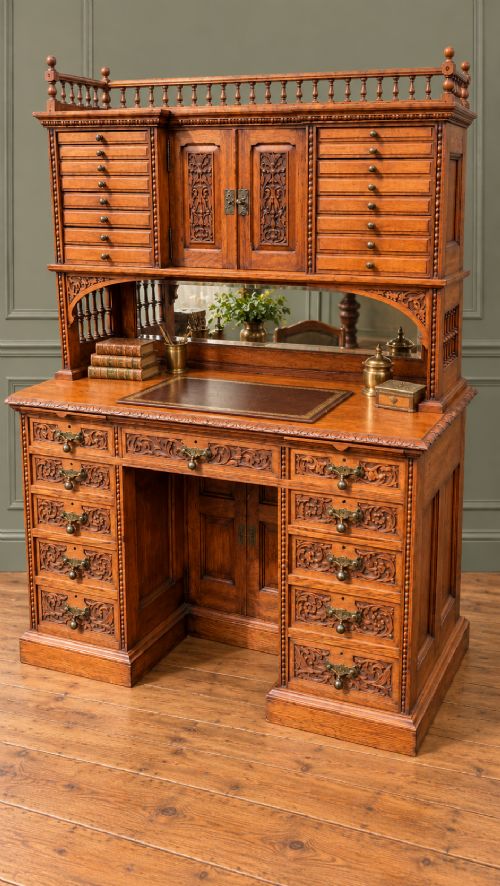
Makers and designers produced varied styles, ranging from plain oak pieces to highly decorated marquetry and revival models. Buyers encounter aesthetic movement influences, french revivals, and simpler campaign styles within the selections. Each variation serves a distinct room scale and decorative preference while retaining a surface dedicated to writing.
Materials and construction
Cabinet makers utilised dense hardwoods like mahogany, walnut, and oak to build structural carcases that withstand daily use. Burr walnut and satinwood veneers added decorative grain patterns to drawer fronts and writing slopes. Brass mounts, leather inserts, and porcelain plaques frequently completed the functional design.
Joinery methods involved precise dovetailing for drawers and secure framing for fall-front desks and pedestal units. Secondary timbers supported internal pigeonholes and small accessory drawers within the writing compartments.
Victorian Furniture Writing Bureau Retail Price Guide 2026
Typical asking prices for victorian furniture writing bureau among the pieces listed under this phrase on Sellingantiques today, from the lower quarter to the upper quarter. They describe what is for sale here now, not the wider market.
Listings feature woods including oak, walnut, mahogany, rosewood, and satinwood across multiple nineteenth century periods.
Judging construction and finish
Quality rests on the selection of timber figures, such as burr walnut or figured mahogany, and the precision of the parquetry or inlay. Superior pieces exhibit seamless veneer work and crisp carving, particularly around mouldings and panels.
The integration of internal fittings, such as secret compartments, fitted satinwood interiors, and original brass hardware, elevates a piece. Structural integrity in the drawers and smooth movement in drop-front mechanisms distinguish finer workshop output from standard production.
JAS Shoolbred·Gillows·Maple and Co·Heal and Son·Morris and Co
The Victorian Furniture Writing Bureau Glossary
- Davenport
- A compact writing desk featuring a sloping top and drawers opening to the side. This form was popular throughout the nineteenth century for domestic correspondence.
- Secretaire
- A cabinet or chest incorporating a pull-down or drop-front writing drawer that conceals small pigeonholes and drawers. It combines storage with a writing surface.
- Pedestal desk
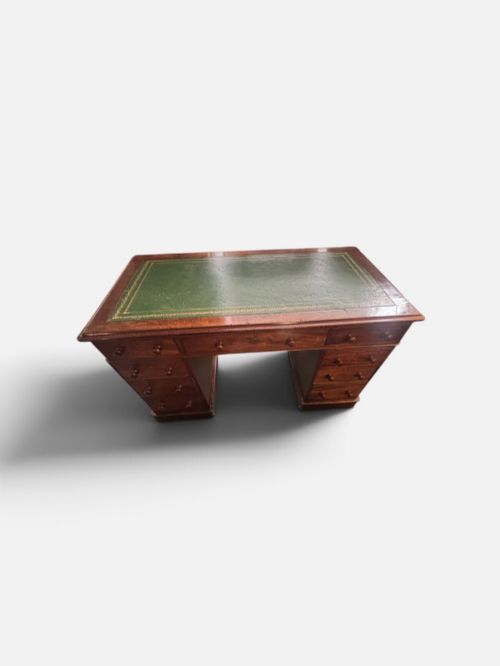
- A large freestanding desk comprising two supporting banks of drawers beneath a flat top. They often feature inset leather writing surfaces.
- Parquetry
- Geometric patterns formed by fitting small pieces of wood veneer together on a surface. It appears on tabletops and bureau fronts.
- Bonheur du jour
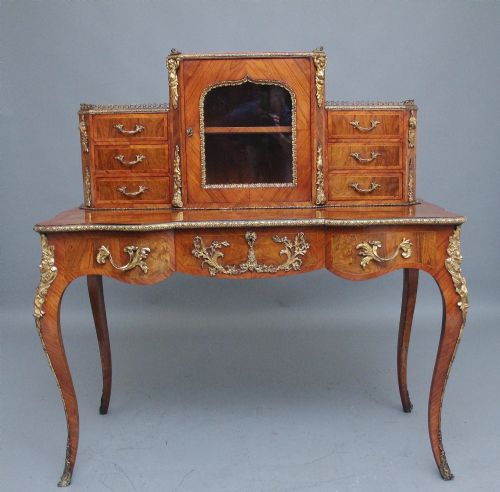
- A light lady's writing desk featuring a small cabinet or set of shelves upon the upper surface. These delicate desks often incorporate exotic woods and decorative plaques.
Victorian Furniture Writing Bureau: Frequently Asked Questions
How do I use a bureau daily?
Lower the writing flap to access the internal pigeonholes and flat surface for correspondence. Store paper and pens in the dedicated drawers beneath or inside.
Close and lock the flap when finished to keep the workspace tidy and secure your papers out of sight.
Where should I place a desk?
Position the piece near a natural light source, such as a window, to illuminate the writing surface. Ensure there is adequate clearance behind the desk for a chair.
Keep wooden furniture away from direct heat sources like radiators to prevent timber from drying out.
How do I care for leather tops?
Clean the leather surface gently with a slightly damp cloth, avoiding excess moisture. Apply specialised leather cream periodically to maintain suppleness.
Protect the surface from sharp objects and persistent direct sunlight to prevent fading and cracking.