



Victorian Fretwork Shelves
Victorian fretwork shelves bring intricate pierced timberwork and practical display space into domestic rooms.
Victorian Fretwork Shelves
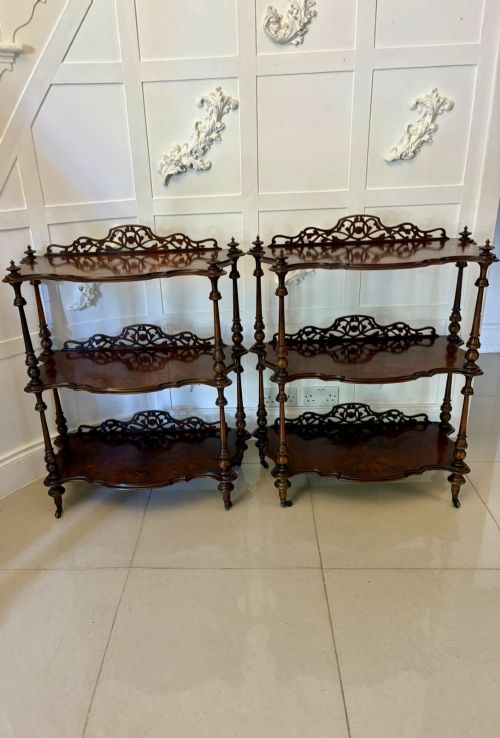
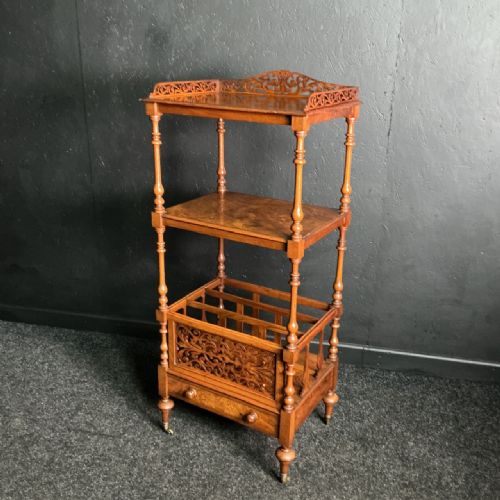
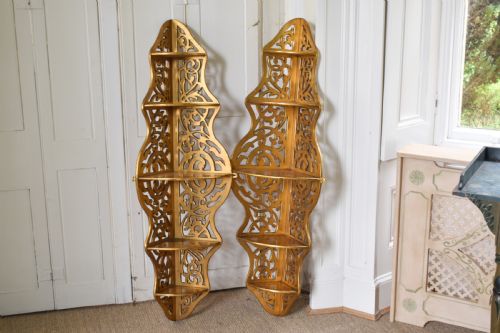
Burr walnut and mahogany dominate the timber choices on this page, often accompanied by rosewood and marquetry inlay. Pieces range from modest corner brackets to multi-tiered floor-standing whatnots with pierced fret-cut galleries.
The term also extends to related forms such as display consoles, canterbury whatnots, and wall mirrors incorporating open woodwork. Walnut remains the most recurrent timber for these decorative storage solutions.
How They Were Made
Cabinetmakers utilised dense hardwoods like walnut, mahogany, and rosewood, applying veneers of burr walnut to prominent surfaces. Pierced fretwork patterns were achieved through meticulous hand-sawing, creating delicate openwork panels and brackets.
Inlay work incorporated contrasting woods and marquetry motifs, while brass galleries and glass components appeared on select display stands. Joints relied on traditional cabinetmaking methods to support tiered platforms and weight-bearing uprights.
The listings span the Victorian and Regency periods, utilising walnut, mahogany, rosewood, and brass.
What Varies in Quality
Quality rests in the crispness of the fret-cutting and the selection of figured timber veneers. Superior examples display precise pierced work without splintering, alongside richly grained burr walnut or rosewood.
Construction solidity distinguishes better pieces, particularly in multi-tiered whatnots and wall brackets where uprights must support weight stably. Subtle details such as fine marquetry inlay and original brass galleries elevate certain items above standard production.
Robert Strahan
The Victorian Fretwork Shelves Glossary
- Whatnot
- A multi-tiered piece of freestanding furniture designed for displaying ornaments, books, or small objects. It originated in the eighteenth century and remained popular throughout the Victorian period.
- Fretwork
- Ornamental perforated woodwork created by cutting patterns through thin boards. It provides the decorative pierced panels characteristic of these shelves.
- Burr Walnut
- Timber taken from the wart-like growths on walnut trees, yielding highly figured grain patterns. Cabinetmakers prized this wood for decorative veneering on Victorian surfaces.
- Marquetry
- The art of applying pieces of veneer to a structure to form decorative patterns and pictures. It frequently decorates the tiers and panels of Victorian furniture.
- Canterbury
- A low, open-partitioned stand originally designed for holding sheet music or portfolios. Cabinetmakers occasionally combined this form with the tiers of a whatnot.
Victorian Fretwork Shelves: Frequently Asked Questions
Where should I hang wall shelves?
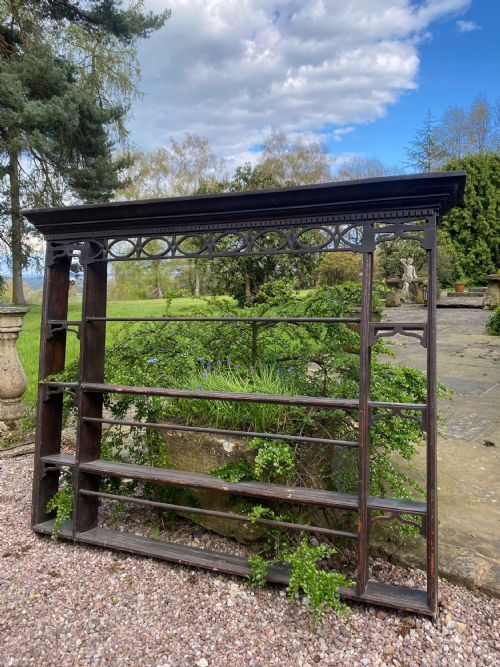
Wall-hanging shelves suit alcoves, hallways, or smaller wall spaces where floor furniture would crowd the room. They provide vertical display areas for cabinet plates, small books, or decorative objects.
Ensure proper wall fixings support the weight of the timber, particularly with denser hardwoods like mahogany or walnut.
How do I clean burr walnut?
Dust timber surfaces regularly with a soft, dry cloth to prevent grit accumulation on the veneer. Avoid chemical sprays or excessive moisture, which can damage polished finishes and lift delicate marquetry.
Apply a traditional beeswax polish sparingly when the wood appears dry, buffing gently to maintain the natural lustre.
What is a whatnot used for?
Floor-standing whatnots served primarily to display porcelain, silver, and decorative ornaments in Victorian reception rooms. Their multi-tiered design maximised display capacity within a compact floor footprint.
Corner whatnots utilised awkward angles in rooms, turning empty junctions into functional display surfaces.
How do I date these shelves?
Dating relies on timber choices, construction techniques, and stylistic revivals present in the fretwork. Mid-nineteenth-century pieces often favour burr walnut and heavy turned uprights.
Later Victorian examples introduce lighter proportions and intricate machine-sawn or hand-cut fretwork patterns typical of the late nineteenth century.