

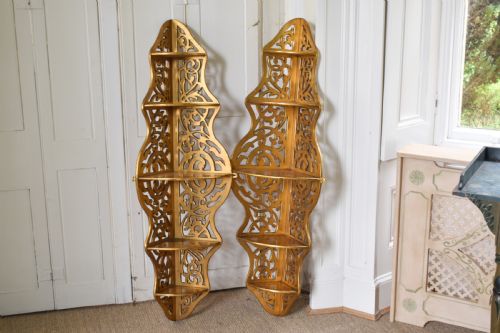


Victorian Fretwork Corner Shelves
Victorian fretwork corner shelves offer tiered display space in walnut and mahogany, bringing period warmth to unutilised wall angles.
Victorian Fretwork Corner Shelves
When buyers search for Victorian fretwork corner shelves, they encounter architectural multi-tier units designed to mount on walls or stand in room angles. These pieces function primarily as display stands for ornaments and small collections within nineteenth-century domestic interiors.
The selections on this page appear predominantly as corner whatnots and wall-mounted brackets from the nineteenth century. Forms range from simple multi-tier shelving units to elaborate demi-lune display consoles and five-tier walnut structures.
Originating largely within the Victorian period, these items incorporate specific regional styles such as Sorrento marquetry and Victorian Rococo Revival. Walnut, burr walnut, and mahogany form the structural backbone of these domestic furnishings.
Construction and materials
Cabinetmakers utilised dense hardwoods including walnut, burr walnut, and mahogany for the primary structure of these tiered shelves. Olive wood also appears in specific Sorrento examples, complemented by inlaid decorative elements and brass fittings.
Surface ornamentation relies on applied gesso and giltwood details alongside intricate pierced woodworking techniques. Turnings such as hollow barley twist columns support multiple tiers while maintaining visual lightness.
A six-tier whatnot stands ready to elevate your porcelain collection into the stratosphere of Victorian parlour ambition.
Judging quality and character
Excellence in these items rests upon the choice of timber figure, particularly the richness of burr walnut veneers and figured mahogany. Superior examples integrate refined marquetry inlay and delicate fretwork that remains crisp and structural.
The architectural ambition of the piece dictates its standing, moving from simple two-tier wall brackets to towering six-tier display stands with intricate turnings. Condition of the timber surface and the precision of assembly separate standard domestic items from finer country house display pieces.
The Victorian Fretwork Corner Shelves Glossary
- Whatnot
- A tiered piece of furniture designed for displaying ornaments, books, or knick-knacks. These open shelves became popular during the nineteenth century for parlour and drawing room display.
- Demi-lune
- A half-moon or semicircular shape utilised in the design of console tables and display pieces. This curved profile allows furniture to sit flush against a wall while projecting into the room.
- Sorrento
- A style of decorative woodwork and inlay originating from the Italian town of Sorrento. Pieces in this tradition often feature intricate wood mosaic designs depicting floral or architectural motifs.
- Burr walnut
- Timber taken from the warted growth on a walnut tree, yielding highly figured and swirling grain patterns. Cabinetmakers prized this veneer for high-status nineteenth-century furniture surfaces.
- Giltwood
- Wood that has been coated with gold leaf or a gold-coloured finish for decorative effect. This technique highlights carved details and architectural mouldings on Victorian display pieces.
Victorian Fretwork Corner Shelves: Frequently Asked Questions
How were these shelves used?
Victorian households utilised these multi-tier units in parlours and drawing rooms to display ceramics, ornaments, and small collections. They transformed empty wall angles into functional display areas.
Their open structure kept objects visible from multiple angles within the room.
How do I date these pieces?
Dating relies on identifying period wood types, construction methods, and decorative styles characteristic of the nineteenth century. Listings reference specific decades and Victorian stylistic revivals.
Examining the timber preparation and joint techniques helps confirm the nineteenth-century origin.
Where should I place them?
Corner shelves fit naturally into room angles, making efficient use of overlooked architectural spaces. Wall-mounted brackets require secure fixing to support timber tiers and displayed items.
Freestanding whatnots anchor room corners while adding vertical timber tones to the interior.