

Victorian French Style Armchairs
Victorian French style armchairs combine nineteenth-century English comfort with continental revival curves, offering elegant seating for a salon or drawing room.
Victorian French Style Armchairs
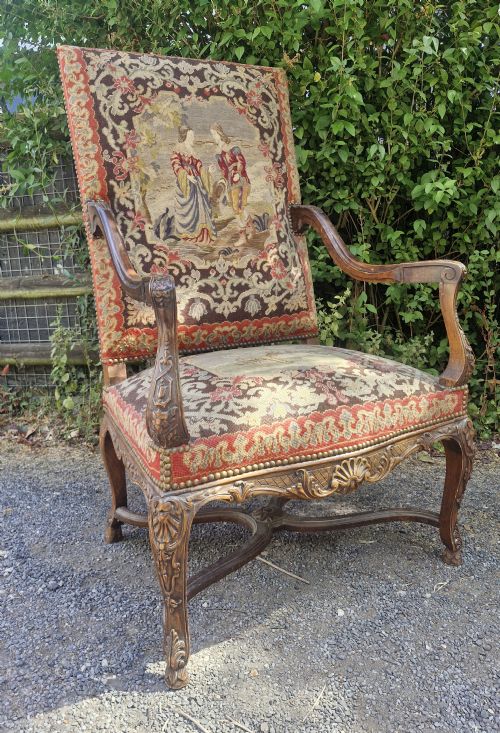
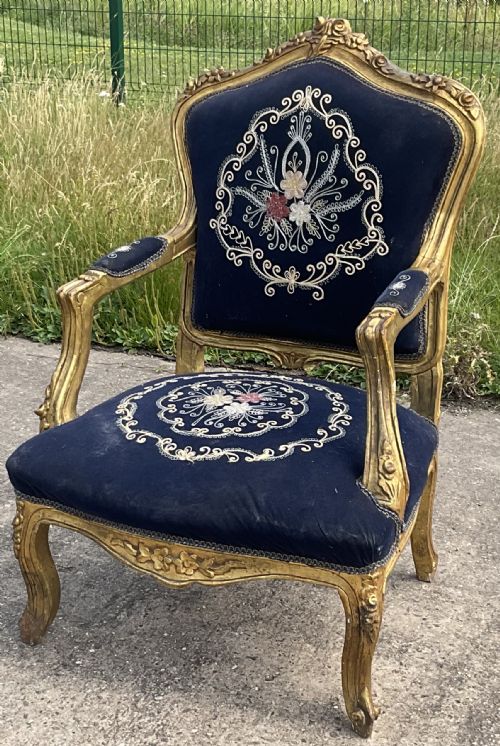
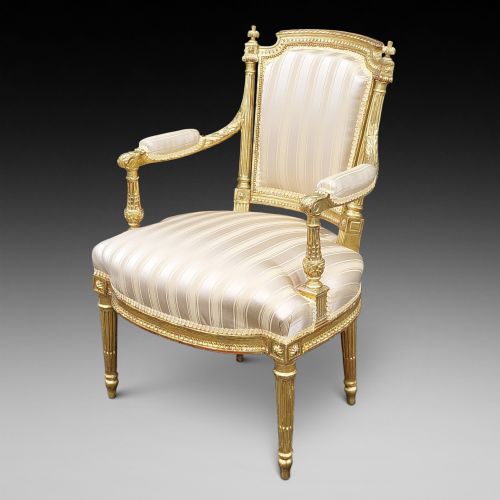
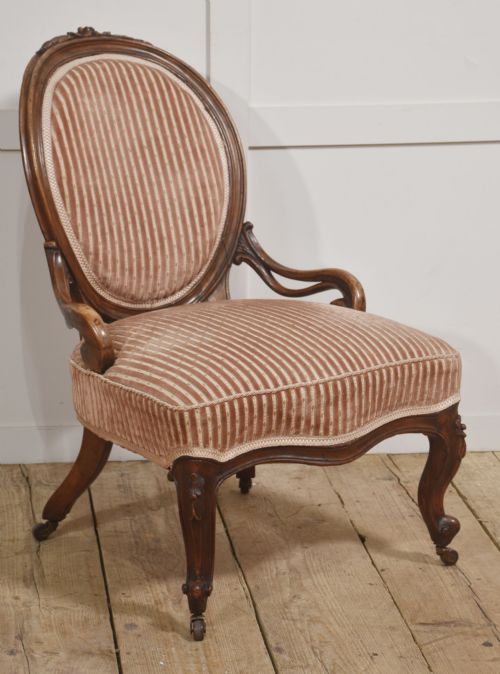
Victorian French style armchairs draw upon continental revival aesthetics, notably Louis Quinze and Rococo forms interpreted by nineteenth-century makers. Buyers looking for victorian french style armchairs encounter open armchairs, giltwood fauteuils, and walnut framed salon seats dating from the mid-nineteenth century to around nineteen hundred.
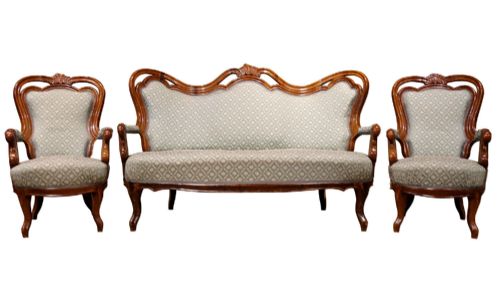
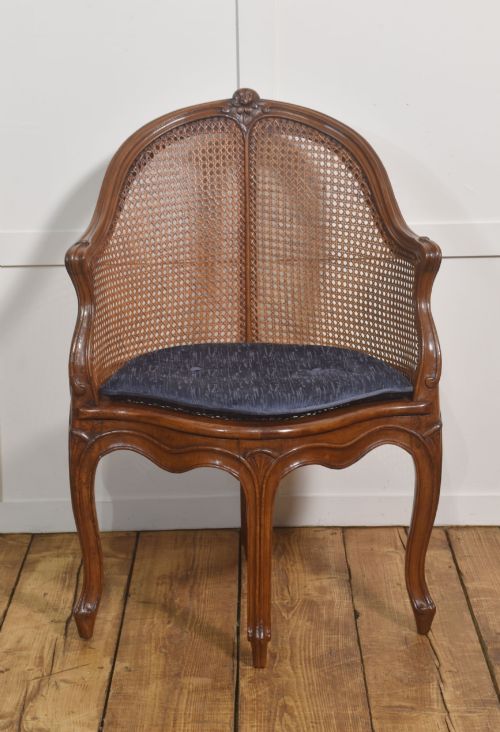
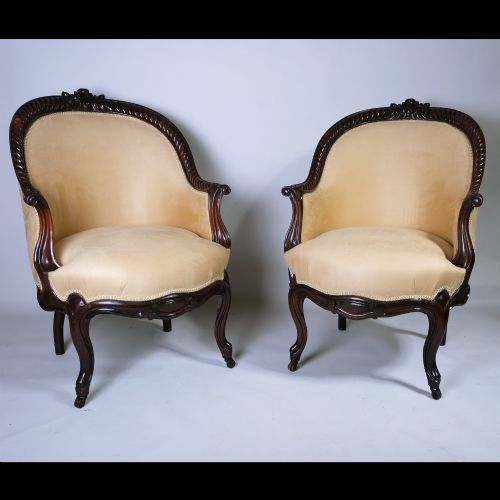
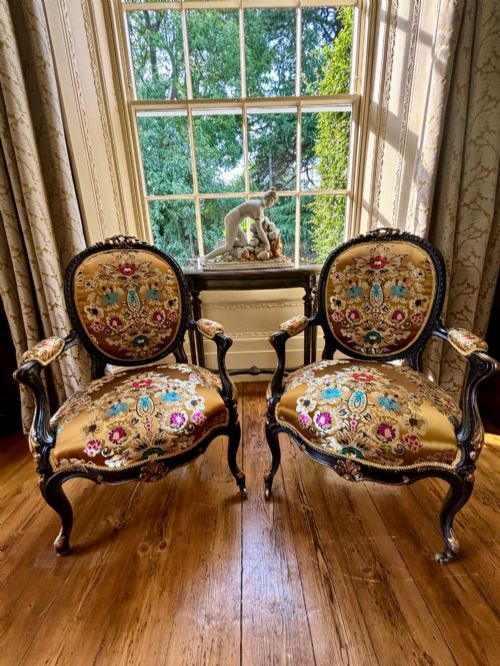
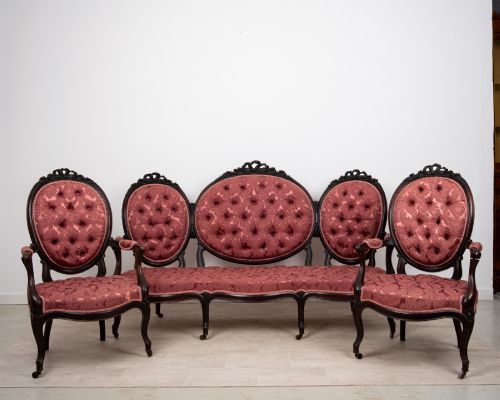
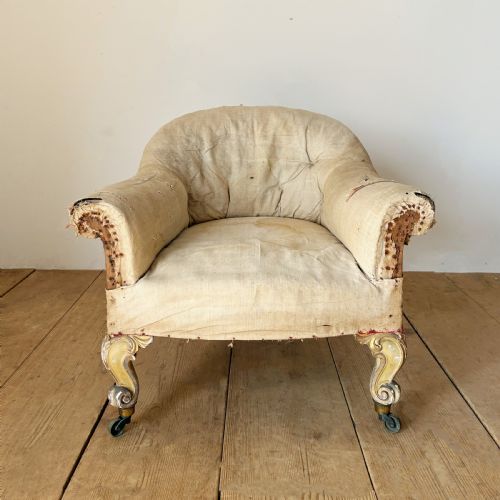
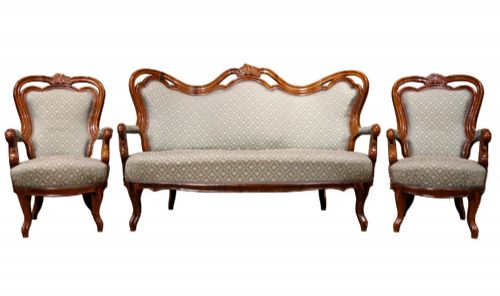
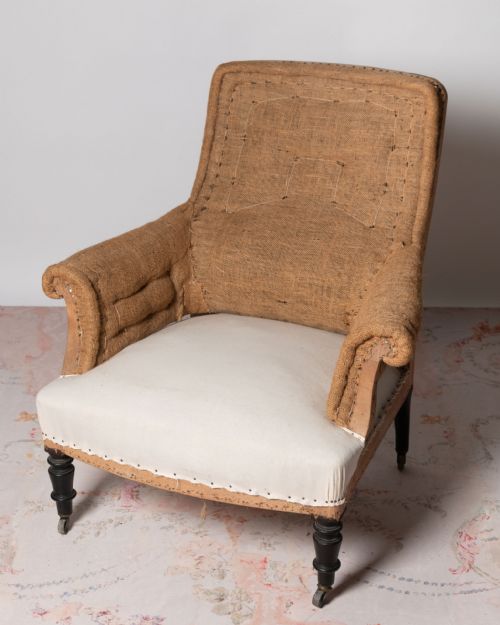
The selection here encompasses various seating arrangements, including matching pairs, salon suites, and individual tub or fireside chairs. Walnut and mahogany frame construction dominates the inventory alongside giltwood finishes and occasional cane panels.
Materials and construction methods
Carved wooden frames form the structural core of these seats, utilising dense hardwoods such as walnut, mahogany, and goncalo alves alongside gilded surfaces. Cabinet makers shaped these timbers into curved cabriole legs and scrolled arms characteristic of French revival design.
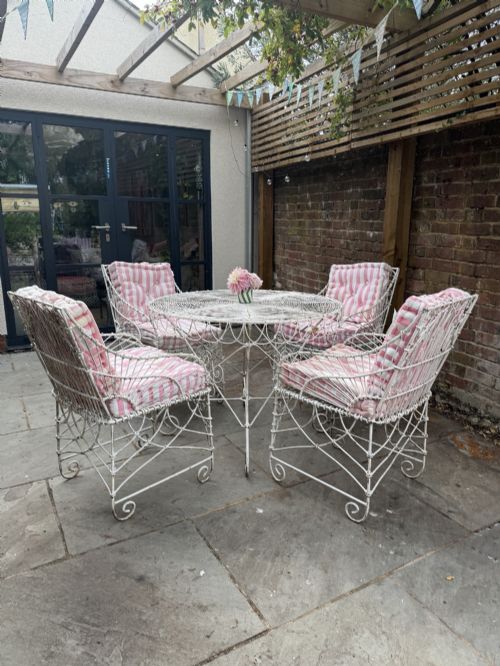
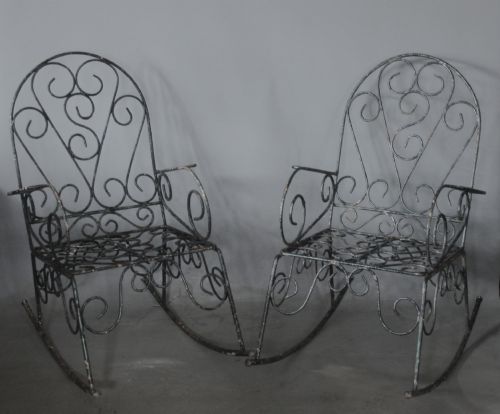
The inventory records armchairs alongside complete salon suites, garden dining sets, and child-sized bergere chairs.
Quality factors in period seating
The refinement of the timber carving distinguishes finer examples from standard production pieces, with crisp mouldings and undercut details indicating superior craftsmanship. Robust joinery in the frame construction ensures structural integrity through decades of use.
The integrity and historical appropriateness of the upholstery materials influence the overall character of the chair. Retained original decorative textile coverings or sympathetic reupholstery preserve the aesthetic value intended by the maker.
The Victorian French Style Armchairs Glossary
- Fauteuil
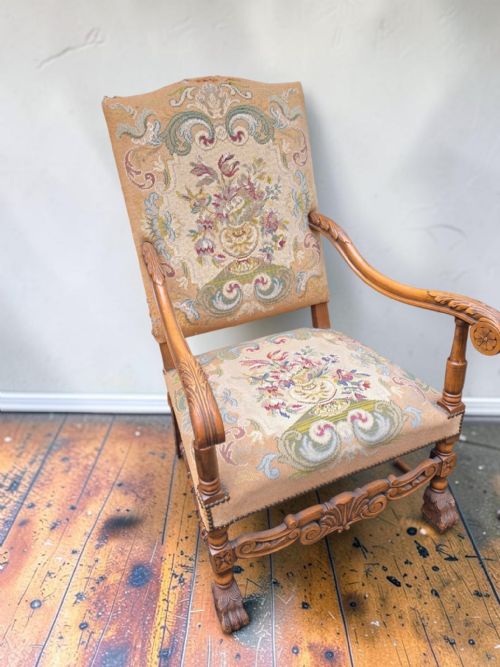
- An open-framed armchair with upholstered back and armrests, originating in France. These chairs typically feature exposed wood frames and carved detailing along the crest rail.
- Bergere
- An enclosed upholstered armchair with wooden frames and cane side panels. The seat usually incorporates a loose down cushion resting over a webbed base.
- Cabriole leg
- A furniture leg that curves outward and then tapers inward, ending in a pad or scroll foot. This shape derives from ancient animal forms and defines much eighteenth and nineteenth-century revival seating.
- Giltwood
- Timber treated with gold leaf or metallic paint to create a lustrous golden surface finish. This treatment appears frequently on ornate nineteenth-century salon chairs.
- Tub chair
- A seating form characterised by a curved back that continues uninterrupted down into low arms. The continuous enclosing shape provides a distinct profile distinct from standard open armchairs.
Victorian French Style Armchairs: Frequently Asked Questions
What defines a Victorian French style armchair?
These chairs combine nineteenth-century British production with continental European revival motifs like Rococo curves and cabriole legs.
They manifest in walnut, mahogany, or giltwood frames paired with upholstered or cane surfaces.
How do I identify a fauteuil?
A fauteuil is an open-arm armchair featuring an exposed carved wood frame around an upholstered back and seat.
This form relies on visible timber structure rather than fully padded armrests.
Where should I place a salon suite?
These matching sets suit formal reception spaces, drawing rooms, or large bedrooms as decorative seating groups.
Pairing them with a central table creates a traditional conversational arrangement.
What is the difference between walnut and giltwood frames?
Walnut frames display the natural grain and warm brown tones of the hardwood timber.
Giltwood surfaces are covered in gold leaf or metallic finish for a brighter decorative effect.