




Victorian French Chest
A victorian french chest brings continental proportion and marble tops to the bedroom, combining English scale with French decorative flair.
Victorian French Chest
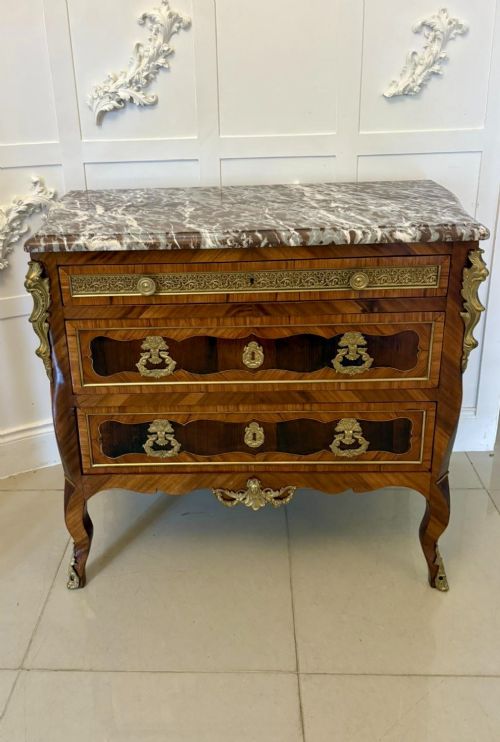
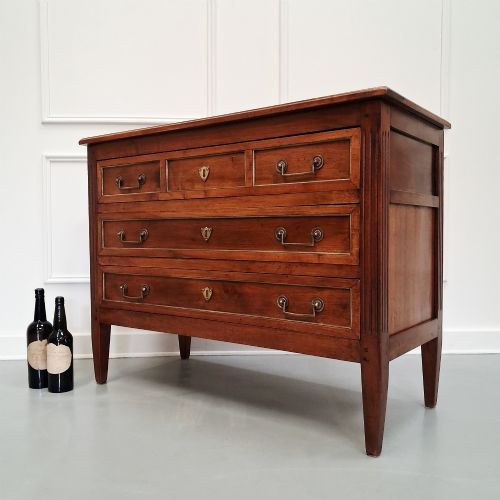
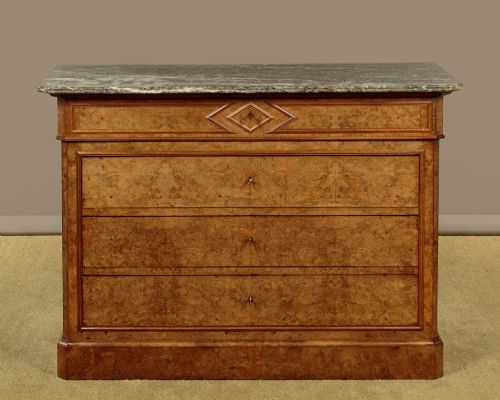
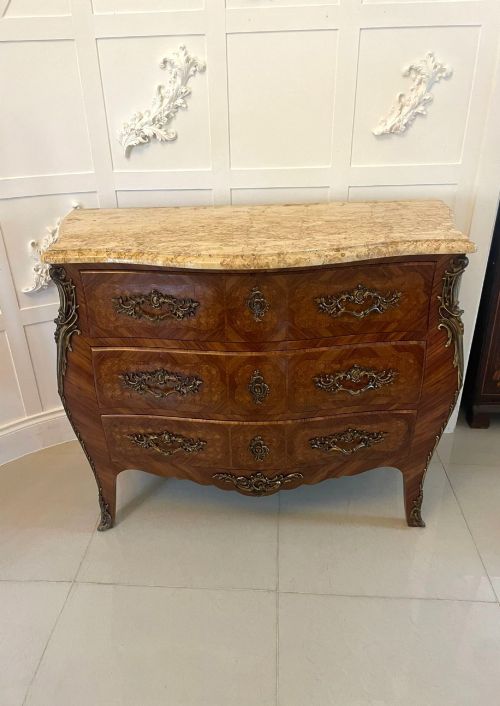
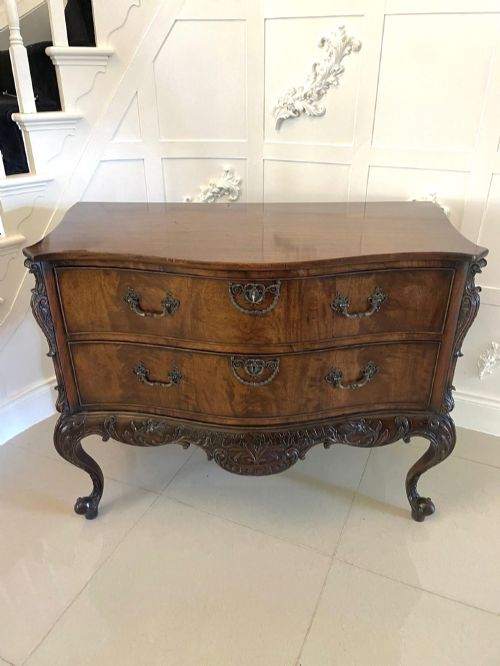
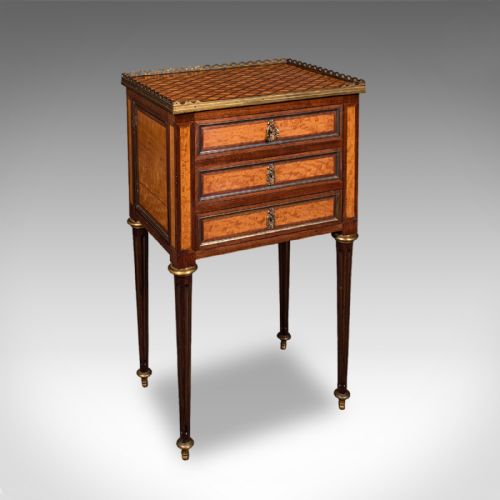
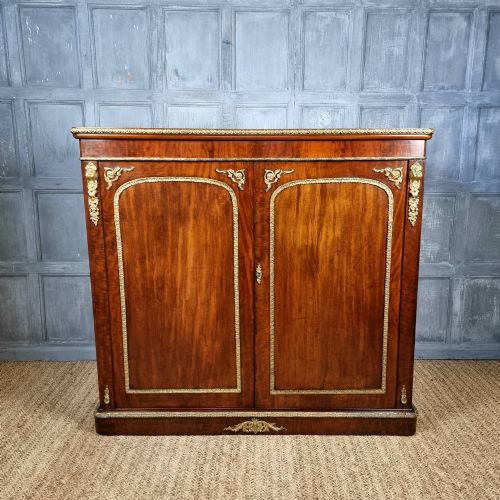
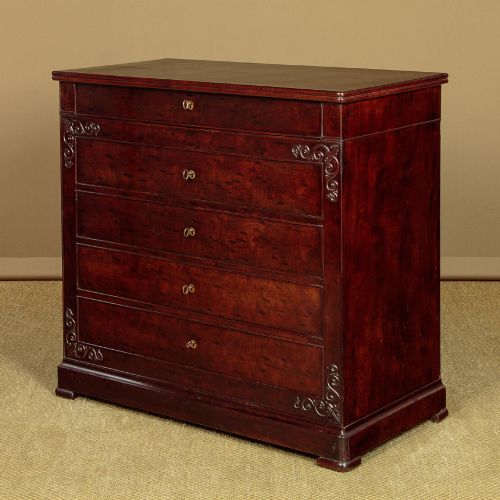
A victorian french chest typically takes the form of a marble-topped commode, a tall semainier, or a bedside cabinet rooted in nineteenth-century design. Walnut, mahogany, and burr veneers dominate the carcasses, often finished with detailed marquetry or parquetry. These pieces bridge domestic English utility with continental revival styles.
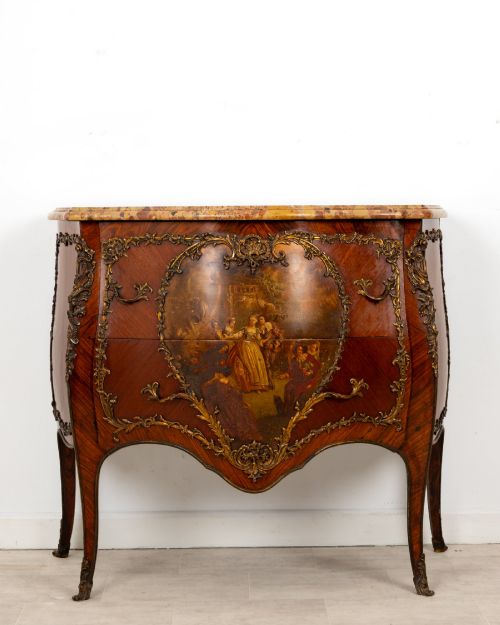
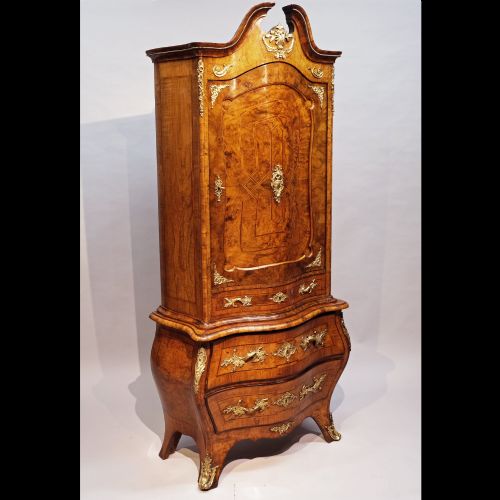
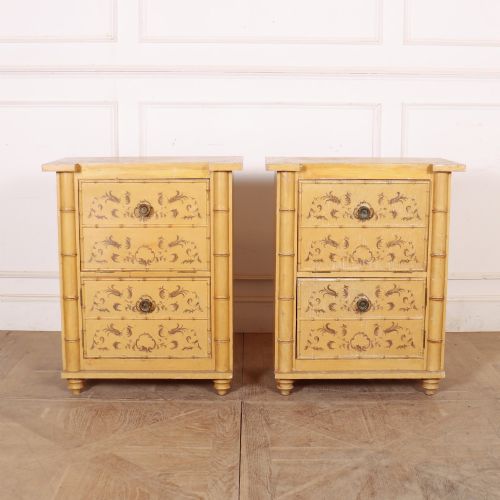
Commodes with fitted marble tops and gilt-bronze or ormolu mounts represent the most frequent encounters within this search. Makers adapted Louis Philippe and Louis XV revival idioms for Victorian interiors, creating substantial storage pieces designed for prominent display in principal rooms. Smaller bedside tables and miniature apprentice chests also appear alongside the larger case pieces.
Materials and Construction
Carpenters constructed these pieces using dense timber frameworks of mahogany, walnut, or oak, faced with figured veneers such as burr walnut, kingwood, or flame mahogany. Heavy slabs of white or grey marble sit squarely on top of commodes and washstands, secured by their own weight and fitted wooden surrounds. Ormolu and cast brass mounts accent drawer corners, keyplates, and feet.
Joinery methods rely on traditional drawer linings in oak or pine, joined with hand-cut dovetails that indicate nineteenth-century workshop production. Marquetry and parquetry panels display contrasting timber slivers arranged in geometric or floral patterns across drawer fronts. Applied mouldings and turned pilasters frame the structural facade.
Victorian French Chest Retail Price Guide 2026
Typical asking prices for victorian french chest among the pieces listed under this phrase on Sellingantiques today, from the lower quarter to the upper quarter. They describe what is for sale here now, not the wider market.
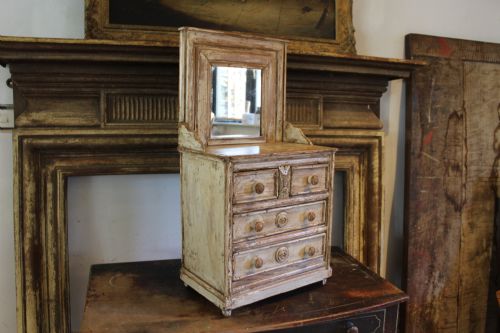
Miniature apprentice chests served as miniature portfolios for woodworkers proving their mastery before joining the guild.
The Measure of Quality
Quality rests upon the selection of veneer figures and the crispness of the bronze or ormolu mounts. Superior examples use book-matched burr walnut or flame mahogany that flows symmetrically across multiple drawers. Heavy, well-chased ormolu mounts that fit tightly against the timber distinguish finer Paris workshop output from simpler provincial work.
The integration of the marble top and the precision of the parquetry dictate the upper tiers of the range. Heavy, unblemished marble slabs with clean edge profiles denote superior specification. Drawer interiors constructed from solid secondary timbers with tight dovetails complete the standard of a high-grade piece.
Gillows·Edwards and Roberts·Tahan of Paris
The Victorian French Chest Glossary
- Commode
- A decorative chest of drawers, often featuring a marble top and French ormolu mounts. The term typically applies to low, wide case furniture from nineteenth-century continental traditions.
- Ormolu
- Gilded bronze mounts applied to furniture corners, escutcheons, and feet. These decorative elements provide metallic contrast to dark walnut and mahogany veneers.
- Semainier
- A tall, narrow chest of drawers traditionally built with seven drawers, one for each day of the week. This form maximises vertical storage space.
- Parquetry
- Geometric wood-mosaic work used to decorate furniture surfaces. Small tiles of contrasting timber are arranged to create patterned tabletops and drawer fronts.
- Wellington chest
- A tall, slender locking chest of drawers secured by a hinged vertical locking bar on one side. It provides compact storage originating in the nineteenth century.
Victorian French Chest: Frequently Asked Questions
What is a french commode?
A French commode is a decorative chest of drawers featuring continental proportions, often topped with heavy marble and mounted with cast bronze or ormolu details.
These pieces served as principal storage furniture in nineteenth-century bedrooms and salons, combining practical drawer space with formal decorative presence.
How do I clean marble tops?
Marble tops require simple wiping with a damp cloth and mild, neutral soap to avoid etching the polished stone surface. Acidic substances like citrus or vinegar should stay away from the stone.
Regular dusting keeps the porous surface clear, while specialist marble wax can protect the sheen over years of domestic use.
Where were these chests made?
Production occurred across Parisian workshops and provincial French cabinetmakers, as well as English firms adopting continental revival styles for Victorian homes. Workshops in Paris produced high-end pieces with detailed bronze mounts.
English makers such as Gillows also reinterpreted these French aesthetic movements for domestic buyers seeking continental styling.
What is burr walnut?
Burr walnut is a timber veneer harvested from walnut tree growths, producing swirling, intricate grain patterns. Cabinetmakers prized this wood for its decorative complexity.
Selected veneers were book-matched across drawer fronts to create mirrored patterns that define high-quality nineteenth-century case furniture.