


Victorian Framed Woolwork
Victorian framed woolwork brings nineteenth-century textile art into modern interiors through detailed needlework preserved behind glass in period frames.
Victorian Framed Woolwork
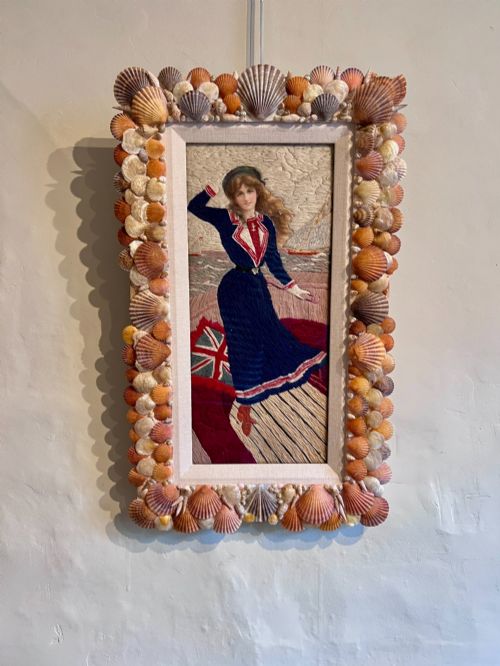
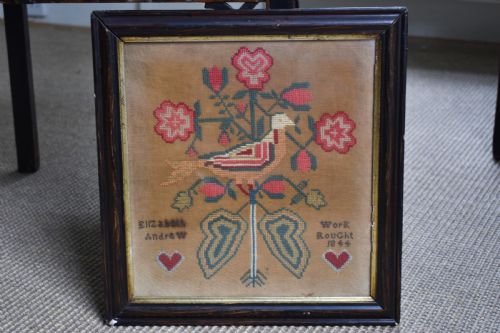
Victorian framed woolwork encompasses textile pictures, samplers, and woolies executed during the nineteenth century and displayed in wooden or gilt surrounds. These wall pieces range from large narrative tapestries and portraits to folk art depictions of animals, ships, and soldiers.
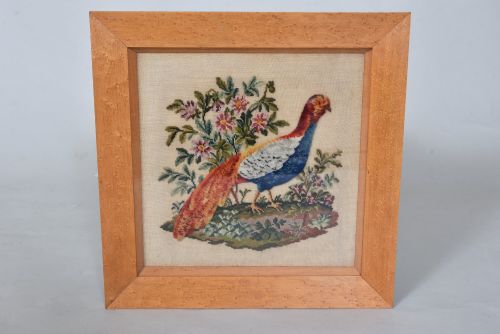
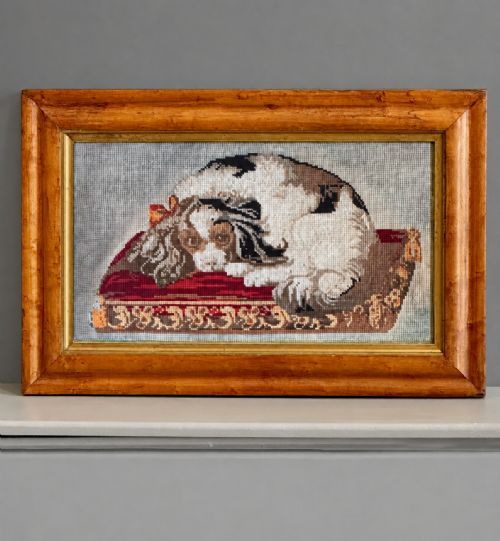
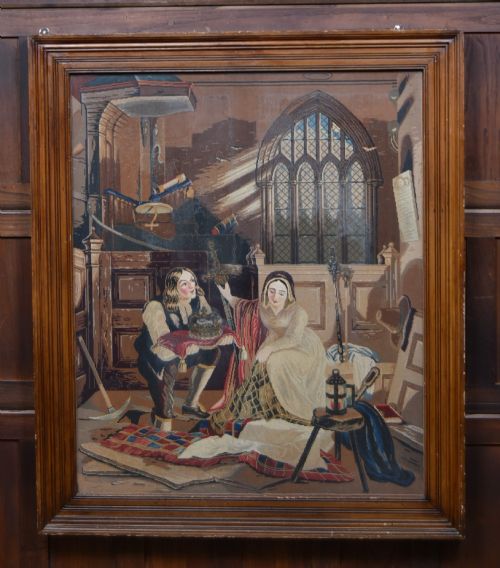
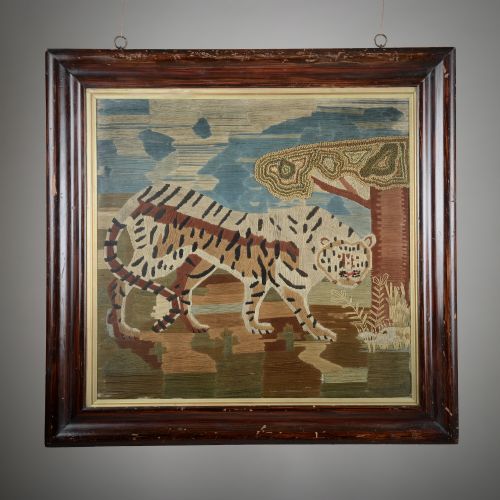
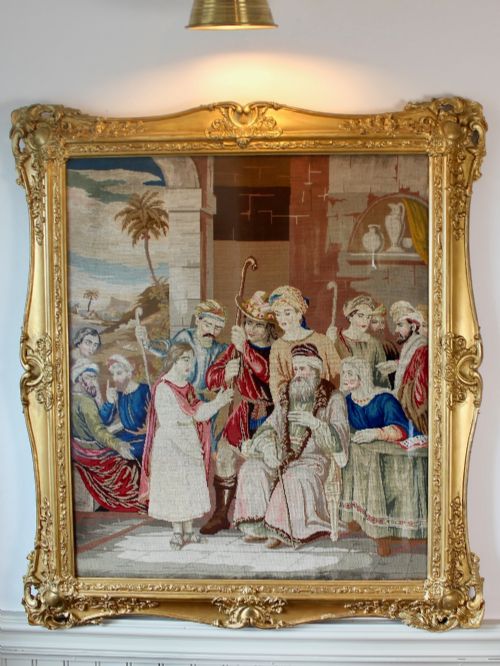
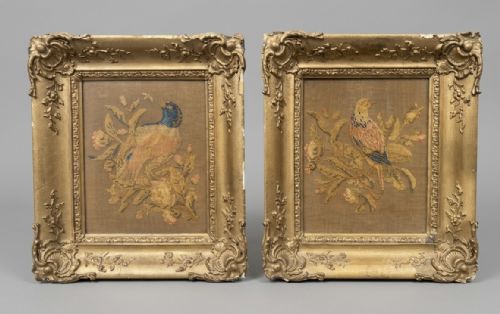
The version most commonly encountered on this page is the wool work picture or tapestry mounted behind glass in wood, burr maple, rosewood, or gilt frames. Subjects vary widely from religious scenes and domestic animals to sailors' woolies and heraldic designs.
Makers produced these works using canvas grounds stitched with wool, silk, and plushwork, often following printed charts such as Berlin wool work patterns. The surviving pieces demonstrate the domestic and professional needlework skills of the Victorian period.
Materials and technique
Needleworkers utilised wool and silk threads stitched onto canvas grounds using gros point and petit point techniques. Many nineteenth-century compositions relied on printed Berlin wool work charts, which guided the placement of coloured yarns to build pictorial depth.
Makers framed these textile panels in wood, rosewood, burr maple, oak, and giltwood, frequently incorporating glass to protect the wool and fabric surfaces. Some examples employed plushwork or carpet mosaic methods to create textured surfaces on animals and figures.
Frames recorded in the inventory include giltwood, rosewood, burr maple, and oak surrounds housing wall art and tapestries.
Quality and execution
The grade of the framing contributes significantly to the overall piece, with original burr maple, rosewood, or elaborately moulded giltwood frames elevating the status of the textile within. Condition of the fabric, absence of moth damage, and the retention of original glass further distinguish better works.
The Victorian Framed Woolwork Glossary
- Berlin work
- A style of nineteenth-century needlepoint worked in wool on canvas using coloured charted designs. This method allowed makers to produce complex pictorial scenes with shaded hues.
- Gros point
- A coarse stitch used in needlepoint and tapestry work that forms the background and structural elements of many Victorian textile pictures. It provides a sturdy grid for heavy wool yarns.
- Woolie
- A pictorial embroidery created by nineteenth-century sailors depicting naval ships, often incorporating wool and silk threads. These folk art items represent a distinct maritime tradition.
- Plushwork
- A needlework technique employing looped stitches that were subsequently cut to create a raised, velvety pile. This method added tactile depth to depictions of animals and foliage.
Victorian Framed Woolwork: Frequently Asked Questions
What is Victorian woolwork?
Victorian woolwork refers to needlepoint and tapestry pictures stitched with wool and silk threads during the nineteenth century. These textiles typically depict portraits, animals, religious scenes, or maritime subjects.
Craftsmen and domestic makers mounted these embroidered panels behind glass in wooden or gilt frames for wall display.
How do I hang antique woolwork?
Antique woolwork requires hanging in rooms with stable humidity and away from direct sunlight to prevent fading of the wool and silk threads. Secure fixings matching the weight of the wood or gilt frame are necessary.
Keeping the glass clean protects the underlying textile from dust and atmospheric pollution over time.
What is a sailor's woolie?
A sailor's woolie is a specific type of nineteenth-century embroidery depicting naval vessels, often made by sailors while at sea. These folk art pieces utilise wool and silk yarns on canvas.
They are valued for their maritime subject matter and direct connection to nineteenth-century naval life.
How do I date a framed tapestry?
Dating relies on examining the construction of the wooden frame, the materials of the canvas ground, and the style of the needlework. Rosewood, burr maple, and heavy giltwood surrounds often indicate specific nineteenth-century periods.
Subject matter and inscriptions, such as specific dates or historical events, provide further chronological context.