





Victorian Four Tier Shelf
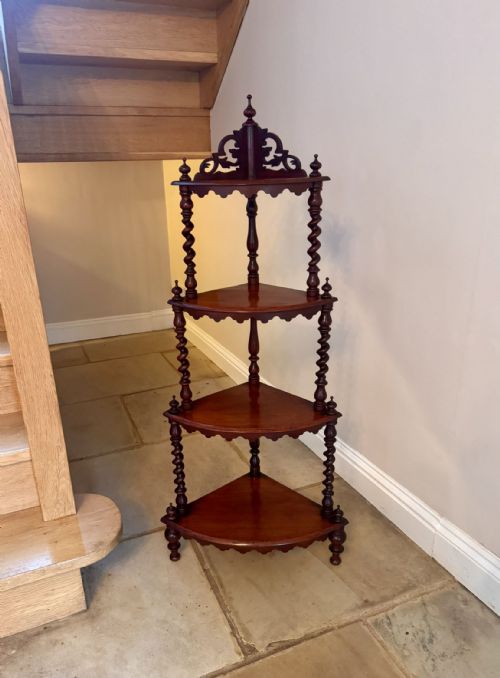
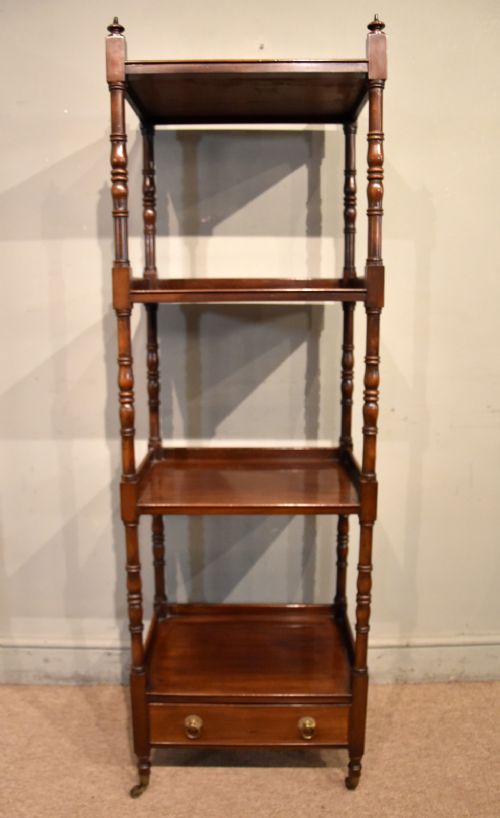
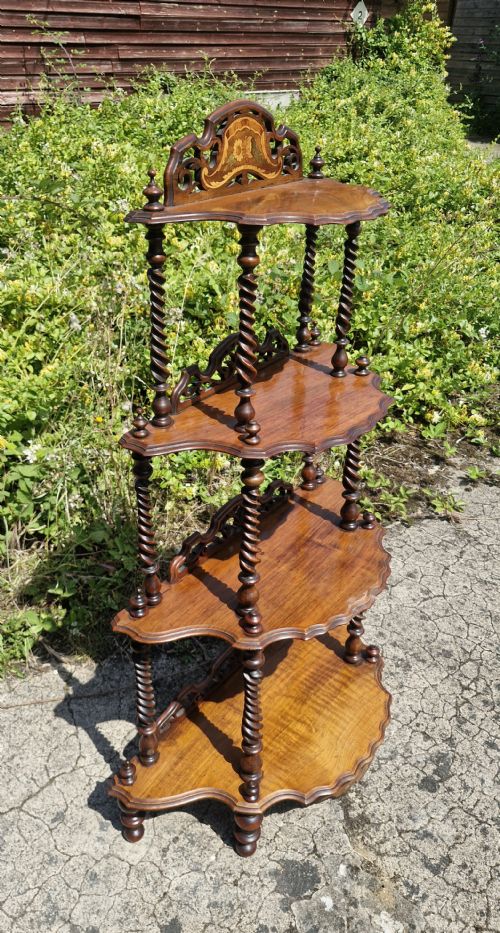
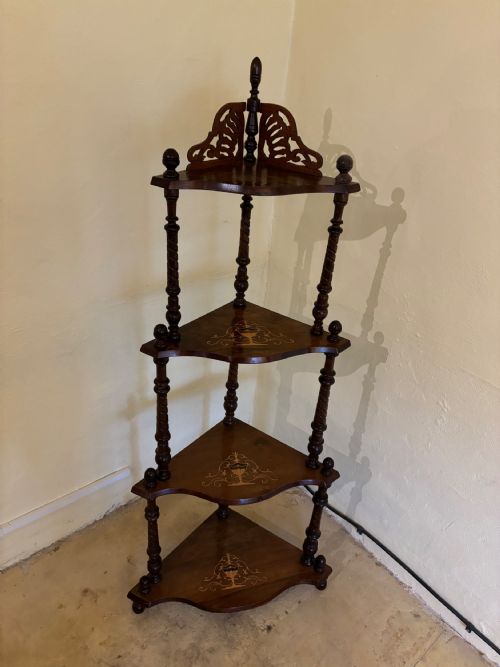
A victorian four tier shelf provides tiered display space in rich timbers, offering practical storage that brings immediate architectural warmth to a room.
Victorian Four Tier Shelf
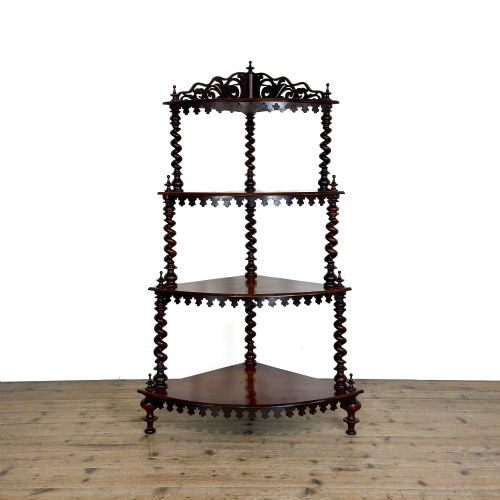
When searching for a victorian four tier shelf, buyers encounter standing whatnots, etageres, and corner units designed for display and storage. These pieces originate primarily from the 19th century, spanning periods from the Regency era through to Edwardian times.
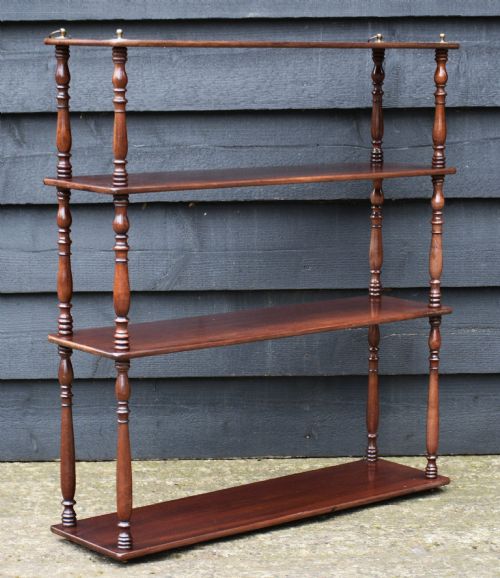
Mahogany and walnut dominate the forms seen on this page, alongside burr walnut, rosewood, and teak. Pieces appear in freestanding formats, as corner units, or as wall-hanging shelves.
Makers utilised various timber types, occasionally incorporating marquetry inlay, wood inlay, or brass details. Origins stretch from English country houses to maritime settings and Anglo-Indian colonial workshops.
How they were made
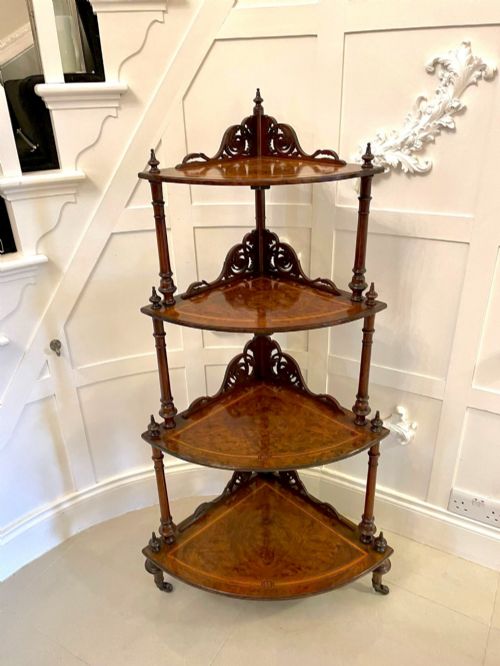
Cabinetmakers constructed these tiers using dense hardwoods such as mahogany, walnut, and rosewood, often selecting figured timbers like burr walnut for decorative impact. Turnery and upright supports divide the multiple platforms, creating stable structures designed to hold books, ceramics, and ornaments.
Surfaces frequently feature intricate wood inlay and marquetry inlay, demonstrating skilled craftsmanship in contrasting timbers. Brass elements appear on select examples to accent joints, rails, or hanging mounts.
Victorian Four Tier Shelf Retail Price Guide 2026
Typical asking prices for victorian four tier shelf among the pieces listed under this phrase on Sellingantiques today, from the lower quarter to the upper quarter. They describe what is for sale here now, not the wider market.
Sailors needed display space too, as proven by the sturdy teak shelves built to weather life at sea.
What varies in quality
The choice of timber sets the baseline for quality, moving from standard mahogany to highly figured burr walnut, rosewood, or exotic satinwood and ebony combinations. Superior examples display crisp turnery, balanced proportions across all four tiers, and precise execution of marquetry or wood inlay.
Refinement in the upright supports and the integration of brass components distinguish finer domestic and colonial workshop pieces from simpler utilitarian shelving.
The Victorian Four Tier Shelf Glossary
- Whatnot
- A piece of furniture consisting of multiple open shelves for displaying small objects or books. It developed during the 18th century and remained popular throughout the Victorian period.
- Etagere
- A set of open shelves for displaying ornaments, closely related to the whatnot. These often feature lighter frames and French or colonial influences.
- Burr walnut
- A specialised timber cut from the burl growth of a walnut tree, yielding swirling grain patterns. Cabinetmakers utilised this veneer on prominent surfaces for decorative effect.
- Marquetry
- The art of applying pieces of veneer to a structure to form decorative patterns and pictures. Craftsmen used contrasting woods to create floral or geometric designs on shelves.
- Corner whatnot
- A specialised shelving unit designed to fit neatly into a room corner. These maximise floor space while providing tiered display surfaces.
Victorian Four Tier Shelf: Frequently Asked Questions
What is a whatnot used for?
These tiered units served primarily for displaying decorative objects, ceramics, and books in Victorian reception rooms. They brought vertical display space to parlours without dominating the floor plan.
Today, owners utilise them in living rooms and hallways to hold plants, collections, and daily items while adding period character to the interior.
How do I identify a Victorian piece?
Victorian pieces display characteristic 19th-century timber choices such as rich mahogany, walnut, and rosewood. Construction methods rely on traditional joinery and hand-turned supports typical of the era.
Stylistic markers range from plain classical lines to elaborate inlaid marquetry, reflecting the diverse design phases between the 1850s and the end of the century.
Are corner shelves stable?
Corner units distribute weight naturally against two adjoining walls, providing inherent stability across their multiple tiers. The design anchors the furniture securely into the corner angle.
Heavier items sit safely on the lower tiers, while lighter decorative pieces occupy the upper levels of the stand.
Where should I place an etagere?
An etagere suits corners, alcoves, or flat walls where vertical display enhances the room's proportions. Freestanding versions need enough surrounding space to showcase their turned supports and timber grain.
Wall-hanging variants require secure fixing to support the weight of the timber and the objects placed upon them.