
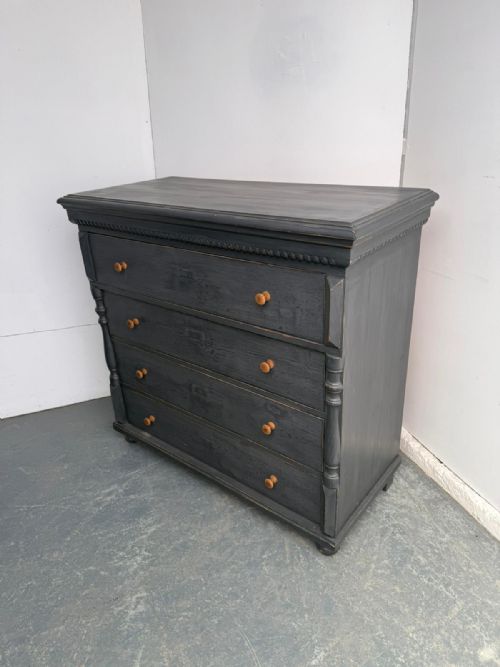
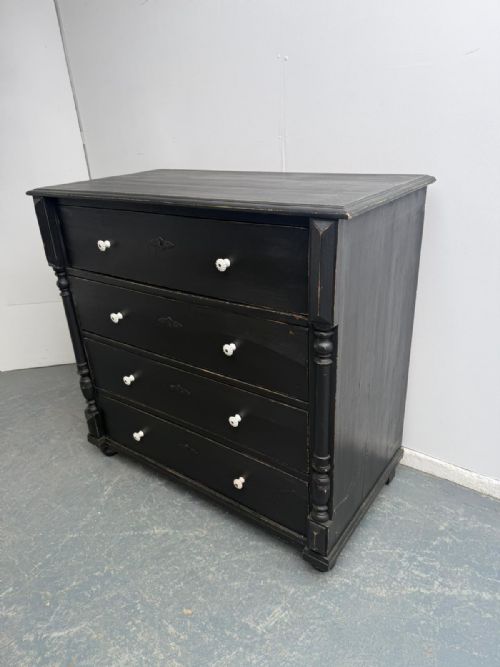


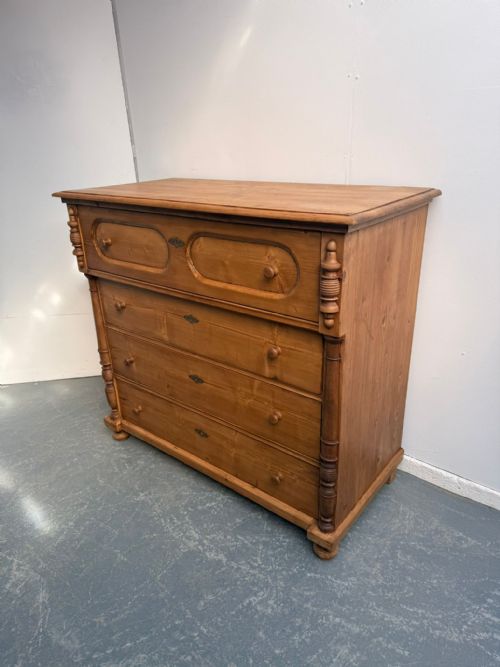


Victorian Four Drawer Dresser
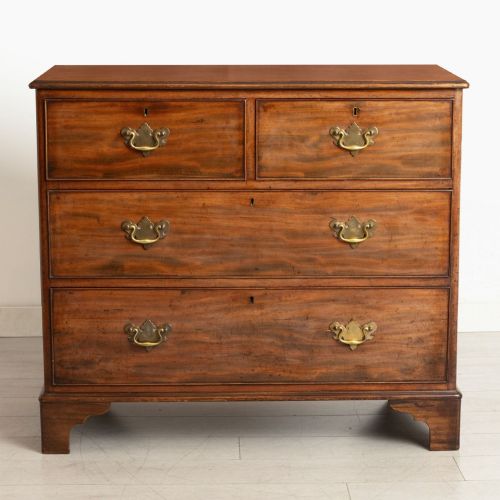
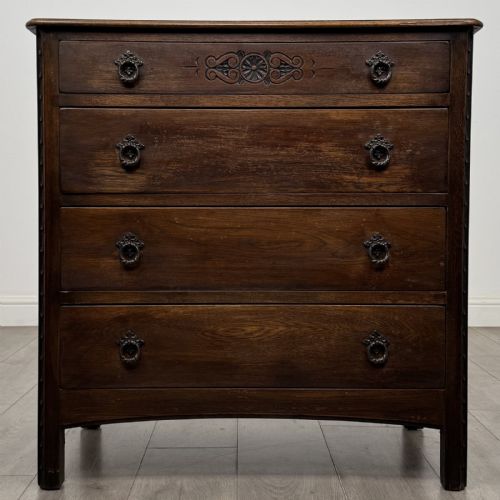
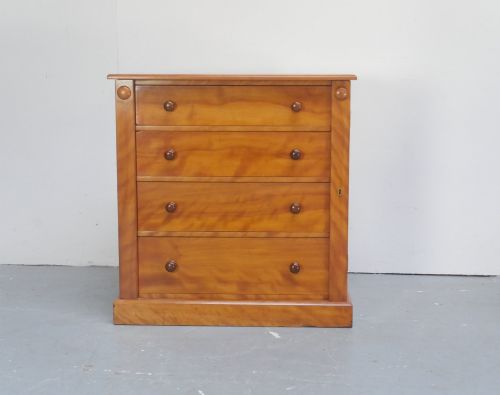
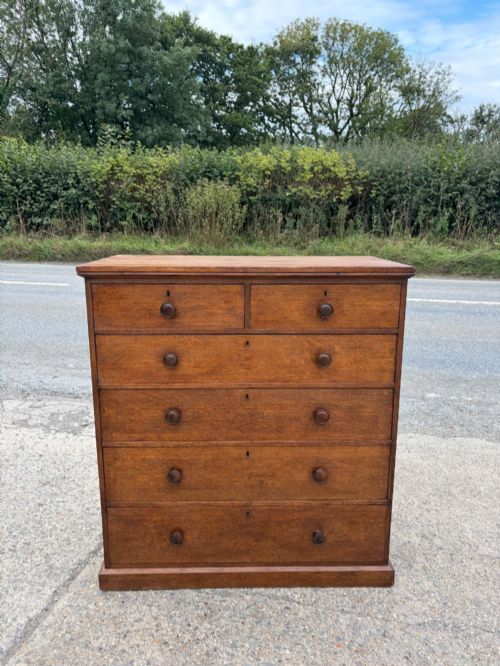
A Victorian four drawer dresser offers practical storage with the distinct proportions of the nineteenth century, bringing solid utility to a modern bedroom.
Victorian Four Drawer Dresser
A victorian four drawer dresser typically takes the form of a chest of drawers, often referred to alongside sideboards, constructed with four graduating or uniform horizontal storage tiers.
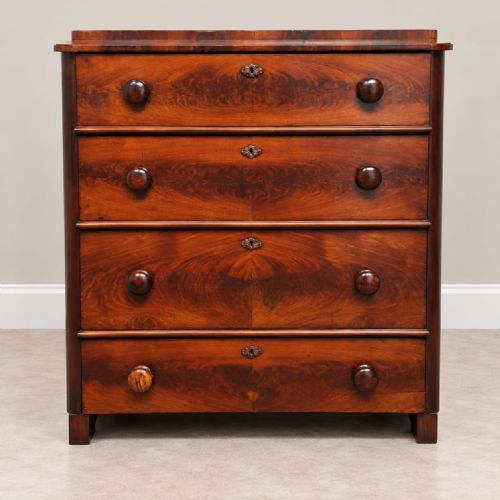
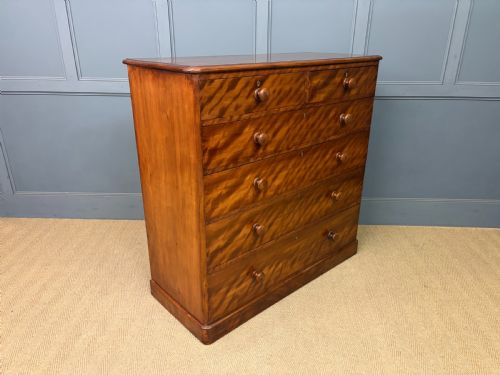
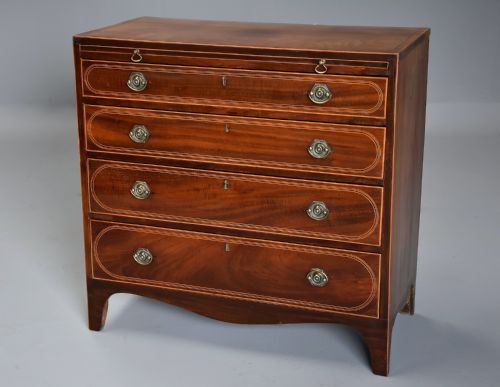
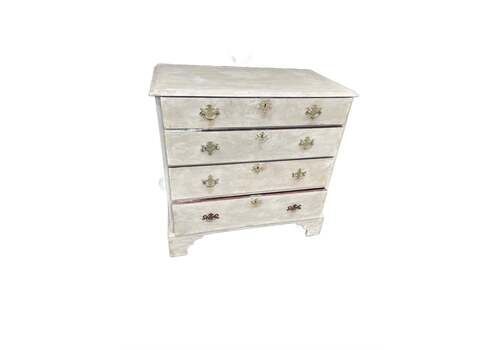
The pieces appearing here span the nineteenth century, including vernacular country pine examples, formal mahogany designs, and painted finishes originating from English, Hungarian, and American workshops.
Formats range from straight-front mahogany carcases to bowfront profiles, country pieces bearing merchant sign-writing, and occasional walnut or satin walnut variations.
Materials and Construction
Makers utilised solid timbers such as mahogany, walnut, oak, and pine, frequently applying flame mahogany veneers to primary drawer fronts to create figured grain patterns.
Secondary elements often involved brass for handles and key escutcheons, while select continental pieces incorporated marble tops above timber carcases.
Surface treatments varied from clear wax finishes highlighting natural wood tones to historical painted coats in grey, black, or polychrome hues.
The listings span woods including mahogany, walnut, pine, and satin walnut, alongside painted and marble-topped variants from the nineteenth century.
Qualities That Separate Examples
Construction integrity distinguishes standard utilitarian pieces from high-status output, seen in the neatness of dovetail joints, the smoothness of drawer movement, and the selection of timber figures.
Makers marks and firm attributions elevate specific examples, alongside original surface treatments such as untouched sign-writing or period paint finishes rather than later alterations.
Heal & Son·Druce & Co·Edwards and Roberts
The Victorian Four Drawer Dresser Glossary
- Biedermeier
- A central European style characterised by utilitarian comfort and clean lines, often executed in rich fruitwoods and flame mahogany.
- Bowfront
- A curved cabinet front that swells outward in the centre, creating a softer silhouette than standard rectilinear chests.
- Flame mahogany
- A veneer cut from the fork of the mahogany tree where branches meet the trunk, producing a distinctive flickering flame pattern.
- Escutcheon
- A protective plate surrounding a keyhole, commonly cast in brass on nineteenth-century drawer fronts.
- Dovetail
- A traditional interlocking woodworking joint used to secure drawer corners, valued for tensile strength.
Victorian Four Drawer Dresser: Frequently Asked Questions
How do I clean a wax finish?
Apply a traditional beeswax polish sparingly with a soft cloth, buffing gently along the grain after a few minutes.
Avoid modern liquid sprays containing silicones, which build up over time and dull the timber appearance.
Can I use this in a hallway?
The compact depth of many four-drawer chests makes them suitable for narrow circulation spaces or entrance halls.
Ensure floor clearance allows adjacent interior doors to open fully without striking the carcase corners.
Why do drawers stick in damp weather?
Solid timber expands and contracts with changes in atmospheric moisture, causing drawer sides to bind temporarily within the carcase runners.
Rubbing a little plain candle wax along the bearing surfaces usually restores smooth operation without altering the wood.
What is the difference between pine and mahogany versions?
Pine examples typically derive from country workshops and domestic farmhouses, often carrying painted surfaces or practical merchant sign-writing.
Mahogany versions represent more formal urban production, featuring sophisticated grain figures intended for middle or upper-class bedroom settings.