

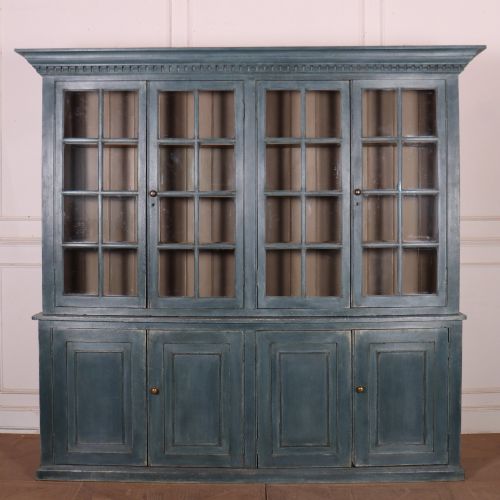
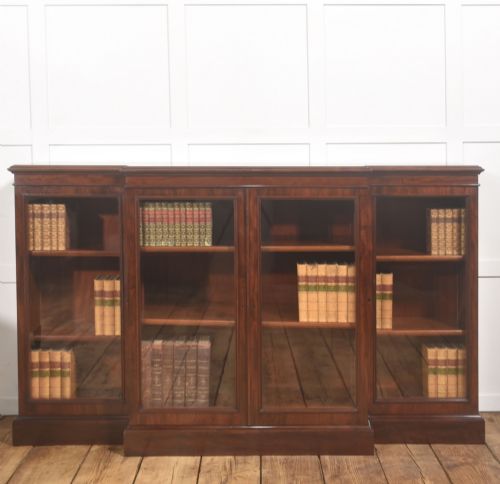
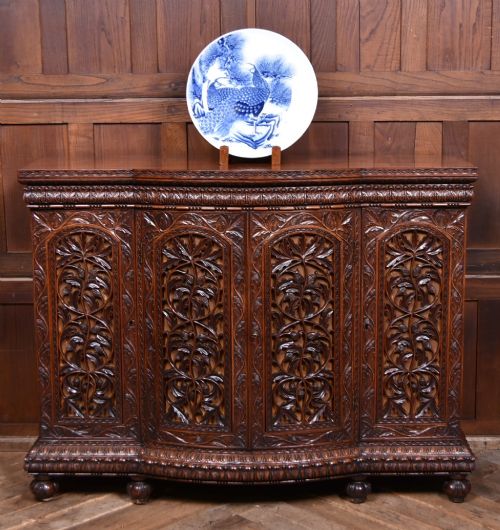
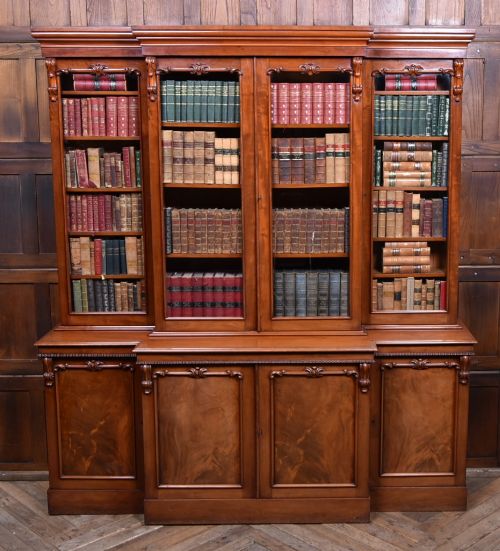





Victorian Four Door Cabinet
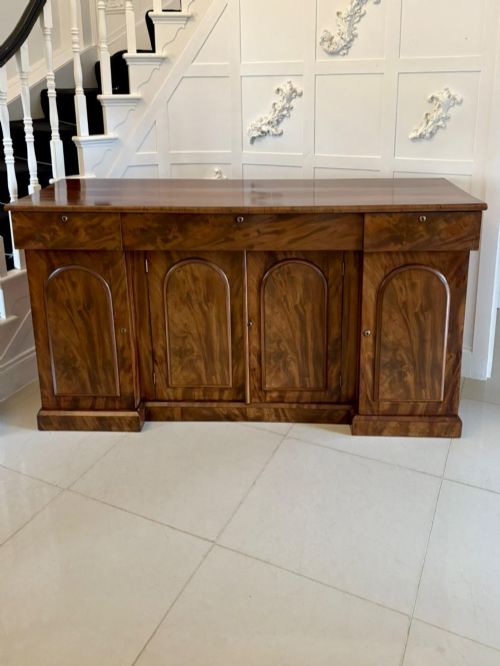
When you want a victorian four door cabinet, you find generous timber storage spanning bookcases, credenzas and sideboards made to anchor a substantial room.
Victorian Four Door Cabinet
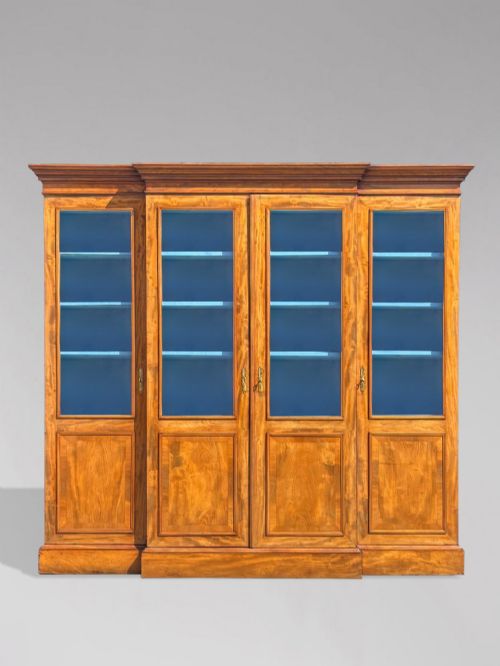
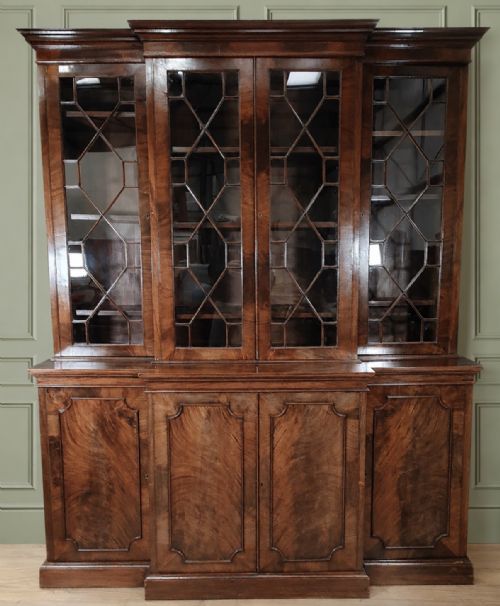
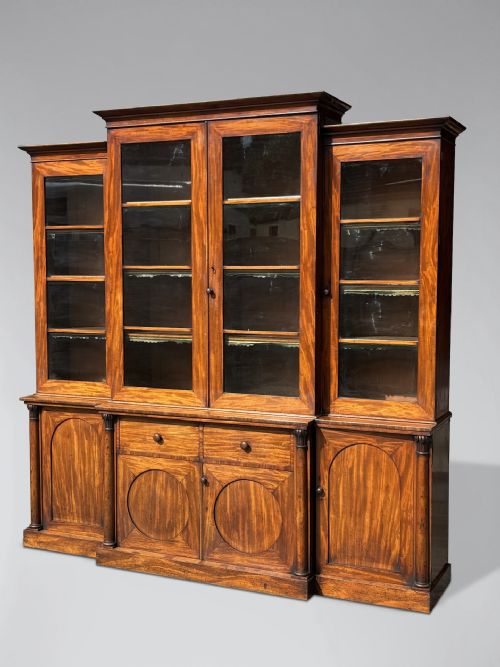
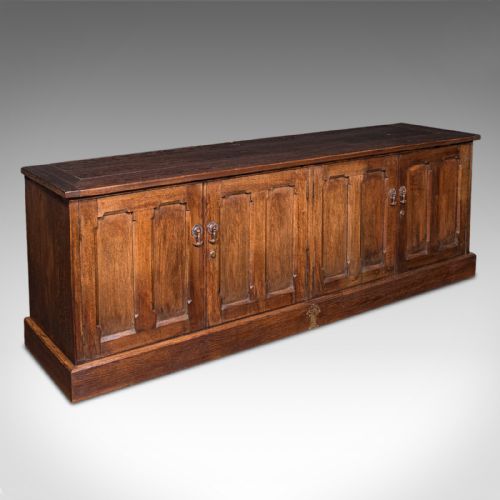
A victorian four door cabinet encompasses a diverse group of large storage furniture, most commonly appearing on this page as breakfront bookcases, credenzas, and sideboards. These pieces provide extensive capacity through matching sets of doors, often combining glazed display sections with enclosed lower cupboards.
The objects stem predominantly from the nineteenth century, utilising domestic and exotic timbers shaped into formal breakfronts or long, low sideboard formats. Makers of the period applied these configurations to libraries, dining rooms, and drawing rooms where heavy storage and display were required.
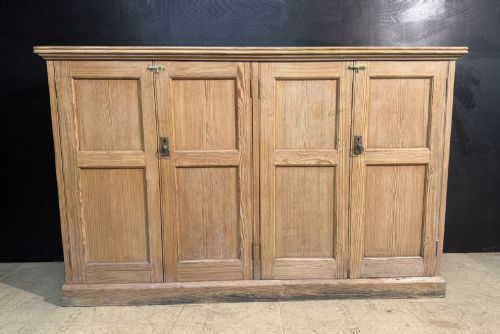
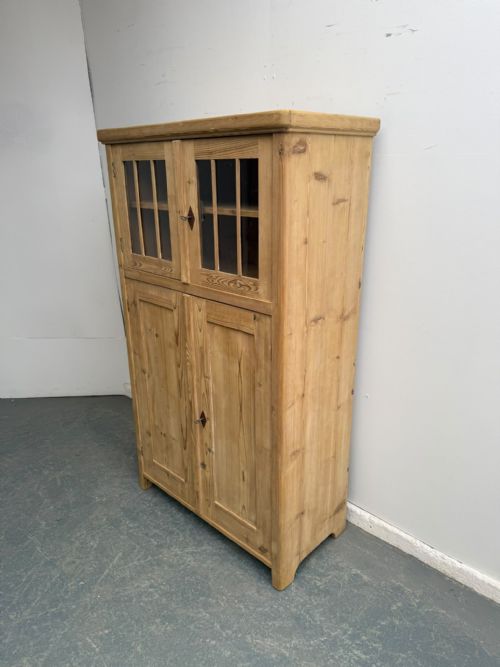
Pine variants also appear frequently, offering simpler farmhouse or housekeepers cupboard forms designed for utilitarian use rather than formal reception rooms. Buyers meet both grand, architectural walnut and mahogany pieces alongside stripped or painted pine storage units.
Materials and Construction
Cabinet makers relied heavily on solid and veneered mahogany, walnut, and burr walnut, frequently laying figured veneers over stable secondary woods to create decorative grain patterns. Ormolu mounts, brass hardware, and glass panes completed the fronts of formal credenzas and bookcases.
Pine served as the primary material for utilitarian cupboards and dressers, constructed with durable pegged joints and panelled doors intended to accept painted or waxed finishes. Carving, marquetry inlay, and Tunbridgeware details added enrichment to the more ambitious nineteenth-century library pieces.
Victorian Four Door Cabinet Retail Price Guide 2026
Typical asking prices for victorian four door cabinet among the pieces listed under this phrase on Sellingantiques today, from the lower quarter to the upper quarter. They describe what is for sale here now, not the wider market.
Listings feature nineteenth-century furniture built from mahogany, walnut, pine, and rosewood, incorporating glass, brass, and ormolu.
Assessing Quality and Execution
The caliber of a piece rests upon the selection of timber and the precision of the cabinet work, particularly in the matching of figured mahogany or burr walnut veneers across four separate doors. Superior examples display disciplined carving, fine marquetry, and well-integrated architectural mouldings rather than clumsy surface ornament.
Secondary wood selection and interior fittings also divide standard production from exhibition pieces, where original glass, functional locks, and adjustable shelving remain intact. The harmony of proportions across a wide breakfront facade dictates whether a cabinet achieves visual balance.
The Victorian Four Door Cabinet Glossary
- Breakfront
- A cabinet facade where the central section projects forward from the flanking wings. This configuration breaks up the expanse of four doors.
- Credenza
- A low cabinet, frequently featuring glass doors or ormolu mounts, developed for nineteenth-century drawing rooms. It sits lower than a traditional bookcase.
- Ormolu
- Gilded bronze mounts applied to furniture for decoration. They appear on high-status Victorian walnut and rosewood cabinets.
- Burr Walnut
- Timber taken from the growth excrescences of walnut trees, yielding highly figured, swirling grain patterns. Cabinet makers prized it for veneering prominent door panels.
- Tunbridgeware
- Small-scale mosaic woodwork forming geometric or pictorial patterns from contrasting wood cubes. It decorates inlaid panels on select nineteenth-century pieces.
Victorian Four Door Cabinet: Frequently Asked Questions
Where should I put a large cabinet?
These large storage units suit dining rooms, libraries, or spacious hallways where their considerable length and height can anchor the wall. They require substantial floor space and adequate clearance for four doors to swing fully open.
Positioning them away from direct sunlight protects vulnerable veneered surfaces and antique glass panes from fading or thermal stress over time.
How do I care for nineteenth-century wood?
Maintain timber surfaces by applying appropriate furniture wax sparingly and buffing with a soft cloth to preserve the finish. Avoid silicone-based sprays, which penetrate the grain and damage historic polishes.
Keep the room at a stable humidity level to prevent the solid timbers and applied veneers from shrinking, warping, or cracking.
Are the shelves adjustable?
Many formal library bookcases and glazed cabinets feature vertically adjustable wooden shelves supported on ratchets or wooden pegs. Utilitarian pine cupboards often retain fixed shelving built into the original carcase construction.
Checking the interior configuration confirms whether the shelving accommodates oversized books or specific display requirements.
How do I distinguish pine versions from hardwood?
Pine variants typically present a lighter, softer softwood grain that was historically intended for utility rooms, farmhouse interiors, or painted finishes. Hardwood examples utilise dense tropical or temperate timbers like mahogany and walnut meant for formal reception spaces.
Pine cupboards frequently carry simpler panelled or beaded door constructions without the elaborate carved mouldings found on high-status library cases.