



Victorian Forest Scene Painting
A victorian forest scene painting captures the deep quiet of nineteenth-century woodlands through the careful hand of period artists.
Victorian Forest Scene Painting
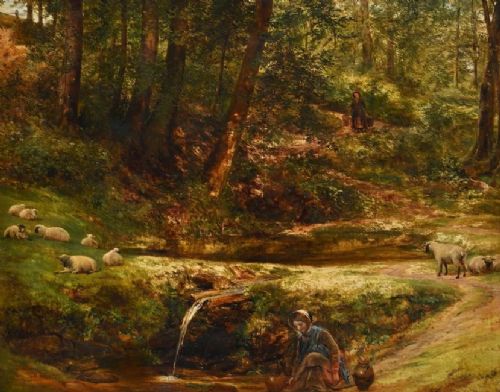
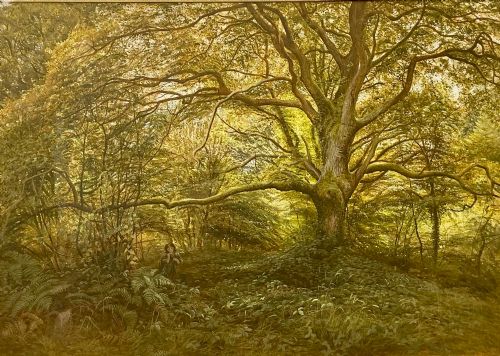
A victorian forest scene painting draws the eye into secluded groves, sunlit clearings, and quiet river banks set within the nineteenth century. These works capture the natural landscape through styles that range from Victorian naturalism and realism to early impressionism.
Most examples found here take the form of original oil paintings on canvas or wood panel, alongside detailed watercolour paintings on paper. Subjects frequently feature figures walking through woodland paths, autumn foliage, and peaceful country river glens.
Makers and artists represented across the collection include named painters such as Thomas W Lascelles, Richard Redgrave, Bonomi Edward Warren, Edmund George Warren, Charles James Adams, J McIntyre, Charles Branwhite, Walter Emsley, and William Mellor.
Materials and methods
Artists worked primarily with oil paint applied to prepared canvas or wood panels, building rich textures that suggest deep foliage and damp earth. Watercolours on paper offered a lighter medium for capturing the translucent quality of light filtering through branches.
Frames often incorporate gesso mouldings finished with gold leaf, matching the traditional presentation methods favoured during the period. Support structures utilise sturdy wooden stretchers and panels designed to preserve the integrity of the paint surface over generations.
Victorian Forest Scene Painting Retail Price Guide 2026
Typical asking prices for victorian forest scene painting among the pieces listed under this phrase on Sellingantiques today, from the lower quarter to the upper quarter. They describe what is for sale here now, not the wider market.
Styles span Victorian landscape, Victorian naturalism, nineteenth century realism, Victorian realism, and Victorian impressionism.
Evaluating the pieces
Quality rests in the artist's command of light, shadow, and atmospheric depth within the woodland setting. Skilled brushwork brings a tangible vitality to the foliage and water, whereas lesser examples rely on formulaic compositions and flat applications of paint.
The condition of the original canvas, panel, and pigment layer dictates the visual impact of the work. Well-preserved surfaces retain their original varnish tones and colour saturation without excessive retouching or structural damage.
Thomas W Lascelles·Richard Redgrave·Bonomi Edward Warren·Edmund George Warren·Charles James Adams·J McIntyre·Charles Branwhite·Walter Emsley·William Mellor
The Victorian Forest Scene Painting Glossary
- Canvas
- A heavy woven fabric stretched across a wooden frame to serve as a sturdy support for oil paintings.
- Gesso
- A plaster mixture applied to wood or canvas to prepare a smooth surface for painting or gilding.
- Watercolour
- A paint consisting of pigment suspended in a water-soluble binder, traditionally applied to paper.
- Wood Panel
- A flat wooden board utilised as a rigid alternative to canvas for oil paintings during the period.
Victorian Forest Scene Painting: Frequently Asked Questions
What periods do these paintings date from?
The works span the nineteenth and early twentieth centuries, with dates ranging from eighteen-eighty through to nineteen-forty. Victorian examples form the core of the selection.
Artists working during this timeframe captured changing landscape styles, moving from traditional realism towards impressionistic treatments of light.
How should I hang a framed oil painting?
Secure fixings must match the weight of the wooden frame and the gesso ornamentation. Use sturdy picture hooks screwed directly into wall studs.
Keep paintings away from direct sunlight and damp spots to protect both the canvas and the gold leaf framing.
How do I distinguish oil from watercolour?
Oil paintings feature thicker, textured paint layers on canvas or wood panels with a varied sheen. They are usually displayed without protective glass.
Watercolours utilise thin washes of pigment on paper and require mounting behind glass to prevent moisture damage and fading.
What subjects appear in these scenes?
Common motifs include quiet river glens, autumn woodlands, and paths through leafy groves. Human figures occasionally appear taking a walk or picnicking beneath the trees.
Artists focused heavily on naturalism, recording the specific qualities of British countryside scenery during different seasons.