
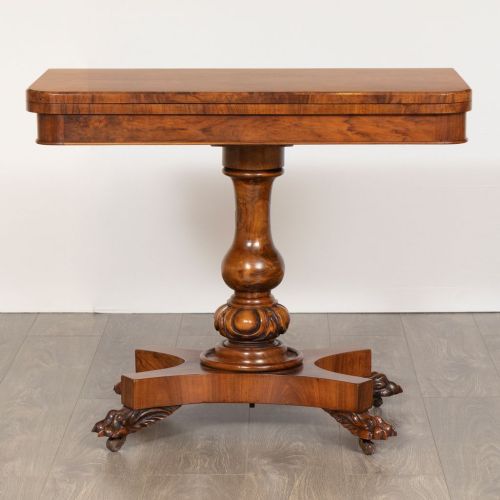
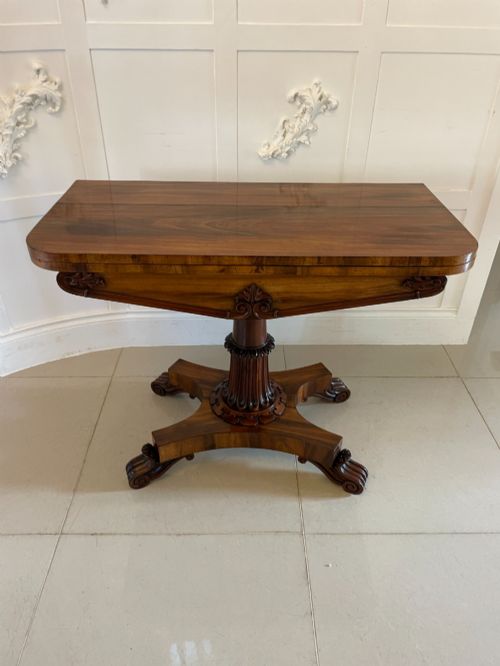
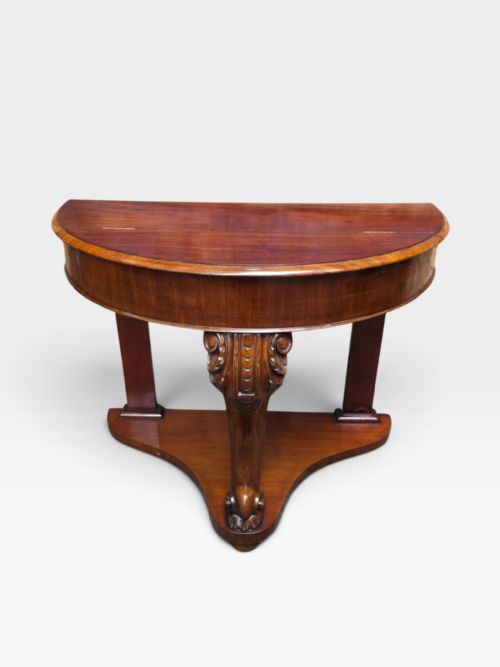
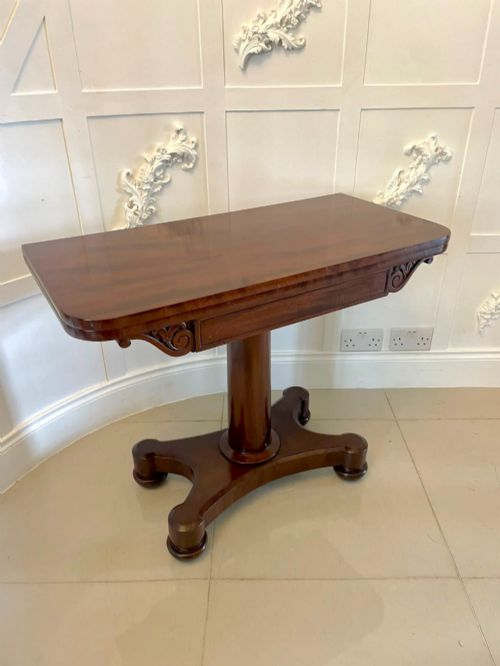
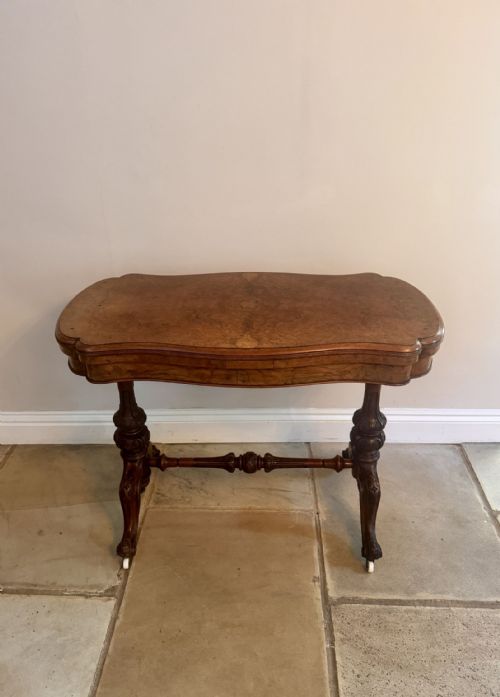
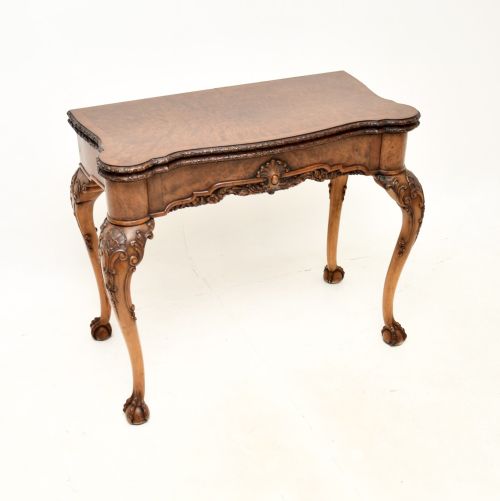
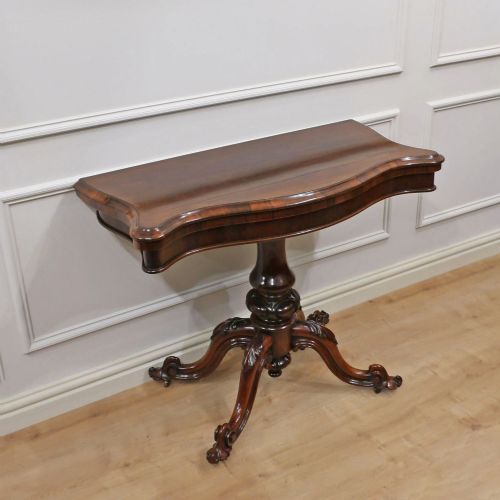

Victorian Folding Tea Table
A victorian folding tea table is a versatile surface engineered for entertaining, pivoting and expanding to suit the drawing room.
Victorian Folding Tea Table
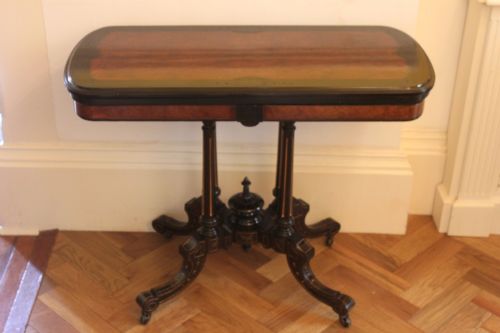
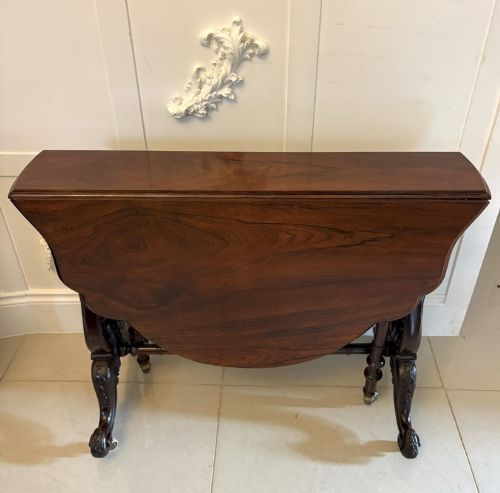
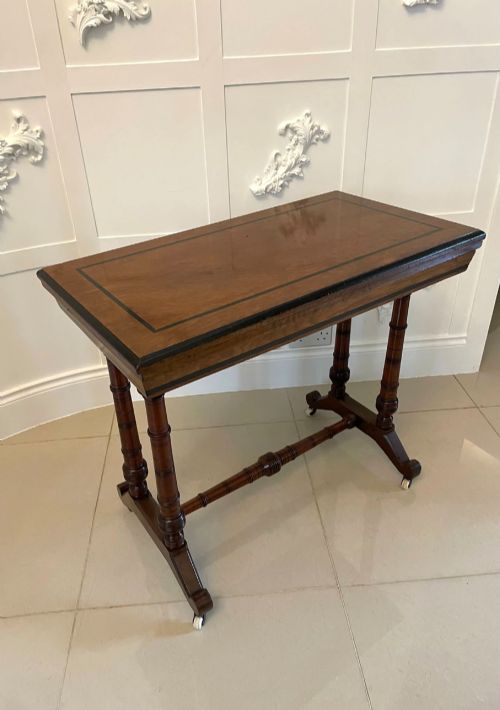
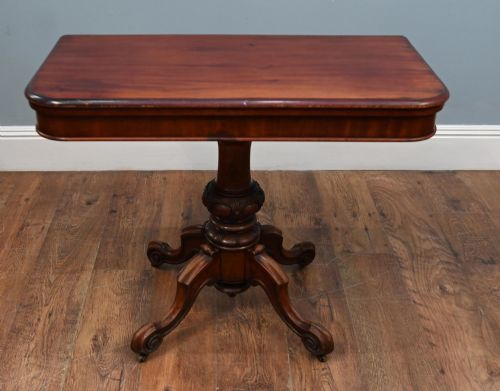
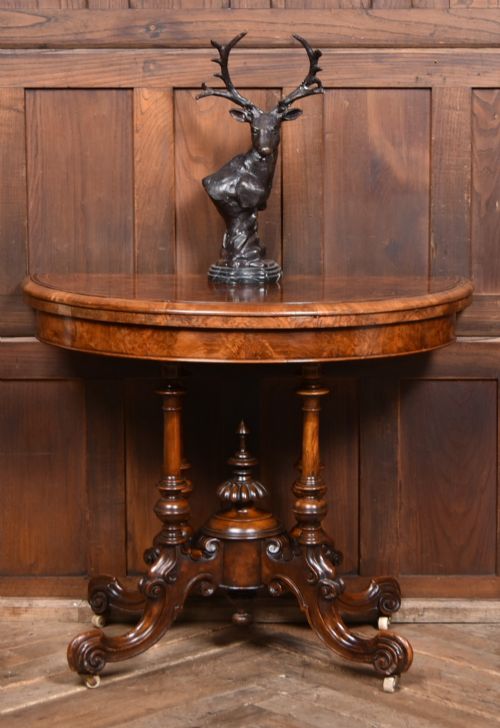
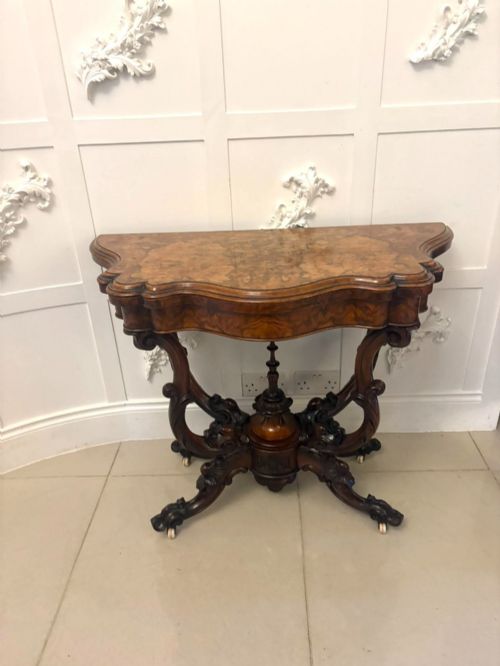
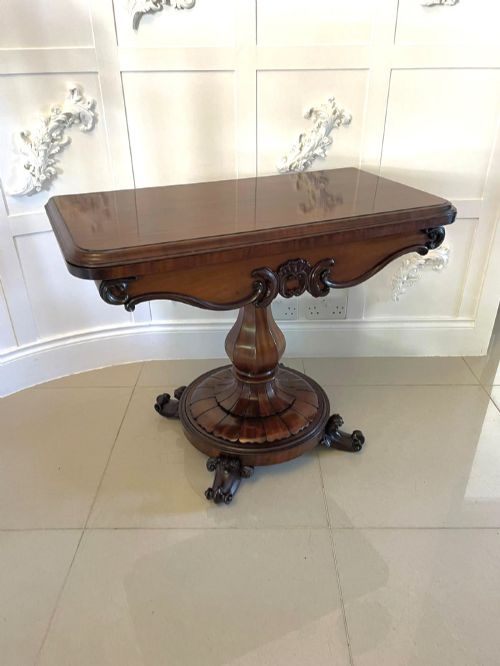
When searching for a victorian folding tea table, a buyer encounters dual-purpose furniture designed to transform from a compact console or side piece into a full dining or gaming surface. The most common manifestations on this page are card tables, games tables, and Sutherland tables utilising hinged, swivel, or drop-leaf mechanisms.
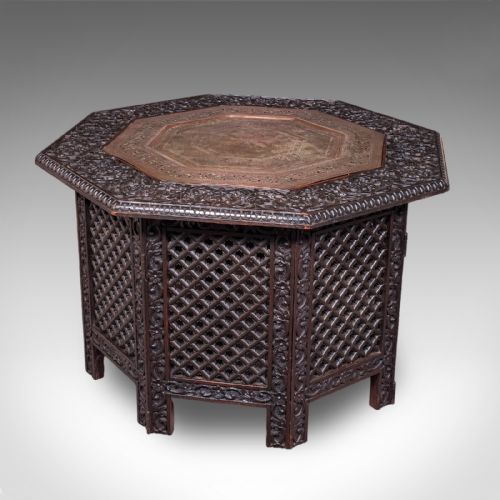
The periods and styles span standard Victorian production through to Arts and Crafts, Anglo-Indian, and Louis XV Revival variants. These tables originate largely from nineteenth-century workshops, appearing in forms ranging from demi-lune consoles to octagonal occasional tables with integrated storage or folding tops.
Materials and construction
Cabinet makers utilised dense hardwoods such as mahogany, rosewood, walnut, and burr walnut, frequently applying intricate marquetry, ebonising, or brass inlay. Surfaces often employ book-matched veneers laid over secondary timbers to create symmetrical grain patterns across the fold-over tops.
Structural integrity relies on specialised pivoting hinges, swivel mechanisms, and folding gateleg supports designed to bear weight when extended. Decorative elements incorporate hand-carved wooden baskets, turned columns, or applied porcelain and ormolu mounts depending on the regional style.
The documented forms include Sutherland tables, Pembroke tables, demi-lune consoles, and octagonal occasional tables originating from British and Anglo-Indian workshops.
Gradations of execution
Quality differentiates itself through the selection of timber veneers and the precision of the joinery within the folding mechanism. Superior examples display seamless grain alignment when the top is closed and robust, tight hinges that prevent wobble during use.
The refinement of hand-carved details, such as floral marquetry, inlaid brass work, or shaped support pedestals, distinguishes standard production items from exceptional conversation pieces. The integrity of the internal pivot and the smoothness of the turning action reveal the maker's original standard of execution.
G T Morant London
The Victorian Folding Tea Table Glossary
- Fold-over top
- A hinged table surface that doubles its area by unfolding flat upon a rotating or swinging support framework.
- Burr walnut
- A prized timber harvested from walnut tree growths, yielding highly figured, swirling grain patterns utilised for decorative veneer panels.
- Sutherland table
- A narrow drop-leaf table featuring exceptionally slender drop leaves and a gateleg action designed to fold flat for storage against a wall.
- Marquetry
- The decorative craft of applying small pieces of varied veneers to a structure to form intricate pictorial or geometric patterns.
- Demi-lune
- A half-moon shape commonly utilised for the tops and frames of console tables designed to sit flush against a wall.
Victorian Folding Tea Table: Frequently Asked Questions
How do folding tea tables function?
These tables operate using a hinged leaf that pivots on a central pivot or swings out on a gateleg frame to double the surface area. The mechanism allows the furniture to sit compactly against a parlor wall when not in use.
When expanded, the secondary flap rests upon the extended framework to provide a stable platform for tea service or cards.
What is a Sutherland table?
A Sutherland table is a specific form of drop-leaf table characterised by very narrow fixed centre leaves and wide folding flaps supported by swinging gatelegs. This design minimises the footprint of the furniture when folded completely down.
Victorian makers produced these in walnut and mahogany, frequently incorporating inlaid marquetry or turned spindle supports.
How are card tables different from tea tables?
Card tables typically feature a fold-over top lined with baize or felt on the interior surface, designed specifically for evening gaming and social play. Tea tables focus on a polished wooden surface intended for displaying porcelain and serving refreshments.
Many nineteenth-century examples combine both functions, providing a finished wood top that conceals a gaming surface underneath.
Where were Anglo-Indian tables made?
Anglo-Indian tables originate from nineteenth-century workshops in regions such as Hoshiarpur and Benares, combining traditional Indian carving techniques with British furniture forms. Artisans utilised padauk and exotic woods inlaid with brass or carved with intricate foliage and animal motifs.
These pieces reflect the cross-cultural exchange of the colonial period, resulting in distinctive occasional and side tables.