

Victorian Fold Over Tea Table
These pieces combine domestic practicality with fine nineteenth-century timber, offering a versatile surface that opens to double its size for dining or card games.
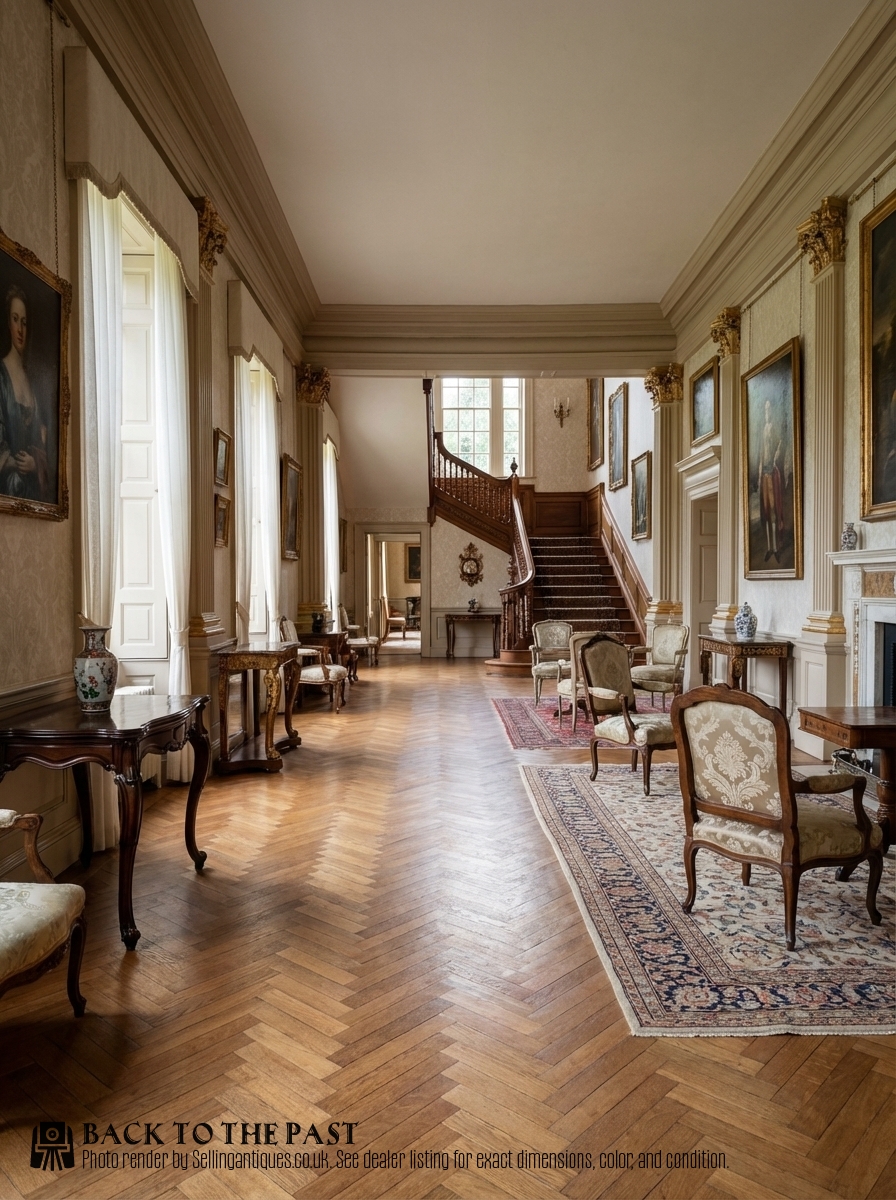
Victorian Fold Over Tea Table
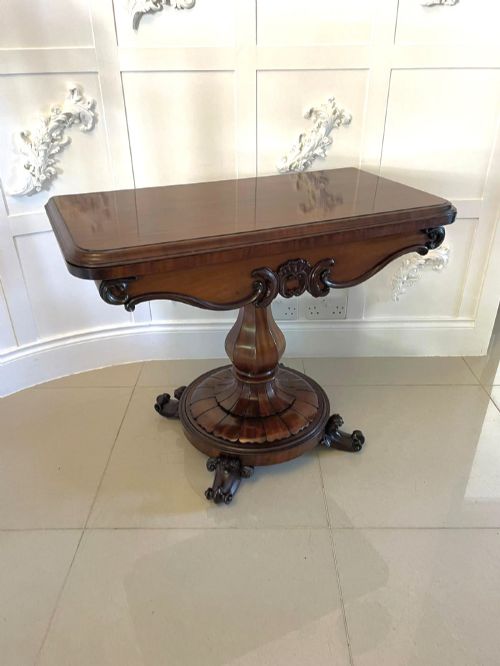
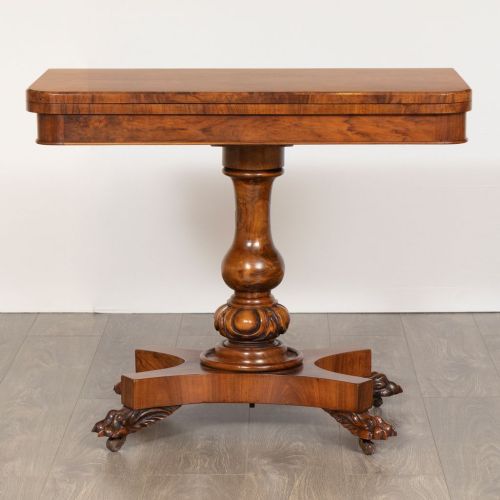
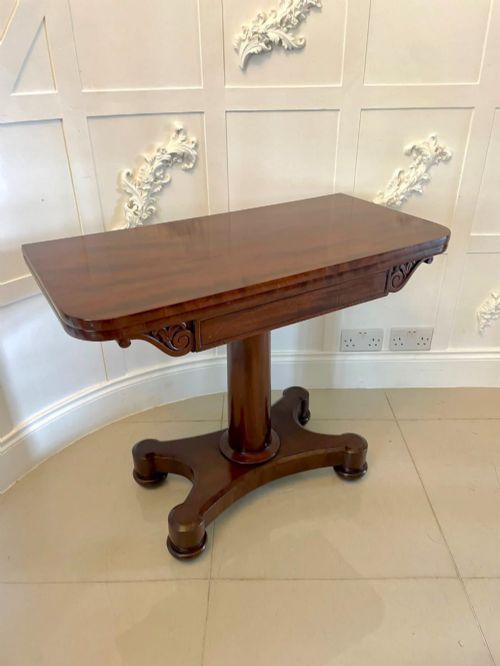
A victorian fold over tea table provides an adaptable surface that functioned in the nineteenth-century parlour for tea service or evening games. The design relies on a hinged top that swivels and rests flat upon the base when expanded, revealing a concealed well or maintaining a streamlined profile.
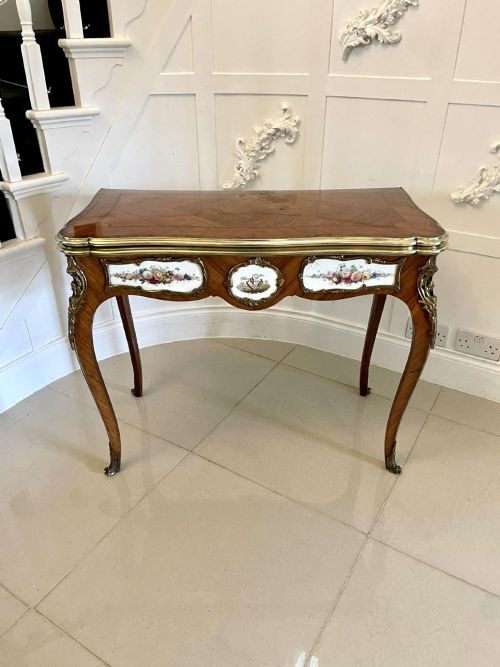
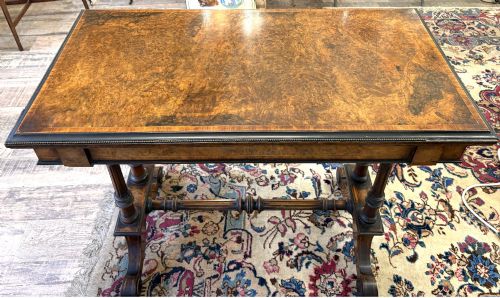
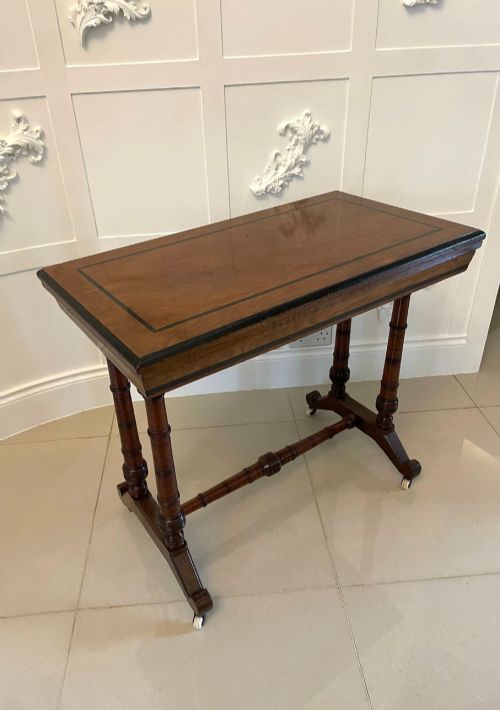
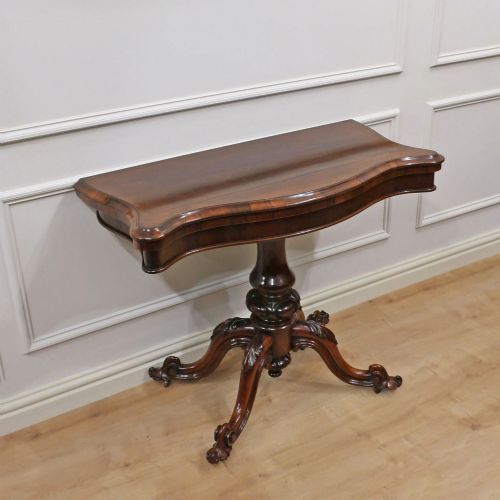
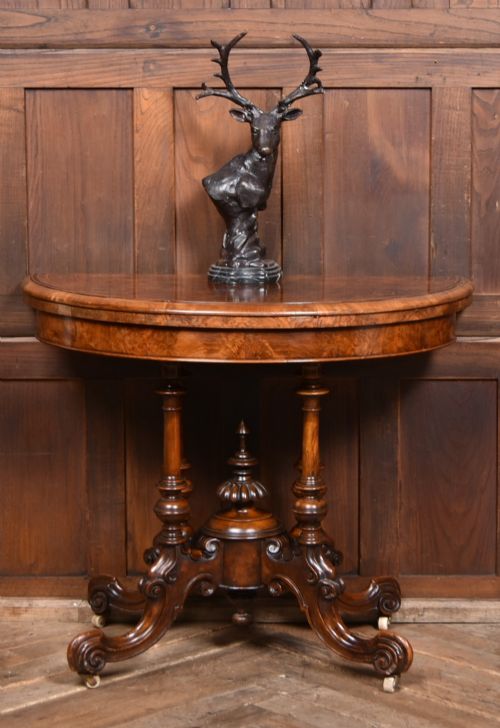
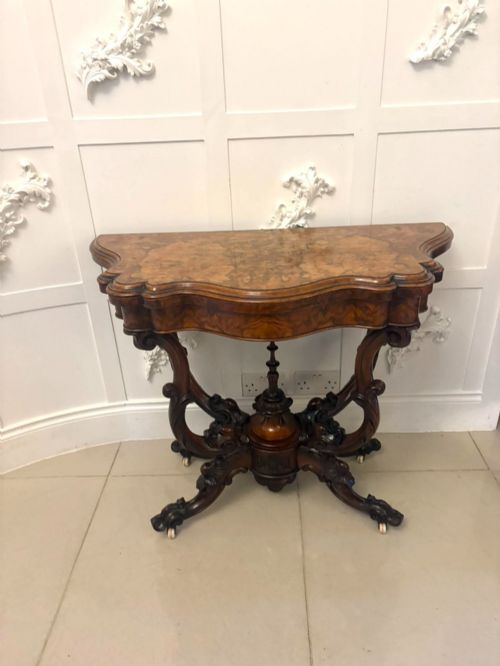
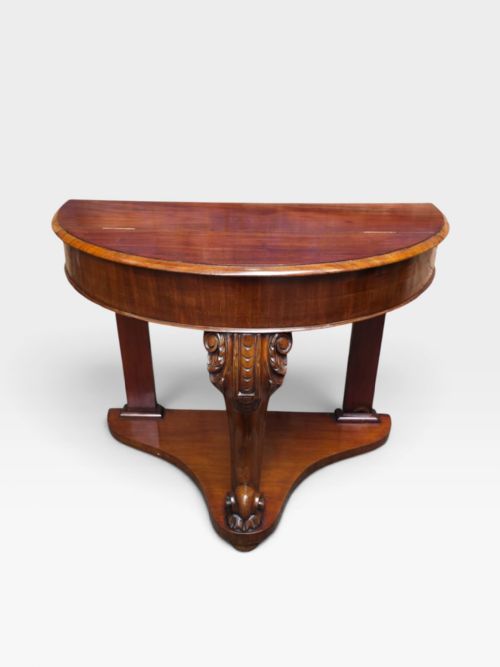
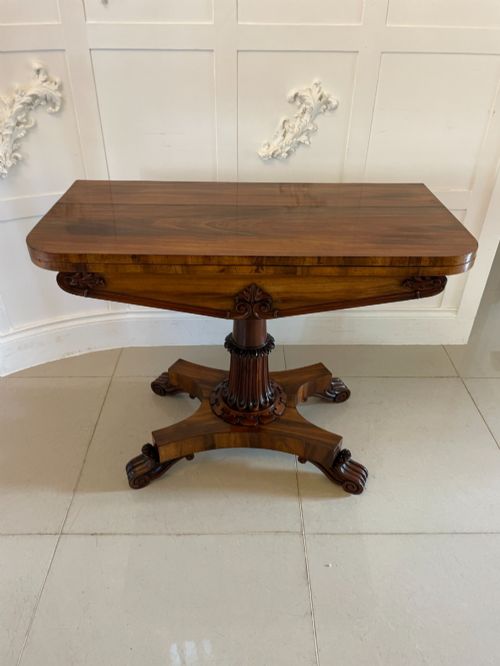
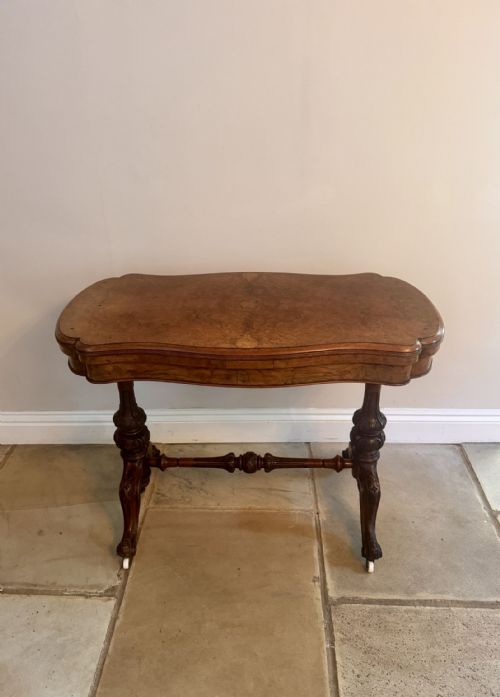
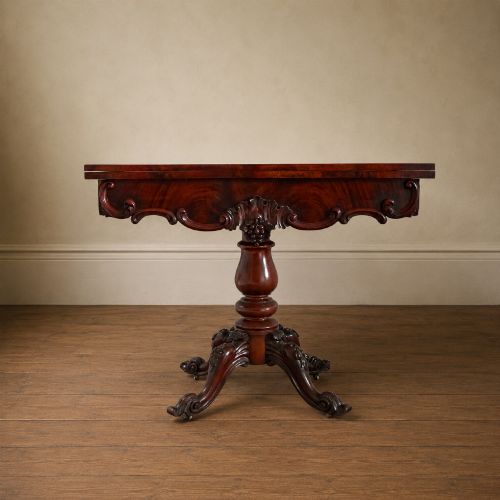
Examples on this page appear predominantly from the Victorian era alongside related nineteenth-century pieces, utilising forms that span from pedestal bases to carved console supports. Woods such as mahogany, rosewood and burr walnut dominate the selection, often taking rectangular, serpentine or demi-lune shapes.
How They Were Made
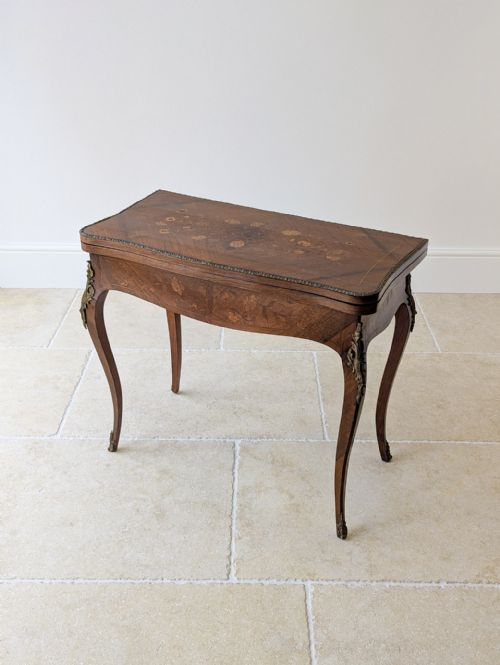
Cabinet makers utilised dense hardwoods like mahogany and rosewood, alongside decorative veneers such as burr walnut and kingwood applied to solid secondary timbers. These surfaces frequently incorporate marquetry inlay, brass mounts or porcelain plaques, demonstrating the period's preference for detailed surface ornamentation.
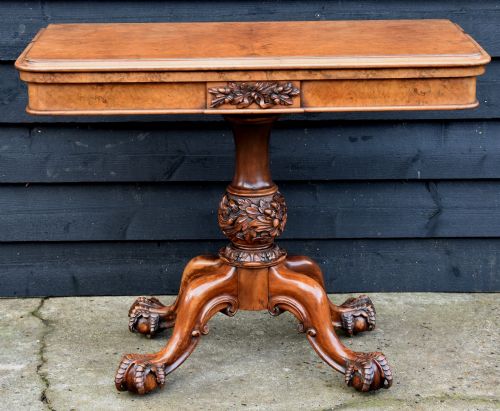
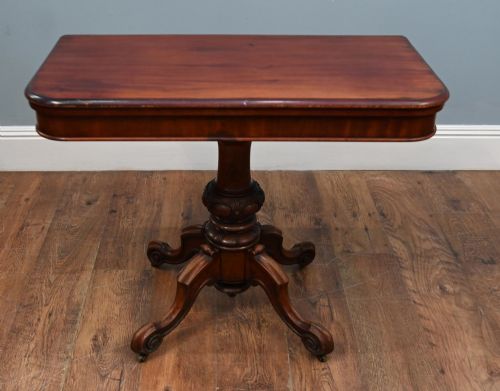
The mechanical action depends on robust pivot hinges and rule joints that allow the hinged leaf to fold smoothly without sagging. Pedestal columns often rise from carved platforms supported by scrolled feet, balancing the weight of the heavy timber top.
Victorian Fold Over Tea Table Retail Price Guide 2026
Typical asking prices for victorian fold over tea table among the pieces listed under this phrase on Sellingantiques today, from the lower quarter to the upper quarter. They describe what is for sale here now, not the wider market.
Listings feature walnut, mahogany, and rosewood across Victorian and Georgian periods.
What Varies in Quality
The distinction between standard examples and superior work rests on the choice of timber figures, such as highly figured burr walnut or heavily flamed mahogany. Finer items exhibit intricate hand-carved details on the pedestal supports and basket bases rather than simpler turned columns.
Construction methods also separate workshop output, seen in the precision of the pivoting mechanism and the seamless alignment of the folding top. Signed pieces by established makers or those featuring complex marquetry and Ormolu mounts represent the upper tier of craftsmanship.
G T Morant·Edwards & Roberts
The Victorian Fold Over Tea Table Glossary
- Fold-over top
- A hinged tabletop design that doubles the surface area when opened for tea or card playing. This mechanism allows a compact console to convert into a larger table.
- Burr walnut
- A highly decorative wood veneer derived from the growths on walnut trees, prized for its swirling grain patterns. Cabinet makers used it extensively on high-end Victorian tabletops.
- Ormolu
- Gilt bronze ornamentation applied to furniture mounts, popular in revival styles. It adds metallic contrast to dark woods like kingwood and rosewood.
- Demi-lune
- A half-moon shape used for table tops and frames that sit flat against a wall. This profile was frequently utilised for card and games tables in nineteenth-century interiors.
- Marquetry
- The art of applying decorative pieces of veneer to a structure to form intricate patterns or pictures. It appears on the finest surfaces of the period.
Victorian Fold Over Tea Table: Frequently Asked Questions
What is a victorian fold over tea table used for?
These tables served primarily in the nineteenth-century drawing room for afternoon tea or evening card games. Closed against the wall, they functioned as side or console tables.
When guests arrived, the hinged top unfolded to accommodate dining or social pastimes, offering practical flexibility for Victorian homes.
How do I tell mahogany from walnut tables?
Mahogany generally presents a straight, reddish-brown grain that deepens in colour over time. It forms the sturdy base for many classic nineteenth-century designs.
Walnut, particularly burr walnut, displays complex, swirling patterns with lighter and darker tones. It was chosen for its decorative impact on more elaborate parlour furniture.
Can these tables be used for dining daily?
While structurally sound, the folding mechanism and hinges are designed for occasional expansion rather than heavy daily use as a primary dining table. Opening and closing the top frequently puts stress on the pivot joints.
Using protective pads helps preserve the polished veneer from heat and moisture during regular meals.
How do I date a nineteenth century table?
Dating relies on observing the secondary woods, the style of the carving, and the complexity of the veneer work. Early Victorian pieces often feature heavy rosewood and mahogany pedestal designs.
Later Victorian and revival examples from the 1880s onward introduce lighter satinwood, marquetry, and aesthetic movement motifs that reflect changing tastes.