




Victorian Flush Set Ring
A victorian flush set ring is a low-profile band where stones sit level with the metal, offering a snag-free silhouette suited to daily wear.
Victorian Flush Set Ring
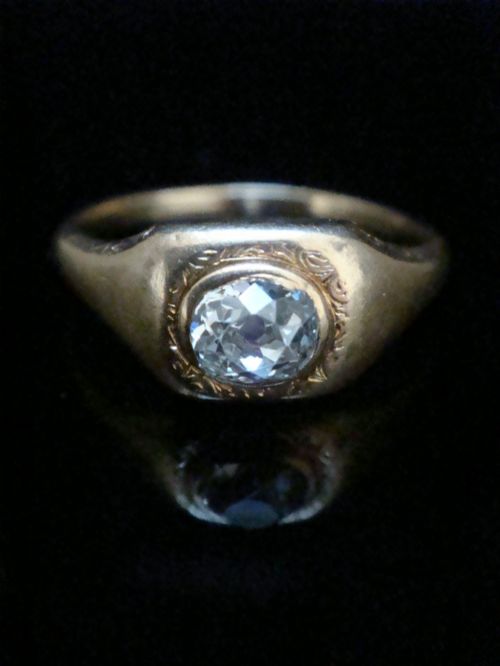
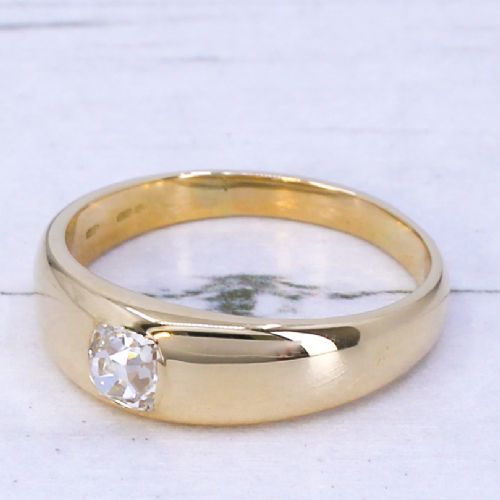
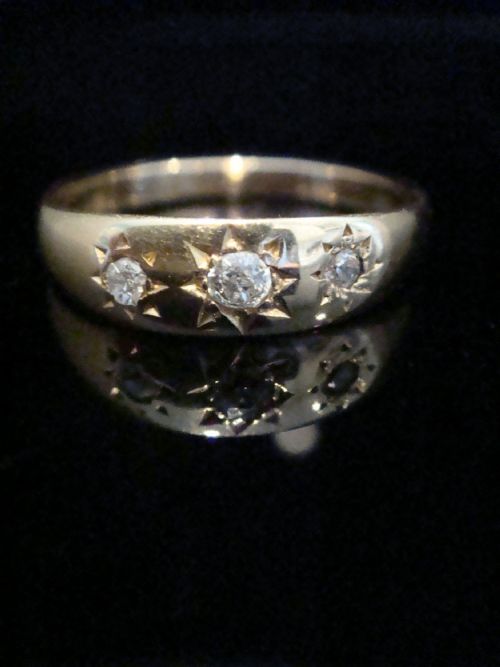
A victorian flush set ring sits flat against the finger, traditionally known as a gypsy or star setting. The metal is pushed up around the gemstone so the table of the stone rests level with the band.
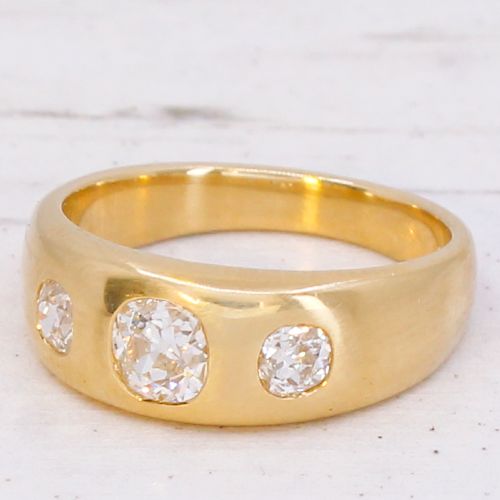
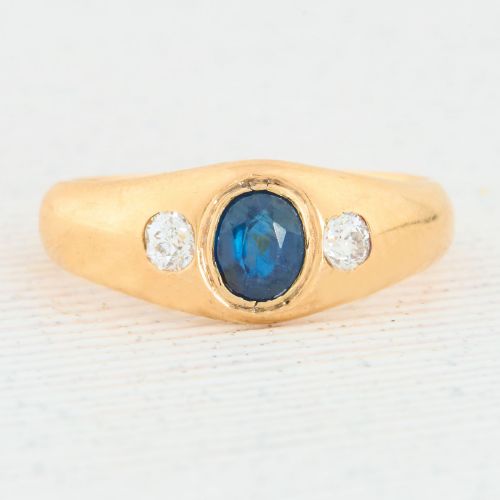
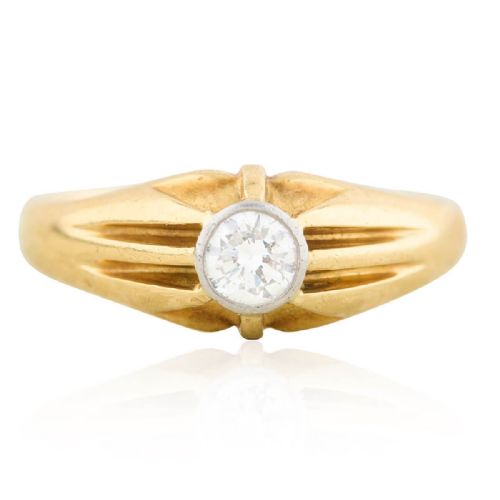
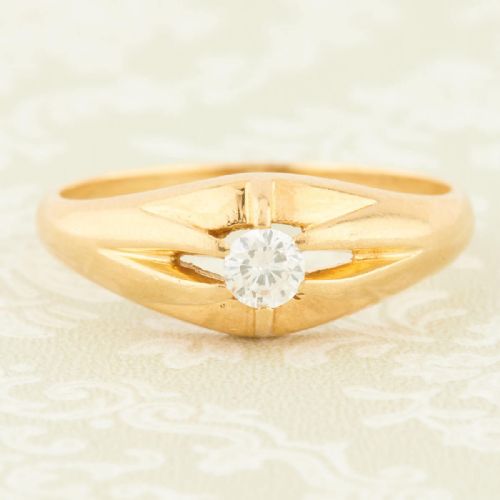
The pieces seen here span the Victorian period into the Edwardian era, alongside a few mid-century examples. You will frequently find single stone diamonds, three-stone configurations, and mixed gemstone clusters involving rubies, sapphires, or turquoise.
Ornate shoulders and starburst engravings often surround the flush-set stones, amplifying the visual footprint of smaller gems. These bands come in varying purities of yellow gold, ranging from fifteen to eighteen carats.
How they were made
Goldsmiths constructed these bands from yellow gold, shaping the metal to accommodate old cut diamonds, sapphires, and rubies. The stones were placed directly into thick walls of gold rather than held aloft in raised claws.
Gravers and burnishers were used to push the surrounding metal over the girdle of the gemstone and press starburst motifs into the surface. This technique anchored the stones securely while creating decorative star patterns around the setting.
The selection spans the nineteenth century through to the Edwardian era, alongside mid-century belcher style bands.
What varies in quality
The weight and thickness of the gold band determine the structural integrity of the piece over decades of wear. Finer examples retain substantial metal walls around the stones, whereas lesser pieces show thinning from past resizing or heavy wear.
The calibre of the gemstones also dictates the character of the ring, from bright old cut diamonds to deeply saturated natural rubies and sapphires. Precision in the starburst engraving and symmetry in multi-stone layouts distinguish superior examples from simpler production.
The Victorian Flush Set Ring Glossary
- Flush set
- A setting technique where the gemstone is embedded level with the surface of the metal. This secures the stone without exposed claws.
- Gypsy ring
- A traditional ring style featuring flush-set stones embedded directly into a thick, tapered band. These designs were popular throughout the nineteenth century.
- Old cut
- A vintage diamond cutting style characterised by a small table, high crown, and open culet. These stones catch candlelight warmly.
- Starburst
- An engraved motif radiating outward from a flush-set gemstone. It makes smaller stones appear more prominent.
- Trilogy ring
- A ring set with three gemstones representing the past, present, and future. They frequently appear in nineteenth-century star settings.
Victorian Flush Set Ring: Frequently Asked Questions
What is a gypsy ring?
A gypsy ring is a style where gemstones are set flush into a solid, heavy gold band. The metal is pushed up and around the stone for a smooth finish.
This design protects the girdle of the stone and prevents the piece from catching on clothing during daily wear.
Can I wear this daily?
These rings were built for everyday wear because the flush setting leaves no protruding claws to snag on fabrics. Solid gold construction provides robust durability.
Checking the security of the metal surrounding the stones periodically ensures the gems remain firmly anchored.
How do I date these rings?
Dating relies on hallmarks, gold carats, and stone cutting styles such as old cut diamonds. Pieces from the nineteenth century often feature fifteen or eighteen carat yellow gold and hand-engraved star motifs.
Later Edwardian and mid-century examples share similar flush-set silhouettes but display slight shifts in band proportions and gold purity marks.
What stones are used?
Diamonds are the most frequent choice, often accompanied by natural sapphires and rubies. Turquoise also appears in nineteenth-century examples.
Multi-stone layouts combine diamonds with coloured gems in starburst or trilogy arrangements.