



Victorian Floral Ceramic Platter
These robust pieces of functional art bring distinct nineteenth-century charm to your table.
Victorian Floral Ceramic Platter
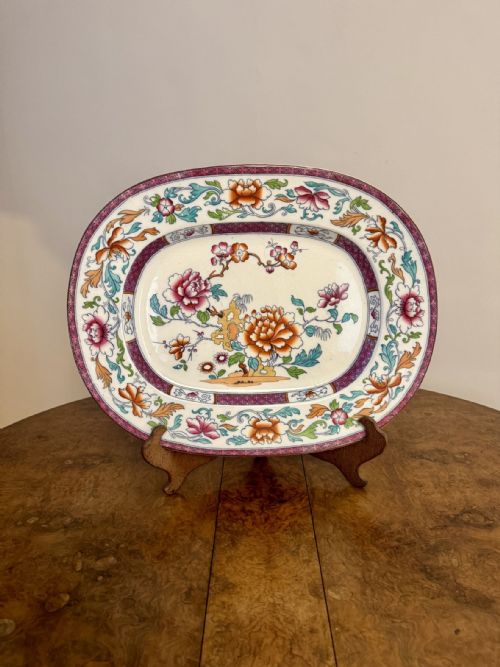
A Victorian floral ceramic platter serves as a grand centrepiece for family gatherings or sideboard display. These functional serving vessels reflect the diverse tastes of the nineteenth century, ranging from domestic meat platters to ornamental chargers.
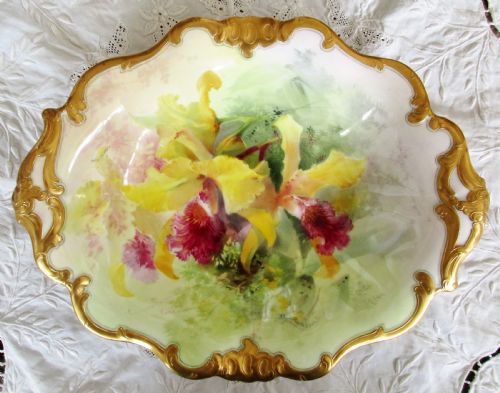
The pieces appearing on this page span several decades of the nineteenth century, encompassing English earthenware, ironstone, and porcelain. You will encounter traditional blue and white transfers alongside brightly coloured Japanese Imari influences.
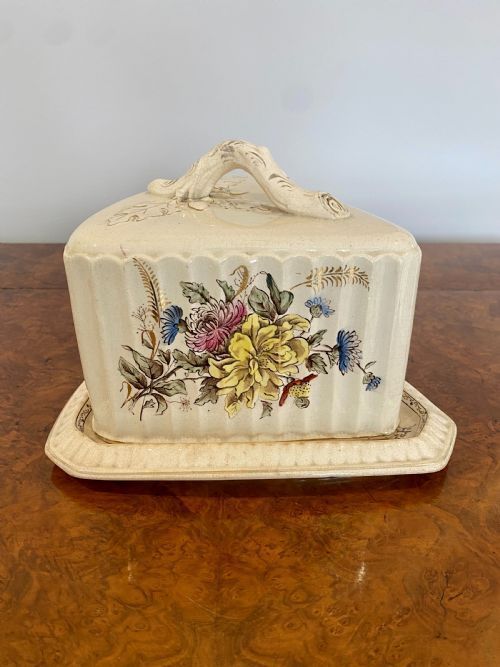
Makers utilised various forms, including large meat dishes, cheese dishes, and rectangular serving trays. Each piece displays distinct floral or botanical motifs suited to nineteenth-century dining.
Materials and Manufacture
Potters shaped these vessels from earthenware, ironstone, and porcelain, applying thick glazes to protect the ceramic body. Ironstone provided exceptional durability for heavy meat platters, while finer porcelain suited delicate cabinet dishes.
Decoration involved hand painting, transfer printing, and gilding with gold leaf. Artisans combined cobalt blue glazes, enamel colours, and gilt highlights to create intricate floral and botanical patterns.
Victorian diners required dedicated cheese dishes because proper households kept Cheddar under lock and key to deter thieving parlour maids.
Assessing Quality
Quality rests upon the crispness of the transfer print or the brushwork skill in hand-painted botanical details. Superior pieces exhibit precise application of enamel and gilt highlights without blurring.
The weight and ringing tone of the ceramic body indicate the purity of the materials used. Well-balanced forms with crisp foot rings demonstrate superior craftsmanship during shaping and firing.
Royal Doulton·Wedgwood·Minton·Carlton Ware·John Ridgway·Royal Crown Derby·Mason's Ironstone·Elkin Knight and Bridgwood
The Victorian Floral Ceramic Platter Glossary
- Ironstone
- A heavy, durable type of earthenware patented in the nineteenth century. It resists chipping and provided a sturdy base for large meat platters.
- Imari
- A decorative style inspired by Japanese export wares, featuring rich cobalt blue and iron red, often enhanced with gold leaf. Victorian makers frequently adopted this palette for decorative chargers.
- Transfer printing
- A technique where an engraved copper plate transfers a design onto paper, which is then stamped onto the ceramic body before glazing. This allowed for intricate repeating patterns on blue and white service dishes.
- Cabinet dish
- An ornamental plate or platter intended for display in a cabinet rather than functional dining use. These pieces often feature fine hand-painted botanical or ornithological scenes.
Victorian Floral Ceramic Platter: Frequently Asked Questions
Can I use these platters for serving food?
Many nineteenth-century ceramic and ironstone platters remain robust enough for modern table service. Check the glaze for stability and avoid dishwashers to protect antique enamels.
Heavier ironstone items handle warm roasts well, whereas delicate porcelain cabinet dishes suit cold presentation or display.
How do I date a Victorian ceramic platter?
Makers often stamped registry marks, patterns, or factory ciphers into the ceramic base. These impressed or printed marks correlate with historical databases for accurate production years.
Stylistic shifts also help determine age, moving from early transfer-printed blues to vibrant polychrome Imari and aesthetic movement designs.
What is the difference between a charger and a platter?
Chargers are large decorative plates traditionally placed beneath other courses or displayed upright on cabinets. Platters are functional serving dishes designed to hold meats, cheeses, or fruit.
While both share ceramic and porcelain materials, platters usually feature shallow wells for juices.