


Victorian Farm Animal Scene
A victorian farm animal scene brings the rustic charm of nineteenth-century countryside life into your interior through oil paintings of livestock, poultry, and rural settings.
Victorian Farm Animal Scene
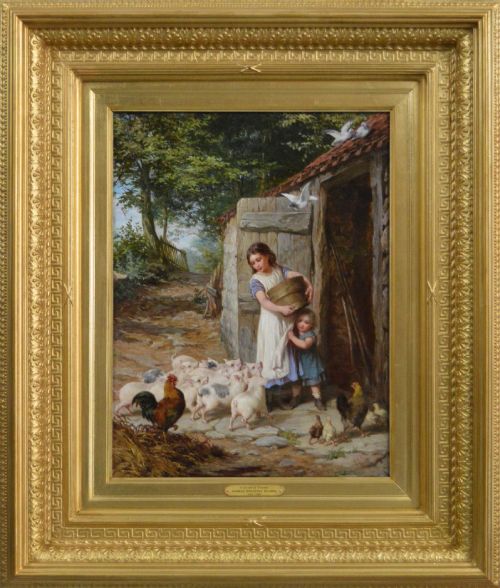
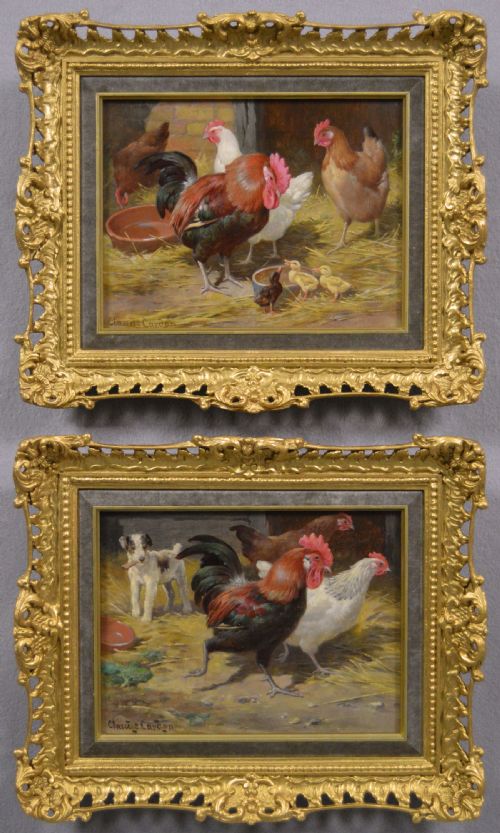
When you search for a victorian farm animal scene, you encounter framed oil paintings depicting horses, cattle, sheep, pigs, and poultry within pastoral or farmyard environments. These works capture nineteenth-century rural life through oil on canvas or board, often framed in giltwood with gesso ornamentation.
The pieces on this page span the Victorian period and extend into the early twentieth century, incorporating styles such as Victorian realism, pastoral scenes, and English Country School painting. Subjects range from solitary sheep and cattle landscapes to busy farmyard scenes featuring horses, goats, and figures feeding chickens or piglets.
What Varies in Quality
Quality in a victorian farm animal scene rests upon the skill of the brushwork and the anatomical accuracy of the animals depicted. Superior examples demonstrate a careful handling of light across livestock and landscape, whereas weaker works show stiff drawing and flat application of paint.
The handling of the broader composition also distinguishes individual pieces, with better works creating balanced groupings of animals and figures within a convincing rural space. The preservation of the original canvas, paint surface, and giltwood frame contributes significantly to the standing of any given piece.
Periods represented span the nineteenth century, including specific years such as eighteen-fifty, eighteen-seventy, and nineteen-twenty.
George Augustus Holmes·Claude Cardon·John Frederick Herring Jnr·Samuel Joseph Clark·Eugene Verboeckhoven·Percival Glenfern·Pierre Emmanuel Dielmans·Edgar Hunt·Thomas Sidney Cooper·Charles Hunt Jnr
The Victorian Farm Animal Scene Glossary
- Oil on Canvas
- A painting medium where pigments suspended in drying oil are applied to woven fabric stretched across a wooden frame. This surface texture remains characteristic of nineteenth-century fine art.
- Giltwood
- Wood that has been coated with a thin layer of gold leaf or gold paint. Frames finished in this manner were standard for framing substantial Victorian paintings.
- Gesso
- A paint mixture consisting of a binder mixed with chalk, plaster, or pigment used to prepare wood surfaces. It forms the raised moulded details found on traditional picture frames.
- Genre Painting
- Artwork depicting scenes from everyday life, typically involving ordinary people engaged in common activities. In this context, it includes figures interacting with farm animals in rural settings.
- English Country School
- A descriptive term for nineteenth-century British artists who focused on rural landscapes and agricultural subjects. These painters captured the domestic animals and daily routines of the countryside.
Victorian Farm Animal Scene: Frequently Asked Questions
What subjects appear in these paintings?
These artworks depict a variety of domestic livestock and poultry, including horses, cattle, sheep, pigs, goats, ducks, and chickens. Many compositions also include figures such as farmers or women tending to animals in farmyards, cottages, or pastoral landscapes.
Animals are often shown gathered near barns, rivers, or pastures, reflecting the agricultural focus of nineteenth-century rural painting styles.
How do I date a farm animal painting?
Dating relies upon stylistic markers, artist signatures, and framing materials characteristic of the nineteenth century and early twentieth century. Canvas types, stretcher construction, and written inscriptions on the reverse of the work frequently offer further chronological clues.
Victorian realism and English Country School works commonly display specific clothing styles for any human figures present, alongside the particular framing techniques of the period.
Where were these paintings displayed originally?
Such oil paintings were produced primarily for domestic interiors, hanging in the parlours, dining rooms, and studies of Victorian homes. They reflected a widespread cultural appreciation for pastoral life and agricultural prosperity during the nineteenth century.
Owners valued them for bringing a sense of tranquil countryside domesticity into urban or suburban residences.
How should I care for an oil painting?
Protect the canvas and giltwood frame by keeping the artwork away from direct sunlight, high humidity, and rapid temperature fluctuations. Dust the surface gently with a dry, soft brush without applying pressure to the paint or gesso.
Avoid using water, chemical cleaners, or abrasive cloths on either the oil paint or the gilded frame to prevent permanent damage.