


Victorian Fabric Ottoman
A victorian fabric ottoman provides a low, upholstered seat or storage base, bringing period character and practical comfort to a room.
Victorian Fabric Ottoman
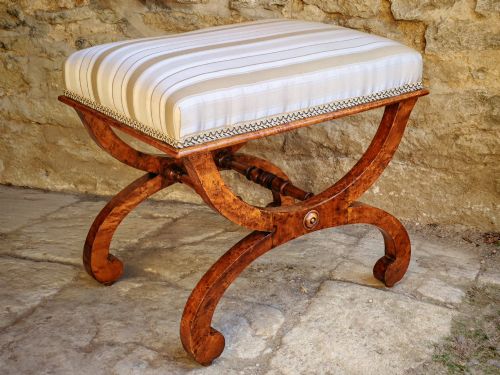
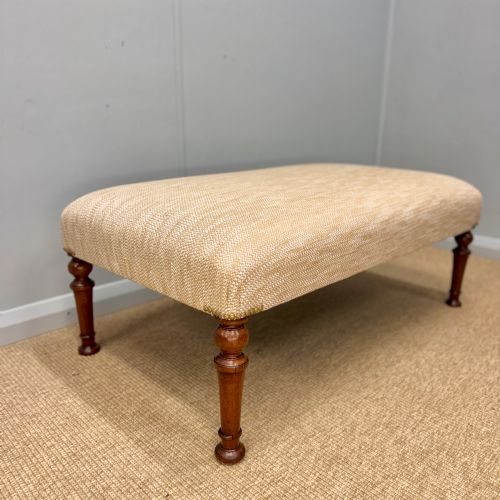
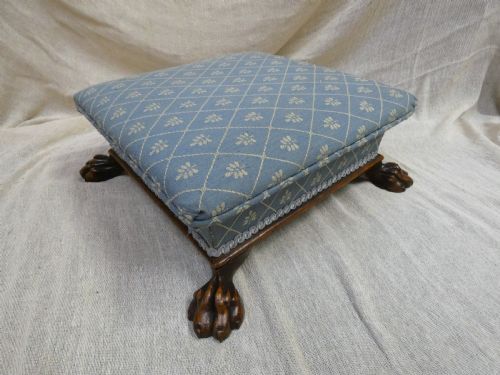
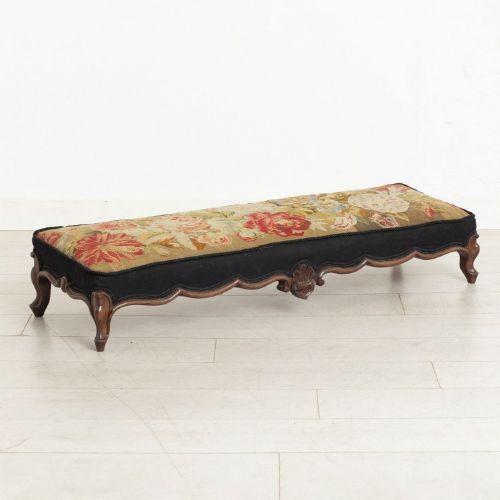
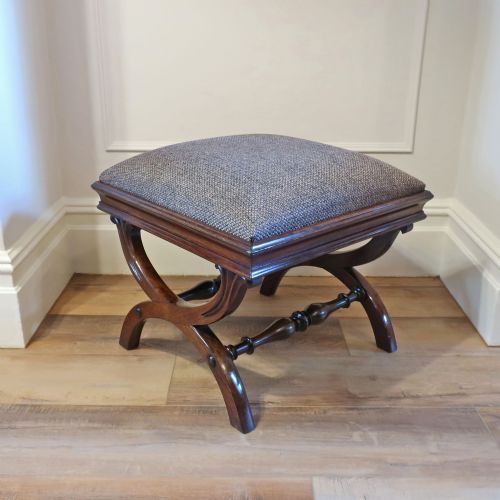
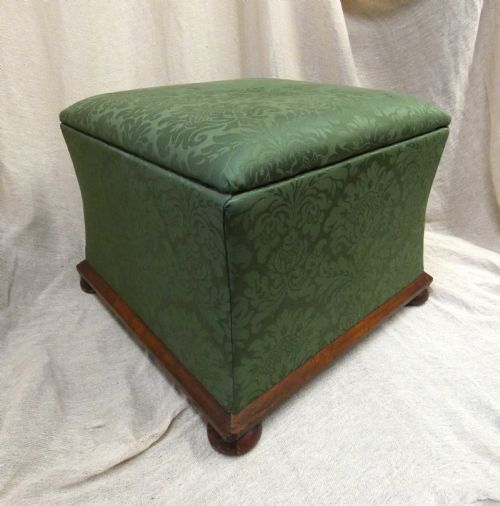
A victorian fabric ottoman encompasses low footstools, dressing stools, window seats, and storage chests originating from the nineteenth century. Buyers examine pieces ranging from simple pine kist chests to elaborate rosewood and walnut frames covered in upholstery fabric, needlepoint, Kilim fabric, or Robert Kime materials.
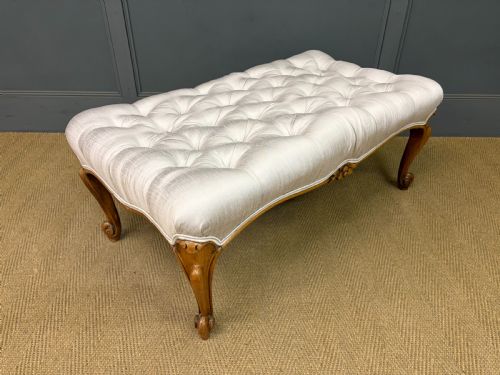
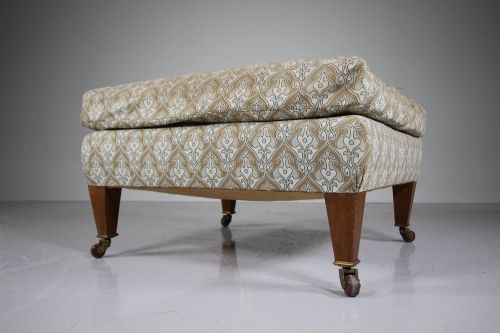
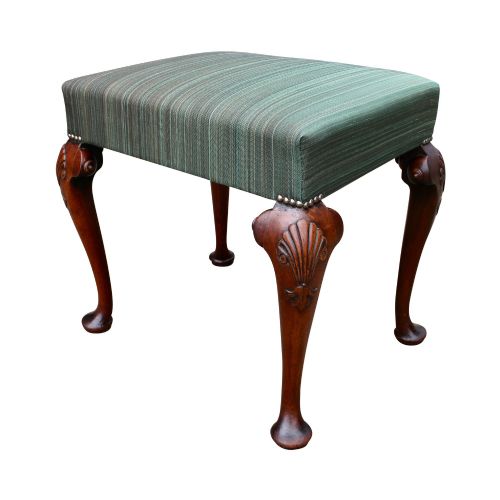
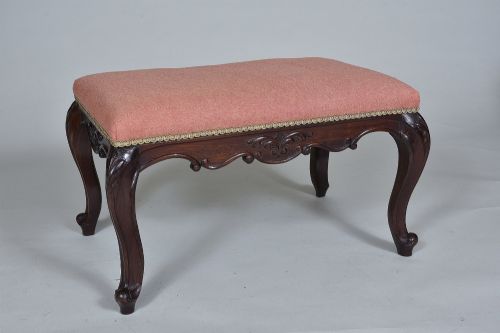
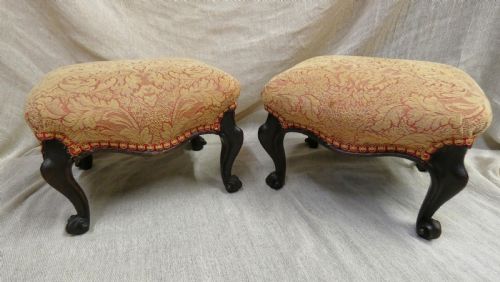
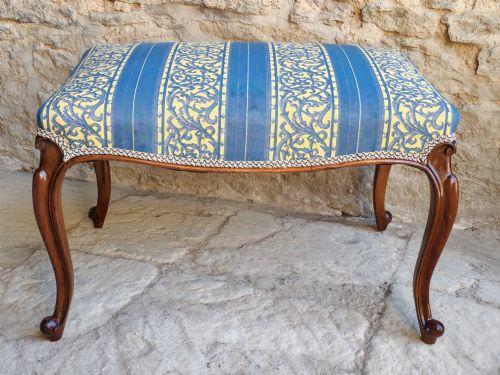
The version most frequently encountered on this page is the Victorian walnut or mahogany footstool, often featuring cabriole legs, brass castors, and deep buttoned upholstery. Larger storage ottomans and blanket boxes also appear alongside pairs of stools and matching armchair sets.
Materials and Construction
Frames are built from hardwoods including mahogany, walnut, rosewood, and pine, joined to support heavy upholstery and daily sitting or resting of feet. Timber structures often feature carved details, cabriole legs, or concave shapes.
Upholstery techniques involve fabric, needlepoint, or specialised textiles stretched over padding, occasionally complemented by brass castors on the feet for mobility. Storage variants incorporate hinged lids forming blanket boxes, toy boxes, or kist chests.
Upholstery materials range from needlepoint and Kilim fabric to Robert Kime and Liberty fabric.
Factors That Determine Quality
The integrity of the timber frame and the precision of any carved woodwork set finer examples apart from simpler utilitarian boxes. Dense hardwoods like rosewood and walnut command attention for their grain and stability.
The choice and execution of upholstery fabric, from needlepoint to designer textiles like Liberty fabric or Robert Kime, influence the finish. Original fabric survivals or professional reupholstery maintain the character of the piece.
Howard And Sons
The Victorian Fabric Ottoman Glossary
- Cabriole leg
- A furniture leg that curves outward and then tapers inward, typical of revival styles seen on nineteenth-century seating.
- Castor
- A small wheel attached to the base of furniture legs to allow smooth movement across floors. Brass examples frequently appear on Victorian stools.
- Kist
- A traditional wooden storage chest or trunk used for blankets and household items. Pine versions serve as storage furniture.
- Needlepoint
- Stitched textile work using canvas and yarn, frequently employed for the top upholstery of Victorian footstools and ottomans.
- Buttoned back
- An upholstery technique where depressions are created in the padding using buttons, adding texture and holding stuffing in place.
Victorian Fabric Ottoman: Frequently Asked Questions
What is a victorian fabric ottoman used for?
These pieces function primarily as low footstools, dressing seats, or window benches in living spaces and bedrooms. Many designs also incorporate hidden storage compartments for blankets and household items.
Larger trunk-style examples operate as storage chests or blanket boxes while offering a cushioned surface for sitting.
How do I identify a Victorian ottoman?
Look for characteristic nineteenth-century timber frames in walnut, mahogany, or rosewood paired with traditional upholstery fabrics. Details such as turned legs, brass castors, and needlepoint tops point directly to the period.
Storage variants often present as pine kist chests or concave blanket boxes with hinged tops dating from the mid to late 1800s.
Are these ottomans comfortable to sit on?
Many examples feature padded upholstery designed specifically for resting feet or sitting during dressing. Deep buttoned padding provides a firm yet cushioned surface on larger stools and window seats.
Comfort levels depend on the condition of the internal padding and the type of fabric used in the upholstery.
Can I place an ottoman in a modern interior?
These versatile items blend easily into contemporary rooms by adding texture through patterned fabrics like Kilim, Liberty prints, or traditional needlepoint. Low profiles make them practical for placement in front of sofas or beside windows.
Storage versions provide functional space management while introducing nineteenth-century woodwork into a modern layout.