

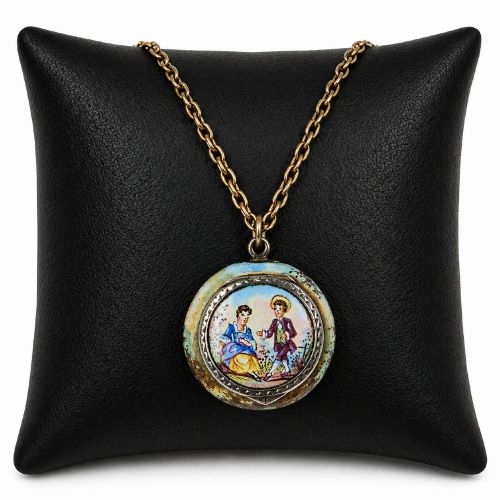


Victorian Enamel Necklace
A victorian enamel necklace brings rich colour and historic character to the neckline, offering miniature works of art set in gold and silver.
Victorian Enamel Necklace
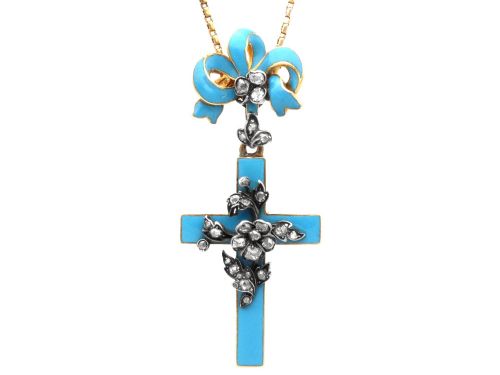
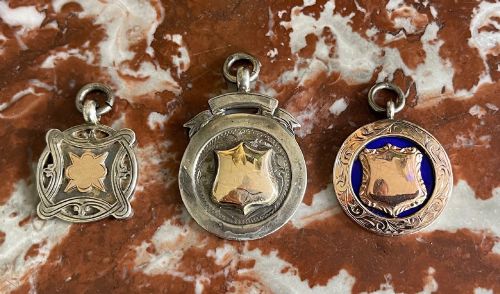
When searching for a victorian enamel necklace, a buyer encounters pieces originating primarily from the Victorian period, alongside examples spanning the 18th century to the Edwardian era. The forms vary from pendants and lockets to multi-gem necklaces, watch fobs, and chains.
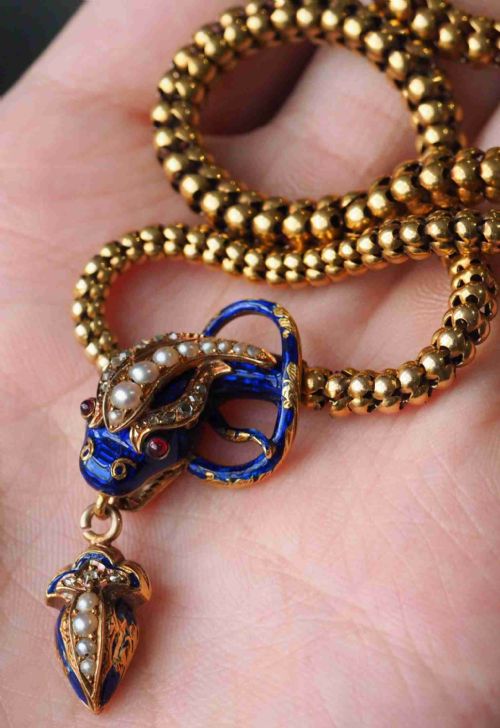
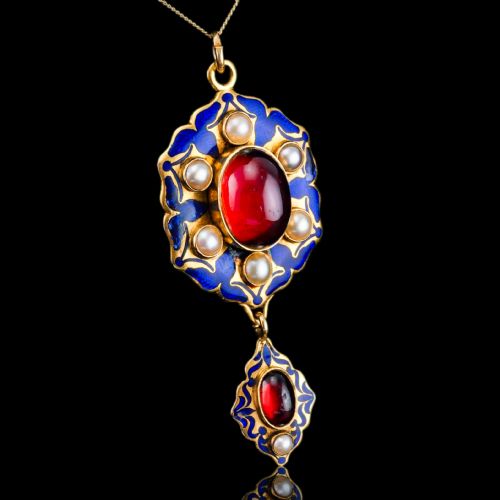
The versions met most frequently on this page combine enamel with gold, silver, pearls, and diamonds. Historic revivals also appear, including Renaissance Revival and Austro Hungarian designs, alongside specific motifs like snakes, hearts, and crosses.
Materials and Technique
Goldsmiths and jewellers utilised yellow gold, 15ct gold, 18K gold, 9ct gold, and silver as the structural foundation for these ornaments. Enamel forms the primary decorative surface, applied in blue and red hues across the metalwork.
Gemstones such as rose-cut diamonds, pearls, garnets, and other multi-gems are integrated alongside techniques like guilloche work to create intricate pendants and lockets.
The documented pieces span several eras, including the 18th Century, Victorian period, and Edwardian period.
Quality and Craftsmanship
The standard of a piece rests on the precision of the enamel work and the complexity of the gold or silver mount. Finer examples display meticulous colour blending and secure gem setting.
Artistry in design, such as elaborate Renaissance Revival motifs or detailed figurative subjects, distinguishes exceptional specimens from simpler productions.
Gauthier
The Victorian Enamel Necklace Glossary
- Enamel
- A glassy substance fused to metal through firing to provide durable colour. It forms the smooth, decorated surface seen on pendants and lockets.
- Guilloche
- A decorative engraving technique producing repetitive intricate patterns beneath translucent enamel. It adds depth and texture to the coloured surface.
- Holbeinesque
- A 19th-century revival style inspired by Renaissance jewellery designs associated with Hans Holbein. These pieces often feature heavy enamelling, gemstones, and dangling pearls.
- Locket
- A small hinged case designed to hold a miniature portrait or lock of hair. Many Victorian necklace pendants double as lockets.
- Rose-cut
- A vintage diamond cutting style featuring a domed top with triangular facets and a flat base. This cut yields a soft, subtle sparkle distinct from modern stones.
Victorian Enamel Necklace: Frequently Asked Questions
How do I care for a victorian enamel necklace?
Enamel is a form of glass and requires gentle handling to prevent chipping or scratching. Store each piece separately away from harder gemstones and avoid harsh chemical cleaners.
Clean the metal and stones gently with a soft damp cloth rather than submerging the entire piece in liquid. Professional inspection helps ensure the settings remain secure.
How do I date a victorian enamel necklace?
Dating relies on stylistic clues, materials, and maker marks or hallmarks where present. Renaissance revival motifs, specific gold standards like 15ct, and regional Austro-Hungarian designs point towards the nineteenth century.
Comparing the construction methods of the clasp, chain, and setting style helps narrow the period of creation from the 18th century through the Edwardian era.
What does a mourning locket signify?
Mourning jewellery was created to commemorate deceased loved ones, often incorporating dark blue or black enamel alongside hair or miniature portraits. These pieces served as personal tokens of remembrance.
The sentiment behind them shaped the materials chosen, reflecting the solemn and reflective customs of the Victorian period.