




Victorian Ecclesiastical Art
Victorian ecclesiastical art encompasses devotional pieces and furnishings from places of worship, shaped by the Gothic Revival and Arts and Crafts movements.
Victorian Ecclesiastical Art
Victorian ecclesiastical art comprises items created for religious spaces, ranging from church pews and lecterns to devotional needlepoint and painted windows. Pieces on this page stem largely from the nineteenth century, including specific periods such as the Edwardian era and the eighteen-eighties and nineties.
These objects reflect distinct design movements of the period, particularly Gothic Revival, Arts and Crafts, and religious folk art. Oak and pitch pine dominate the wooden furniture, while wool and canvas appear in textile pieces.
Distinctions in quality
Quality rests on the depth and precision of craftsmanship, visible in the hand-carving of solid oak panels and the intricate execution of needlepoint pictures. Pieces produced for major institutions or marked with specific provenances demonstrate superior workshop standards.
Condition and originality dictate standing, as items retained from their original architectural context hold greater integrity than later adaptations. The finesse of painted details in oil paintings and illuminated texts further separates standard decorative items from finer works.
Victorian Ecclesiastical Art Retail Price Guide 2026
Typical asking prices for victorian ecclesiastical art among the pieces listed under this phrase on Sellingantiques today, from the lower quarter to the upper quarter. They describe what is for sale here now, not the wider market.
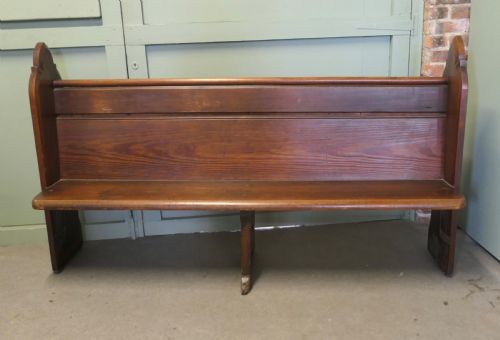
A pew once sat quietly in St Paul's Cathedral before finding its way to the open market.
The Victorian Ecclesiastical Art Glossary
- Gothic Revival
- An architectural and design movement drawing inspiration from medieval forms, characterised by pointed arches and heavy timber construction. It dominates nineteenth-century church furnishings.
- Tin tabernacle
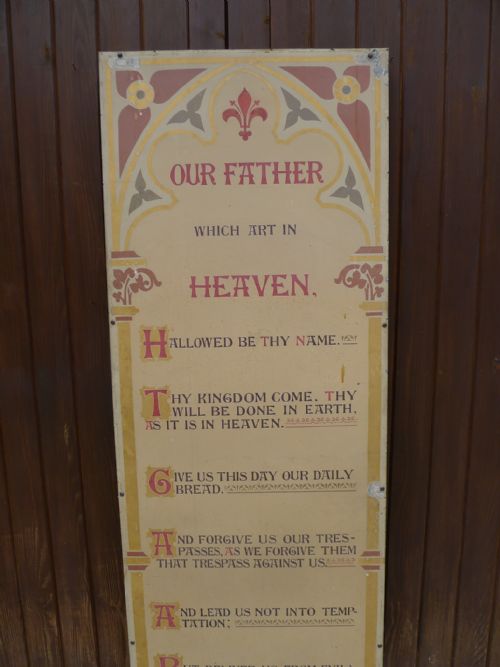
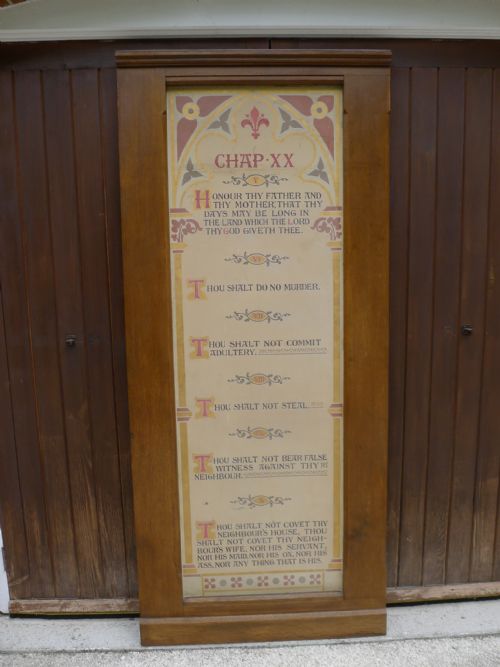
- A prefabricated corrugated iron church building common in the late nineteenth century, which housed simple devotional furnishings and illuminated wall texts. They served communities before permanent stone churches were built.
- Tracery
- Openwork ornamentation in stone or carved wood, typically seen in the upper parts of windows or decorative panels. It defines much of the Gothic architectural style.
- Needlepoint
- A type of canvas work embroidery executed with wool or silk yarn, used historically for devotional pictures and altar frontals. The technique allows for detailed pictorial representation.
- Oxford Movement
- A nineteenth-century religious movement within the Church of England that emphasised traditional ritual, liturgy, and Catholic aesthetics. It influenced the design of church art and furnishings.
Victorian Ecclesiastical Art: Frequently Asked Questions
What is a tin tabernacle?
A tin tabernacle is a prefabricated corrugated iron building erected for religious services during the Victorian period. These structures contained utilitarian yet decorative items such as illuminated religious texts and simple wooden furnishings.
Today, pieces salvaged from tin tabernacles offer a distinct glimpse into nineteenth-century mission work and local worship. They bring a straightforward, unpretentious character to domestic interiors.
How do I date these pieces?
Dating relies on stylistic markers such as Gothic Revival motifs, materials like pitch pine or solid oak, and documentation linked to specific decades like the eighteen-eighties or nineties. In some cases, maker marks or inscriptions provide precise historical context.
Comparing construction techniques and the type of finish helps determine whether an object originates from the mid-nineteenth century or the subsequent Edwardian era. Material wear and archival labels also aid verification.
Where can I place church pews at home?
Church pews and benches constructed from oak or pitch pine suit hallways, large kitchens, or dining areas where linear seating is practical. Their solid construction makes them durable options for everyday domestic use.
Placing a bench against a wall highlights the carved woodwork and architectural proportions typical of nineteenth-century ecclesiastical furniture. They anchor larger spaces with traditional presence.
What is religious folk art?
Religious folk art encompasses devotional items made outside mainstream academic workshops, often by local craftspeople or pious individuals. These works include embroidered textile art and framed needlepoint pictures depicting biblical scenes.
Such pieces display individual interpretations of sacred subjects rather than strict adherence to academic styles. Their charm lies in this direct, unvarnished expression of faith.