



Victorian Ebonised Plant Stands
Victorian ebonised plant stands bring dark, dramatic timber and eclectic nineteenth-century detailing into a room to hold greenery or display ornaments.
Victorian Ebonised Plant Stands
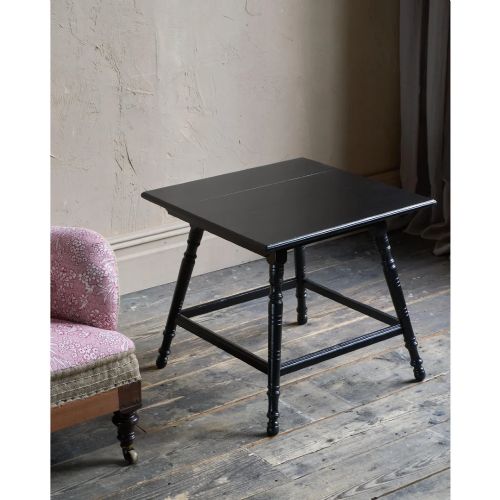
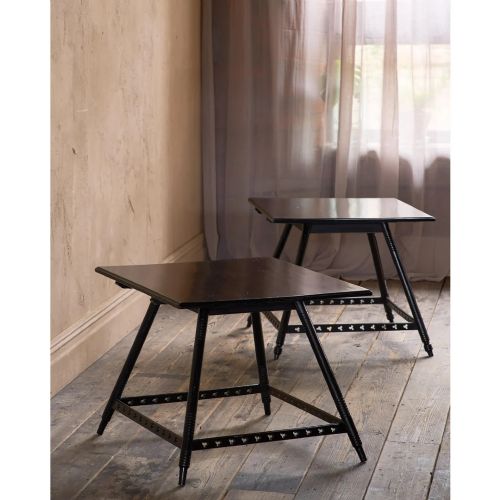
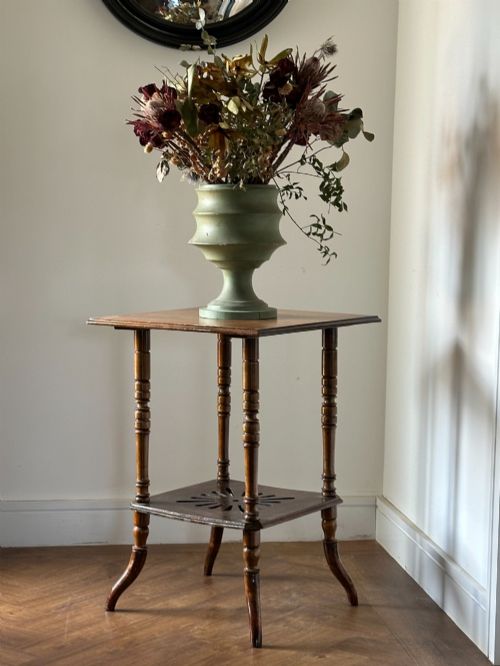
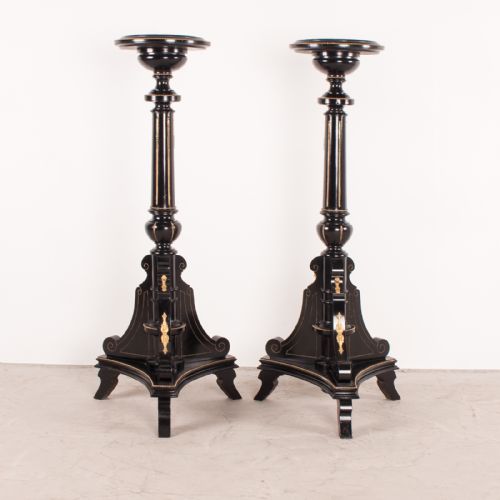
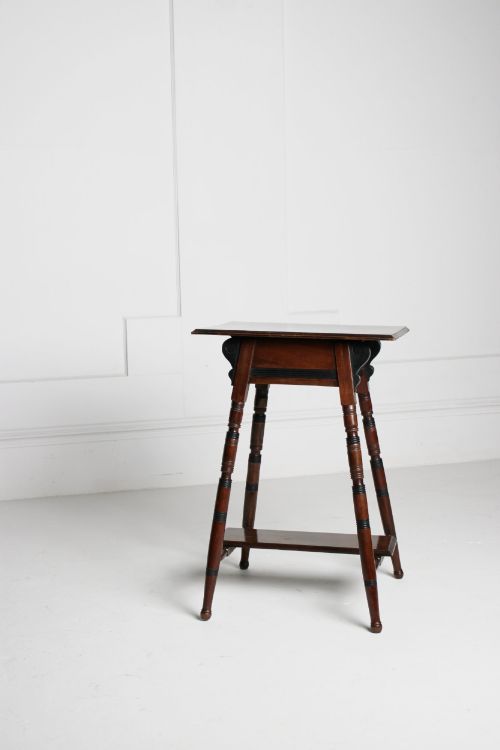
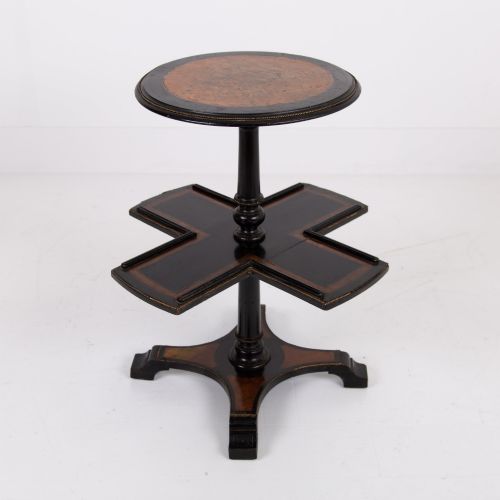
When searching for victorian ebonised plant stands, a buyer encounters a diverse group of nineteenth-century furnishings designed to elevate plants, lamps, and decorative objects. These pieces include pedestals, torcheres, jardiniere stands, and occasional side tables finished with a dark, blackened surface mimicking expensive ebony.
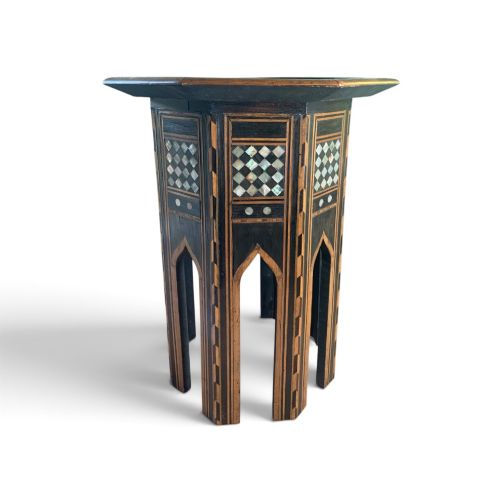
The selections span distinct stylistic movements of the period, notably the Aesthetic Movement, Anglo-Japanese taste, Moorish Revival, and French Napoleon III designs. While some take tall, slender column forms, others manifest as octagonal, round, or square tables intended to anchor a corner or display a prized ceramic.
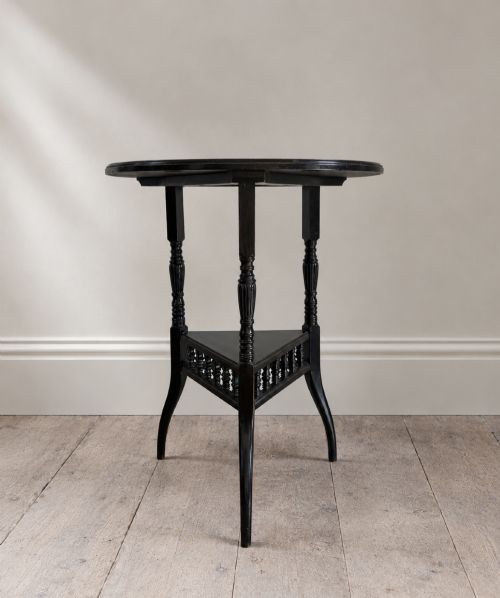
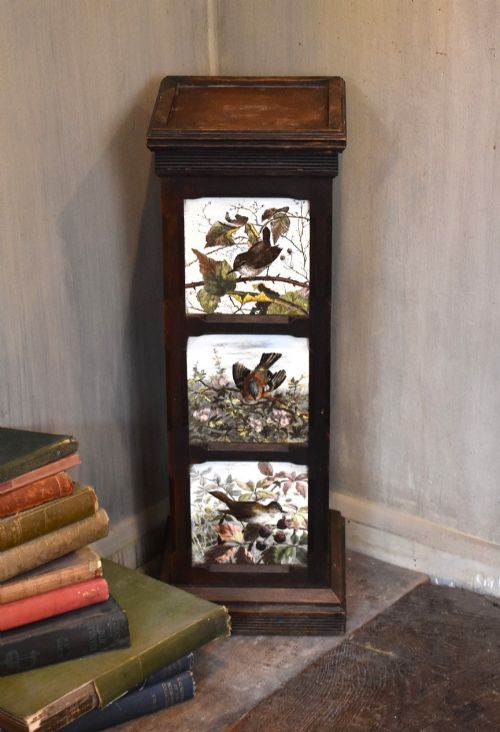
Most examples rely on ebonised hardwood, walnut, or elm, frequently enriched with inlay, carving, or parcel gilding. These stands reflect an era of global design influences, incorporating Japanese motifs, carved animal figures, and geometric Moorish patterns into domestic British and European interiors.
How they were made
Cabinetmakers utilised dense hardwoods, walnut, and elm as substrates, applying an ebonising process to dye or paint the timber to resemble solid ebony. This dark finish provided a high-contrast background for decorative highlights.
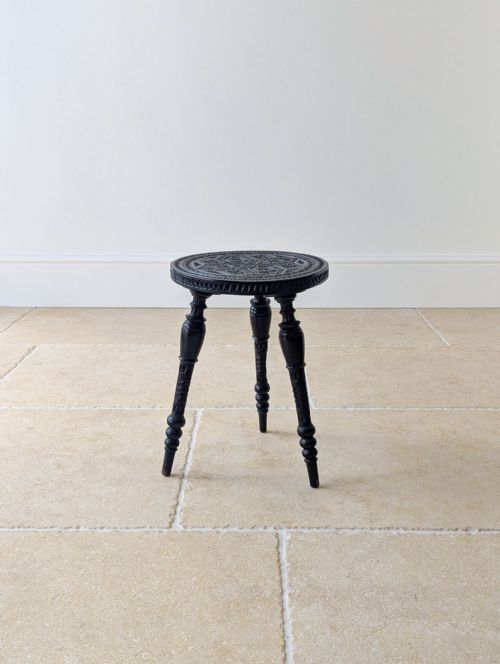
Many surfaces feature intricate detailing, including chip-carving, hand-painted decoration, and contrasting inlays of bone, ivory, mother-of-pearl, amboyna, or marquetry. Metal elements such as brass mounts, gilt details, and rouge marble inserts add weight and varied texture to the structures.
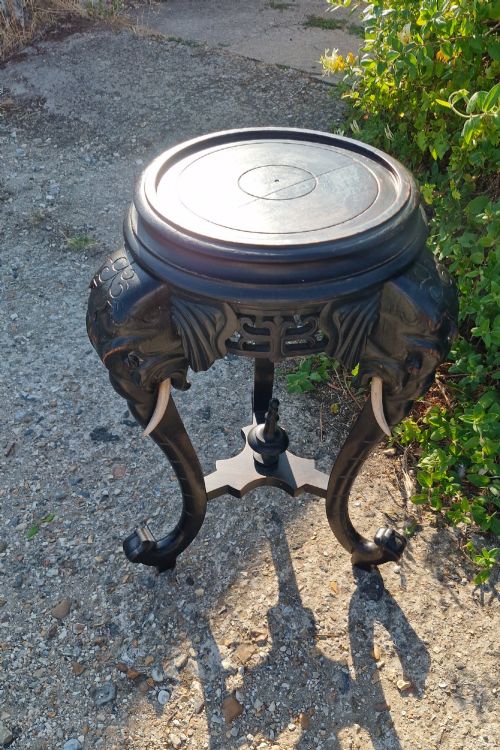
Several stands feature carved wooden elephants and crouching figures holding up the tabletops.
What varies in quality
The distinction between ordinary production and superior craftsmanship lies in the depth of the detailing and the integrity of the materials. Pieces associated with notable retail firms or specific designers exhibit crisper carving, finer joinery, and more ambitious decorative schemes.
Quality also shows in the handling of secondary materials, such as precision in bone or marquetry inlay and the stability of multi-tiered or columnar structures. Simpler turned supports contrast with elaborately carved figural bases or hand-painted surfaces, separating standard utility items from ambitious aesthetic commissions.
Hindley and Sons·Druce and Co London·Liberty and Co·Gillow and Co
The Victorian Ebonised Plant Stands Glossary
- Ebonised
- Wood treated with stain, paint, or chemical processes to achieve a deep black finish that imitates genuine ebony. This technique gained immense popularity during the nineteenth century for furniture influenced by Japanese and Classical design.
- Torchere
- A tall, slender stand or pedestal originally designed to hold a torch or candle, later adapted for lamps or decorative vases. They often feature elevated platforms supported by slender columns or carved figures.
- Jardiniere
- A decorative container or stand meant to hold a plant or floral arrangement. In nineteenth-century interiors, these stands frequently incorporated waterproof liners or marble tops to protect the woodwork.
- Aesthetic Movement
- A late nineteenth-century design philosophy prioritising visual beauty over narrative or moral purpose. Furniture from this movement often shows Japanese inspiration, clean geometric lines, and ebonised surfaces.
- Marquetry
- The art of applying small pieces of veneer to a structure to form decorative patterns or pictures. Craftsmen utilised contrasting woods, bone, and shell to create intricate surface ornamentation.
Victorian Ebonised Plant Stands: Frequently Asked Questions
What is an ebonised plant stand?
An ebonised plant stand is a nineteenth-century furniture piece made from timber finished in a deep black lacquer or stain to resemble solid ebony. These stands were built to elevate potted plants, lamps, and decorative ceramics.
They appear in various forms, including tall columns, torcheres, and multi-tiered occasional tables, often displaying influences from Japanese art, Gothic revival, or Moorish design.
How do I identify Aesthetic Movement stands?
Aesthetic Movement stands are typically characterised by ebonised wood surfaces, clean structural lines, and direct inspiration from Japanese decorative arts. They frequently incorporate contrasting details such as gilt highlights or inlaid panels.
Many examples reflect the design principles associated with figures like E.W. Godwin or retailers who championed artistic home furnishings during the late nineteenth century.
Where should I place a torchere stand?
Torchere stands suit corners, empty wall spaces, or flanking points beside larger pieces of furniture where vertical height adds balance to a room. Their slender profiles make them practical for displaying single statement objects.
Traditionally used for lighting or tall vases, modern placements often feature trailing houseplants, sculptures, or table lamps that benefit from elevated positioning.
What woods were used for these stands?
Cabinetmakers primarily used accessible domestic hardwoods, walnut, elm, and occasionally rosewood as the structural base for these stands. The timber was then ebonised to achieve the fashionable black finish.
More elaborate models combined these blackened woods with exotic veneers, bone, mother-of-pearl, and brass mounts to create striking textural and colour contrasts.