


Victorian Earthenware Tableware
Victorian earthenware tableware brings robust utilitarian charm and colourful tabletop presence to daily dining through durable ceramics, bold transfers, and vibrant majolica glazes.
Victorian Earthenware Tableware
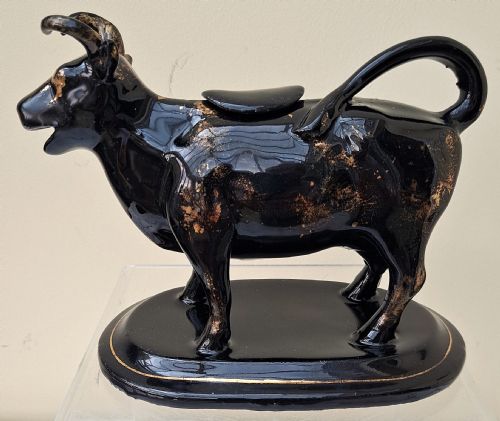
Victorian earthenware tableware encompasses practical domestic items ranging from large dinner services and lidded tureens to specialised pieces like cheese dishes, game pie dishes, and cow creamers. These items combine everyday utility with the decorative tastes of the nineteenth century, often reflecting the rigorous demands of household dining.
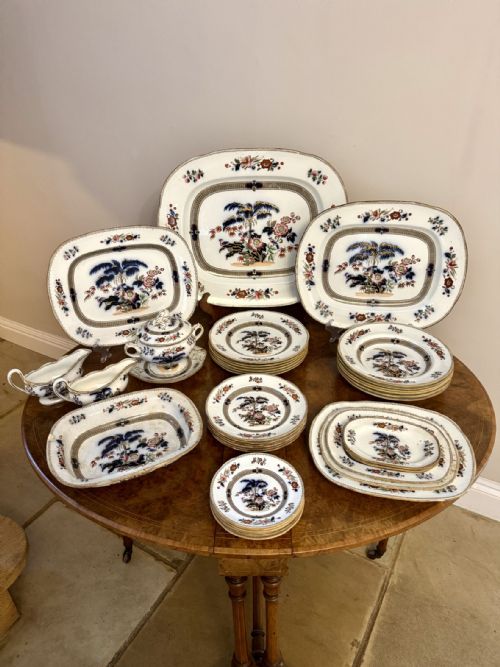
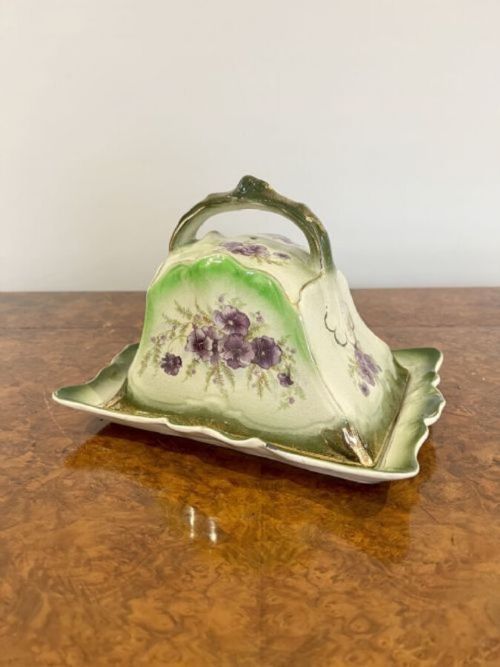
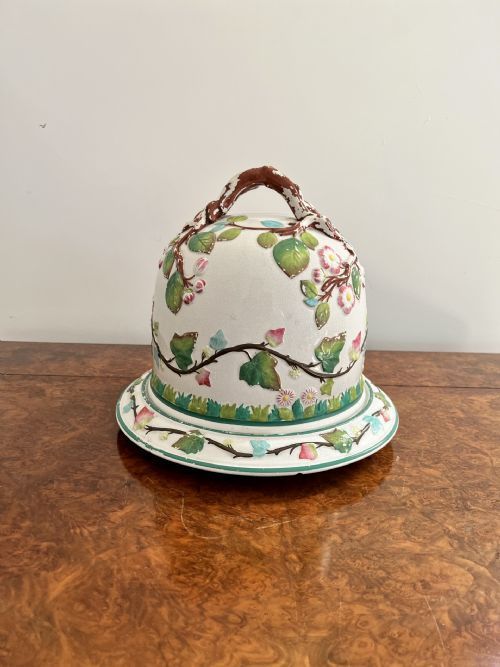
On this page, you are most likely to meet substantial serving pieces, including blue and white meat platters, transfer-printed tureens, and colourful majolica cheese domes. These ceramic forms frequently display the dense patterns and robust bodies characteristic of English potteries operating through the nineteenth century.
The objects span production from the early Victorian decades into the Edwardian transition, capturing shifts in domestic hospitality. Whether you encounter a large fifty-nine piece dinner service or an individual custard set, each item demonstrates the heavy reliance on ceramic and earthenware bodies for nineteenth-century dining.
Materials and production methods
Potters formed these items primarily from porous earthenware and creamware bodies, which were then coated in liquid glazes to provide a smooth, waterproof surface suitable for food. Many pieces received colourful enamel paints or detailed blue and white transfer prints applied beneath or over the glaze before firing.
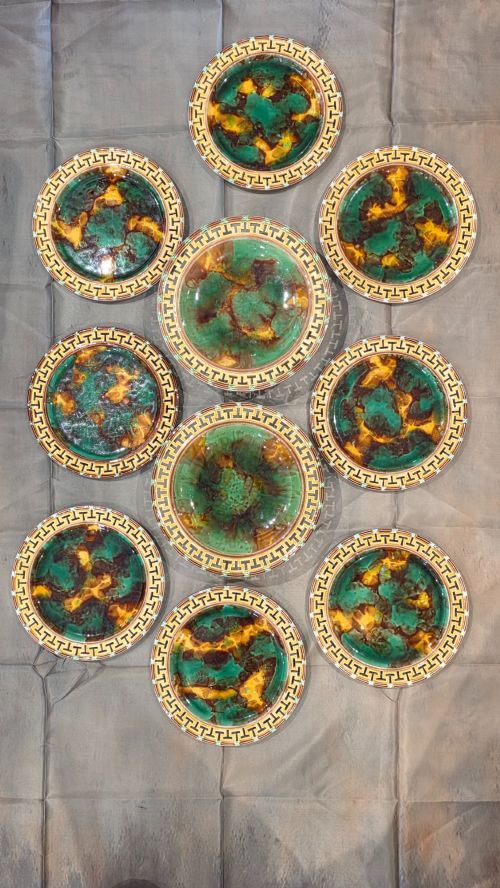
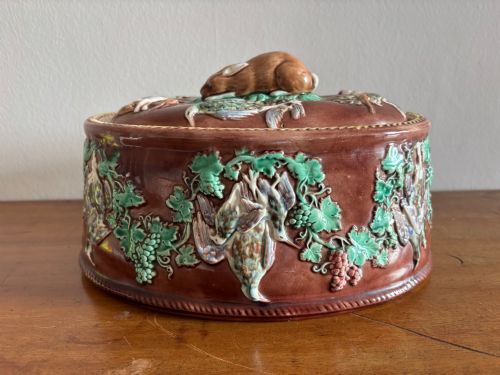
Specialised decorative wares, particularly majolica services and cheese domes, utilised heavily moulded terracotta and earthenware structures finished with richly coloured lead glazes. Other items incorporated applied gilding and intricate hand-painting to accent the moulded ceramic relief work.
Listings for this phrase demonstrate a strong preference for 19th century production, featuring earthenware, ceramic, and terracotta bodies finished with transfer prints, enamel, and majolica glazes.
Distinctions in quality and execution
Quality in these ceramics rests on the crispness of the moulded relief, the alignment of transfer prints, and the depth of the coloured glazes. Superior pieces display sharply defined botanical or figurative details without blurring or running in the glaze during kiln firing.
The reputation of the producing pottery and the completeness of larger services also define the tier of an object. Well-preserved multi-piece dessert services and named maker output retain greater integrity than heavily worn utility wares.
Wedgwood·Doulton Burslem·Ridgways·Copeland and Garrett
The Victorian Earthenware Tableware Glossary
- Earthenware
- A porous ceramic body fired at lower temperatures than stoneware or porcelain, requiring a vitreous glaze to hold liquids. It forms the structural foundation for the majority of nineteenth-century domestic tableware.
- Majolica
- A type of earthenware decorated with brightly coloured lead glazes applied over an opaque white tin enamel or directly onto the clay body. This technique created richly hued, glossy surfaces popular for Victorian cheese domes and dessert services.
- Transfer print
- A decorative technique where an engraved metal plate transfers a monochrome ink design onto tissue paper, which is then rubbed onto the unfired ceramic surface. It allowed potteries to produce intricate blue and white patterns with high consistency.
- Creamware
- A refined, pale yellow earthenware developed in the eighteenth century and continued into the Victorian era. Its warm tone provided an ideal background for botanical painting and transfer printing.
- Tureen
- A deep, lidded serving bowl designed for holding soups, sauces, or vegetables at the dining table. They frequently appeared alongside matching ladles and large meat platters.
Victorian Earthenware Tableware: Frequently Asked Questions
How do I care for Victorian earthenware?
Wash these ceramic pieces gently by hand using mild detergent and warm water to protect their historic glazes and enamel details. Avoid soaking items with crazed surfaces or applied gilding to prevent moisture penetration.
Store them securely in dry environments away from direct sunlight and rapid temperature fluctuations. Proper handling prevents accidental chipping of fragile nineteenth-century edges.
Are these pieces safe for daily use?
Most nineteenth-century earthenware contains porous bodies and historic glazes that may react to acidic foods or modern dishwasher cycles. Hand washing is essential to preserve the integrity of the ceramic and any delicate surface pigments.
Many collectors prefer to display these items or use them strictly for dry service rather than heavy daily dining. This cautious approach protects the historical material from unnecessary wear.
How do I distinguish majolica from standard earthenware?
Majolica is defined by its thick, vibrant coloured lead glazes fired over moulded earthenware or terracotta reliefs, often featuring naturalistic plant or animal themes. Standard earthenware relies instead on flat transfer printing or simple enamel painting.
The glossy, pooling quality of majolica glazes gives the surface a distinct reflective depth. This technique stands apart from the smoother, quieter finishes found on traditional blue and white tableware.