

Victorian Earthenware Flatback
These Victorian earthenware flatback figures are designed to stand proudly on mantelpieces, bringing portraiture, royalty and theatrical scenes into nineteenth-century homes.
Victorian Earthenware Flatback
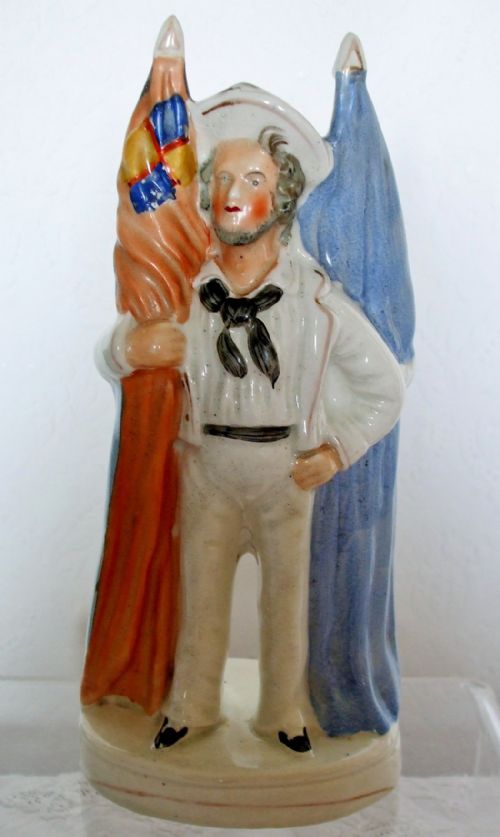
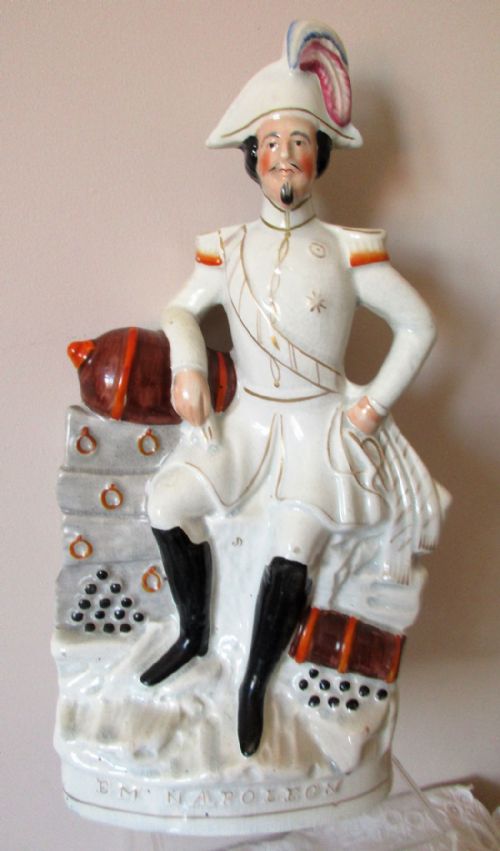
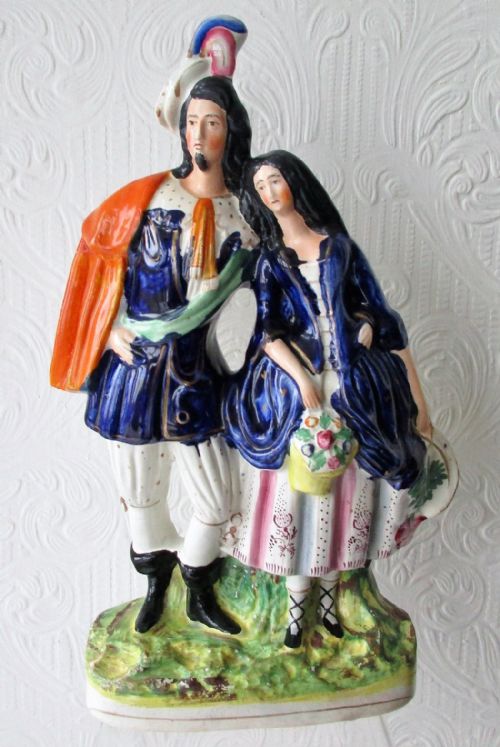
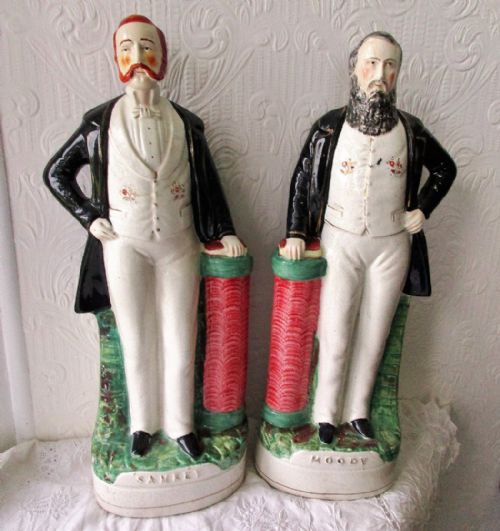
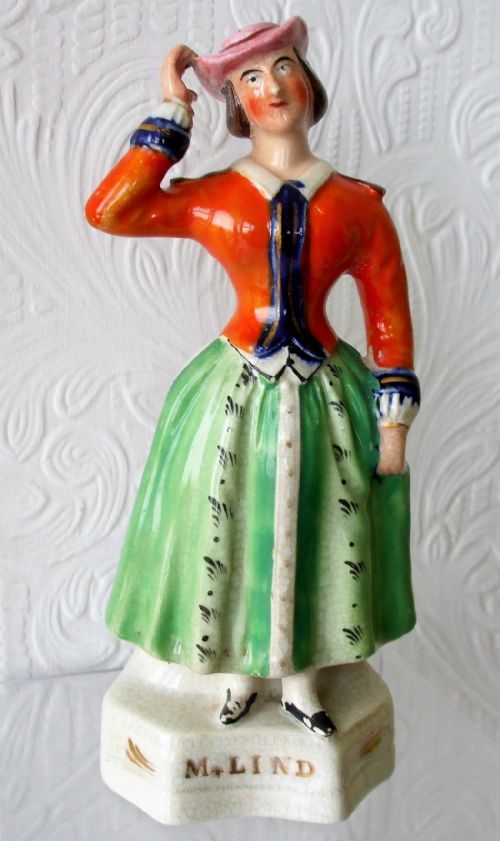
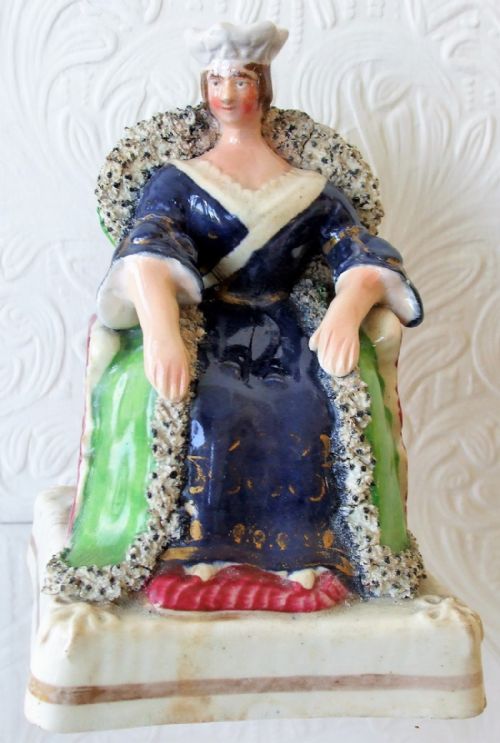
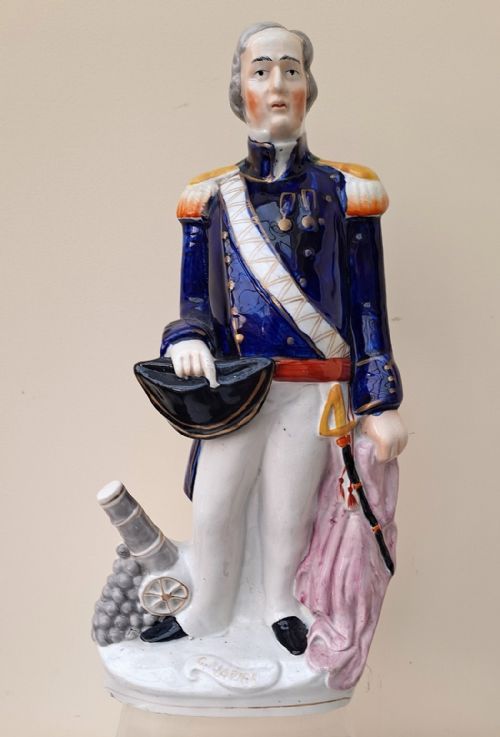
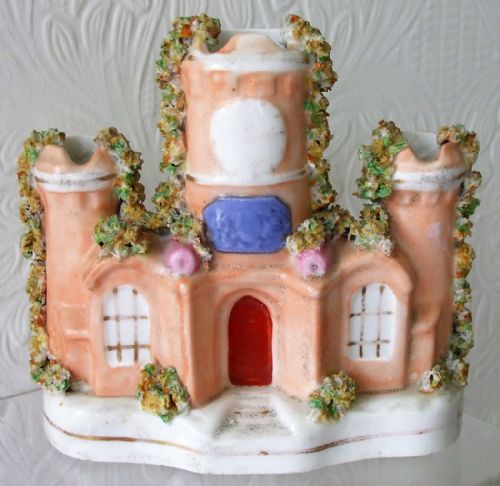
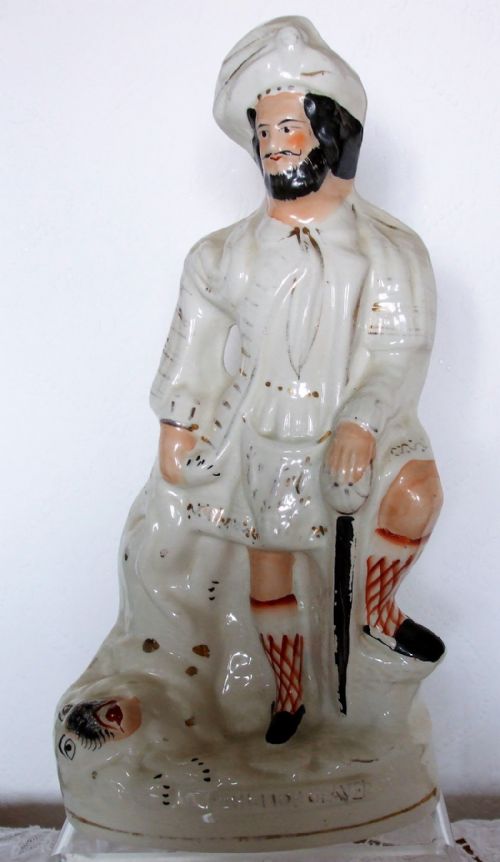
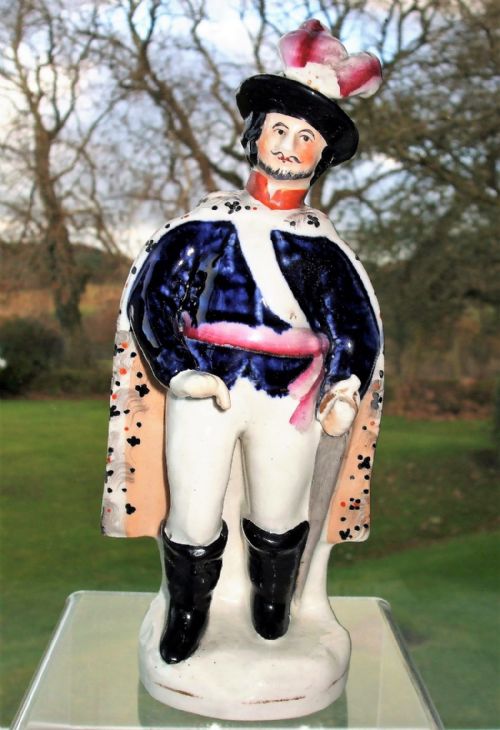
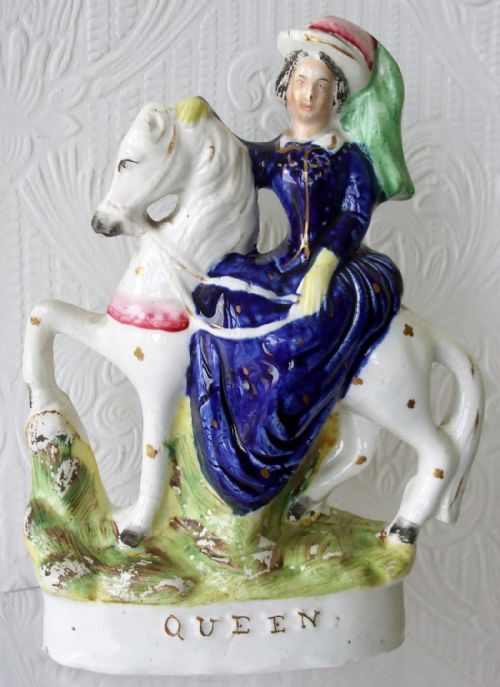
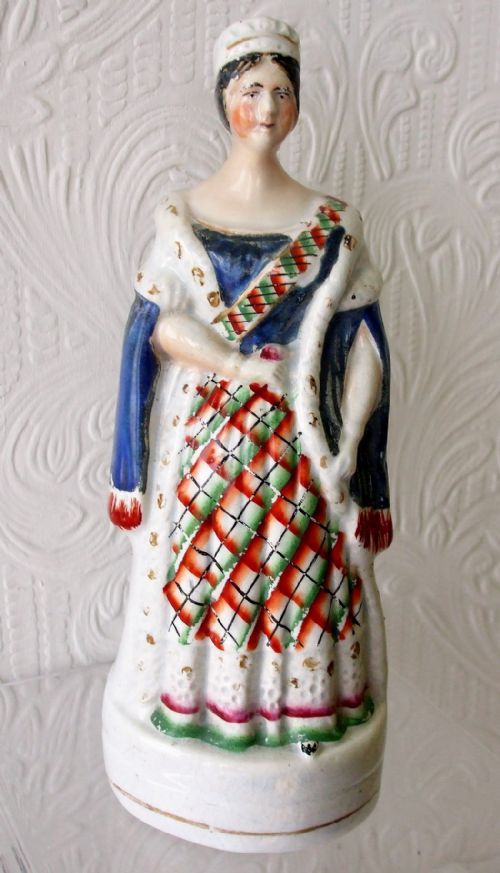
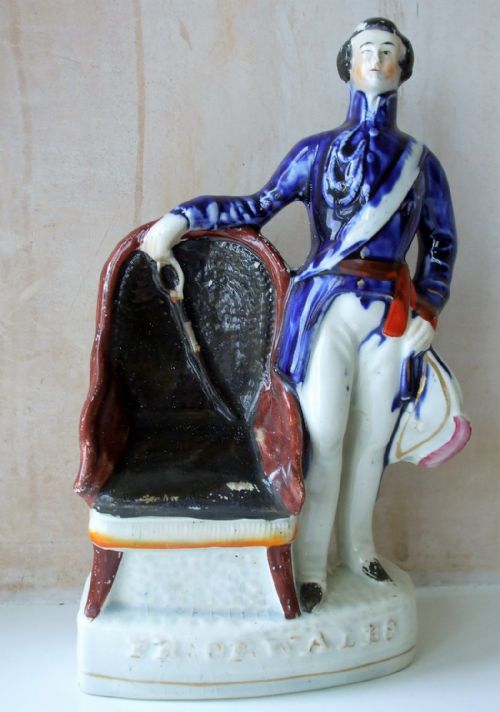
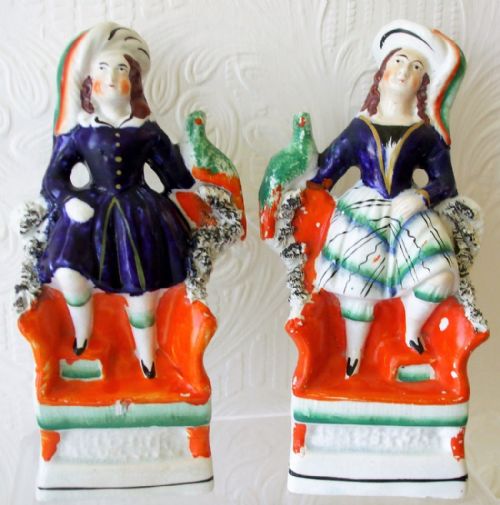
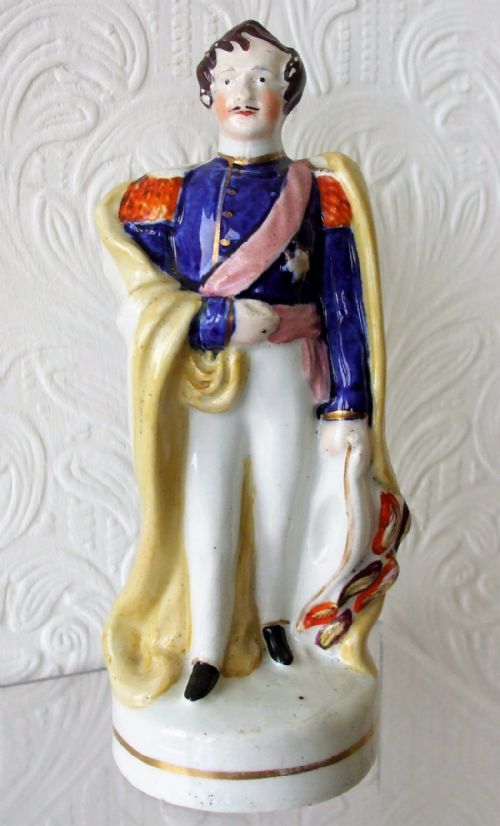
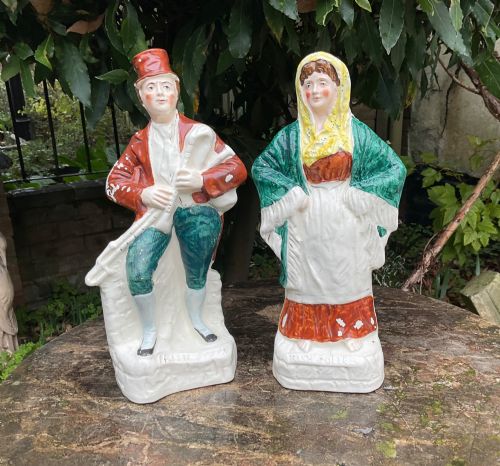
When you search for a Victorian earthenware flatback, you enter a world of nineteenth-century ceramic portraiture, theatrical subjects and royal groups designed for display against a wall. These mantle ornaments were modelled with unglazed or simply finished backs because viewers only ever saw the painted and glazed fronts. The pieces on this page span the mid to late nineteenth century, emerging from the Staffordshire potteries between eighteen-forty-five and nineteen-hundred.
Subjects range widely from Queen Victoria and Prince Albert to Crimean War generals, literary characters and humble cottages or castles. You encounter single portrait figures, dramatic pairs, equestrian subjects and functional spill vases that held wooden matches. The style embraces both formal portraiture and naive Victorian folk art, capturing public fascination with royalty, crime and theatre.
Makers drew inspiration from contemporary newspaper illustrations, theatrical prints and historical events to feed a middle-class appetite for decorative shelf ornaments. Figures like Louis Napoleon, Empress of France and local gardeners sit side by side in the material record. Each piece offers a tangible link to Victorian parlour culture, manufactured in vast quantities yet surviving today as individual sculptural snapshots of an era.
Materials and Making
Potters shaped these figures using clay pressed into multiple moulds before joining the sections together and applying a basic lead glaze. The hollow interior kept weight and material costs down while preventing the thick ceramic from cracking during kiln firing. Earthenware provided an inexpensive and pliable body that accepted liquid clay slip and vibrant surface pigments with ease.
Victorian Earthenware Flatback Retail Price Guide 2026
Typical asking prices for victorian earthenware flatback among the pieces listed under this phrase on Sellingantiques today, from the lower quarter to the upper quarter. They describe what is for sale here now, not the wider market.
Victorian potters painted mischievous expressions on sheep and cows that gaze out from mantelpieces with surprising personality.
Assessing Quality
The choice of subject matter and scale also distinguishes standard production from more ambitious commissions. Large portrait groups, intricate castles and unusual historical or theatrical pairs often demonstrate greater sculptural ambition than standard single figures. Collectors look for depth in the palette and careful application of gilt highlights that elevate the object beyond mass factory output.
The Victorian Earthenware Flatback Glossary
- Flatback
- A ceramic figure modelled with a finished front and a flat, unglazed or minimally glazed rear. This design allowed the ornament to sit flush against a wall or mantelpiece.
- Earthenware
- A porous ceramic body fired at lower temperatures than stoneware or porcelain. It requires a glaze to become impermeable to liquids.
- Spill Vase
- A hollow ceramic tube incorporated into a figure group designed to hold wooden spills for lighting fires or pipes. They combine domestic utility with decorative display.
- Enamel Paint
- Vitreous coloured pigments applied over the fired glaze and fixed in a second, lower-temperature kiln firing. It provides the bright surface colours characteristic of these figures.
- Lead Glaze
- A glossy coating containing lead compounds applied to pottery before firing to give a smooth, watertight finish. It enhances the brightness of the underlying earthenware body.
Victorian Earthenware Flatback: Frequently Asked Questions
What is a flatback figure?
A flatback figure is a ceramic ornament moulded with a detailed front and a flat, unglazed back. This allowed the piece to sit neatly against the wall on a mantelpiece.
Potters left the backs plain to save on materials and manufacturing time since the objects were meant for frontal display only.
How were spill vases used?
Spill vases held wooden spills or tapers used to transfer flames from a fireplace to candles, lamps or tobacco pipes. They served a practical household purpose while doubling as decorative ceramic sculptures.
Victorian households placed them on mantelpieces where fires burned during colder months.
Who do these figures depict?
The figures portray royalty, military heroes, theatrical actors, literary characters and ordinary country folk. Queen Victoria, Prince Albert and Crimean War generals appear frequently alongside pastoral scenes and cottages.
These subjects reflected popular news and cultural interests of the nineteenth century.
How do I date a flatback?
Dating relies on historical subjects, costume details and stylistic markers recorded in the pottery traditions. Figures commemorating specific weddings, wars or royal tours provide a clear window into their production period.
Potters often reused moulds over decades, so style and glaze characteristics help narrow the decade.